Is This Viktor Orbán’s Last Stand?
After 16 years in power in Hungary, his Fidesz party is trailing in the polls by double digits behind a new opposition party.
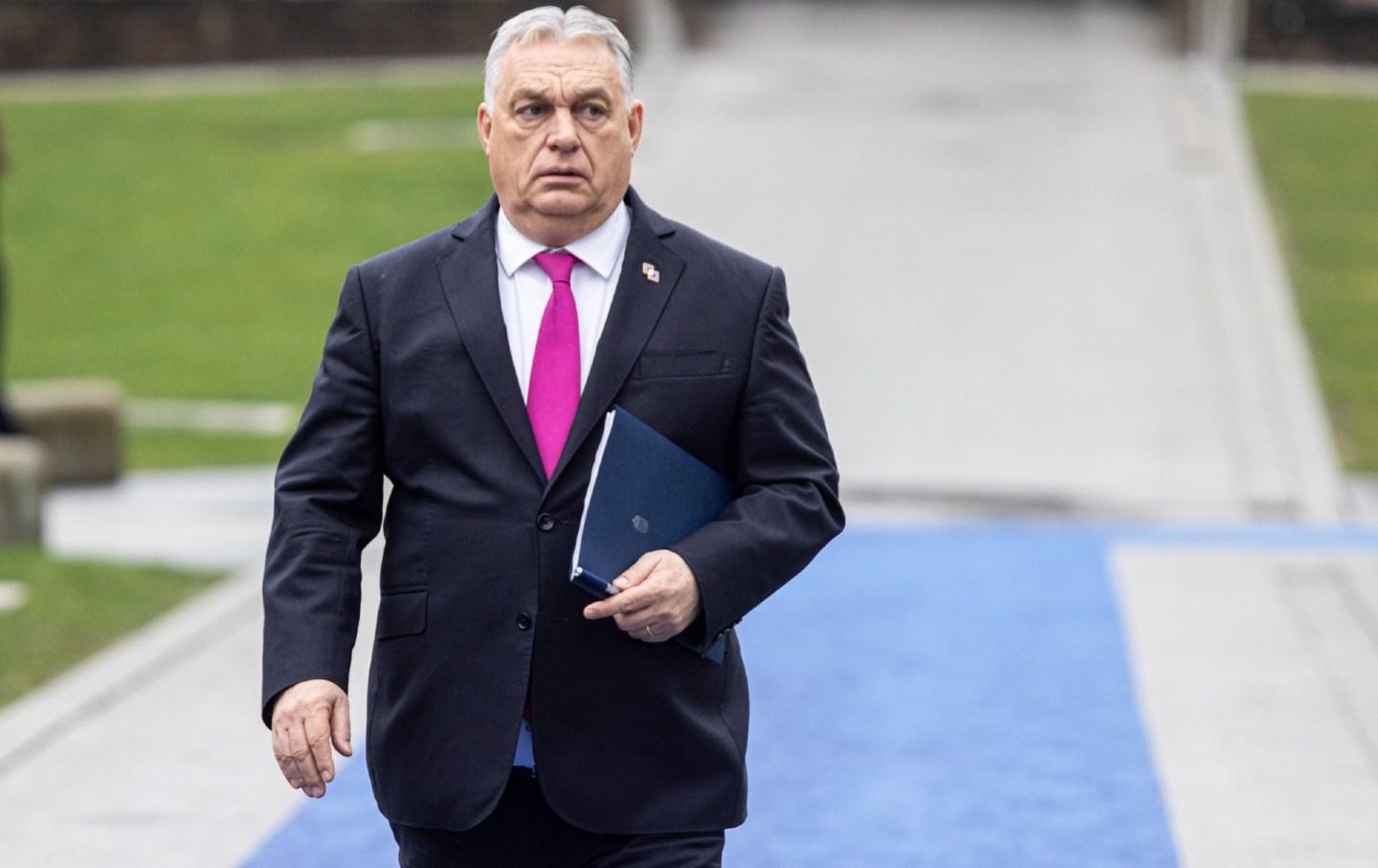
Viktor Orbán, Hungary’s autocratic prime minster, shouldn’t have had anything to worry about in the run-up to the April 12 general election. In four previous votes, he and his Fidesz party—a far-right trailblazer in Europe—triumphed handily, securing two-thirds majorities in parliament in every election since 2010. Orbán’s governments overhauled the Hungarian state in Fidesz’s image and tried to craft a system that would perpetrate Fidesz rule indefinitely. Moreover, the muscle behind Orbán and his party could hardly be more formidable: Vladimir Putin’s Russia, President Donald Trump, and China, too, line up behind Orbán, their favorite European leader.
And, yet, Fidesz is trailing a new opposition party, Tisza, by double digits and the buttons that Orbán’s pushed so deftly for 16 years—immigration, Hungarian nativism, anti-LGBTQ, “peace”—aren’t triggering Hungarians as they had in the past. Magyars appear fed up with the economic backlash of lost EU funding, the high cost of living, ubiquitous corruption, and a long trail of unseemly scandals. In 2024, Hungarian President Katalin Novak resigned after it emerged that she had pardoned the accomplice of a convicted child abuser. A pedophilia affair last year involving videos that showed children suffering abuse in state-run juvenile facilities prompted tens of thousands to take to the streets.
The gale-force storm has observers cautiously convinced that Tisza (Respect and Freedom Party) could upend Orbán’s “embedded autocracy.” Two of Hungary’s most astute analysts, Andras Bozoki and Zoltan Fleck, describe Orbán’s government as a highly centralized regime that is so deeply entrenched in the composition of society and in control of pseudo-democratic structures that it locks in its own electoral continuation. The Fidesz state, they argue, has the trappings of a democracy—regular ballots, basic civil liberties, and multiple parties—but the system is fixed to yield the same result. Orbán rewrote the Constitution, packed the courts, promoted and paid off loyal allies, and redrew electoral districts to Fidesz’s advantage. Independent media was nationalized or bought up by Orbán supporters, while critical civil society is squeezed out of the public sphere.
“There’s a chance Fidesz will exit from power peacefully,” said Zoltan Fleck, legal scholar at Eötvös Loránd University in Budapest, and co-author of Embedded Autocracy: Hungary in the European Union. “But authoritarian regimes don’t usually finish by way of elections, and Fidesz has a lot to lose in terms of money, property, the even the freedom of its core figures involved over years in a criminal state.“ With the country in a declared state of emergency because of the war in Ukraine, Orbán has expansive powers to rule by decree, Fleck said, and has numerous options to tweak the system to Fidesz’s advantage.
“Tisza needs more than a narrow victory to dislodge Fidesz,” András Bíró-Nagy of the Budapest-based think tank Policy Solutions said. He explained that rural votes in Orbán strongholds in eastern Hungary are more heavily weighted than urban votes, and therefore the opposition needs a popular victory of at least four percentage points. According to Bíró-Nagy, a victory by 10 points would spell its defeat and force it to exit from power. “We’re not Belarus here,” he said, referring to the Russian ally’s bald-faced refusal to accept electoral defeat.
In 2022, the EU Parliament declared, “Hungary can no longer be considered a full democracy.” The bloc continues to withhold a significant portion of EU funds allocated to Hungary—estimated at more than €20 billion—due to concerns about the rule of law, corruption, judicial independence, and civil rights. Much of this could flow back into Hungary’s coffers were reforms introduced. But Orbán barely budges.
Unshakable, Orbán continues to throw wrenches into the European Union’s Ukraine policies, undermining Ukraine’s funding, sabotaging its EU accession, and providing Putin with a foothold in EU Europe. Orbán’s long-running anti-Ukraine campaign seeks to convince voters that the neighboring country—Hungary and Ukraine share 85 miles of border—is embroiled in a war of its own making and poses an existential threat to Hungary’s security. “Orbán’s appeal is as a strongman who protects the Hungarians,” explained Laszlo Andor, an economist and former EU minister. Andor said Orbán frames the war in Ukraine as a threat to the interests of ordinary Hungarians—a threat he is keeping at bay. “Today Ukraine is the number-one topic. It has replaced migration in Fidesz propaganda.”
And then there’s Orbán’s economy, which peaked in mid-to-late 2010s and was largely responsible for Fidesz’s broad support. But this has dissipated, replaced by inflation that surged to over 17 percent in 2023 due to energy prices and currency depreciation. It hit average Hungarians hard. My friend Dorotteya, a private teacher, shells out half of her salary to put food on the table of her family of three. Between 2019 and 2025, Hungarian food prices jumped by 82 percent, while cumulative inflation reached 50 percent.
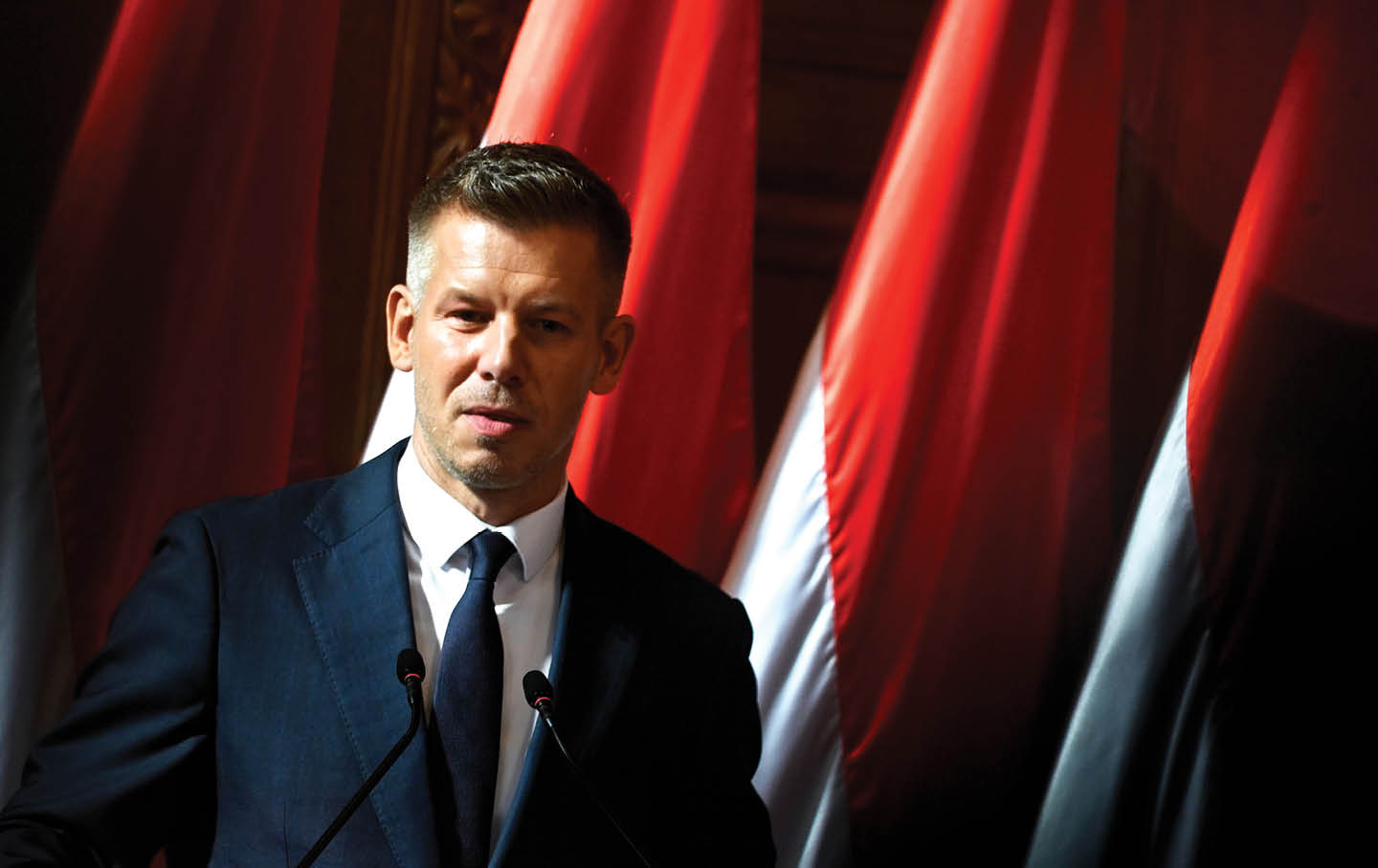
Tisza is the product of Peter Magyar, a wily, 44-year-old former Fidesz higher-up. In contrast to past elections, the wider opposition has rallied around him. A divided opposition never stood a chance against Fidesz, but this time around, thanks to the insistence of the voters, socialists, greens, liberals, conservatives, Roma activists, and social democrats have put differences aside in order to oust Fidesz and begin dismantling its state.
As excited as the opposition is about finally uniting, Fleck notes that Magyar is a conservative who comes from within Fidesz. How far and how quickly he’ll tear down the Fidesz state, should Tisza come to power, is an open question. The authoritarian ethic runs deep in Hungary, Fleck cautioned.
The big three
Fidesz’s poor position in the polling is all the more extraordinary in light of its heavy-hitting global supporters. The love affair between Orbán and Putin over a decade is based as much upon their affinities as authoritarians as Hungary’s reliance on cheap Russian energy. Hungary and Slovakia are the only EU countries that haven’t attempted to wean themselves off Russian gas. Russia’s bot armies, fake news, social media blitzes, and other misinformation campaigns dovetail perfectly with Fidesz’s homemade spins: Europe’s succumbing to hordes of foreign immigrants, the corruption of Christian values by Western perversion, and Ukraine as a fascist state.
Popular
“swipe left below to view more authors”Swipe →Trump has expressed his deep admiration for Orbán—and all of Europe’s far right—many times, most recently in early February in a social-media post that called him “a true friend, fighter, and WINNER, and has my Complete and Total Endorsement for Re-Election as Prime Minister of Hungary.” Next week, after addressing the Munich Security Conference, Secretary of State Marco Rubio will travel to Hungary and Slovakia.
Perhaps a credit to Orbán’s diplomatic guile, he has managed to line up China too for Hungary’s purposes‚ thus far without incurring Washington’s ire. China is Hungary’s largest non-European trade partner, and Hungary relies on Chinese raw materials, automotive components, metal products, textiles, and electronics. President Xi Jinping sings Orbán’s praises and supports Hungary in “playing a bigger role in the EU” as a way to promote better China–European Union relations.
Analyst Biro said that with the state behind it in so many ways, Fidesz can outspend Tisza “more than 100 to one. The playing field is not level, not all at.”
Hungarians have clearly soured on Fidesz, but the question is by how much. If Hungary isn’t Belarus, then people power can crack the embedded autocracy and pry open space from within which democratic culture can take root. But after 16 years of Fidesz rule, we have no evidence that Hungary isn’t the EU’s Belarus.