
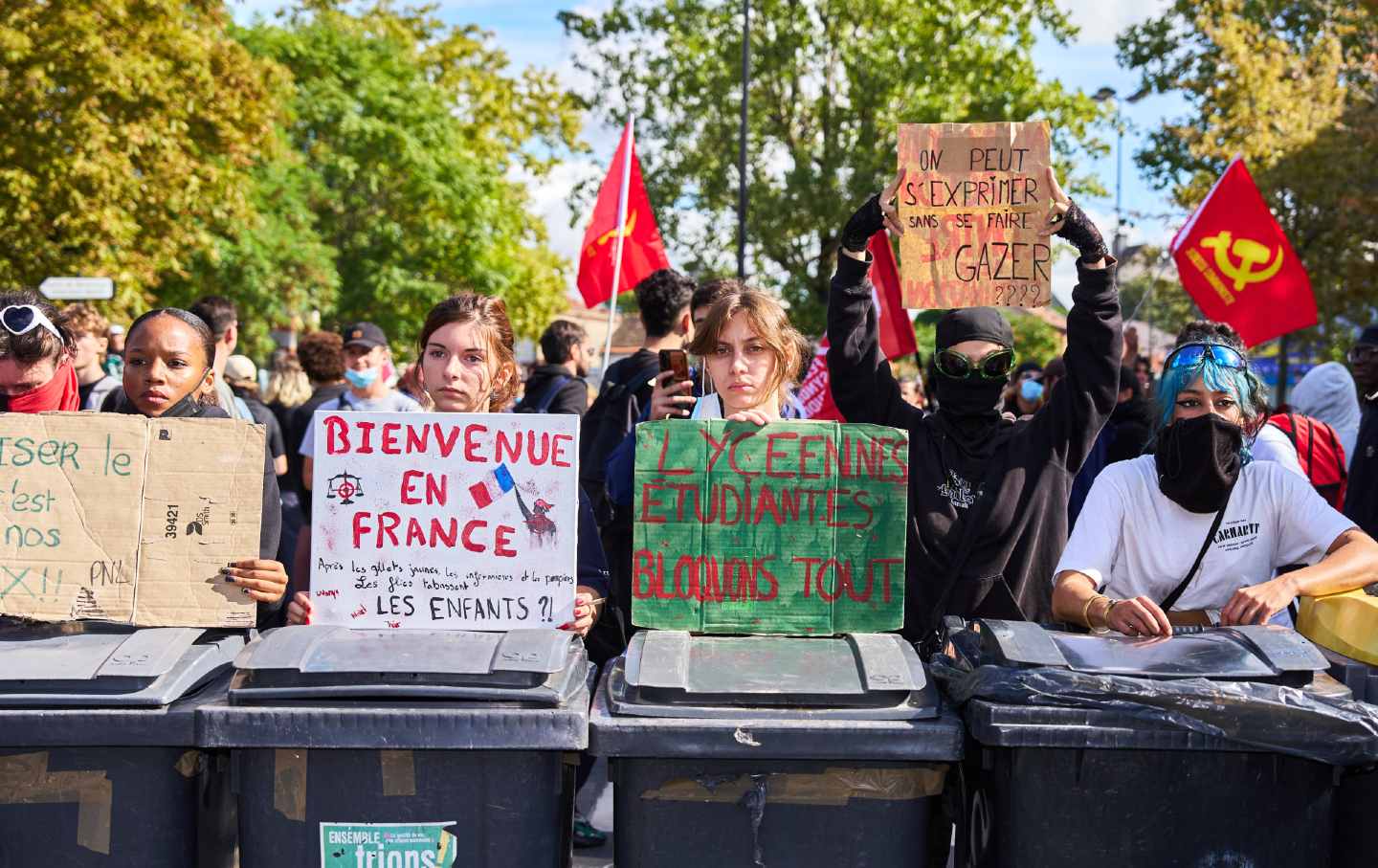
The elephant in French classrooms, as just about anyone who has recently taught or studied in the country’s education system will tell you, is stretched resources. Classes are filled to the brim, with teaching increasingly delegated to intermittent instructors. Behind the façade of “Liberté, Égalité, Fraternité”—the republican promise emblazoned on each public school building in the country—stand deteriorating buildings, squalid facilities, poorly stocked libraries, unreliable IT, if any, and outnumbered critical support staff like nurses and counselors. Videos circulating on social media from students’ accounts document the most disastrous conditions: rats running around across the hall; collapsing ceilings; walls leaking with humidity; broken doors and dysfunctioning lighting in bathrooms.
Frustrations with this untenable status quo started to boil over in late September, only three weeks into the new academic year. The first sparks emerged on September 17 at the Lycée Saint-Exupéry, where striking teachers were joined by students who attempted a blockade of the school facilities.
They were soon joined by other students in the greater Paris area, most notably at the Lycée Paul Éluard in Saint-Denis, a diverse, working-class suburb north of the capital, who also launched a blockade on September 25. Less than a week later, their demonstration had spread to over 1,000 high schools across the country—more than a quarter of total establishments—crystallizing the social malaise of an entire generation.
Reacting to what was rapidly taking on the scale of a national crisis, President Emmanuel Macron intervened on Wednesday during a state visit to Madrid. “I understand the anxieties and anger that our youth might feel, whether that’s related to the climate, new technologies, or geopolitical tensions,” he said during a press conference. “However, none of these fears justify violence.”
The scope of the protests is perhaps best summed up in the clampdown that has followed, as media and government figures alike harp on the exceptional incidents of violence, such as the burning of Lycée Nelson Mandela in Nantes. On October 1 alone, nearly 2,000 people were arrested, with scores of schools now closed by administrative order and conducting online courses, in an effort to mitigate the effects of the blockades. As of Friday afternoon, however, the situation shows few signs of slowing down. A day of national mobilization and strikes is called for October 6.
The scene on Friday morning outside the Lycée Lucie Aubrac in Pantin, a suburb northeast of Paris, was typical of the French students’ revolt.
Though their school was closed by administrators, some students gathered outside the shuttered gates as early as 7:30 am. “Nobody listens to us,” said Lila, a high school senior. “Last year we didn’t have a math teacher for over seven months.”
Though the gathering was entirely peaceful, our interview was interrupted when a group of police officers started charging the students at around 8:45 am. Quickly, students started running, escaping the tear gas out of fear of the brutality that they have seen put to full force in schools elsewhere. Lila had on her mind, for example, the 16-year-old who on Thursday was shot in the eye with a rubber bullet in the nearby suburb of Argenteuil. On September 28, a rubber bullet also shattered the teeth and jaw of a 14-year-old boy in Saint-Ouen, just north of Paris.
“The level of violence we’re witnessing from the police is traumatizing,” said Lila. “We’re only minors here, children trying to have our voices heard.” In the eastern French city of Troyes, protesters filmed an unmarked police car driving at high speed between a crowd of students as officers sprayed tear gas from the windows.
For students in places like Pantin, or other disadvantaged banlieues, or suburbs, across France, the reaction to their mobilization feeds into the lingering sense of being relegated to a second-class status, problems to be managed rather than citizens deserving an opportunity to a decent education. To them, the police mobilization recalls the clampdown in response to the rioting that followed the 2023 killing of Nahel, a 17-year-old shot during an altercation with police in the Paris suburb of Nanterre.
A few kilometers to the south of Pantin, the Lycée Voltaire in Paris was also among the over 400 establishments closed on Friday. Several hundred students were gathered from the early hours of the morning, outside a barricade of trash cans and repurposed street fences blocking the doors to the storied 11th arrondissement high school. The peaceful protesters were greeted by solitary honks from motorists and truck drivers along the Avenue de la République.
For high schoolers at a place like Voltaire—though not one of the capital’s most elite schools—their demonstration was in part out of solidarity with the suburbs. “We’re relatively privileged here in Paris and know that the gap remains enormous between our school’s conditions and those found in high schools in the banlieues,” said Charly, a senior at Lycée Voltaire.
Still, the school is not spared from the broader problems afflicting French education. Students The Nation spoke to attested to packed classrooms and overworked teachers. Louis, also in his final year, denounced a “chronic lack of resources for the National Education ministry.” According to the ministry’s own figures, some 20 million class hours went untaught in the 2024–25 academic year. Louis, for example, said that his Spanish class last year was simply canceled for nearly an entire term, “without any substitute ever being appointed.”
The education budget is expected to grow by a little over €800 million in the 2027 fiscal year, not enough to compensate for inflation. In fact, next year’s budget, introduced on October 1, is slated to see permanent teacher rolls decline by 1,500 posts. A similar squeeze is felt in the university system. A 2024 study from economists Thomas Piketty and Lucas Chancel estimated that in real terms between 2017 and 2023 the annual budget for higher education declined by nearly 15 percent per student enrolled. “The army budget grows year after year, but for education we’re trapped in stagnation,” remarked Louis. In its 2027 budget outline, Prime Minister Sébastien Lecornu is seeking €54 billion in savings, although an additional €6 billion has been earmarked for the armed forces.
Another thing that unites just about all high schoolers is a shared frustration with the university selection system instituted at the beginning of Macron’s presidency. Known as Parcoursup, the digital platform introduced in 2018 has become infamous for its glitches and malfunctioning. But it is most decried for the idea of education it stands for, divvying up students along rigidly algorithmic lines, often discounting a candidate’s preferences about their intellectual and career interests and even geographic location. “You can be sent across the country because a computer told you that’s where you’ll study,” said Louis, nostalgic for a period when a student could easily enroll in the university of their choosing. In recent days, students at several universities have also joined in the push for occupations.
There are probably further storm clouds on the horizon for the university system. A senatorial report released in early September called to turn the page on the principle of free and open public universities for all.
Popular
“swipe left below to view more authors”Swipe →With ideas like that circulating—and liable to be picked up in 2027 should a figure from the conservative establishment or the far right accede to power—it’s little wonder that the sentiment prevalent for France’s rising generation of students is that of a stolen future. Looking around them, they know that their school system, once considered the foundation of a republican society, has grown increasingly undemocratic and more segregated.
As the straitjacket of reduced budgets comes to dominate the national debate, the main political reaction to the mounting protest movement has been foot-dragging. In one apparent concession, Education Minister Édouard Géffray withdrew on Thursday a proposal that would have seen the levying of registration fees for certain post–high school trade schools and preparatory classes to France’s selective “Grandes Écoles.”
Otherwise, government figures and leaders of the right-wing opposition are decrying alleged outside agitators and seeking to pin the blame on a culture of protest prevalent among French youth. Far-right stalwart Marine Le Pen even broached the idea of a new anti-rioting law. “It’s a grave mistake that the media only harp on the rare images of violence,” remarked Charly, from Lycée Voltaire. “We’re portrayed as savages who only know how to burn trash bins.”
La France Insoumise (LFI), the leading left-wing opposition party, led by Jean-Luc Mélenchon, has also become a favored target of the backlash. Mélenchon called on LFI elected officials to “step in” between students and riot police, before urging for protests to remain nonviolent. The mainstream media has otherwise fixated on images of the LFI mayor of Saint-Denis, Bally Bagayoko—who had intervened to drag a burning trash can away from the gates of the Paul Éluard high school on Monday—as proof of LFI rabble-rousing. Bruno Retailleau, leader of the conservative Les Républicains, even called for the party’s banning, seven months from the presidential election.
But evasions like this will do little to calm the anger that has spilled out in the open in recent days—and it will do nothing to address the root causes of the crisis in French education.
“For now, this is a struggle led by and for young people, but we hope that unions will join and that this will expand into a broader national battle,” said Louis, the senior from Lycée Voltaire. Meanwhile, eyes remain fixed on the possible revival of a “yellow vest”–style movement starting on October 17. Macron’s government is no doubt aware that France has a long history of student protests snowballing into far larger social movements.
More from The Nation
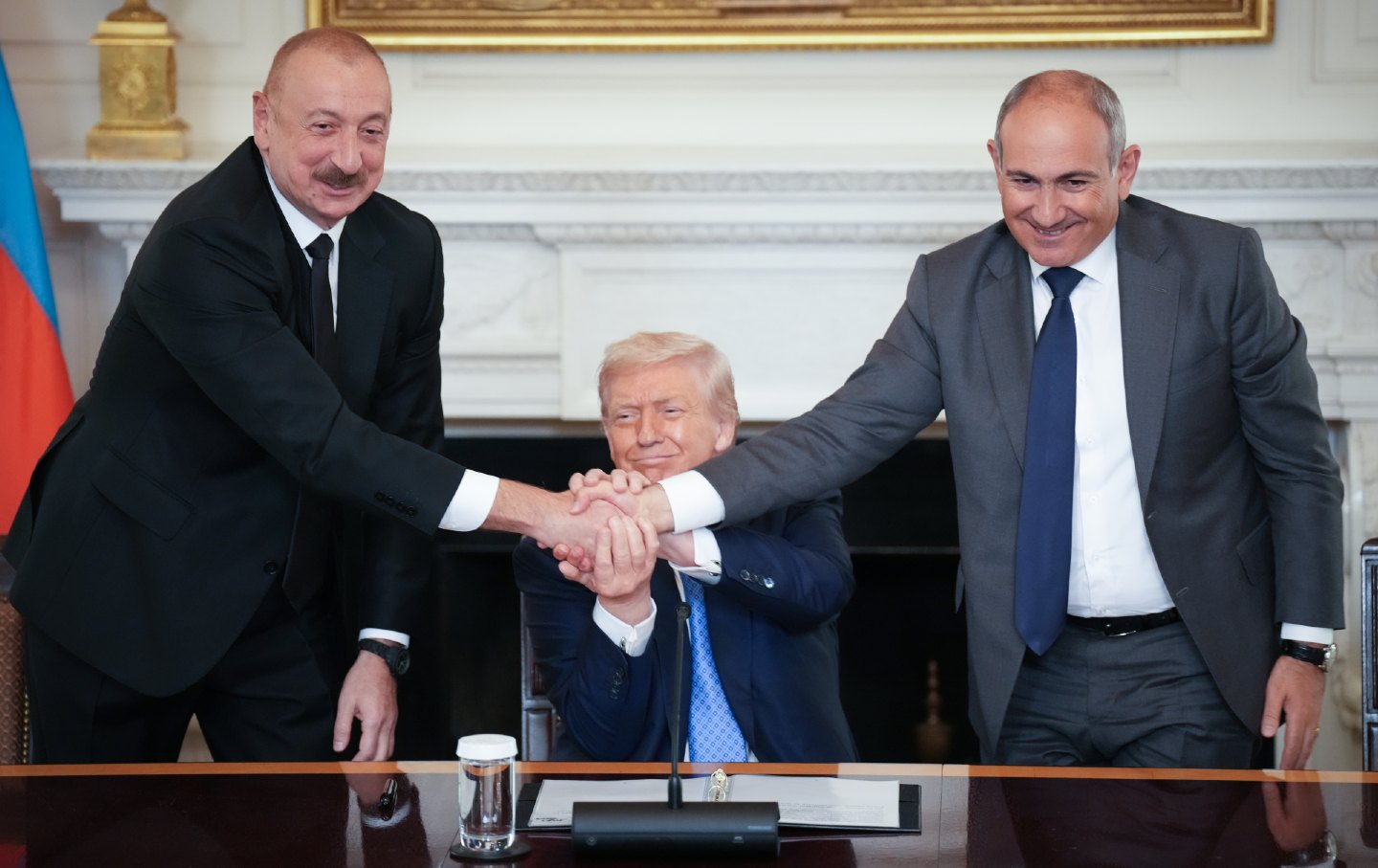
Revolution or No Revolution Revolution or No Revolution
Eight years after Armenia’s “Velvet Revolution,” Nikol Pashinyan’s government has deepened the country’s neoliberal trajectory while reorienting Armenia toward the West.
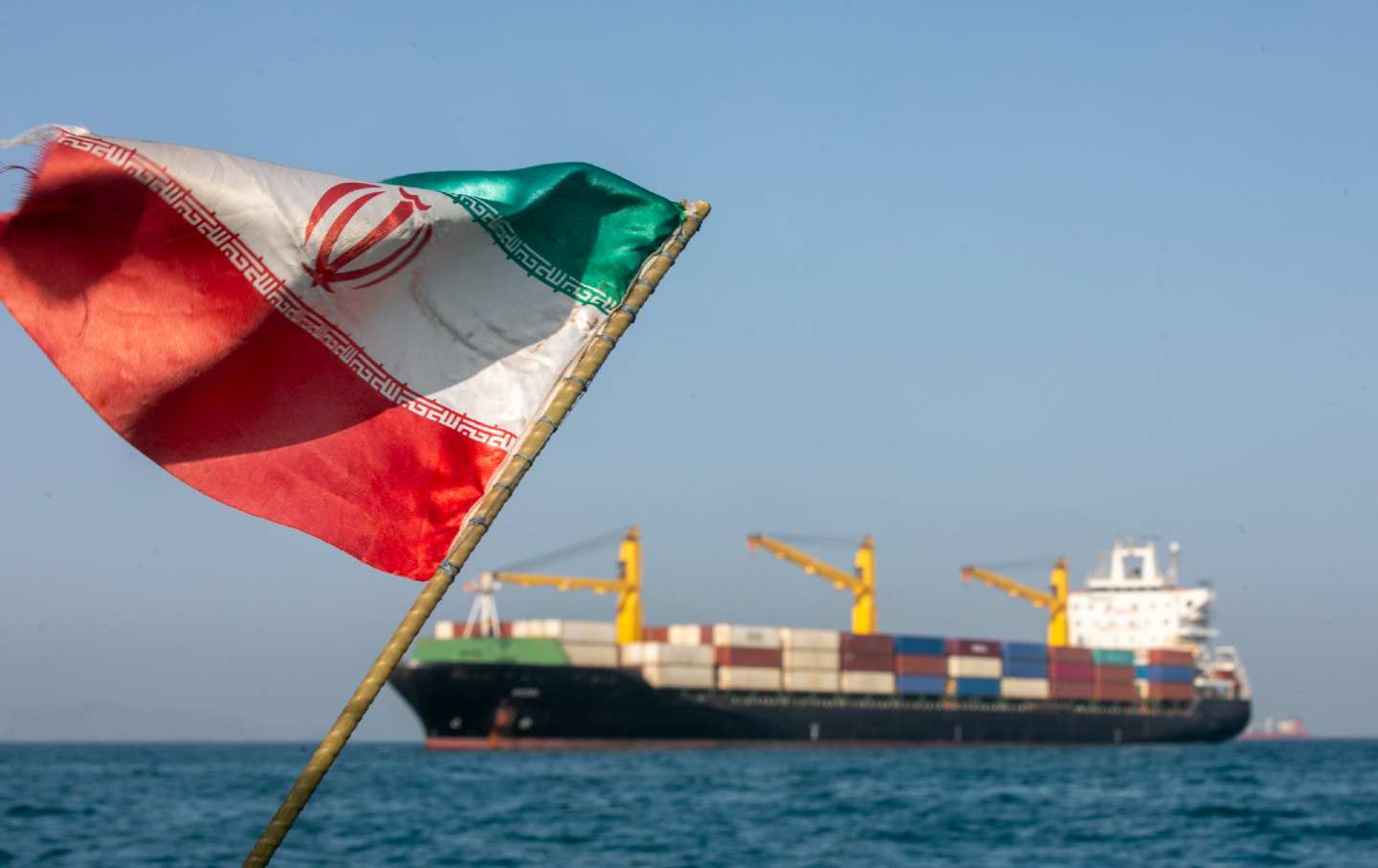
The GOP Sells the Mirage of a Hormuz Victory The GOP Sells the Mirage of a Hormuz Victory
The American action in the contested strait isn’t sustainable—and won’t alter the economic and political fallout from its closure.
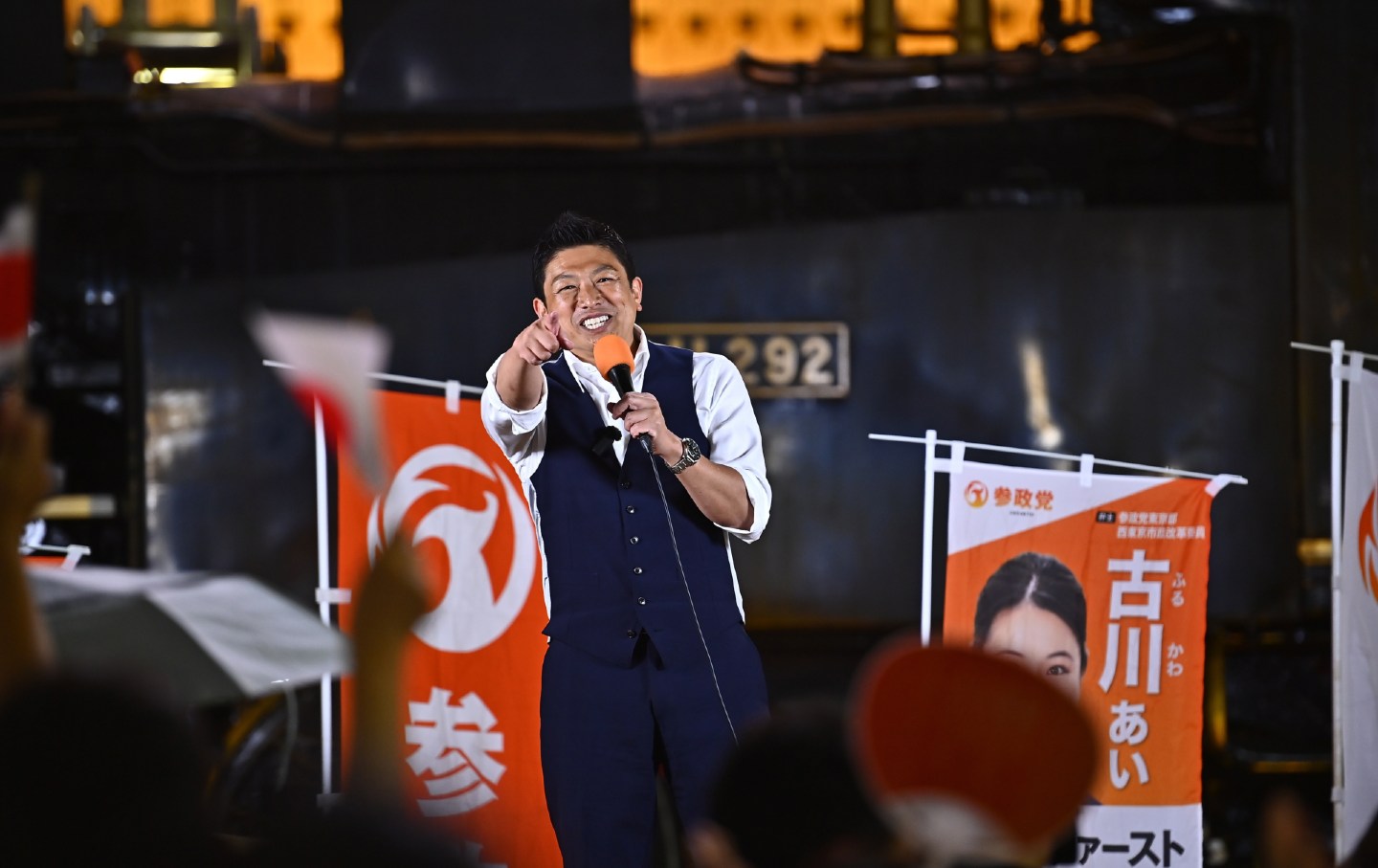
Japan’s Far Right Is Courting Young Voters Japan’s Far Right Is Courting Young Voters
Sanseitō has attracted young voters through a robust social-media strategy, Charlie Kirk–like public speaking events, and anti-establishment messaging.
This AI Panic Is Nothing New This AI Panic Is Nothing New
In the 1940s, The Nation asked questions about the atomic bomb we’re asking of artificial intelligence today.
The Decades-Old Roots of Trump’s War on Iran The Decades-Old Roots of Trump’s War on Iran
An interview with historian Behrooz Ghamari-Tabrizi about the generations of US presidents who have tried to destroy the Iranian regime.
Emmanuel Macron’s Turbulent Exit Emmanuel Macron’s Turbulent Exit
Between a budget crisis and a cost-of-living squeeze, Macron is leaving a country feeling more insecure than ever—and ready to take to the streets.

