
At 3 Years of War, North Darfur Is an Open Graveyard
As Rapid Support Forces cut off the flow of resources to western Sudan, hunger, cholera, and violence abound.
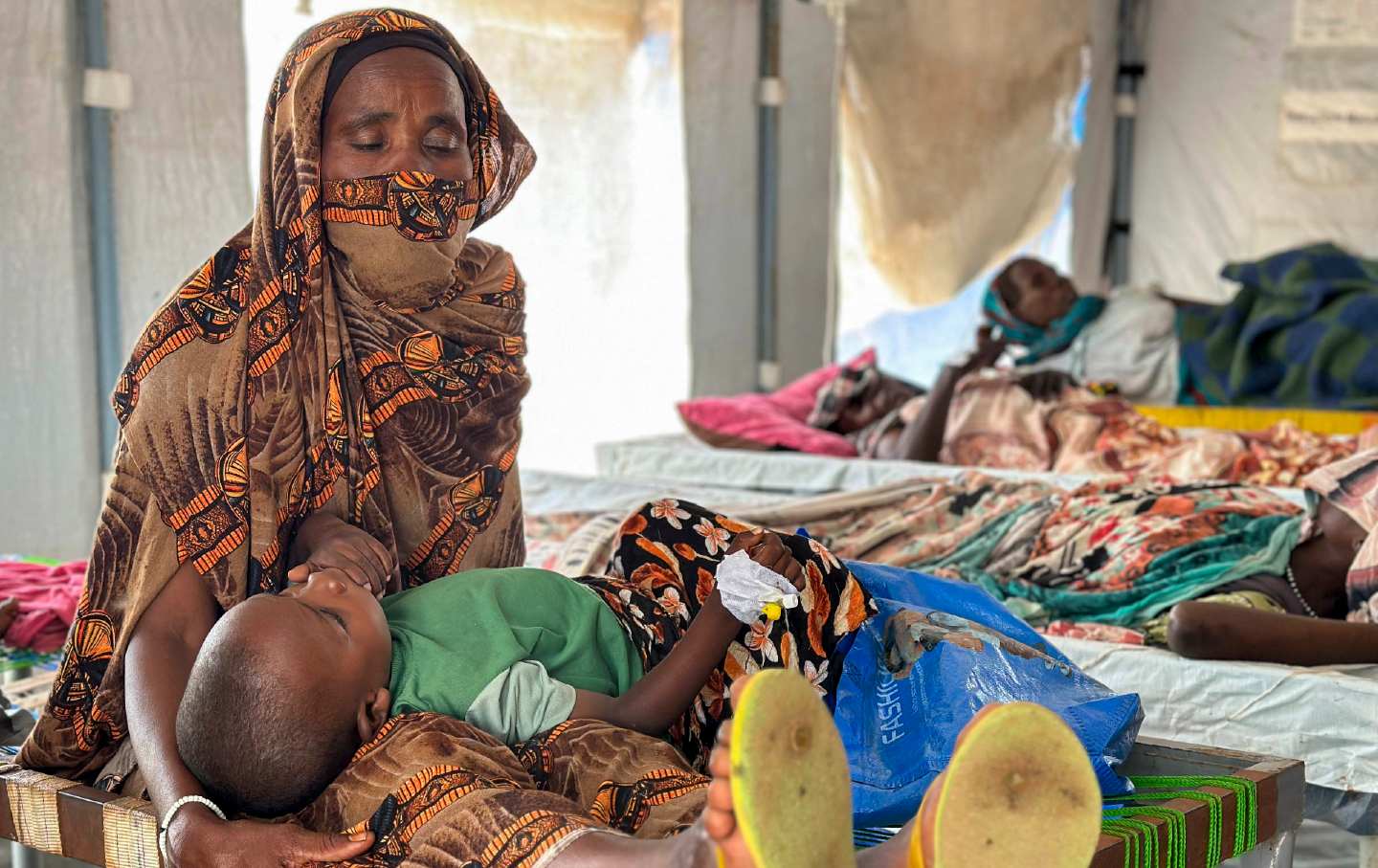
Cholera infected patients receive treatment at a refugee camp in the city of Tawila in Darfur.
(AFP via Getty Images)“Everyone left in El Fasher has changed,” said Ahmed Suleiman, who has seen more than 260 Rapid Support Forces (RSF) attacks since the paramilitary laid siege to North Darfur State’s capital. Three blood-soaked years after Sudan’s civil war broke out in April 2023, rates of infectious disease, displacement, and malnutrition have reached a fever pitch in the Darfur region—now a critical battle zone.
Suleiman, the program manager of the Darfur Organization for Development and Human Resources, has grown numb to the continuous artillery shelling and drone strikes, but he describes the ache of watching people die of hunger as cholera tears through an already weakened population. “There is a huge number of bodies,” he said, “scattered in open air, homes, inside water tanks within houses, and some bodies were not properly buried.”
Without any meaningful way to tamp down the spread of disease, the fighting in Sudan has created a perfect storm for cholera outbreaks, exacerbated by the severe lack of access to clean water and food for most residents of North Darfur. The region forms part of Sudan’s western frontier, known for its vast plains, jagged volcanic peaks to the south, and arid savannahs which blend into Libyan deserts to the north.
Since the fighting began, the number of cholera cases has risen at an alarming rate. Worsening famine, intensified by USAID cuts in a region where up to half of all international aid was American, have accelerated infection rates. The intestinal disease is marked by a severe and total depletion of salt and water in the body, and is called the “unrelenting killer” for its ability to spread rapidly, most often through contaminated water sources.
“Patients die of severe, unstoppable dehydration; there are tons of fluid in their bodies that they must expel with diarrhea. These are lives which can and should be saved with proper rehydration salts,” said Dr. Manal Shams Eldin, an epidemiologist and researcher with Doctors Without Borders. “It’s a sad disease, a disease of poor hygiene and no access to clean water.”
In 2003, rebels attacked the Sudanese government, protesting the marginalization of non-Arabs and launching the modern Darfur conflict. The Khartoum government’s response was to deploy the Janjaweed, an Arab militia that steamrolled Darfur. A ceasefire agreement in 2004 and international peacekeeping missions in 2008 and 2010 did little to slow the carnage. By 2014, the United Nations reported that more than 3,000 villages in Darfur had been razed and that rampant sexual violence, among other human rights violations, was pervasive.
The Janjaweed raids were notable for their brutal tactics, primarily targeting civilian villages. Following attacks by air, Janjaweed infantry rushed through towns, murdering men, raping women, and kidnapping children. Though international governments vehemently denounced the genocide, it took, by some estimates, over 10 years and more than 20,000 peacekeeping troops to curtail the violence. Millions of Sudanese have been displaced and hundreds of thousands were killed. Healthcare infrastructure was all but rubbed out and the march to recovery has been punishingly slow.
In April 2023, wavering efforts to rebuild infrastructure ground to a halt with the outbreak of the Sudanese civil war. North Darfur has been a strategic target for both warring factions in Sudan: the Sudanese Armed Forces (SAF) and the paramilitary RSF. Since May 2024, as reported by Al Jazeera, the RSF has maintained a bombardment of El Fasher, cutting off supply routes and trapping 260,000 people, 130,000 of whom are children. The military progress of the RSF has prevented sorely needed humanitarian aid from entering the city.
Dr. Mohamed Almahal, the Sudanese American Medical Association’s executive director, described a dire situation in western Sudan and efforts to help going in vain. “[El Fasher has] become a symbol of resilience for the Sudanese people who really don’t want [it] to fall to the RSF,” he said, referring to the continuing deadlock in the struggle. “Even military personnel are struggling without food, becoming completely exhausted. And for those stuck in El Fasher, there seems to be no hope on the horizon.”
Health systems were already groaning under the weight of entire towns annihilated by the fighting, but a series of targeted attacks on healthcare centers has left providers at a complete dead end. Heavy artillery strikes last October left the city an “open morgue,” with hospitals and shelters pulverized, according to the El Fasher Resistance Committees Coordination. Each blow leaves the region weaker and more vulnerable to food insecurity and health threats. In the months since, conditions in El Fasher have remained as dismal as ever, according to Almahal.
A state of famine in El Fasher and nearby displacement camps, such as Zamzam, is exacerbating the crisis faster than anyone can respond, said Almahal. The population, weakened, malnourished, and without access to clean water, has become a hotbed of cholera. “One confirmed case of cholera is enough to confirm an epidemic in [places like North Darfur],” she said. “Cholera can spread very quickly and can kill very quickly if not contained.” Targeted attacks on water, therefore, are functionally biowarfare, and Suleiman said that many of the sources have intentionally been “destroyed by drones.”
Dr. Almahal described a terrifying scale of suffering, with almost a total lack of access to basic services and lifesaving vaccines in Tawila, North Darfur. An identical situation has unfolded in El Fasher, with “most health facilities destroyed by the RSF [and an absolute lack of] essential drugs,” said Suleiman. Citizens can’t leave to seek treatments, he added. People are captive in El Fasher, as guards “check homes and return [citizens] to gathering sites while strictly guarded” to prevent escapes.
More than 14 million people have been displaced in this crisis, nearly twice the population of New York City. And yet, international sanctions have been futile. Secretary of State Anthony Blinken’s calls to end the fighting in 2024 seemed to be shouts into the abyss as the war raged on. Currently, The Trump administration is maintaining sanctions on the RSF in stated opposition of the group’s systematic use of murder and rape as tactics in the war. The RSF has responded by attempting to prove connections between the SAF and Islamist organizations that the US labels as terrorists, putting pressure on any American support to the Port Sudan–based government.
Popular
“swipe left below to view more authors”Swipe →In the meantime, without any resources, Ahmed Suleiman and his colleagues are fighting a losing battle. Given the scarcity of basic medicines, food stuffs, and treatment tools, Almahal believes that working with local partners is critical for all humanitarian agencies trying to get resources into the war zones. Vaccines and Ringer’s lactate, an intravenous fluid proven to effectively rehydrate cholera patients, are relatively inexpensive ways to curtail and treat the disease. In September, the World Health Organization kicked off a campaign to vaccinate nearly 2 million people against cholera in six Darfur localities. Despite rehydration efforts, the cholera outbreak continues to swell during the rainy season, which lasts from about June to September.
But food insecurity has been the top concern for those in El Fasher. “Even money can’t get you anywhere,” said Almahal. “No one has any food. It’s a very sad thing.” The complexities of delivering aid in a war zone are undeniable. “Things become difficult because there are many groups in power,” said Almahal. “When delivering Ringer’s lactate in Tawila, we must seek permission from the RSF and the Abdul Wahid group,” another rebel faction, which belongs to the Sudanese Liberation Movement. In El Fasher, local volunteers struck deals with RSF soldiers to bring food to the city. “We provide them with salt and flour,” said Almahal. “It’s such a simple thing that it can be brought into the city without trouble.”
The situation in North Darfur is even more difficult. “The distribution itself occurs in a very challenging environment,” Almahal said, citing shelling and armed militia members. “Local partners are under direct threat for their lives.” Women and children in North Darfur are extremely vulnerable. They are raped, beaten, and killed, by many accounts. Almahal calls it “death without dignity.” He mentioned a recent killing in which a woman was crucified in Darfur. Suleiman has heard reports of women abducted by the RSF in El Fasher. Such war crimes are breaking down the morale of those stuck in siege.
Almahal believes the world needs to see what is happening in Sudan, saying that calls for accountability on a global stage are the only means for survival. “Where is the humanity? We set standards for international humanitarian law. But when these laws are tested, we fail.”
More from The Nation

Japan’s Far Right Is Courting Young Voters Japan’s Far Right Is Courting Young Voters
Sanseitō has attracted young voters through a robust social-media strategy, Charlie Kirk–like public speaking events, and anti-establishment messaging.
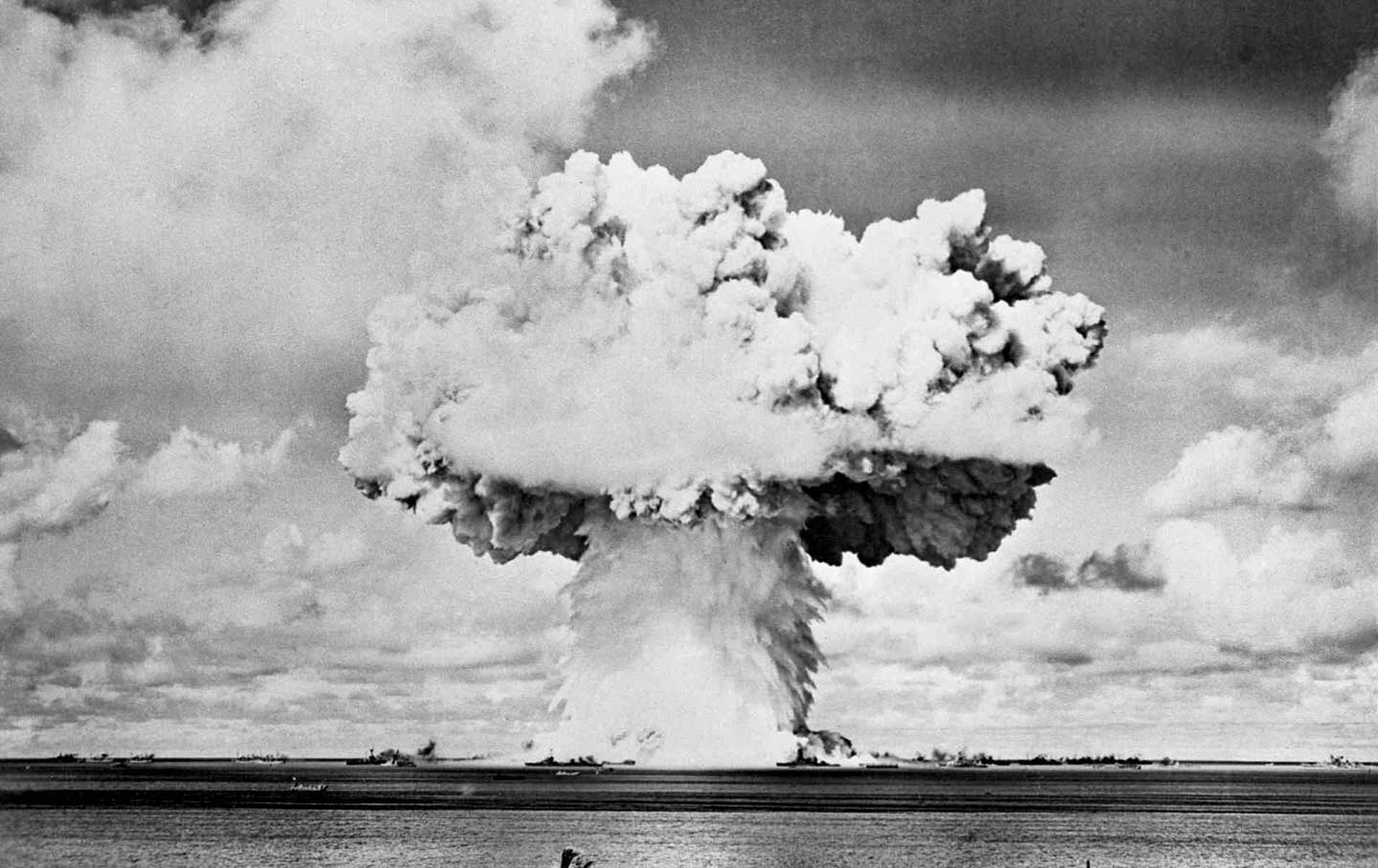
This AI Panic Is Nothing New This AI Panic Is Nothing New
In the 1940s, The Nation asked questions about the atomic bomb we’re asking of artificial intelligence today.

The Decades-Old Roots of Trump’s War on Iran The Decades-Old Roots of Trump’s War on Iran
An interview with historian Behrooz Ghamari-Tabrizi about the generations of US presidents who have tried to destroy the Iranian regime.
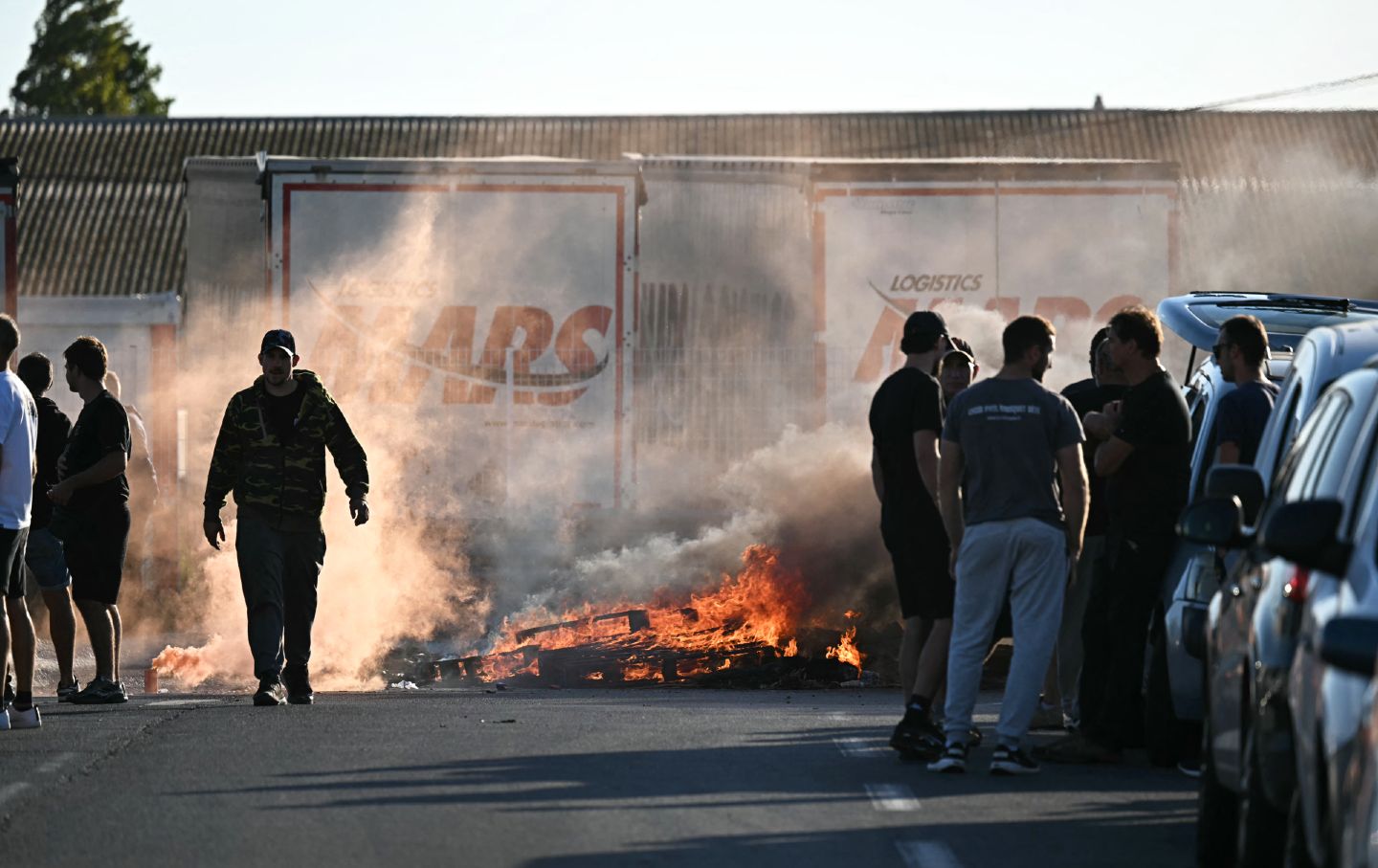
Emmanuel Macron’s Turbulent Exit Emmanuel Macron’s Turbulent Exit
Between a budget crisis and a cost-of-living squeeze, Macron is leaving a country feeling more insecure than ever—and ready to take to the streets.
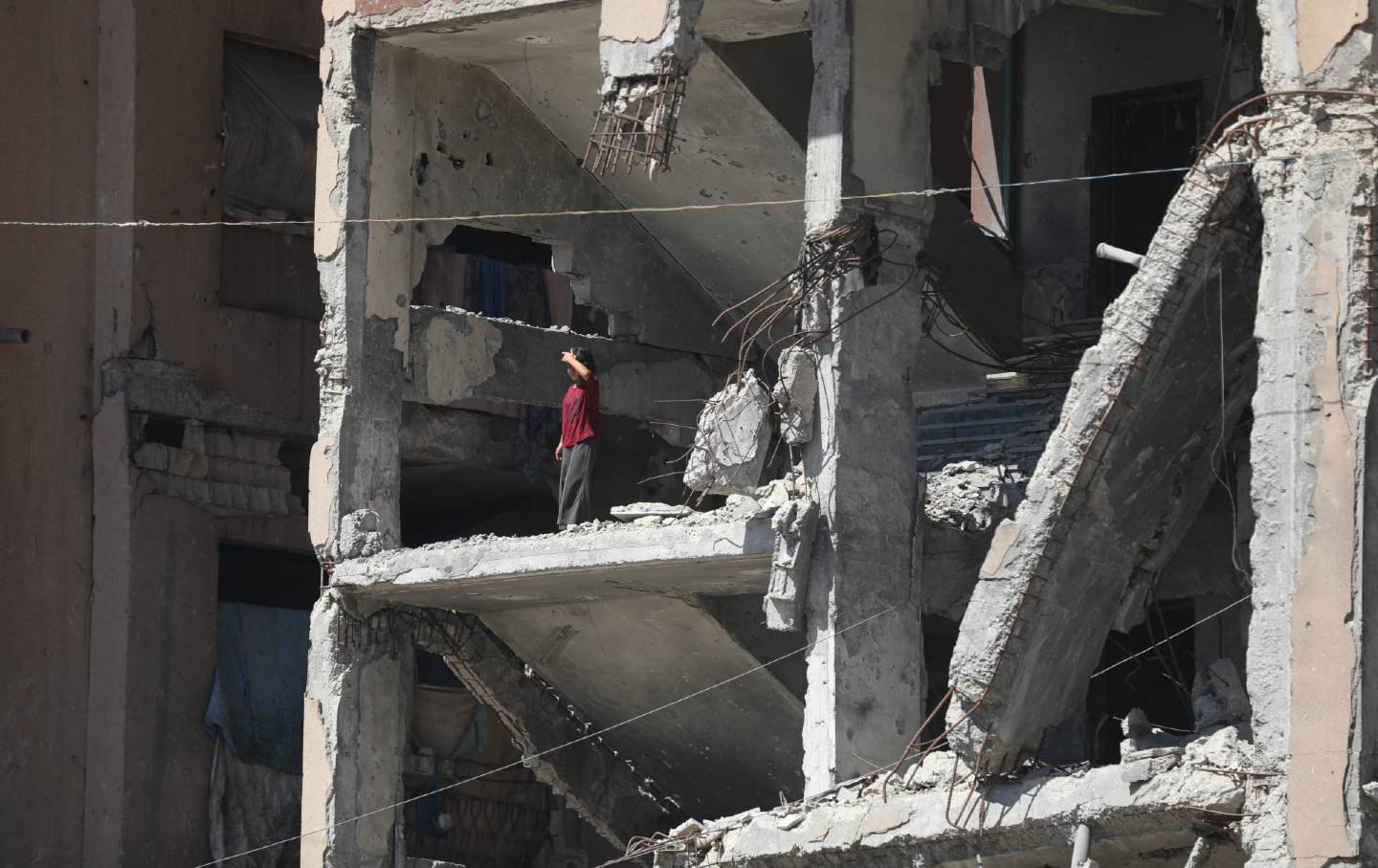
Israel’s Election Can’t Fix What Netanyahu Broke Israel’s Election Can’t Fix What Netanyahu Broke
The fundamental problem is not the name of the prime minister, but rather the actions of the Israeli government and the urgent issues that need to be addressed.

The AfD’s Rise Isn’t Just About East Germany The AfD’s Rise Isn’t Just About East Germany
The Alternative für Deutschland has a stable national poll lead, including in the former West Germany. Its rise owes to much more than Eastern grievances.

