Letters From the December 2026 Issue
True progress… A willful blilndness… Correction…
True Progress
Your special issue on the US semiquincentennial brilliantly reminds us that America remains an unfinished project [“250 Years in Search of a More Perfect Union,” July/August 2026].
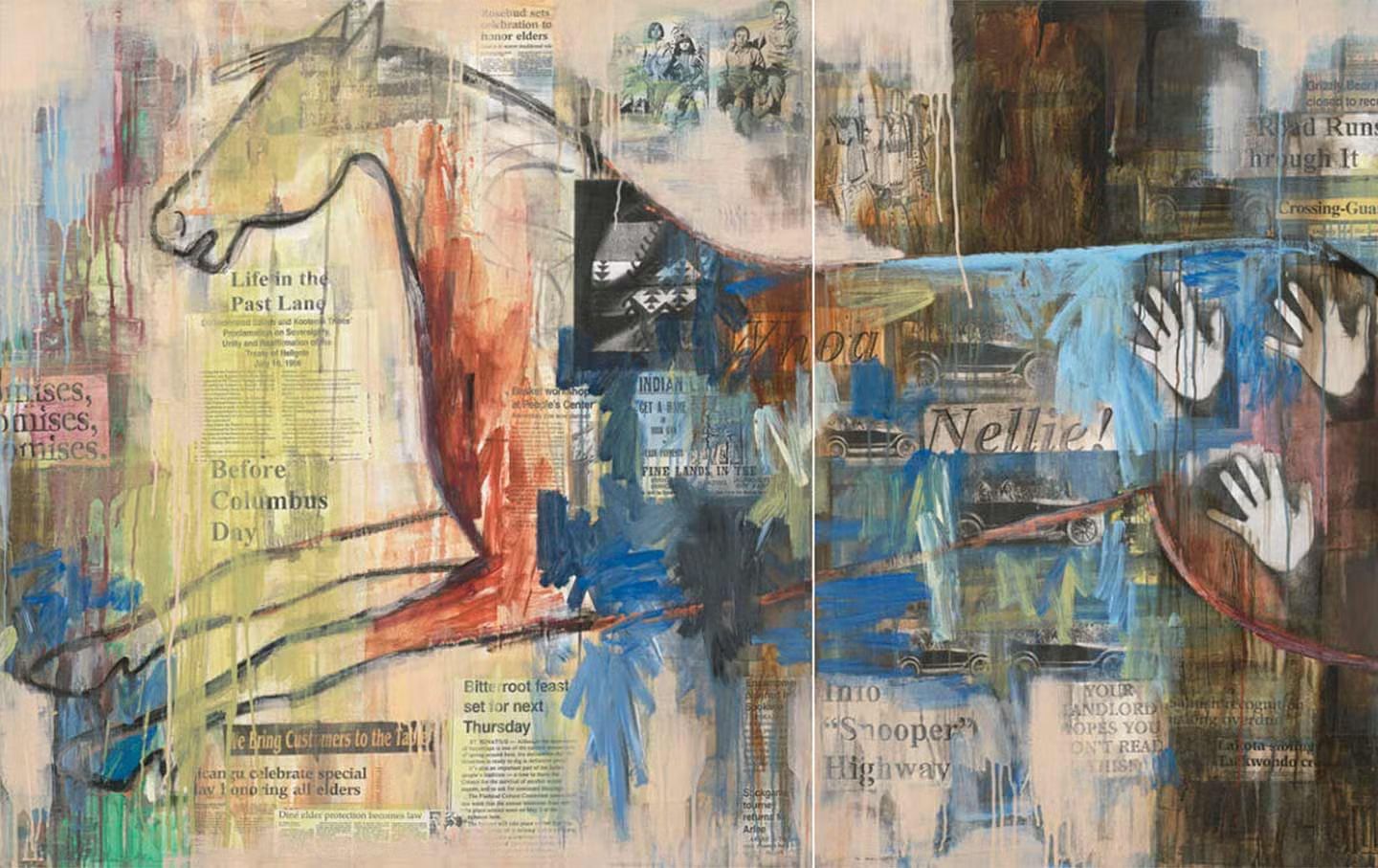
Contributors Simon Moya-Smith [“Murderers Most Foul”] and Gerald Horne [“Banquo’s Ghost”] expose the brutal truths underlying our national myths. In his review of Joseph Ellis’s The Great Contradiction: The Tragic Side of the American Founding, Horne writes, “Much like Macbeth and Banquo’s ghost, Ellis concedes, the nation cannot evade the tragedy preordained at its founding”—specifically, as Ellis puts it, the “failure to end slavery, and the failure to avoid Indian removal.” True progress requires confronting these foundational failures directly rather than erasing them from our narrative.
Brij Mohan
santa barbara, california
A Willful Blindness
I believe that The Nation erred by publishing an advertisement from the Citizens Commission on Human Rights (CCHR) [July/August 2026]. That ad promotes a very misleading video titled “Prescription for Violence: Psychiatry’s Deadly Side Effects,” which demonstrates a willful blindness to important facts. It decries gun violence by patients with a wide variety of mental illnesses but blames their medications for the violence. But what’s most problematic about the ad is that it fails to identify the real cause of increased shootings: the broad and easy availability of high-capacity-magazine firearms. Its video also omits researchers’ recommendation for a public-health approach to gun violence via limiting people’s access to such high-capacity firearms. Instead, the video features plaintiffs’ attorneys reading medications’ “black box” warning language as if the effects it describes are typical, when in fact it describes atypical outlier events and psychiatrists can successfully treat most of these patients.
My perspective is informed by more than three decades as a career “academic” emergency physician at urban trauma centers, where I’ve treated many patients whose psychiatric symptoms reemerged because they self-discontinued the very medications that were successfully remediating their psychiatric disorders. I’ve also treated many gun-violence victims.
It’s a bad idea to give matches to an arsonist. But that’s effectively what The Nation has done by publishing CCHR’s ad. It should not appear in future issues.
Gary Gaddis, MD, PhD
university city, missouri
Correction
Due to an editing error, the state represented by Jesse Helms was misnamed in “Our Unalienable Right,” by Regina Mahone [July/August 2026]. He was a senator from North Carolina, not South Carolina.