
Abortion Has Always Been an American Tradition
More than one founding father knew that to be truly free, women needed control over their reproduction.
Abortion is older than America, but for the past 250 years, the ability to access it has almost always depended on one’s own ingenuity. Healthcare, including reproductive healthcare, was never promised by the founding fathers. Sure, they suggested that we all deserve “life, liberty, and the pursuit of happiness.” But the devil is in the details: The colonizers who made that promise in 1776 would go on to commit horrific atrocities and cruel acts of violence and genocide against Native Americans and enslaved Africans over the next century. The only “life” they were referencing in the preamble to the Declaration of Independence was their own.
For thousands of years before those colonizers set foot on what would become the contiguous United States, people here and around the world used medicinal herbs and plants such as bear root and juniper to stop or prevent pregnancies. As Renee Bracey Sherman, my coauthor on the book Liberating Abortion, points out, the earth provided them with what they needed to control their reproduction. We found while conducting research for our book that people did not consider these terminations to be abortions as we think of them today, but rather a process for “restoring the menses.” The misogynistic argument that an embryo or fetus had a “right to life”—an idea that is not unlike the European colonists’ belief that they had a right to steal land that wasn’t theirs—was nonexistent.
But these abortion practices are also not as ancient as they may sound. In the 19th century, Indigenous people in what is now southern Montana used medicinal plants like calamus and horsetail to end undesirable pregnancies—for example, during brutal winters when it was too cumbersome to carry a pregnancy, or when the woman was ill. Enslaved Black women throughout the South notoriously chewed cotton-root bark to end or prevent pregnancies and experience some modicum of dignity in the atrocious system of chattel slavery and forced reproduction. Abortion has been a part of US history for as long as women have been.
250 Years of Searching for a More Perfect Union
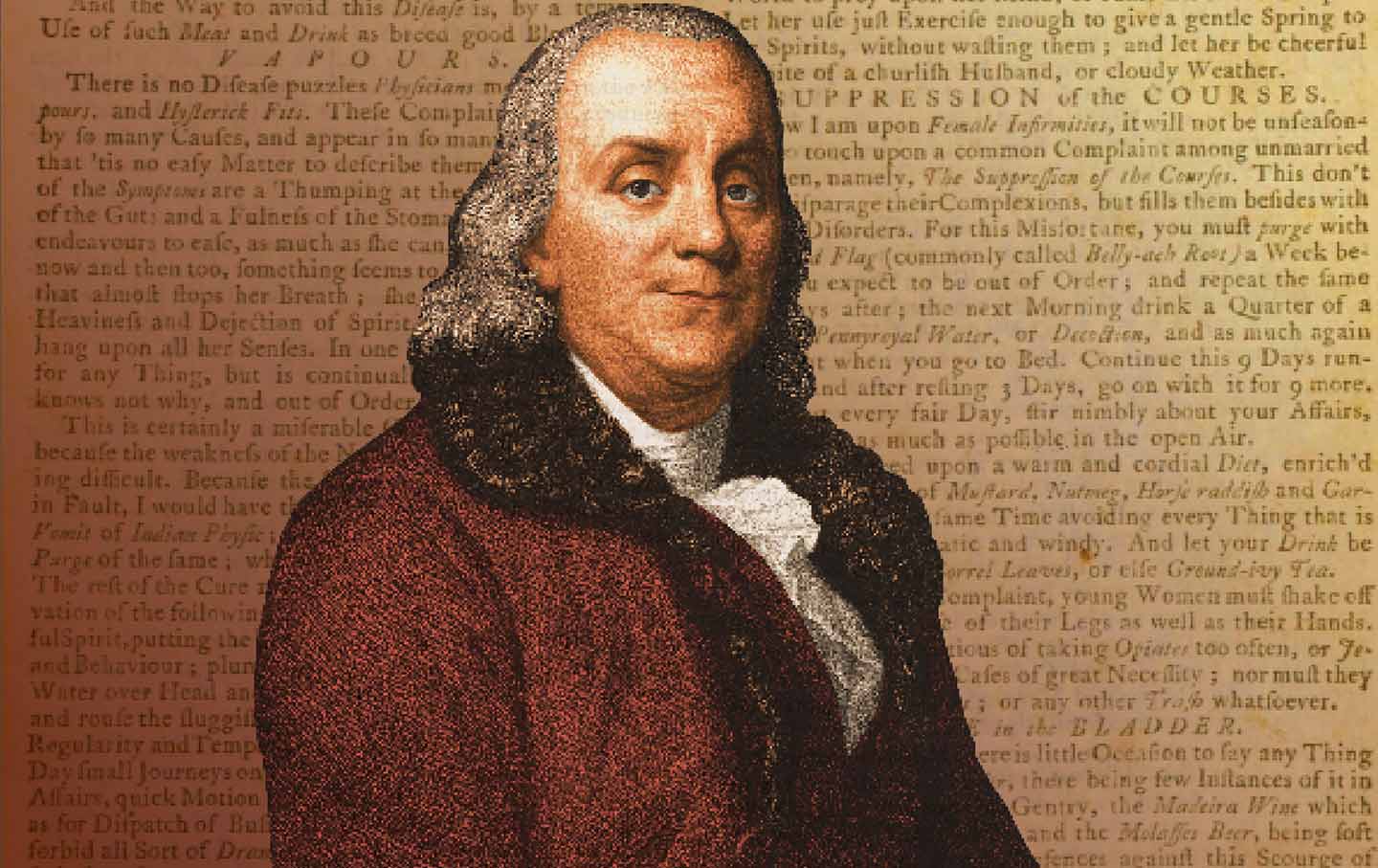
There are two founding fathers who seemed to understand this need—that abortion was essential to the exercise of our unalienable rights. Benjamin Franklin, the US Postal Service’s first leader, included an abortion recipe in The American Instructor, his 1748 reprint of a popular British textbook that offered guidance on basic tasks and subjects, including arithmetic and writing. In 1792, when Thomas Jefferson’s daughter Martha gave her cousin Nancy gum of guaiacum “to produce an abortion”—because Nancy had been impregnated by her sister’s husband—and had to testify in court about her involvement, Jefferson wrote in a letter to his daughter, “I see guilt but in one person, and not in her.” He added that his abortion-providing daughter was “on firm ground” and that he should “be made very happy if you are the instrument not only of supporting the spirits of your afflicted friend under the weight bearing on them, but of preserving her in the peace and love of her friends.”
That’s the thing about abortion: It is always necessary, whether it’s because the pregnant person needs one or because they want one. But care has never been guaranteed in America, not even under Roe v. Wade, despite being essential to a functioning democracy and gender equality.
The effort to control who could have or provide abortions began in earnest in the mid-1800s, when the American Medical Association started a campaign against them, led by the anti-immigrant zealot Horatio Storer, that promoted the notion that “the child is alive from the moment of conception,” and when the Catholic Church shifted its stance from tolerating abortions prior to “quickening”—when the pregnant person feels fetal movement—to condemning them. The resulting tug-of-war culminated in the US Supreme Court ruling in favor of a national right to abortion in the landmark 1973 Roe v. Wade decision. But anti-abortion lawmakers immediately started to chip away at that right: The same year that Roe was decided, North Carolina Senator Jesse Helms introduced an amendment to ban federal foreign aid from being used to pay for abortions elsewhere in the world, and congresspeople—including Illinois Representative Henry Hyde—began floating a proposal to bar federally funded insurance programs from covering abortions in the US, as Amy Littlefield reports in her book Killers of Roe. In 1977, these anti-abortion lawmakers got their wish, and the Hyde Amendment went into effect. Soon thereafter, Littlefield writes, the pro-choice movement pivoted away from demanding that Medicaid cover abortions to focus instead on general threats to access. They relied on the courts to protect nationwide access—a strategy that failed them.
After the Supreme Court ended the constitutional right to abortion with its 2022 Dobbs v. Jackson Women’s Health Organization decision, and more than a dozen states moved to enact total abortion bans, many political observers argued that the complacency of the broader base of abortion-rights supporters played a major role in how we arrived at our current crisis. The challenge for movement leaders has been to keep the public engaged on this issue, particularly as news coverage has dried up.
Further, as Molly Murphy, president of the polling firm Impact Research, who studies public opinion on a range of issues affecting families, explained recently, people in the political center tend to think that the post-Dobbs laws work well enough, with some exceptions, such as Texas’s more prohibitive laws (if they are aware of the state laws at all). These voters tend to believe that what happened to the women who have suffered under abortion bans won’t happen to them. “They might worry that things are going to happen,” Murphy said at a gathering of abortion storytellers and advocates in March, “but telling people that something bad might happen in the future is really hard to persuade people on,” as opposed to talking to them about current realities. This is how we end up with a situation in which 38 percent of the voters who supported Donald Trump—protector of women “whether the women like it or not”—in the 2024 election also believe in the right to abortion.
Giving people access to hear or read stories about how state restrictions effectively amount to a total ban is crucial, Murphy told me. “People really don’t like bans, and then there’s a whole lot of gray area in between on the number of weeks or the circumstances or where or whether there are exemptions. I think that hearing from people that they are in fact having their rights banned—even if, on paper, what people would say is ‘Oh, it’s 12 weeks, that’s very reasonable,’ or whatever—[is why] storytelling matters a lot.”
But it is less clear to me whether stories can disarm one of the worst of America’s founding principles, American exceptionalism—especially when the stories may reinforce, for some listeners, narratives that they’ve been told about how the pregnant person, and not the system, is responsible for the suffering that they were forced to endure.
For 250 years, America has failed to treat women as though they were equal to men. If we were truly considered as such, abortion would be as easy to access as ibuprofen, because it’s just that common and essential to our ability—as well as the ability of trans and gender-nonconforming people who need abortions—to participate fully in society and our democracy. Instead, America has weaponized abortion access, setting limits around when we can exercise our reproductive rights. It’s a system in which those who can find a way to get their abortions will get them, and everyone else must make do, no matter what “making do” actually means. And because some people have succeeded at getting care, we can, as a country, excuse this system for not working for everyone. That’s just how it’s always been.
“We do, as a country, rally around self-reliance, and I think that’s a big part of it,” Murphy said when I asked her why it sometimes feels like our stories are not enough to successfully address issues like abortion access and the maternal healthcare crisis as the structural problems that they are. “When it comes to women having kids, we beatify mothers and say, ‘You’re so amazing and self-sacrificing’ and all of these things, and it allows society to not then try to support them.” This belief system is also rooted in anti-Black racism, because not all people are seen as deserving of support.
We have known for decades that abortion bans kill people, especially women of color. In 1977, a young woman in McAllen, Texas, named Rosie Jiménez was the first person confirmed by the Centers for Disease Control and Prevention to have died as a direct result of the Hyde Amendment. Her two previous abortions were covered under Medicaid, but Rosie became pregnant again one month after the amendment went into effect in her state. When her provider denied her care, the 27-year-old mother of a 4-year-old sought an illegal abortion and died from septic shock after a botched procedure, leaving behind a $700 financial-aid check that she had planned to use to further her education and build a better life than the one her parents, migrant farmworkers, could give her. After Rosie died, national reproductive-rights organizations initially organized against Hyde, as Littlefield’s Killers of Roe details, calling the amendment a blatant attack on the poor. (If Rosie had been in a different income bracket, she might have been able, as some women do, to travel out of state for her procedure.) Yet not only has the Hyde Amendment continued to reign, but anti-abortion lawmakers have gotten even more creative in their efforts to ban abortion and gender-affirming care through government insurance programs.
Meanwhile, people and their families continue to suffer. In the summer of 2022, Amber Nicole Thurman sought an abortion because, much like Rosie, she understood that she couldn’t handle another child, let alone twins, while she attended nursing school. After her medication abortion, which Amber had to get out of state because of the near-total ban on abortion in her home state of Georgia, the 28-year-old mother of a 6-year-old son suffered a rare complication—but the hospital providers near her home delayed the routine abortion procedure she needed to clear her uterus of tissue that had remained in her body after she took the medication. By the time they did perform the procedure, it was too late: Amber died after developing sepsis.
Amber’s mother, Shanette Williams, has been speaking out about her daughter’s unjust death ever since the 2024 presidential race, and today she is fighting alongside Democratic leaders to build support in Georgia for the Reproductive Freedom Act, which would restore and expand reproductive rights in the state, including protecting access to abortion care.
I first heard Williams share her story in Austin, Texas, in early 2025. Her family had learned that Amber’s death was preventable only after an investigation by ProPublica. When I caught up with Williams at the storytelling convening in March, I could sense her frustration about the moment we are living through. She told me that when she visits her daughter’s grave site, “It’s upsetting to me that I can’t tell her anything different, that I can’t tell her we have a win…. My baby is in the grave,” she added, “and while we’re smiling, on the inside I am saying, ‘What am I smiling for? I’m not happy—I’m not happy about what I see.’” Still, she continues to fight for justice for her daughter, speaking out against Georgia’s extreme abortion ban. “Every time I’m at that grave, I hear my baby tell me, ‘Don’t stop, don’t quit, keep going,’” Williams said.
It’s a message that all of us should heed. Sharing and amplifying such stories is an important step. But even more, we need to rebuild the healthcare system so that it never again allows care for some at the expense of care for others. Because until we can treat women—Black women, trans people, young people—and everyone in our society who has been denied equal rights as deserving of “life, liberty, and the pursuit of happiness,” none of us will ever be truly free.
Correction: A previous version of this article misidentified the state that Senator Jesse Helms represents.
More from The Nation

The Jewish Case Against AI The Jewish Case Against AI
Haredi rabbis and the secular left agree: This technology is a threat to the entire social fabric.
The Fight for Educational Equality Is Also a Fight for a Just Supreme Court The Fight for Educational Equality Is Also a Fight for a Just Supreme Court
The court has severely weakened our ability to make an education system that fulfills the promise of Brown.
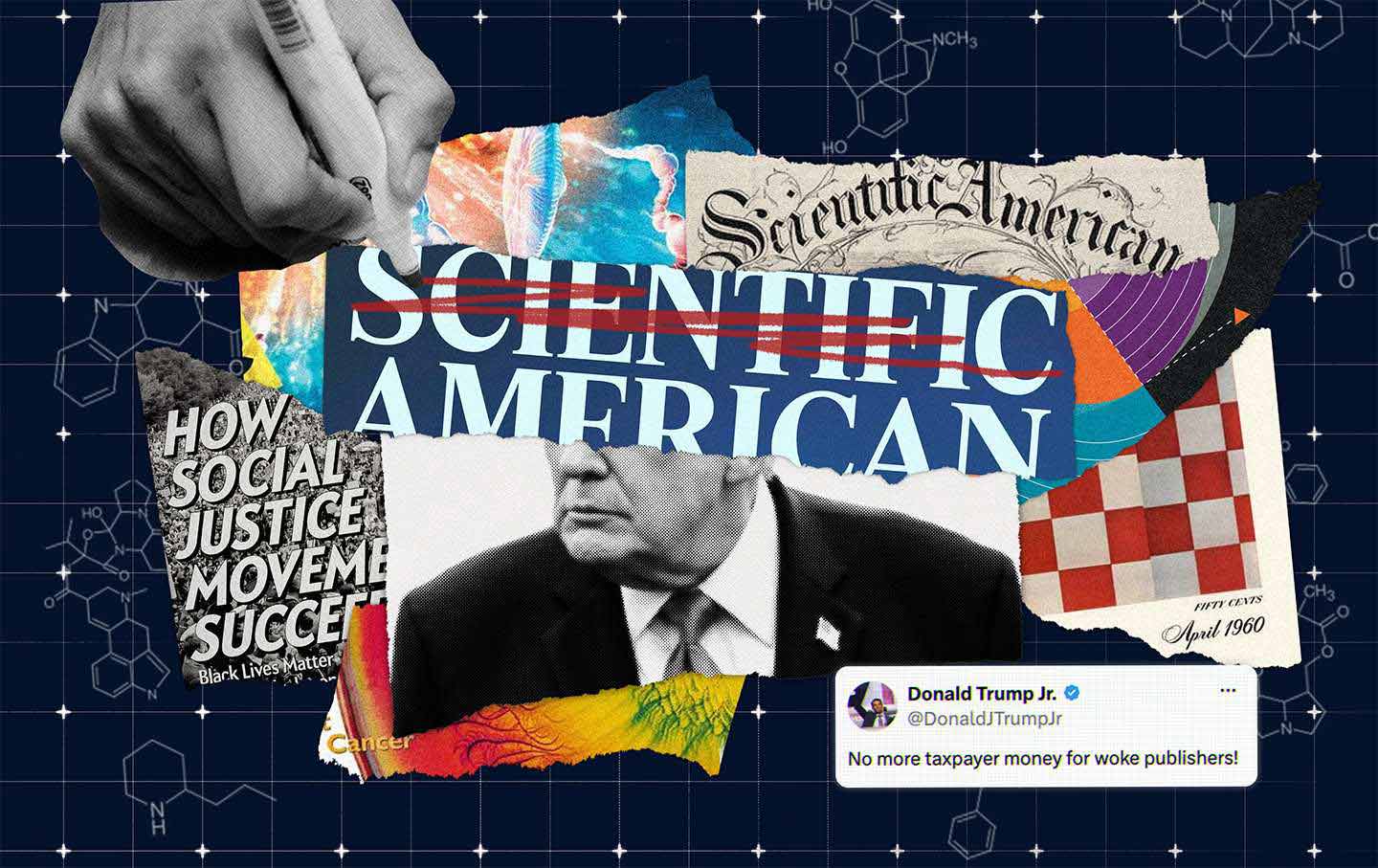
The Fall of “Scientific American” The Fall of “Scientific American”
When the beloved science publication got too political, its corporate owners stepped in. Now its future is uncertain.

The Bookstore Revolution in Taiwan’s Conservative Heartlands The Bookstore Revolution in Taiwan’s Conservative Heartlands
After Taiwan legalized same-sex marriage, gender-themed bookstores are working to build the social acceptance that the law alone couldn’t deliver.
Jalen Hurts Deserved Better. We All Do. Jalen Hurts Deserved Better. We All Do.
In a country that treats workers as expendable parts, Hurts’s playing through a blood clot is just the highest-profile example of the price workers pay in an oligarchy.
The Terrifying Future of States’ Criminalizing Pregnant People Is Already Here The Terrifying Future of States’ Criminalizing Pregnant People Is Already Here
The idea of charging people who have abortions with murder is gaining traction on the right. But a report finds that people are already being prosecuted for their pregnancy outcom...

