
We Could Do Worse Than Kash Patel Being a Drunken Buffoon
If the FBI director’s alleged intoxication prevents him from carrying out Trump’s agenda, that might not be such a bad thing.
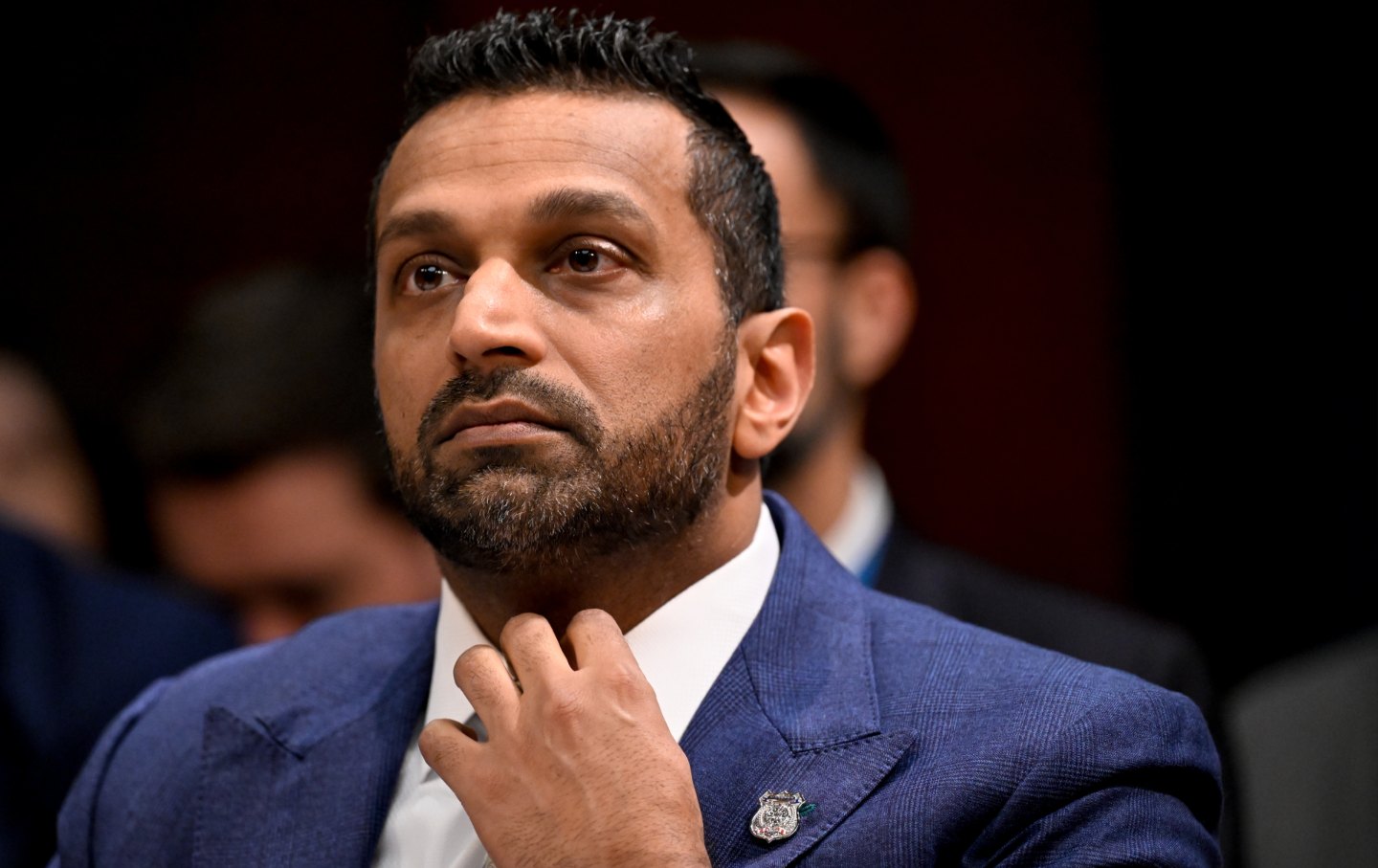
Normally, SWAT teams rely on specialized “breaching equipment” to break down the doors in an emergency where criminals are hunkered down in a heavily fortified bunker. But last year, FBI agents reportedly almost used breaching equipment not to capture a dangerous lawbreaker but to try to wake up their boss, Kash Patel.
On Friday, Sarah Fitzpatrick, writing in The Atlantic, reported that the FBI director has frequently been so incapacitated by heavy drinking that he has been unable to do his job. According to Fitzpatrick, “On multiple occasions in the past year, members of his security detail had difficulty waking Patel because he was seemingly intoxicated…. A request for ‘breaching equipment’…was made last year because Patel had been unreachable behind locked doors.”
Fitzpatrick’s article, which is based on interviews with numerous government officials who were granted anonymity, paints a detailed and troubling portrait of a senior public official prone to “conspicuous inebriation and unexplained absences.” Fitzpatrick notes,
Several officials told me that Patel’s drinking has been a recurring source of concern across the government. They said that he is known to drink to the point of obvious intoxication, in many cases at the private club Ned’s in Washington, D.C., while in the presence of White House and other administration staff. He is also known to drink to excess at the Poodle Room, in Las Vegas, where he frequently spends parts of his weekends. Early in his tenure, meetings and briefings had to be rescheduled for later in the day as a result of his alcohol-fueled nights, six current and former officials and others familiar with Patel’s schedule told me.
Both the White House and Patel have disputed the entirety of Fitzpatrick’s reporting, and on Monday morning, Patel filed a $250 million defamation lawsuit against The Atlantic over her piece. But even before the Atlantic story, there was already ample public evidence that Patel is wildly unfit for the job. He has repeatedly damaged high-profile cases, such as the Charlie Kirk murder investigation, by making premature and false statements in an attempt to hog the media spotlight. He has also been accused of using a FBI jet for private business, including meetings with his girlfriend.
There is no question that Patel is a buffoon. The only factual uncertainty is whether he is an often-soused buffoon or a largely sober one.
Patel is already on thin ice at the White House since his incompetence has been derided by Republicans as well as Democrats. The Atlantic exposé is perfectly pitched to tip things over the edge and get him fired, given that substance abuse is one of the few transgressions that Donald Trump, famously a lifelong teetotaler who watched his older brother, Fred Trump Jr., drink himself to death, cannot abide in his underlings. This helps explain why Patel has reacted to it with fierce indignation.
But while Patel’s alleged drinking problem is a potential disaster for him, it might ironically turn out to be good news for the rest of us. That’s because anything that hampers Patel’s ability to execute Trump’s agenda is probably a net bonus—particularly since the president is eager to turn the FBI into a private police force that punishes his political foes.
In truth, Patel, whether drunk or sober, has been all too effective in reshaping the FBI along Trumpian lines. In January, The New York Times published an extensive report, based on interviews with 45 current and former FBI employees, that made clear that under Patel’s leadership the agency has become deeply partisan.
The two big changes are in the FBI’s mandate and in personnel. As the Times notes, under Patel’s predecessor Chris Wray (who had been appointed by Trump in 2017), the FBI had eight major goals: “combating terrorism, organized crime, espionage, public corruption, white-collar crime, cybercrime and violent crime, as well as protecting civil rights.” Under Patel, there are four major priorities: “defend the homeland, rebuild public trust, crush violent crime and ensure fierce organizational accountability.”
Disturbingly, two of those priorities (rebuilding public trust and fierce organizational accountability) are nothing more than euphemisms for firing FBI agents on political grounds. Meanwhile, “defend the homeland” has meant turning the FBI into an accessory of ICE in the immigration crackdown.
During the Senate hearings to confirm his nomination, Patel was asked if he would fire agents who had been assigned to investigate Donald Trump. Patel responded that “no one will be terminated for case assignments.”
Patel was lying. He has, in fact, fired numerous agents on political grounds. As the Times documents, agents have been fired or forced to quit for being assigned to work on the January 6 investigation and various other Trump-related investigations. One agent, David Maltinsky, was fired for having a Pride flag on his desk, something he had previously been assured by his supervisor was acceptable. A group of agents was fired for kneeling during a Black Lives Matter protest, which they did to defuse tensions. Spencer Evans, who ran the Las Vegas field office, was fired because a podcaster criticized him for being too rigorous in demanding Covid tests from agents.
Jill Fields, a former supervisory intelligence analyst for violent crime in the Los Angeles field office, was forced to quit because she resisted superiors who wanted to target lawful anti-ICE protesters. Fields’s account of her experience is striking:
Popular
“swipe left below to view more authors”Swipe →I was ordered to have members of my team run a preassessment on some anti-ICE protesters who allegedly had impeded an immigration arrest. F.B.I. policy says that an investigation can’t be opened based on First Amendment-protected activity. The investigative team who analyzed the video determined that the protesters had done nothing wrong; the officers told them to stay back, and they did.
I was told they had to open an investigation anyway. I pushed back, and they said, Jill, you can either get fired today, or you can get fired in four years—meaning when another administration comes in and starts looking into constitutional violations. And I was like: Then fire me today.
As Fields and other former FBI agents make clear, Patel has turned the FBI, which was already a conservative institution, into a dangerously right-wing agency, one with tremendous power to hurt political enemies. Focused on punishing Trump’s opponents (real or imagined), Patel’s FBI is also incapacitated in dealing with real problems, whether it be political corruption, organized crime, or terrorism.
Trump may well fire Patel soon, but the damage done will outlive Patel’s tenure because it has the full support of the president and the GOP. The real problem is not Patel’s alleged inebriation but the deep corruption of the most important law enforcement agency in the country.
Become a Sustaining Donor This September
Between the reemergence of right-wing red-baiting and Donald Trump’s use of the chilling National Security Presidential Memorandum–7 to criminalize left political organizing, we’re seeing McCarthyism reborn before our eyes.
This assault on democracy cannot be ignored or wished away. Resisting it requires bravery in the face of threats and repression, a steadfast commitment to the truth, and the unwavering belief that we can—and will—overcome this darkness.
We must have an independent media that sets the record straight, unearths corruption and abuses of power, and advances a politics of justice and dignity for all if we’re to win this fight.
That’s why I’m writing to you today. This September, The Nation needs to add 100 monthly donors to sustain our progressive journalism. Your contribution makes the next investigative report, the next truth-speaking column, and the next pathbreaking essay all possible.
I hope you’ll support our work with a recurring donation today. If you donate $10 or more a month, we’ll send you a brand new “Hands Off the Free Press!” sticker to recognise your commitment to our cause. Please, donate today.
Onward,
Katrina vanden Heuvel
Editor and Publisher, The Nation
More from The Nation
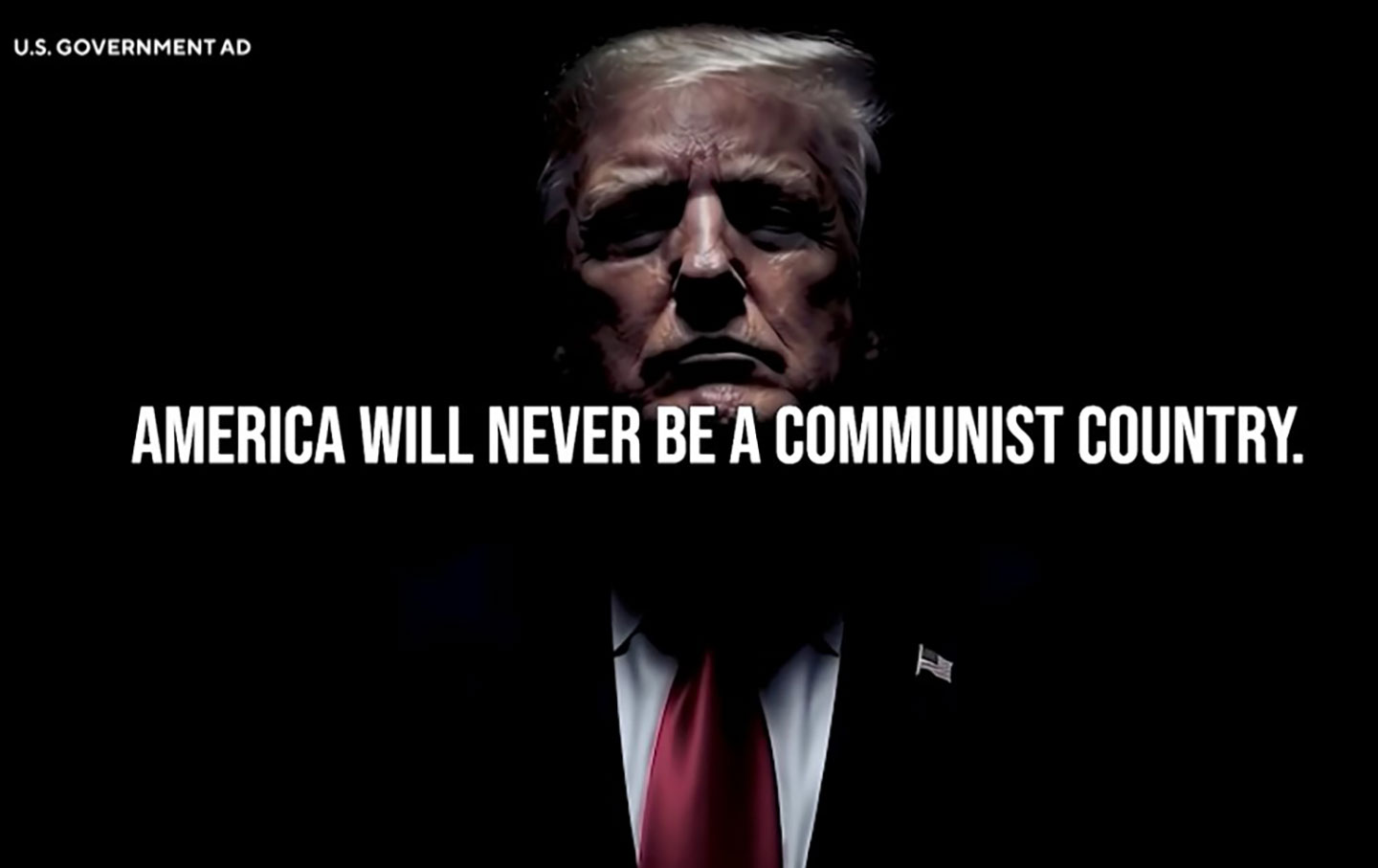
Trump Is Using Your Taxpayer Money to Pay for Illegal Election Propaganda Trump Is Using Your Taxpayer Money to Pay for Illegal Election Propaganda
But as brazen and authoritarian as these ad spots are, they seem likely to backfire.

Clavicular’s Charges Are One Thing. Rape Culture Is Another. Clavicular’s Charges Are One Thing. Rape Culture Is Another.
Braden Peters consistently acts as though the autonomy of women is a maladaptive trait, and dogmatically dismisses any claim to female equality as an outlying aberration.
Kimberly Guilfoyle Is a Master of Mafia Diplomacy Kimberly Guilfoyle Is a Master of Mafia Diplomacy
The US Ambassador to Greece is making suspicious deals for her buddies.
Missing Guardrails for AI Missing Guardrails for AI
Trump ignores the threat of extinction.

