The “Petroleum Mafia” Takes On COP31
How consensus decision-making doomed yet another UN climate summit.
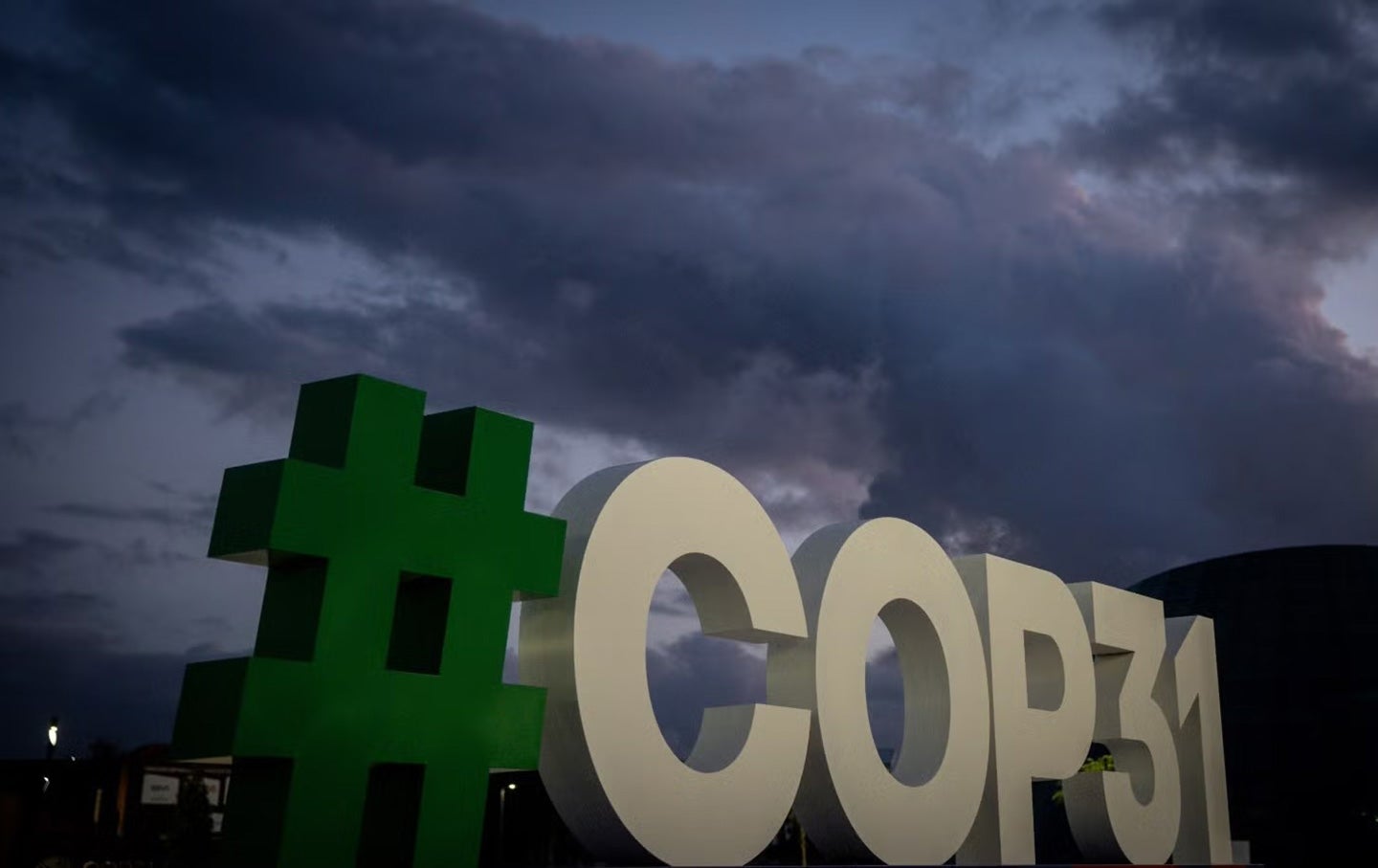
Breakdown. Collapse. Failure. Those were some of the words that media coverage used to describe last week’s COP31 UN climate summit in Antalya, Turkey. The talks ended in acrimony and finger-pointing after the nearly 200 participating nations could not reach consensus on how to advance the official mission of these annual summits: to protect humanity from “dangerous” amounts of man-made global warming.
Most news coverage also identified the main reason for the lack of consensus. As Reuters reported, Saudi Arabia “was at the forefront of resisting language on reducing reliance on fossil fuels,” even as “the European Union, several small island states, and other nations particularly vulnerable to climate change said they could not accept a text that failed to mention the oil, gas, and coal that scientists say drive global warming.”
Coming on the heels of a summer that featured 50,000 excess heat deaths across Europe and a glacial collapse in Nepal that killed at least 7,000 people and wiped out 10 percent of the country’s gross national product in the space of minutes, the failure to highlight fossil fuels’ role in the climate emergency unleashed both derision and dismay. “A climate deal that leaves out fossil fuels is like a plan to quit smoking that never mentions cigarettes,” commented Katharine Hayhoe, the chief scientist at the NGO The Nature Conservancy.
Murat Kurum, Turkey’s environment minister and COP31 copresident, opened the final day of talks by declaring that “a historic decision” was in the offing. What followed was historic, alright, though not in the way Kurum hoped. This COP marked only the second time in the 31-year history of these summits that no final agreement (known in COP parlance as a “cover decision”) was published.
Yet a strong case can be made that COP31 was not a total failure but rather a much-needed turning point toward more effective climate diplomacy going forward. “No deal is better than a deal that locks in failure,” said Harjeet Singh, strategic adviser and global engagement director for the Fossil Fuel Treaty Initiative. Bill Hare, chief executive at Climate Analytics, wrote in The Guardian that “the failure of COP31 in Antalya was a line in the sand moment, a victory for multilateralism as countries stood up to the big fossil fuel producers and said no.”
COP31 vividly demonstrated what has been evident for years: Petro-states—including the United States, which boycotted these talks for the second year in a row—will never willingly agree to leave fossil fuels behind. And they will exploit the COP tradition of consensus decision-making to delay action as long as possible.
By refusing at COP31 to keep playing along, the vast majority of the world’s countries were, to borrow from Beckett, no longer “waiting for Godot”—no longer waiting for petro-states to help rather than hinder the fight against climate breakdown. Instead, many of these countries are moving ahead on their own to do what both science and justice call for.
One of the few bright spots at COP31 was further growth of the Santa Marta coalition of countries that is committed to a global phaseout of fossil fuels. The coalition first took shape at COP30, where 87 countries wanted the final agreement to endorse developing a global “road map” to phase out oil, gas, and coal. But when Saudi Arabia and Russia led a handful of petro-states in refusing to consent, consensus decision making meant that the endorsement of a road map was excluded from the agreement.
Undaunted, many of those countries met in April 2026 in Santa Marta, Colombia, to begin developing a road map themselves. Collectively, the countries that met in Santa Marta—a group that included Germany, the world’s third-largest economy; France, the sixth-largest; the UK, the seventh-largest; Brazil, the 10th-argest; and The Netherlands, the 18th-largest—amount to the biggest economic superpower on Earth. Combine their GNPs and the total is larger than that of the United States. Include California, whose governor, Gavin Newsom, said at COP31 that he backed the Santa Marta effort “100 percent”—and the coalition’s GNP is nearly as large as that of the US and China put together.
If these countries can implement credible plans for transitioning away from fossil fuels to solar, wind, batteries, and other forms of clean energy, it would put governments and financial markets on notice that staying invested in fossil fuels will be a risky proposition that could leave them with trillions of dollars of stranded assets. This scenario became more plausible at COP31, as the coalition expanded to include not only California, the world’s fourth-largest economy, but also Spain, Ireland, Belgium, Finland, Denmark, Norway, Luxemburg, and Pacific island nations.
Petro-states’ obstructionism at COP31 also led to renewed calls to reform the decision-making process at future COPs. “COPs are designed to fail,” Juan Carlos Navarro, the minister of the environment for Panama, said in an interview with Covering Climate Now. Minutes earlier, Navarro had delivered the summit’s most piercing sound bite, telling a press conference that, “We are being held hostage by the petroleum mafia.” In the interview, he explained that consensus decision making means that “all it takes is one idiot to torpedo the entire process. If we don’t change direction, by the time we have COP61 the world will be 5 degrees [Celsius] warmer.”
Panama plans to press this issue at the UN General Assembly, Navarro said. “Decisions at the COP should be made by simple majority, just like at the General Assembly,” he said, adding that “more and more countries” are coming around to this view. An effort within the UN to update the operating rules for COPs is another potential avenue for reform.
Popular
“swipe left below to view more authors”Swipe →Such reform is not as unlikely as some observers seem to think. Chris Bowen, the climate minister of Australia and the copresident of COP31, acknowledged after the talks ended that consensus decision-making was partly to blame for the outcome. But Bowen misstated the relevant history when he asserted that “when COPs were created…[decision-making] was made consensus only.”
Johan Rockström, the director of the Potsdam Institute for Climate Impacts Research, walked through the history in a LinkedIn post during COP31. How COPs would make decisions was initially discussed at the very first COP, held in 1995. A proposal was made to make decisions by consensus if possible, but if “all efforts have been exhausted and no consensus reached,” then a two-thirds majority vote would serve as a last resort. “But oil producing countries opposed this, with support from US oil lobbyists,” Rockström wrote.
The issue was left unresolved. Nevertheless, Rockström said at a CCNow Press Briefing, in subsequent years “a culture took hold…to operate under consensus,” though in fact “there is nothing hindering…the COP process to have majority voting today.”
How the various efforts to reform decision-making at UN climate summits unfold is a story worth watching—and covering. There would seem to be enough time to fix the process before COP32 takes place next November in Addis Ababa, Ethiopia. Doing so could make a world of difference.
More from The Nation
As Wildfires Worsen, a New Generation Is Joining the Fire Service As Wildfires Worsen, a New Generation Is Joining the Fire Service
Young firefighters in Washington cite environmental concerns, workplace culture, and economic stability as draws to the profession.
Is America Headed Toward a New “Nuclear Golden Age”? Is America Headed Toward a New “Nuclear Golden Age”?
As the attempted revival of a nuclear plant in Michigan is revealing, actually running a nuclear reactor is a risky, and expensive, proposition.
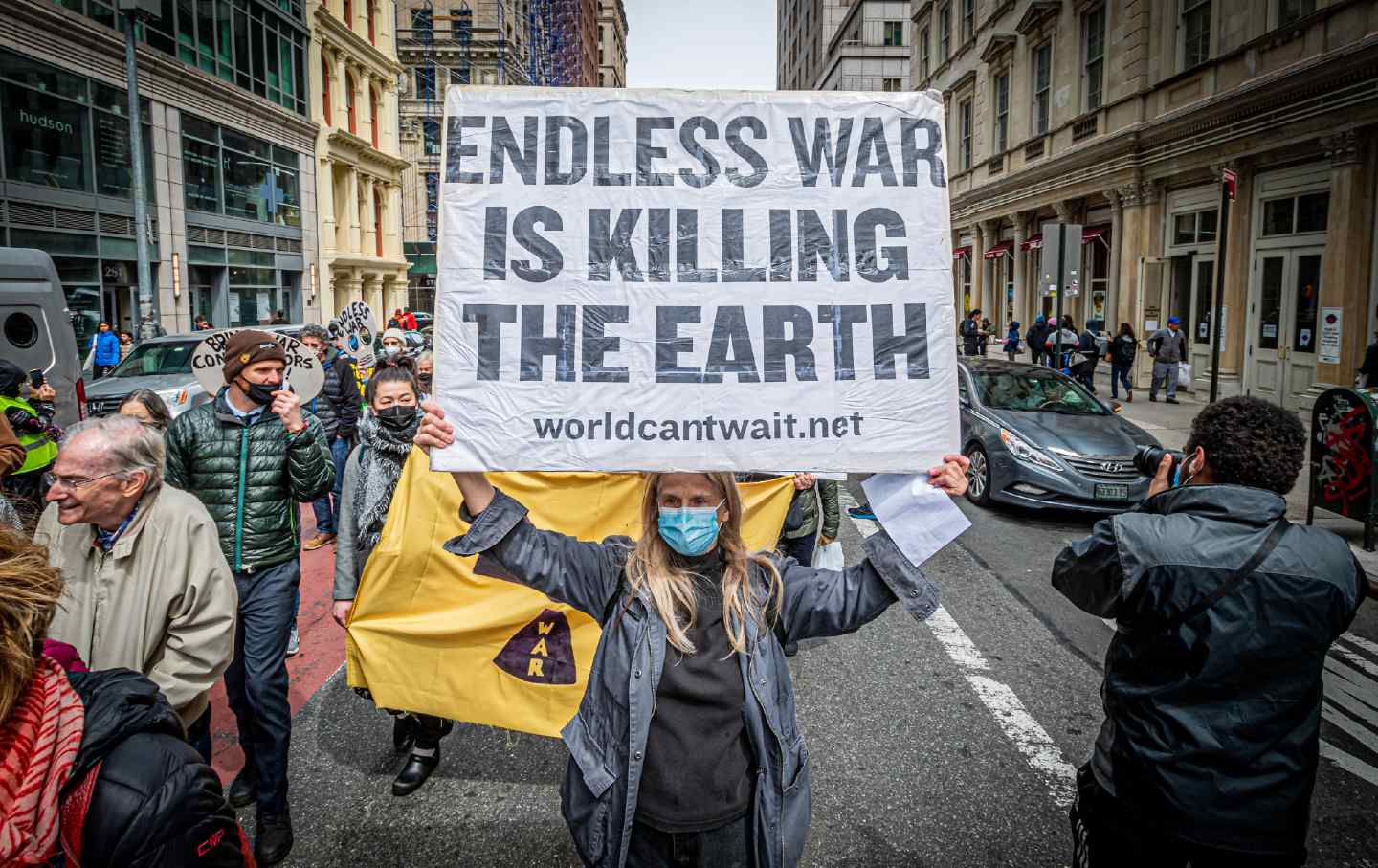
Abby Martin on the Climate Cost of US Empire Abby Martin on the Climate Cost of US Empire
The filmmaker discusses military pollution, her reporting in Hawai’i, and why the climate and antiwar movements belong together.
Trump Is Making Deals With Big Oil Trump Is Making Deals With Big Oil
Democrats and the press should be paying attention to how this pay-to-play behavior relates to the midterms
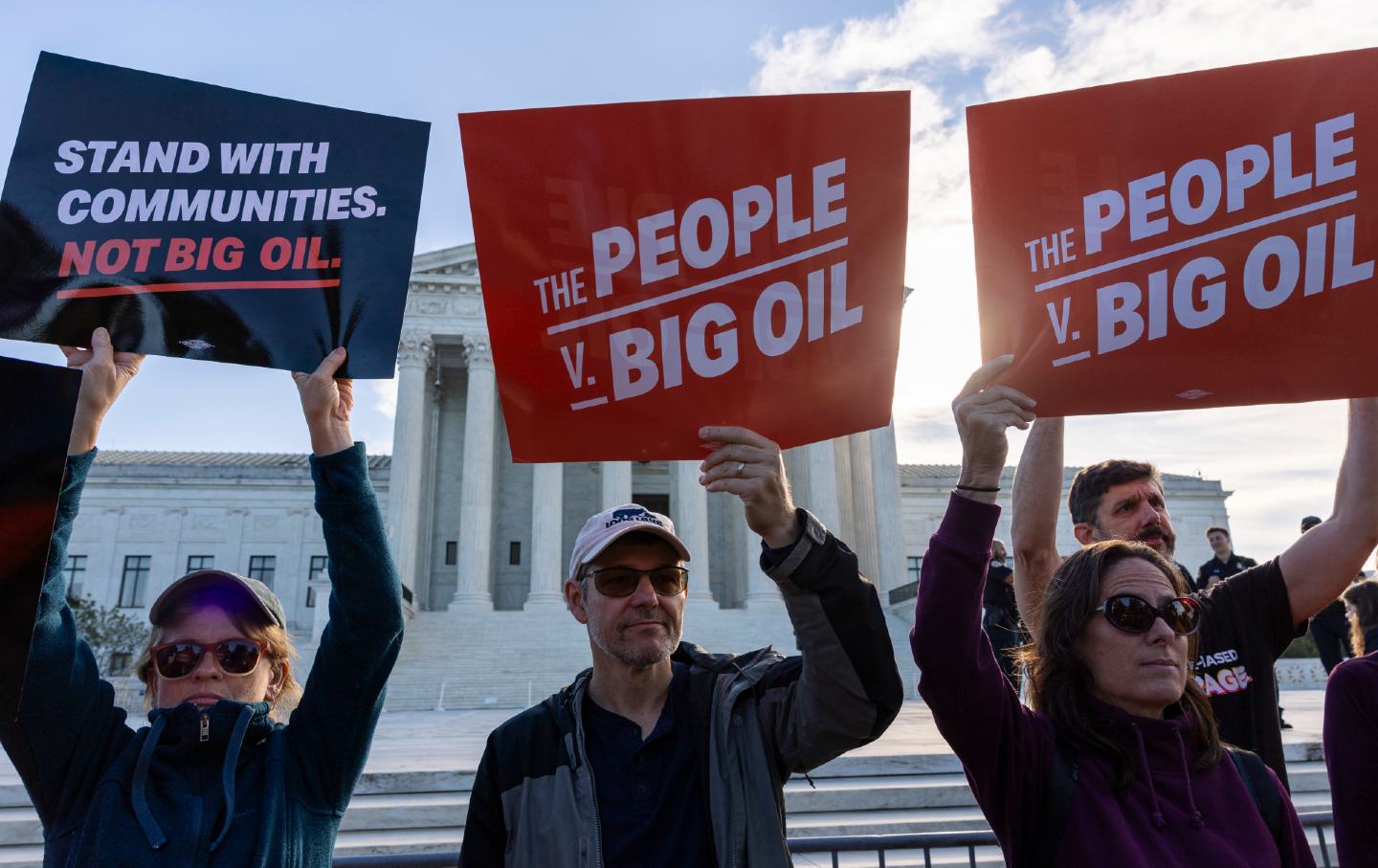
This Lawsuit Could Make Big Oil Pay for the Harm It’s Caused This Lawsuit Could Make Big Oil Pay for the Harm It’s Caused
The question is whether the Supreme Court will let it.

Germany and California Make Up an Environmental Superpower Germany and California Make Up an Environmental Superpower
The world’s third- and fourth-largest economies have pledged to environmental protections. Will others follow suit?