
Why Is New York Running Away From Renewables?
Kathy Hochul is proposing to retreat from the state’s nation-leading climate and energy strategy. That would be a disaster.
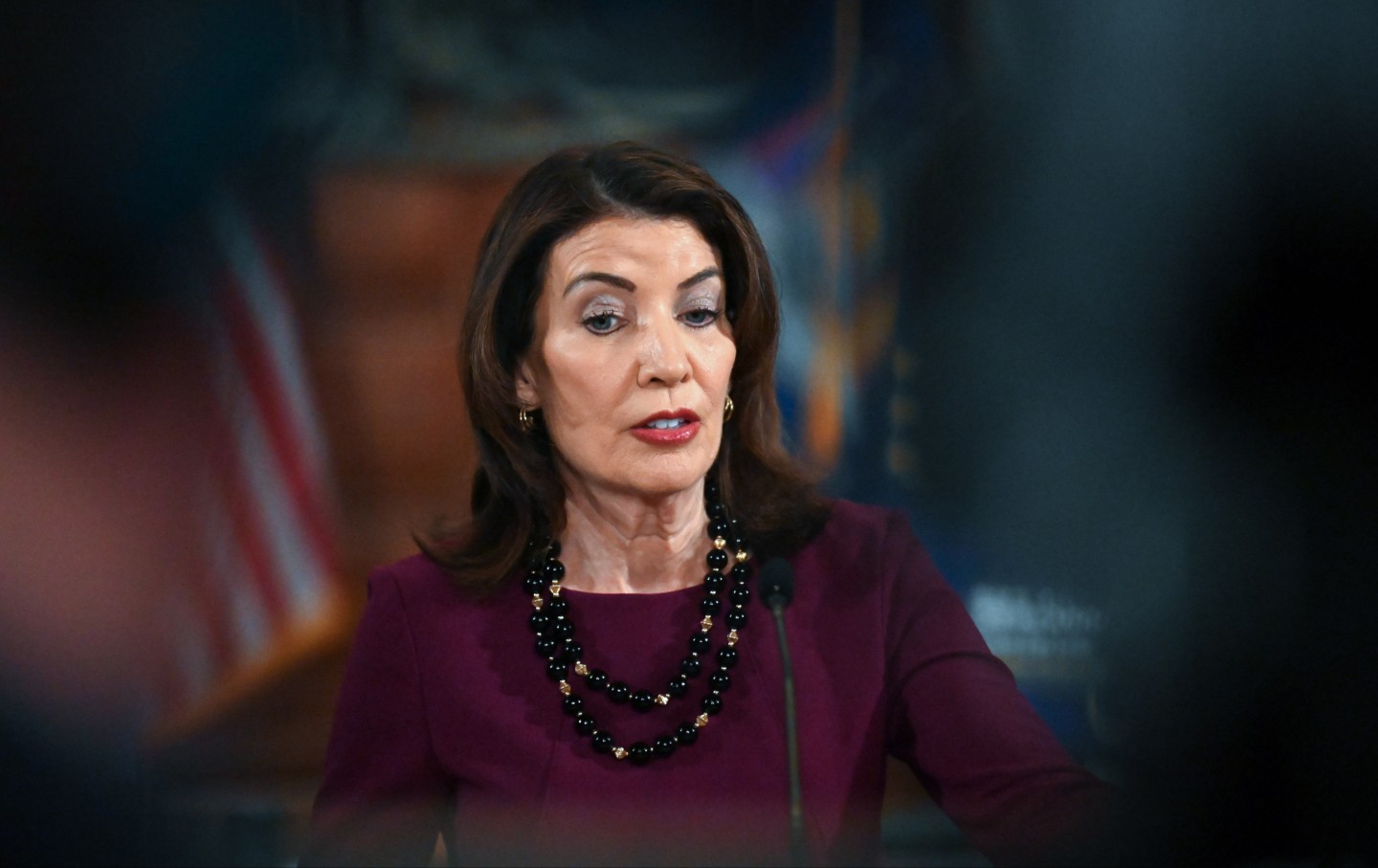
New York Governor Kathy Hochul on Monday, March 23, 2026.
(Will Waldron / Albany Times Union via Getty Images)The war in Iran, and its entirely predictable impact on global energy markets, has once again put into stark relief the cost of the world’s continued dependence on fossil fuels. As if waking from a nap, countries whose commitment to climate action had been waning have been jolted back into action to transition their economies away from an energy system that is rapidly destabilizing the globe and toward one that promises significantly more predictability, stability, affordability, and energy independence.
The UK’s Climate Change Committee recently determined that the cost of achieving net-zero by 2050 will be less than that of a single fossil fuel price shock. The country will be requiring heat pumps and solar panels in all new homes, as well as subsidizing plug-in solar for low-income households. France is doubling its investments in electrification and banning gas heating in new buildings. In Pakistan, a massive, grassroots-led transition to solar power after the Russian invasion of Ukraine is insulating people from the impacts of the Hormuz double blockade. And China, which has invested heavily in becoming the solar, wind, and EV workshop of the world, is being widely labeled as the “winner” of the Iran War.
During the first Trump administration, the federal government turned back progress on climate and clean energy, and individual states picked up the mantle of leadership. Many of those states formed the United States Climate Alliance in response to Trump’s withdrawal from the Paris Agreement; in subsequent years, Climate Alliance members followed up with real action to move the needle on the energy transition.
In New York, in 2019, we passed what was at the time nation-leading climate legislation, the Climate Leadership and Community Protection Act, or CLCPA. The CLCPA has a level of ambition that matches the reality of the climate crisis. It charts a path for a more livable future for New Yorkers, with cleaner air, better health outcomes, and lower-cost, locally produced modern energy for our homes and businesses, all of which will create thousands of good, union jobs across our state. And it includes binding emissions reduction targets. By 2023, nine other states had legislated similar binding targets, with the eventual goal of achieving net-zero greenhouse gas emissions or similar by 2050.
Seven years later, Trump is back, and things are worse than ever on the climate front. The second Trump administration has been even more aggressive than the first, openly declaring war on cheap, American-made renewable energy and climate progress of any kind, even going so far as to scrub any reference to climate from the federal government. The administration has stopped the development of offshore wind in its tracks, attempted to prevent new onshore wind and solar from being built, and repealed and clawed back tax credits and grants created by President Biden’s Inflation Reduction Act, among hundreds of other actions.
Yet instead of responding to this crisis with the kind of boldness and vigor we showed in 2019, New York is on the verge of becoming the first domino to fall in a potential chain reaction of retreat on climate across the US. New York Governor Kathy Hochul is co-chair of the Climate Alliance. But it seems as though she wants to pretend that her state’s own climate legislation doesn’t exist. In 2024, her administration failed to issue legally required regulations to implement the CLCPA. Later that year, Hochul unilaterally, and likely without legal authority, delayed the start of New York City’s now wildly successful congestion pricing program.
In the years that followed, the Hochul administration’s anti-climate policies included approving construction of a gas pipeline under New York Harbor that had already been rejected in 2018, 2019, and 2020 because of water pollution impacts, approving the air permit for a cryptomining facility to repower an old fossil fuel plant, even though the permit had also been previously rejected; conceding without objection to a judicial delay of New York’s law requiring all-electric new buildings; cutting funding for a critical energy-efficiency program; and shepherding the adoption of a State Energy Plan that embraces increasing dependence on natural gas.
Far from being cost-saving measures, these actions will make New Yorkers poorer. The NESE pipeline will cost gas ratepayers several billion dollars and drive up monthly bills. All-electric new buildings are cheaper to build and cheaper to own or rent. The state’s EmPower+ home energy efficiency program has saved New Yorkers $26 million since 2023, with an average household savings of $600 per year. And each of these decisions by Hochul’s government will increase air and water pollution in our neighborhoods and exacerbate the climate-driven extreme weather events that take an increasing toll on New Yorkers’ wallets as well as their lives and livelihoods.
As woeful as this record is, Hochul—a governor who proudly claims that “no governor in modern times has done more to protect our environment”—was just getting started. She has now proposed to functionally repeal the CLCPA itself as part of this year’s state budget, removing provisions that require meeting mandatory emissions reduction and clean energy targets. The result would be a wholesale abandonment of New York’s commitment to climate action.
This potentially disastrous move should concern not just New Yorkers but any American who cares about an affordable energy system, real independence from the geopolitical volatility driven by fossil fuels, and a livable climate for ourselves, our children, and our grandchildren. In 2019, New York was leading the charge on climate progress; now, there is a real risk that seven years (and at least three major oil or gas price shocks) later, we will be responsible for leading the retreat, turning a climate policy stalemate into a catastrophic rout and embedding the Trump administration’s anti-climate trajectory as a model for Democratic-run states and Democratic presidential candidates.
The ostensible reason for this climate fecklessness is concern over energy affordability and President Trump’s aggressive opposition to expanding renewables, though Governor Hochul’s justifications have been as volatile as gas prices. She first said it’s because the CLCPA is pushing up costs, but then said that to suggest as much would be “stupid,” and has failed to provide proof that there is any other economic need for gutting the law.
The truth is that moving backward on renewable energy, as she proposes, will cost Americans money and lead to more price volatility, not less. It’s not solar farms and heat pumps that are making energy unaffordable but the fossil fuel status quo. Subsidizing the expansion of the natural gas system in New York costs ratepayers $600 million every year. Because of New York’s heavy reliance on natural gas for electricity generation, the New York Independent System Operator points out, “electricity price volatility is a direct result of volatility in the market for natural gas.” The gold rush of AI data center development has driven up electricity costs by as much as 267 percent over the last five years in areas of the country near where they are sited. And the climate crisis itself is driving up insurance, healthcare, food, and other costs.
On the other hand, delivering energy efficiency and a modern, clean, lower-cost renewable energy system promises a way out. Last year, the International Renewable Energy Agency confirmed that in 2024, 91 percent of utility-scale renewable energy projects were cheaper than fossil fuel options. Recent analysis shows that as a result of concerted investment in renewable energy, Europe’s electricity prices were 25 percent lower between 2023 and 2025 than they would otherwise have been.
Popular
“swipe left below to view more authors”Swipe →Trump administration’s obstruction, far from justifying abandoning laws like the CLCPA, is the reason we passed them in the first place during his previous administration. If there is one constant in the chaos and confusion of the Trump era, it is that the destabilizing influence of fossil fuels—over our wallets, our climate, our democracies, and matters of war and peace—is only increasing. Americans long for, and deserve, the stability that can and will be delivered only by the transition to clean and abundant renewable energy. That is a future we must continue to fight for every day, everywhere. History will judge us harshly—and rightly so—if we give up now.
Become a Sustaining Donor This September
Between the reemergence of right-wing red-baiting and Donald Trump’s use of the chilling National Security Presidential Memorandum–7 to criminalize left political organizing, we’re seeing McCarthyism reborn before our eyes.
This assault on democracy cannot be ignored or wished away. Resisting it requires bravery in the face of threats and repression, a steadfast commitment to the truth, and the unwavering belief that we can—and will—overcome this darkness.
We must have an independent media that sets the record straight, unearths corruption and abuses of power, and advances a politics of justice and dignity for all if we’re to win this fight.
That’s why I’m writing to you today. This September, The Nation needs to add 100 monthly donors to sustain our progressive journalism. Your contribution makes the next investigative report, the next truth-speaking column, and the next pathbreaking essay all possible.
I hope you’ll support our work with a recurring donation today. If you donate $10 or more a month, we’ll send you a brand new “Hands Off the Free Press!” sticker to recognise your commitment to our cause. Please, donate today.
Onward,
Katrina vanden Heuvel
Editor and Publisher, The Nation
More from The Nation
Gavin Newsom Comments on Climate Gavin Newsom Comments on Climate
On the sidelines of the UN General Assembly meeting and New York Climate Week, the California governor called AOC “the real damn deal.”
Cities as Climate Labs: Inside the U20 Summit Cities as Climate Labs: Inside the U20 Summit
Mayors at the Urban 20 Summit worked across borders to confront the climate crisis at the local level.
Big Oil’s Origin Story Big Oil’s Origin Story
Amy Westervelt’s new book, Brought to You By, exposes the deep history of today’s “information pollution.”
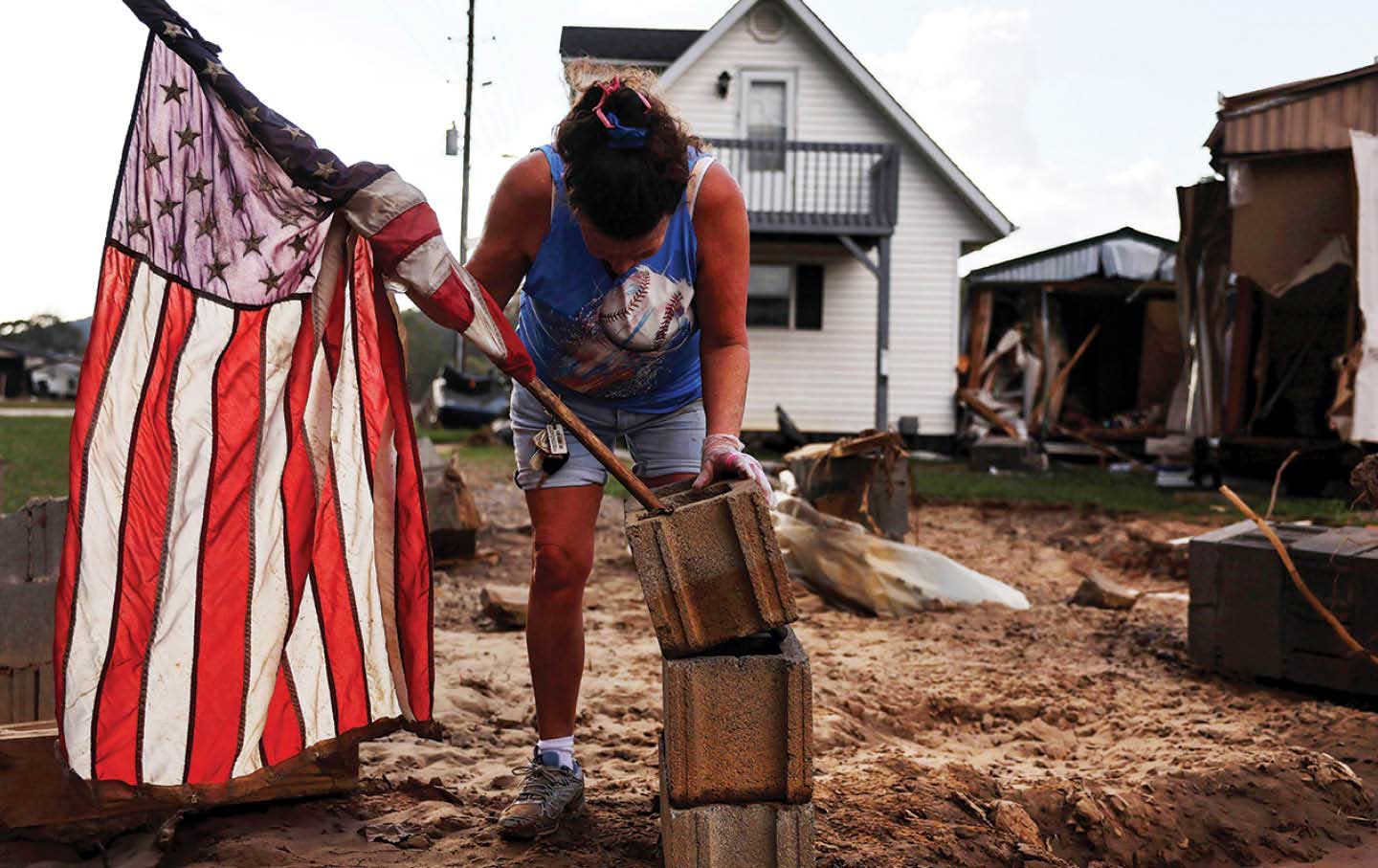
Two Years After Helene, North Carolina’s Unsettled Recovery Two Years After Helene, North Carolina’s Unsettled Recovery
The state has become a testing ground under an eviscerated FEMA and a missing-in-action “recovery czar,” Michael Whatley, with big political ambitions.
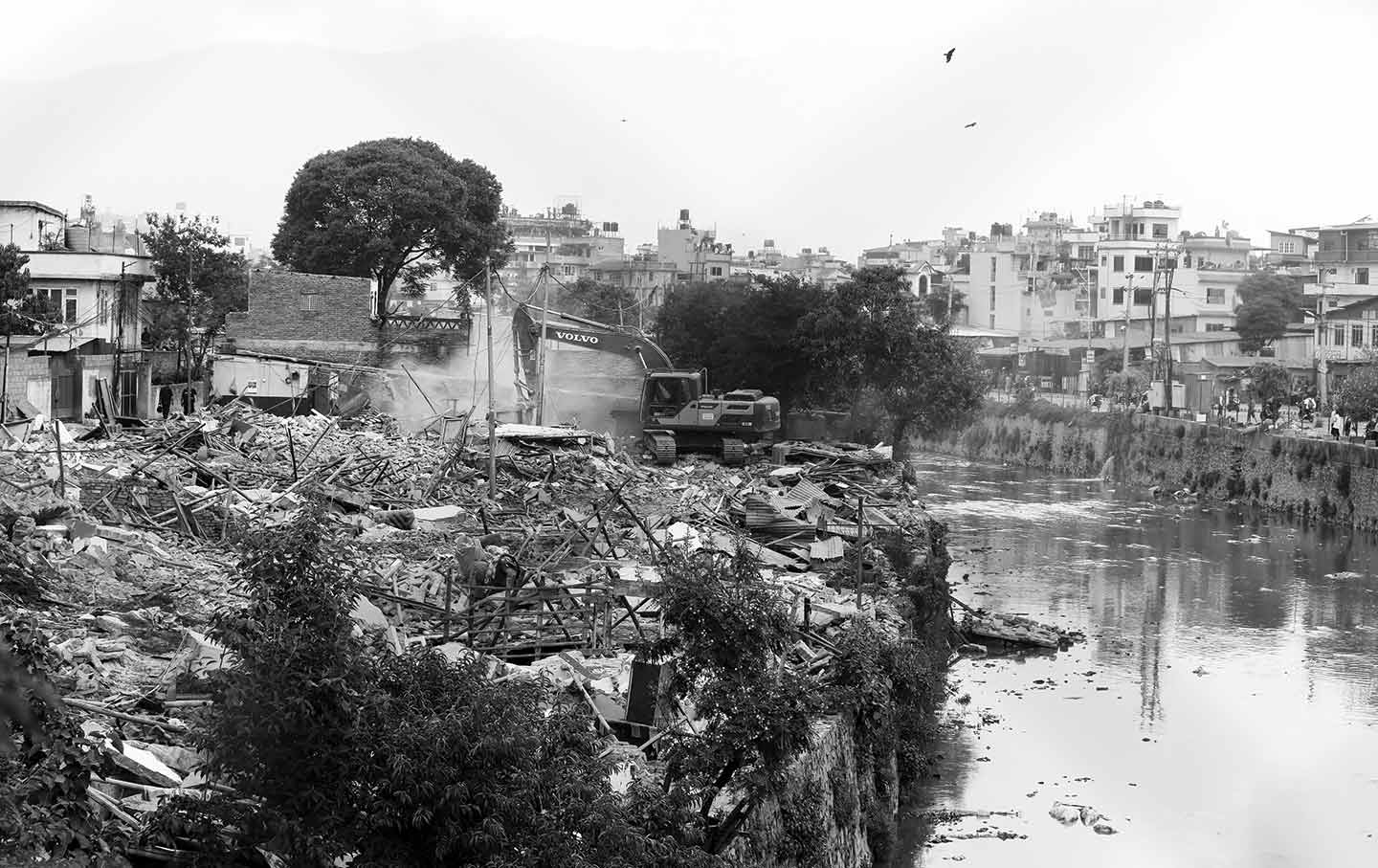
A Reckoning Comes for Nepal A Reckoning Comes for Nepal
A year after its Gen Z uprising, Nepal faces a struggle not only for democracy and human rights but for climate survival.

How a Creative Mind Lives in Nature How a Creative Mind Lives in Nature
Working in the wilderness could not satiate my intellectual impulses. But for the protagonist of Hothouse Bloom, the binary between mental and physical labor is what calls her.

