Wait, Could This Be a Climate Conference That Actually Works?
As the Iran war highlights fossil fuel risks, a coalition of the willing pursues a global phaseout.
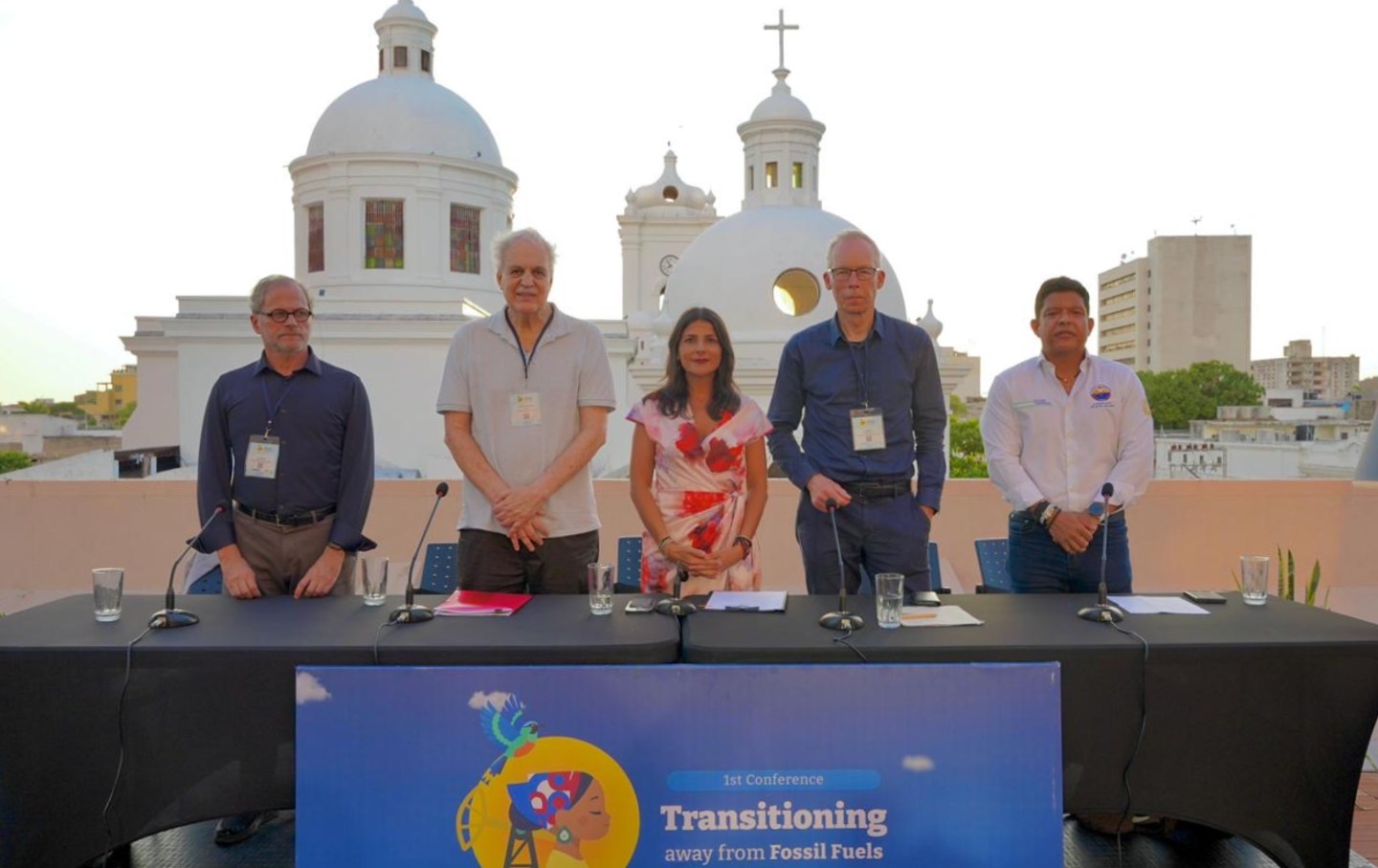
A press conference from the First International Conference on the Transitioning Away From Fossil Fuels.
(Courtesy of Mark Hertsgaard)
Santa Marta, Colombia—Global climate talks got an unexpected boost Friday when the head of the International Energy Agency said the Iran War had broken fossil fuel markets beyond repair.
“The damage is done,” Fatih Birol said in an interview with The Guardian. The war’s interruptions to oil and gas supplies and the resulting price spikes for energy, fertilizer, and other essential goods, Birol added, will forever turn countries away from fossil fuels toward renewables and other more secure and affordable sources of energy.
“The vase is broken, the damage is done—it will be very difficult to put the pieces back together again,” said Birol, whose agency The New York Times has described as “enormously influential” on the long-term plans of energy companies and investors around the world. This crisis “will have permanent consequences for the global energy markets for many years to come.”
“I am very happy that Birol is saying this,” Irene Vélez Torres, the environment minister of Colombia, said in an interview in Santa Marta, the host city for a conference where some of the biggest economies in the world are meeting over the next week to develop a global “road map” to phase out the burning of oil, gas, and coal, the primary driver of increasingly dangerous climate change.
“It makes me more optimistic about what our conference can achieve,” Vélez added. “It seems that many of us are seeing at the same time that fossil fuels cannot provide energy security, because fossil fuels are subject to scarcity, and scarcity can be manipulated. Our energy sovereignty as well as our climate survival require moving to other energy sources.”
Although Birol has previously said plummeting prices for renewables herald the “beginning of the end of the fossil fuel era,” rarely if ever has he so bluntly portrayed the fossil fuel industry as a dead man walking—comments likely to further anger the administration of President Donald Trump, which has threatened to withdraw the United States from the IEA. Chris Wright, the US secretary of energy, has demanded that the IEA stop publishing an annual report outlining how countries could eliminate their emissions of planet-heating gases to 2050, as scientists say is imperative to avoid the most devastating impacts of climate change. The United States supplies roughly 14 percent of the IEA’s annual budget.
The Santa Marta gathering, officially called the First International Conference on the Transitioning Away From Fossil Fuels and cosponsored by the Netherlands, brings together governments representing many of the biggest economies on earth, as well as hundreds of academics, climate and labor activists, business leaders, and Indigenous peoples representatives. Plans for the conference took on fresh urgency after the latest United Nations climate summit in November, when a handful of petro-states used UN rules requiring consensus decision making to veto a call from 85 countries to develop a to phase out fossil fuels.
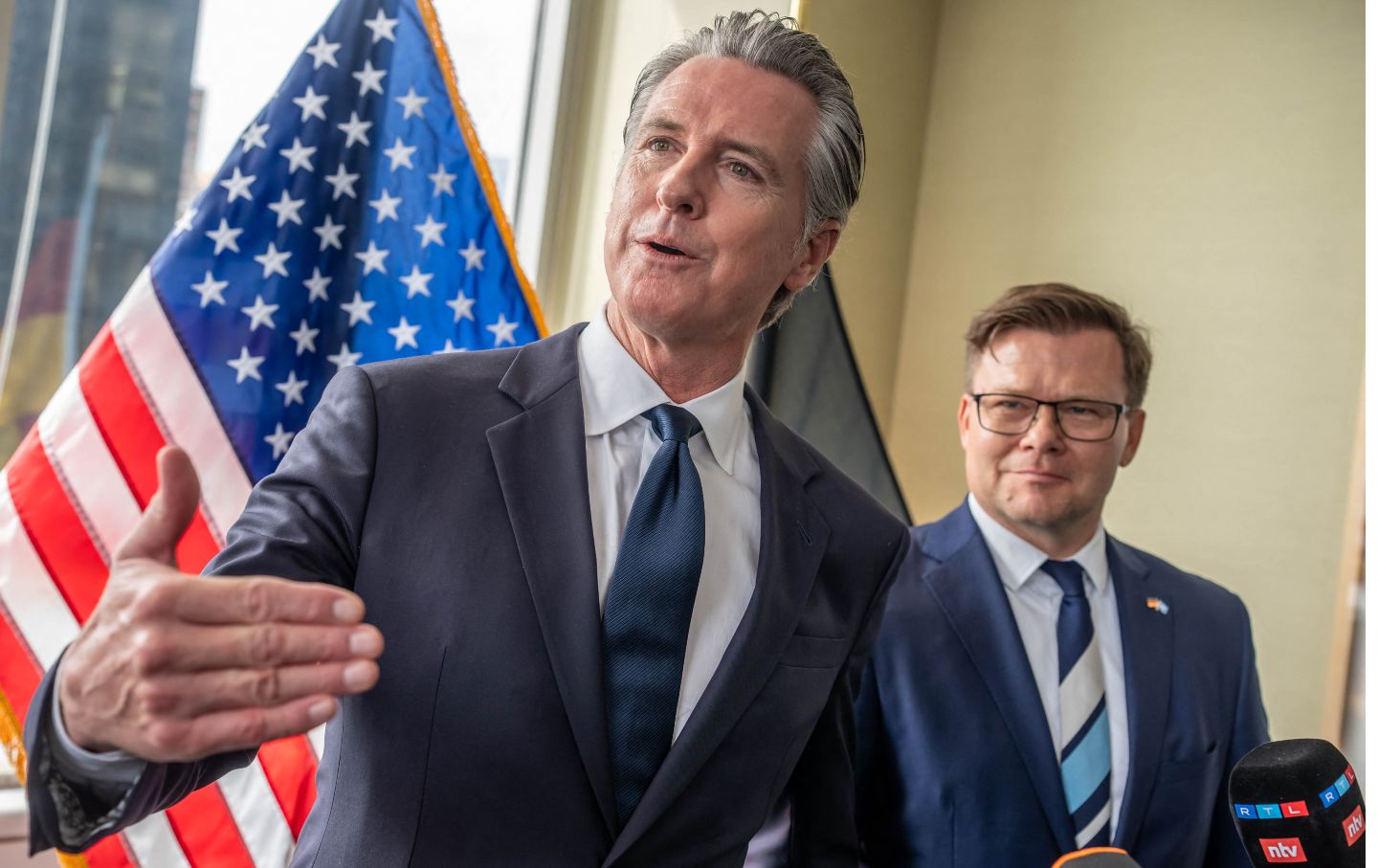
Among the governments represented in Santa Marta are Germany, the United Kingdom, California, France, Italy, Brazil, Canada, Spain, Mexico, and Australia—10 of the 13 biggest economies in the world. Together, these countries amount to an economic superpower whose collective heft is larger than that of the United States and double that of China. If this “coalition of the willing” withdraws its enormous purchasing power from fossil fuels in the coming years, as Birol foresees, it would slash demand for fossil fuels, render many of the industry’s production projects unprofitable and spark a global retreat from fossil fuels.
Much the same thing happened after the Paris Agreement of 2015, when countries pledged to limit global temperature rise to “well below” 2 degrees C and to aim for 1.5ºC. In response, governments and industries scaled back expansions of oil, gas, and coal production while increasing investment in solar, wind, batteries, and other non-carbon energy sources. Five years later, the resulting decline in emissions had lowered the planet’s projected warming from a hellish 4ºC to 2.7ºC—still too much, but a big step in the right direction.
In another departure from UN climate summits, the Santa Marta conference is “listening to the science” instead of to “disinformation and lobbying,” Vélez said. The overheating of the planet is already “crossing tipping points that will undermine human society within our lifetimes,” said Johan Rockstrom of the Potsdam Institute for Climate Impacts Research in Germany. Rockstrom and Carlos Nobre, a senior scientist at the National Institute of Amazonian Research in Brazil, have assembled a panel of scientists that will advise governments on which policies work best to phase out fossil fuels. “A critical mass of 30 countries are already decarbonizing their economies, showing that it can be done,” said Rockstrom. “We’re not here to establish new climate science but to enable better and faster policymaking by governments, businesses, and all stakeholders.”The Santa Marta conference, which concludes on April 29, is but a start, said Vélez. A follow-up conference to refine plans for how countries, regions, and economic sectors can leave fossil fuels behind—without harming workers, businesses, and governments that currently rely on fossil fuels for jobs, profits, and tax revenues—is planned for later this year. The conference’s results will also be channeled into the deliberations of the next UN climate summit, taking place in Turkey in November. But after years of “pressure and vetoes” from petro-states “against us talking about phasing out fossil fuels,” Vélez said, “here we have an alignment that is ready to act.”
Become a Sustaining Donor This September
Between the reemergence of right-wing red-baiting and Donald Trump’s use of the chilling National Security Presidential Memorandum–7 to criminalize left political organizing, we’re seeing McCarthyism reborn before our eyes.
This assault on democracy cannot be ignored or wished away. Resisting it requires bravery in the face of threats and repression, a steadfast commitment to the truth, and the unwavering belief that we can—and will—overcome this darkness.
We must have an independent media that sets the record straight, unearths corruption and abuses of power, and advances a politics of justice and dignity for all if we’re to win this fight.
That’s why I’m writing to you today. This September, The Nation needs to add 100 monthly donors to sustain our progressive journalism. Your contribution makes the next investigative report, the next truth-speaking column, and the next pathbreaking essay all possible.
I hope you’ll support our work with a recurring donation today. If you donate $10 or more a month, we’ll send you a brand new “Hands Off the Free Press!” sticker to recognise your commitment to our cause. Please, donate today.
Onward,
Katrina vanden Heuvel
Editor and Publisher, The Nation