Trump’s Caribbean Killing Spree
The president’s unprecedented and lawless attacks supposedly target drug cartels, but serve a far more troubling political agenda.
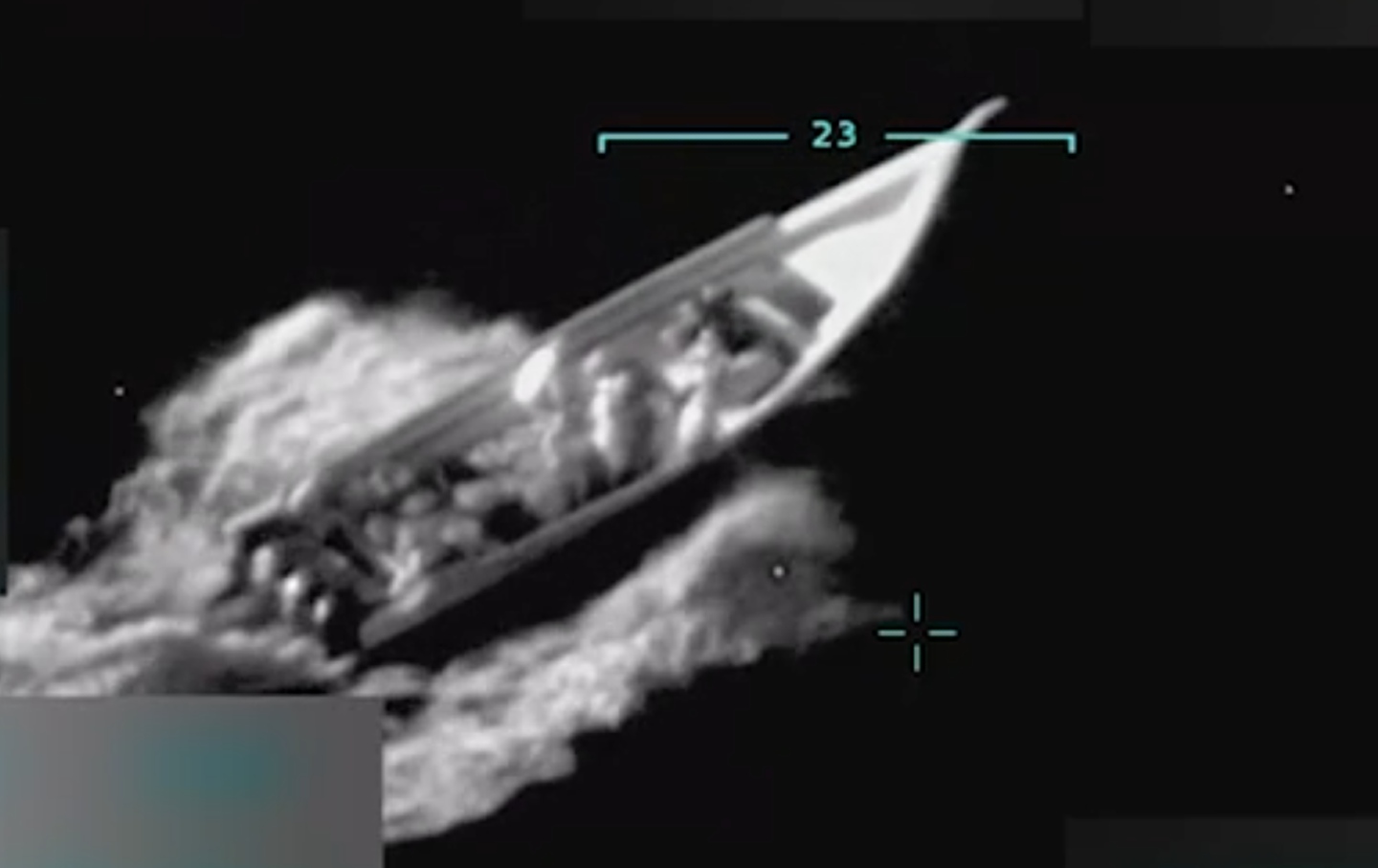
On September 2, the US military sank a go-fast boat in the southern Caribbean off the coast of Venezuela, killing 11. The United States then hit two more boats, on September 15 and 19, killing another six people. The Army attacked another craft off Venezuela’s coast in early October, reporting four fatalities on board. Trump has also since notified Congress that the US is in an “armed conflict” with drug cartels in the region.
The murders were premeditated. On the first day of his second term, Trump signed an executive order designating Latin American drug cartels as terrorist organizations. A month later, the State Department added Venezuela’s Tren de Aragua to the list. On August 8, The New York Times reported that Trump had “secretly signed a directive to the Pentagon to begin using military force against certain Latin American drug cartels.” The Times also mentioned “sensitive internal deliberations” within the administration over whether the use of the military to kill civilians suspected to be members of cartels would constitute “murder.”
Clearly, the United States was on the hunt for something to attack and someone to kill.
A chance came early in September, when US Southern Command apparently spotted an open-air speedboat leaving a small fishing village in eastern Venezuela. A missile, probably fired from a drone, destroyed the boat and killed all on board.
The White House has presented no evidence of drug trafficking on this boat, or on the others the United States attacked. Those executed were civilians charged with no crime, much less a capital offense.
Little or no fentanyl enters the United States from Venezuela; cocaine coming through Venezuela is grown in Colombia. Rather than functioning as a centralized international cartel, Tren de Aragua is a loose confederation of local criminals. Intelligence reports suggest its members aren’t equipped to move wholesale amounts of cocaine from Colombia or Bolivia into the US.
But drug interdiction isn’t the real point here. The Trump White House is bringing the logic of Gaza to the Caribbean: the use of disproportionate, high-tech violence to murder defenseless civilians with impunity, justified by the broadest imaginable definition of “self-defense.” And the killing, Secretary of State Marco Rubio said, will continue.
Retired Adm. James G. Stavridis, a former Supreme Allied Commander of NATO, believes that a more proximate motive for these strikes is to send a message to Venezuela’s pariah president, Nicolás Maduro, to demonstrate that the administration can destroy an oil tanker as easily as it can a speedboat. The United States is currently engaged in a massive military buildup in the Caribbean, which some fear is intended to produce shock, awe, and ultimately regime change across the region.
The Trump administration can’t seem to decide whether to bomb Mexico or assault Venezuela, but there exists an interagency war party—Rubio at State, Pete Hegseth at Defense, Terrance Cole at the DEA, and JD Vance in the vice presidency, among others. This coterie seems to believe that forcing Maduro out will be the first step toward toppling the governments of Cuba and Nicaragua, while intimidating the region’s more independent-minded leaders—especially Luiz Inácio Lula da Silva in Brazil, whose government recently convicted his predecessor, Jair Bolsonaro, on charges of election fraud.
Trump pushed Lula hard to go light on Bolsonaro and to absolve Brazil’s right-wing coup plotters. But Lula balked, and Brazil’s Supreme Court sentenced Bolsonaro to 27 years in prison. Such insolence on the part of Latin America is rarely tolerated in Washington—and it may well explain, at least in part, Trump’s exceptionally vicious murder spree in the Caribbean.
Become a Sustaining Donor This September
Between the reemergence of right-wing red-baiting and Donald Trump’s use of the chilling National Security Presidential Memorandum–7 to criminalize left political organizing, we’re seeing McCarthyism reborn before our eyes.
This assault on democracy cannot be ignored or wished away. Resisting it requires bravery in the face of threats and repression, a steadfast commitment to the truth, and the unwavering belief that we can—and will—overcome this darkness.
We must have an independent media that sets the record straight, unearths corruption and abuses of power, and advances a politics of justice and dignity for all if we’re to win this fight.
That’s why I’m writing to you today. This September, The Nation needs to add 100 monthly donors to sustain our progressive journalism. Your contribution makes the next investigative report, the next truth-speaking column, and the next pathbreaking essay all possible.
I hope you’ll support our work with a recurring donation today. If you donate $10 or more a month, we’ll send you a brand new “Hands Off the Free Press!” sticker to recognise your commitment to our cause. Please, donate today.
Onward,
Katrina vanden Heuvel
Editor and Publisher, The Nation