We Don’t Need to Join the Political Establishment’s Exhausting ‘War on Woke’
Despite what a recent New York Times article argues, tactically supporting the carceral system is no path to a better world.

A protestor raises a sign during a march to protest the death of Daunte Wright on April 13, 2021 in Philadelphia, Pennsylvania.
(Mark Makela / Getty Images)
In a recent op-ed for the New York Times, Jacobin editor Meagan Day offered a pointed critique of the ways that identity politics can be weaponized to muzzle dissent. On its face, this could have been a valuable contribution to larger conversations about how the powerful co-opt anti-oppression language to silence and discipline their critics. Instead, Day punches down.
In his indispensable 2022 book Elite Capture: How the Powerful Took Over Identity Politics (And Everything Else), Olúfẹ́mi O. Táíwò explains how those in power deploy the politics of identity to entrench their own class or managerial positions, a method we have seen utilized in breathtakingly cynical fashion with the recent push to secure the Speaker of the House position for Representative Hakeem Jeffries. According to Al Sharpton, Van Jones, and Jeffries himself—not to mention centrist fossils like Paul Begala and James Carville—opposing Jeffries is “racism of the left,” an accusation that undercuts any principled objections to his centrist politics, his commitment to funding the war on Iran, and his fealty to Israel and AIPAC.
It would be extremely valuable to introduce the concept of “elite capture” to a New York Times audience. But that’s not the op-ed Day wrote. Instead, starting with a headline that could comfortably appear as a chyron on Newsmax—“Woke One Was Crazy—And It’s Still Here”—the article rehashes what I’m sure Day would agree has been a well-trod argument across the political spectrum: that the “wokeness” of the “crazy” left is pushing people away from progressive politics. (Before reckoning with Day’s argument, it’s worth saying that her pejorative use of the word “woke”—a linguistic attack coined by the nationalist right to mock the phrase “stay woke” in the Black community—is an unfortunate choice.)
In the op-ed, Day argues that for democratic socialists to move forward, they must reject “wokeness,” which she argues has devolved into a “crusade against personal transgressions” built on the performance of empty absurdities. She explains the “crazy” of “wokeness” by telling the story of an almost two-decade old experience she had in 2009 at Oberlin College, involving confusion over whether a frat was throwing a racist party and the ensuing uproar. What her disdain for these overzealous, painfully earnest college students (and don’t we want our college students to be overzealous and painfully earnest?) has to do with the actual titanic challenge plaguing the left—namely how to organize this generational thirst for socialist politics—is left unclear.
In its last paragraphs, the op-ed gets at what seems to be its real intent. Here, Day calls for the “woke” brigade to stop attacking those in the DSA who say that the only way to build a mass party is to accept some degree of law and order politics—an idea that Day and other DSA thought leaders are calling “carceral minimalism.”
“Carceral minimalism” is a pithy label for a socialist position that makes strategic peace with the prison industrial complex. Instead of advancing the century-old socialist principle of calling to abolish this country’s system of mass incarceration, they argue that such a demand is “not a viable road to social justice.” Police and prisons effectively reduce crime, they argue, (although criminologists differ on this point) making them a necessary part of society, one that actually “protects the weakest.” Instead of abolishing this system, they argue that we should focus on jailing fewer people.
But the proponents of “carceral minimalism” never say how many human beings have to be locked away to meet their criteria. Currently the United States has the largest prison population on earth, with two million people behind bars. Would 1.5 million incarcerated be the goal? That certainly would be better than our current nightmare. And decarceration reforms—like eliminating prison terms for non-violent drug abuse or bail reform—have long been demands of the prison abolitionist movement. But this country would still be jailing more people per capita than anywhere on earth. And statistically we know who would continue to get locked away: most overwhelmingly poor, some wrongly accused, few with decent legal representation, and disproportionately Black and Latino. Calling for “carceral minimalism” amounts to playing a racialized lottery with people’s lives. It’s about as far as a person can venture from the tradition of socialist prison abolitionists like Angela Davis and Howard Zinn. It is also a rebuke of the great socialist leader Eugene Debs’s thunderous declaration: “While there is a criminal element I am of it. While there is a soul in prison I am not free.”
Day and her cohort advance these politics in order to separate themselves from the “crazy” identitarian dead-enders and, in their telling, fully seize the power and opportunities that come with DSA’s unprecedented presence within the Democratic Party. This could come, however, with the price of unnecessarily dividing or pushing away the many in DSA who are joining in droves in order to build a multi-racial organization that can effect radical change. There are no easy answers for how to accomplish this mammoth task, but history tells us that the organizations that did the most successful work in building multiracial coalitions—like the Communist Party in the 1930s or the Student Non-Violent Coordinating Committee (SNCC) in the early 1960s—were able to do so because they threw themselves into explicitly anti-racist work.
To abandon that and support, even tactically, our racialized prison industrial complex doesn’t seem like a feasible path to that goal. If anything, it recalls the early 20th century Socialist Party’s terrible position on race, summed up best in Debs’s regrettable assertion that “We have nothing special to offer the Negro, and we cannot make separate appeals to all the races.”
Debs’s position, in addition to undercutting the Socialist Party’s ability to build in Black communities, also gave cover to the party’s outwardly racist, hyper-nationalist right wing, led by Congressman Victor Berger. The Wisconsin representative supported the Chinese Exclusion Act, promoted white supremacist race science, and was not a fan of organizing Black and white workers together. As WEB DuBois wrote in 1911: “So long as the Socialist movement can put a ban upon any race because of its color, whether that color be yellow or black, the negro will not feel at home in it.”
Berger’s views changed for the better in subsequent decades, but the harm caused by a Socialist leader taking those positions caused irreparable damage to the reputation of socialism—one that lingers. It also played a role in the eventual split and near total destruction of their organization, as socialists inspired by the 1917 Russian Revolution and those who became disgusted by the right of the Socialist Party split off to build the Communist Party of the United States.
Today, some thought leaders on the right of DSA have been publishing a great deal in praise of Victor Berger—his later years, of course—as a model for socialist organizers today. That the praise for Berger is happening alongside arguments for “carceral minimalism” feels more like a concerted branding rollout than a coincidence.
Popular
“swipe left below to view more authors”Swipe →What a time, in a moment so bursting with possibility, to choose to stand with the political establishment and join their exhausting “war on woke.” But even more harmful, what a time to introduce “carceral minimalism” to a mass New York Times audience as an aim of the socialist movement. This only serves to undermine those trying to organize in the best traditions of the movement and not its most regrettable.
Decades ago, Howard Zinn made it plain: “I am convinced that imprisonment is a way of pretending to solve the problem of crime. It does nothing for the victims of crime, but perpetuates the idea of retribution, thus maintaining the endless cycle of violence in cruel and useless substitute for the elimination of those conditions—poverty, unemployment, homelessness, desperation, racism, greed—which are at the root of most punished crime. The crimes of the rich and powerful go mostly unpunished.”
Is it “crazy woke” to want to tear down the prison industrial complex? If so, it beats dreaming that the path to socialism is paved with the discarded remains of anti-oppression principles in the name of electoral expediency.
More from The Nation

“Grand Theft Auto” Is the “Mona Lisa” of Video Games “Grand Theft Auto” Is the “Mona Lisa” of Video Games
It is technically perfect in its rendition of imperfection, evocative in a way that can’t be explained and must be experienced. And it can be experienced on many different levels....

At Cornell, Students Are Still Seeking Answers At Cornell, Students Are Still Seeking Answers
Amid faculty votes of no confidence and perceived administrative mishandling of sexual assault allegations, Cornell students are still searching for accountability.
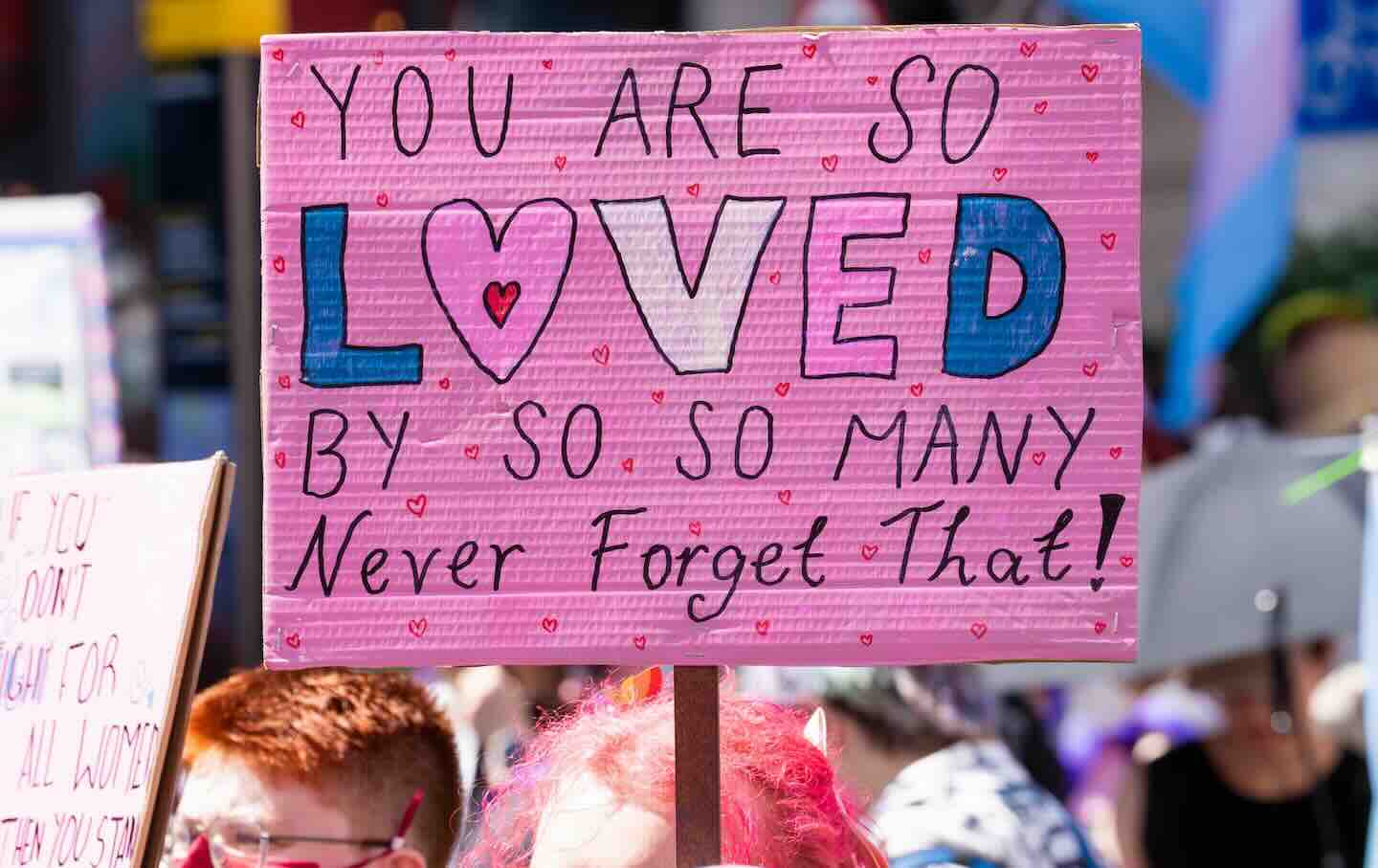
What It Looks Like to Parent Without Gender What It Looks Like to Parent Without Gender
My queer partner and I are raising our new baby in unconventional ways. It’s going to frustrate people on the right and the left.
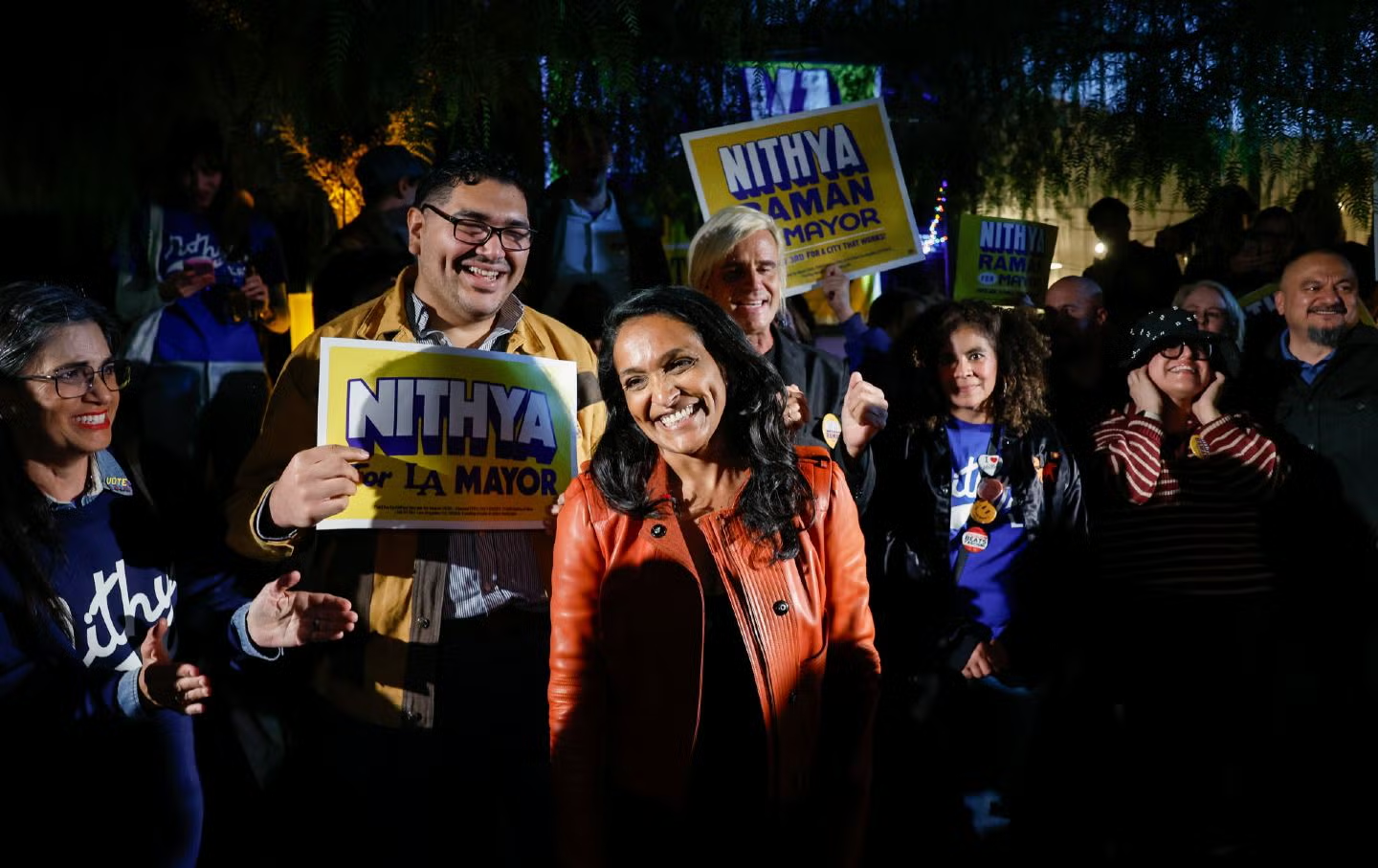
Will Nithya Raman Take on the Olympics Machine? Will Nithya Raman Take on the Olympics Machine?
As Los Angeles’s mayor-elect, Raman is in the perfect position to raise major questions about the Olympics. Before the election, she seemed ready to do so. Now it’s not so clear.

A New Trump Rule on Tax Credits Could Impoverish Thousands of Legal Immigrants A New Trump Rule on Tax Credits Could Impoverish Thousands of Legal Immigrants
It’s the latest move in the administration’s all-out effort to deny government benefits to immigrants—even those living and working here legally.

Documenting Women Out of Their Cells Documenting Women Out of Their Cells
Over a 10-year period, a photographer captured the lives of women in and out of prison.