We Have Invited Insane Surveillance Into Our Homes
Aggregated property listings are being weaponized by insidious intelligence outfits. We have ourselves to blame.
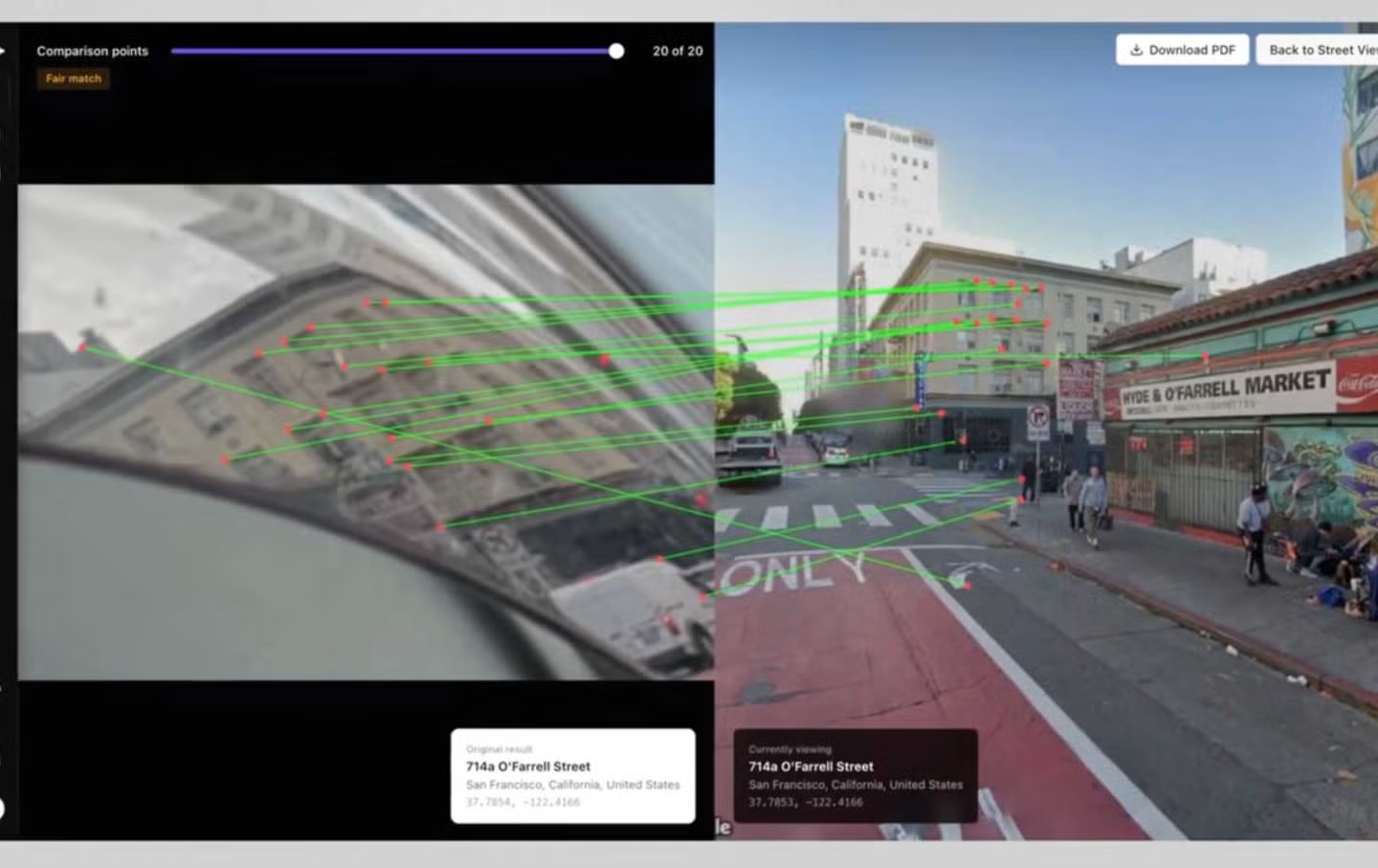
In October, 404 Media uncovered yet another AI spy ring, one that truly brings the surveillance state home. The “visual intelligence” platform Raven, formerly GeoSpy(!), makes it possible for cops to geolocate a building based solely on interior images (or even pixels from images) fed into the platform’s AI software. Raven’s software uses the property listings that real-estate agents and homeowners post on Zillow and Airbnb to pinpoint locations with terrifying precision, and the company boasts that it allows authorities to “capture dangerous individuals faster than ever before.” The comically shadowy “frontline intelligence” AI lab Graylark developed this software, which Raven has licensed to the Miami-Dade and Los Angeles police departments. This means that if you have ever uploaded a photo of the inside of your apartment to one of these listing sites, police could identify your exact location. Airbnb has said it has no relationship with Graylark, while Zillow said scraping its site violated its terms of use, making it unclear where the company is obtaining this data.
If the AI era has taught us anything about the tech industry and its billionaire overlords, it’s that there is no limit to how far they will go to steal and profit from the information that billions of people have contributed to the Internet since the dawn of its existence. The art we’ve made is transmogrified into ChatGPT slop. The help we’ve provided to others on forums and blogs is pilfered—and often misconstrued—by Google Gemini (which has cut off websites’ ability to generate ad revenue from search-engine traffic). Even our most personal posts on Instagram and Facebook are being mined for God knows what purposes.
More From Kate Wagner
These technologies have always been insidious. We all oohed and aahed at the premiere of Google Earth in 2005 (I certainly spent hours exploring it) and crowed with excitement when we saw a Google Maps car on the street. Now satellite and street-view data of all kinds provide the scaffolding for a surveillance state we all participate in, to ends both innocuous (like tracking how busy a restaurant is) and sinister (like supplying pretexts to detain our neighbors when Flock cameras misread their license plates). Just as we chose social media as a means to connect with one another, we accepted geolocation as a technology of convenience—who doesn’t use Google Maps every day?
Every time we photograph our surroundings or ourselves and others, we leave behind a digital trail that is extremely desirable to data brokers, police departments, and AI companies. While passersby are still blurred in Google Street View, companies like Graylark are rendering intimate details of our lives visible to law enforcement or private interests. The sense of security we feel in our neighborhoods—and now even in our own homes—is being undermined in ways that once existed only in spy movies. There is no longer a true “public” to speak of, because we can’t have collective autonomy if we don’t have individual autonomy. We may have largely accepted that our phones are bugged, but the fact that we’ve allowed the routine commercial processes of renting and selling our homes to enable such grotesquely invasive surveillance should send a chill down all our spines.
Of all the companies that are ensnared in this collective affront against privacy, Zillow is perhaps the most interesting. In its own way, Zillow has always been a technology of surveillance. The company’s broad goal has always been to disrupt the real-estate industry. Launched in 2006, it aimed to make individual property records widely accessible, enabling people to see an estimate (“Zestimate”) of the value of their home—and that of their neighbors. Undercutting appraisers, people flocked to the site to see where they stood on the financial ladder at the zenith of the housing bubble. Keeping up with the Joneses would never be the same again.
As the company continued to accumulate data, it began providing image-hosting space (at a time when it was in short supply) and later a map-based view of listings, aggregating and publicizing information that real-estate agents once kept under lock and key. Soon agents found their sales flagging if they didn’t list their properties on Zillow, and they lost their exclusive access to multiple-listing services (MLS), private databases of homes for sale and their prices. Once local MLS sources capitulated to sharing their data with Zillow, the need to go directly to a real-estate office when searching for a home was largely replaced by shopping online and then contacting the agent attached to the property. (Zillow is still trying to conquer the entire home-buying process, though it has faced major legal troubles as a result.)
Real-estate aggregators like Zillow (or Redfin or PropertyShark) have blurred the boundaries between a dwelling and a commodity, between curiosity and nosiness, between minding one’s own business and spying. The ability to look into so many houses at the press of a button has changed interior design itself (by creating market-driven hype for certain types of renovations and fixtures) as well as our relationships with our neighbors and cities, and it has furthered our conception of a home as an asset rather than a place of shelter. Zillow puts us in the driver’s seat of a vehicle designed to accelerate speculation and diminish the power of individual taste and judgment. It was only a matter of time before the tables turned.
We are barreling toward a new normal where there is no longer such a thing as private space. This development goes hand in hand with the commodification of the built environment as a whole. Real estate is not just illiquid capital anymore. It’s even more abstract than that: It’s now digital capital as well, and we are not the ones who are profiting.