
How I Became an American
My path to US citizenship was a long and difficult one.
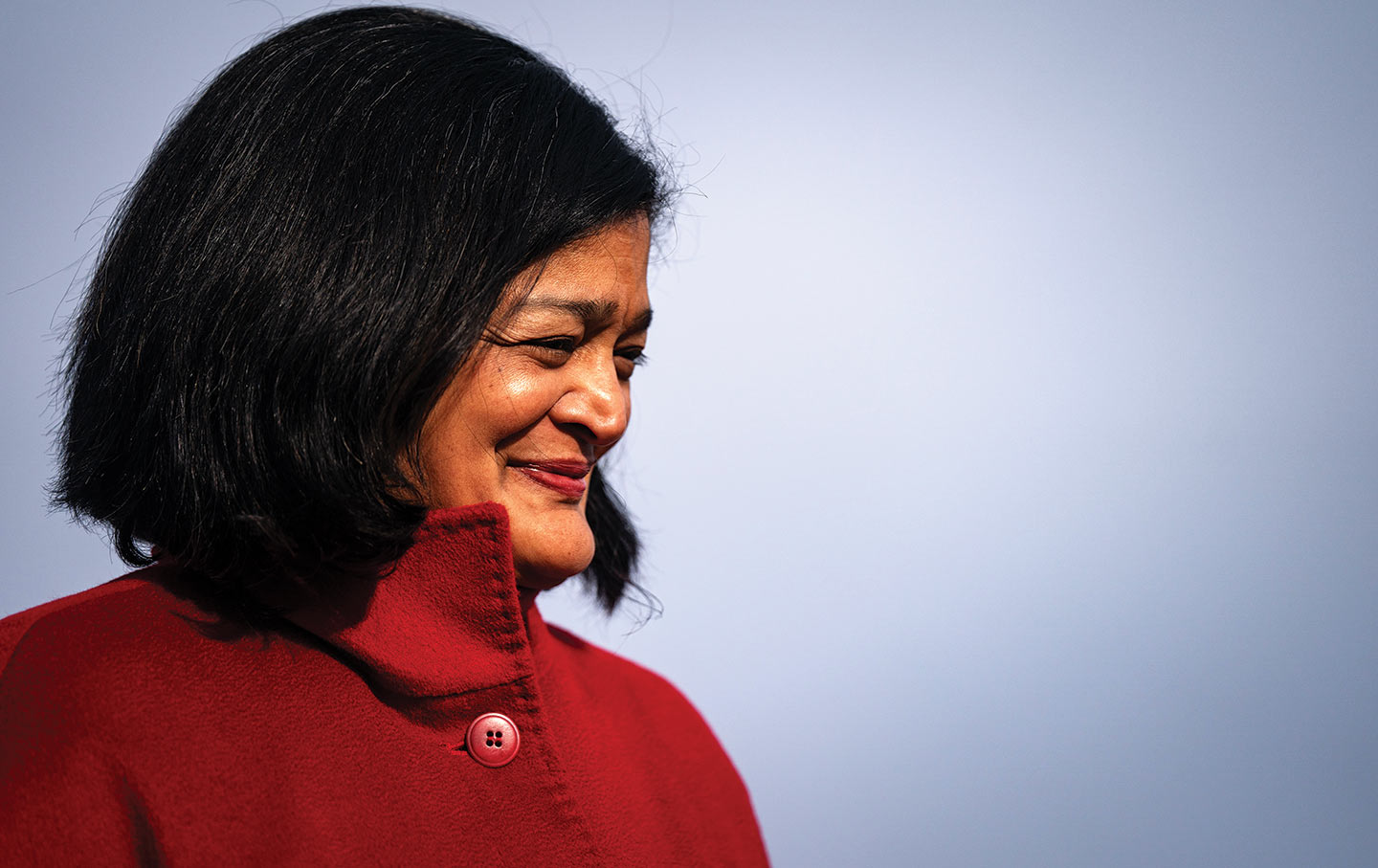
A dream deferred: “The American dream I experienced is out of reach for most people,” writes Pramila Jayapal.
(Kent Nishimura / Getty Images)
As with many other immigrants who choose to become Americans, my path to US citizenship was a long and difficult one. I was born in Chennai, India, and was raised in India, Indonesia, and Singapore. My parents believed deeply in the importance of an education—specifically, an American education, which they thought would enable me to achieve anything. So, when I was 16, my mother and father took their last meager savings and sent me to America by myself for college.
It took me 17 years, several degrees, and an alphabet soup of visas to ultimately get my citizenship. The penultimate step was marriage to a US citizen. That gave me a green card around the same time that I also received a prestigious two-year fellowship to live in India.
250 Years of Searching for a More Perfect Union
We planned things out carefully: I would get pregnant toward the end of the fellowship and return to the United States just in time to give birth and retain my permanent-resident status. But those plans quickly fell through after my daughter was born prematurely in India at 26 and a half weeks, weighing one pound, 14 ounces. The doctors gave her a 40 percent chance of survival, and I refused to leave her side. Her life was paramount, even if it meant I might lose my green card. Thanks to incredible advocacy from my institute, a deal was cut with the US embassy to restore my green card, but there was a catch: The years I had spent qualifying for citizenship would be erased from the record. I would have to start from scratch. I didn’t care. It allowed me to not be separated from my daughter and to return to the US once she was stable enough to fly.
That terrifying ordeal made me even more determined to become a US citizen so I would never again face the prospect of being separated from my family. I waited the requisite three years, passed my citizenship tests, and finally received my approval.
Even 26 years later, I have never forgotten the day when the process was finished. In the cavernous hall of the historic Immigration and Naturalization Service building in Seattle, I stood with hundreds of people from all over the world, many of whom had also waited decades. Some were refugees, escaping war and persecution; others had come to join their immediate family or take new jobs. We waved small US flags, renounced our citizenship to our birth country, and pledged allegiance to this new land of immigrants welcoming us to her shores. Tears rolled down my cheeks as I felt the mixed emotions of pride in my new American citizenship and sorrow at the renouncing of my Indian citizenship. In that moment, I understood that I would never live on the same continent as my parents again, and that I had been given the most coveted of opportunities: to become a US citizen.
That conferring of citizenship brought a new sense of responsibility: to participate in our democracy and to ensure that those opportunities remain available to others. I dedicated my life to public service—first as an activist and organizer pushing for immigration reform, higher minimum wages, and a better life for all Americans; then as a Washington state senator, the only woman of color in the Senate at the time; then as the first and only South Asian American woman to serve in the US House of Representatives. In a full-circle moment, I am now the first naturalized citizen to serve as the ranking member of the Immigration Subcommittee of the House Judiciary Committee.
But as we celebrate America’s 250th anniversary, the American dream I experienced is out of reach for most people. A nativist, fascist administration has utilized the levers of government to terrorize immigrants and citizens alike, sending armed, masked agents into our cities to kidnap and incarcerate thousands of people in for-profit jails, murder US citizens, attack constitutional free-speech rights, and rip apart families who have been part of our communities for decades. Almost every legal path to citizenship that once existed for immigrants like me has been ended. Cruelty, racism, and xenophobia have been wielded against us with glee by our own government to shield an oligarchic system that gives a few billionaires the vast majority of wealth, power, and control while stripping basic rights from the rest of us.
Our American identity is uniquely tied to immigration. Our legal, cultural, and political histories are complex combinations of exclusion and opportunity, xenophobia and multiculturalism. Layered on all of this is the failure of Congress to modernize the immigration system for more than 30 years. The last time we got close was in 2013, when the Senate passed a true bipartisan immigration-reform bill. House Republicans refused to bring it to a vote, because it would have taken away their ability to use immigration as an election issue.
Today, the broken and inhumane immigration system holds our country back from achieving progress on every front while creating deep fear and division. Immigration has always been a civil system, but Donald Trump has attempted to criminalize every form of it—including trying to strip birthright citizenship.
Despite all of this, Americans remain deeply convinced that immigration is a good thing. The horrors inflicted by Trump have led to record levels of public support for reining in and dismantling Immigration and Customs Enforcement; majorities also support providing a path to citizenship for undocumented immigrants and eliminating for-profit detention centers.
I have held a series of congressional hearings titled “Kidnapped and Disappeared” to expose ICE abuses, elevate frontline organizers, and build support for immigration reform. Courageous people from all walks of life have testified about these horrors and also about their own refusal to give in to the cruelty and the chaos. Organizing across the country against ICE and Customs and Border Protection has given new meaning to what it looks like to confront the government’s violence with nonviolent actions, to demand change when it seems impossible, and to win—whether in the courts or through the kind of public pressure that led to the ouster of Kristi Noem. Now we just need to win on legislation that fixes our immigration system once and for all.
In 1787, Benjamin Franklin said that America was a “republic, if you can keep it.” America was a promise, not a guarantee, from our founders. Now more than ever, protecting that promise depends on each of us. As I do this work, I am lifted and strengthened by the courage and resilience of so many that I have met along the way: the African immigrants who walked across deserts in bare feet to escape war, the undocumented grandmothers who risked everything for a better life for the next generations, and the many Dreamers who dared to demand more of their country. Each of them is a powerful reminder of the responsibility I felt, standing at my naturalization ceremony, waving the American flag, to do everything I could to defend that promise.
More from The Nation

The Jewish Case Against AI The Jewish Case Against AI
Haredi rabbis and the secular left agree: This technology is a threat to the entire social fabric.
The Fight for Educational Equality Is Also a Fight for a Just Supreme Court The Fight for Educational Equality Is Also a Fight for a Just Supreme Court
The court has severely weakened our ability to make an education system that fulfills the promise of Brown.
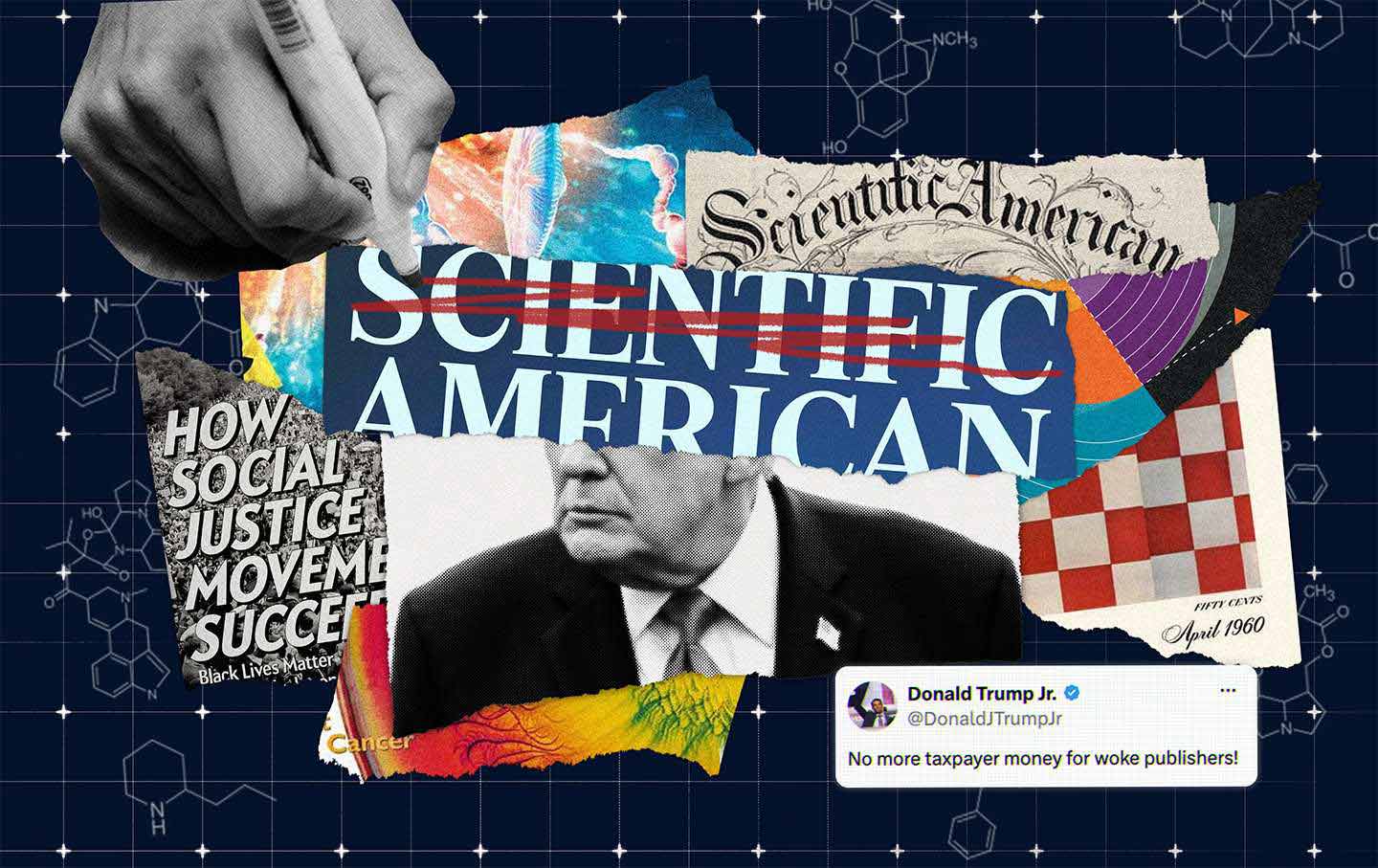
The Fall of “Scientific American” The Fall of “Scientific American”
When the beloved science publication got too political, its corporate owners stepped in. Now its future is uncertain.

The Bookstore Revolution in Taiwan’s Conservative Heartlands The Bookstore Revolution in Taiwan’s Conservative Heartlands
After Taiwan legalized same-sex marriage, gender-themed bookstores are working to build the social acceptance that the law alone couldn’t deliver.

Jalen Hurts Deserved Better. We All Do. Jalen Hurts Deserved Better. We All Do.
In a country that treats workers as expendable parts, Hurts’s playing through a blood clot is just the highest-profile example of the price workers pay in an oligarchy.
The Terrifying Future of States’ Criminalizing Pregnant People Is Already Here The Terrifying Future of States’ Criminalizing Pregnant People Is Already Here
The idea of charging people who have abortions with murder is gaining traction on the right. But a report finds that people are already being prosecuted for their pregnancy outcom...

