The Fight for Educational Equality Is Also a Fight for a Just Supreme Court
The court has severely weakened our ability to make an education system that fulfills the promise of Brown.
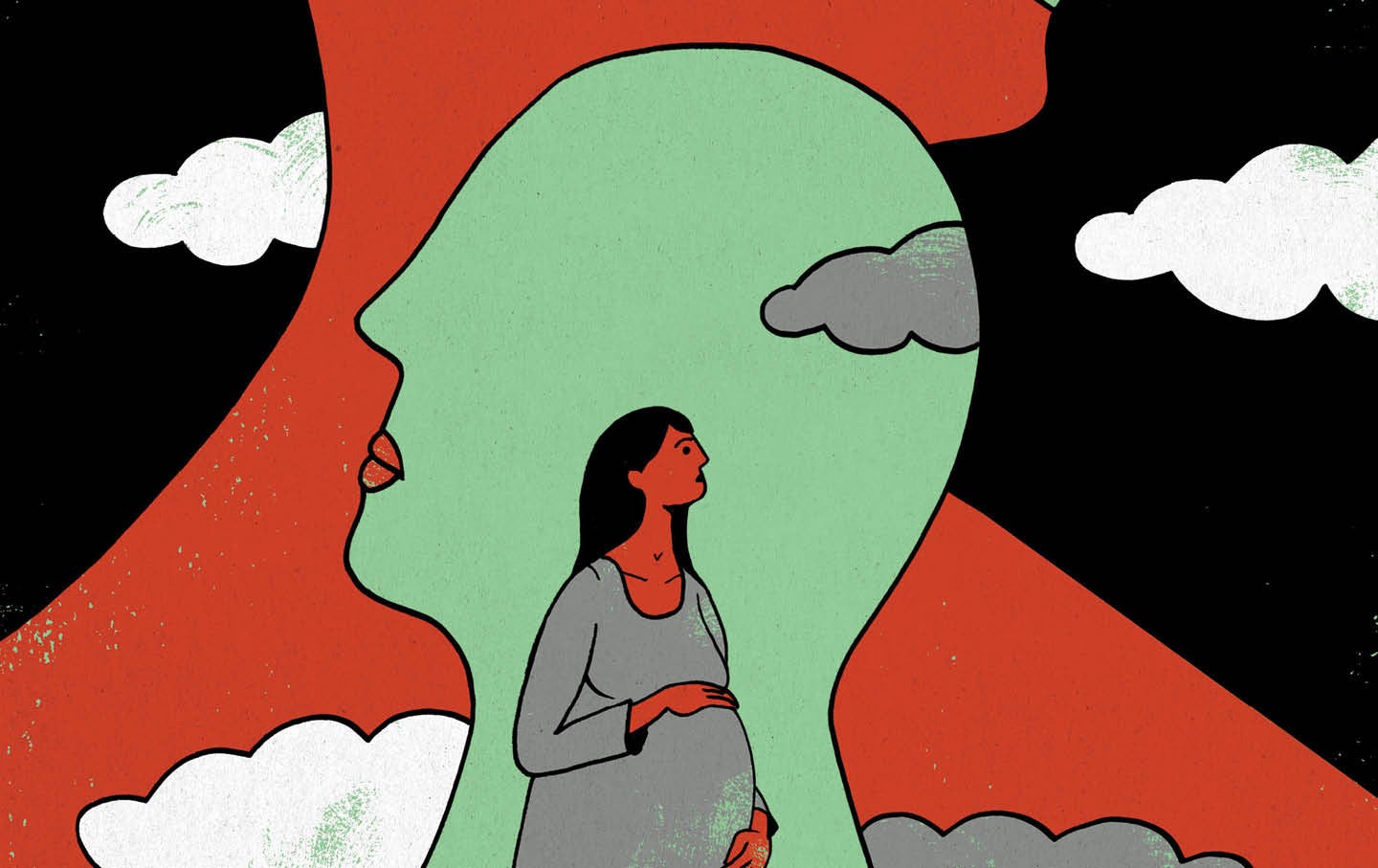
Last month, a piece by New York Times journalist Nikole Hannah-Jones sparked conversations across America about race, education, and parenting. In the piece, Hannah-Jones described in painstaking—and often painful— detail the consequences of the deliberate decision she and her husband made to send their daughter to a mostly Black, lower-income, underperforming New York City public school rather than a school with better educational prospects and, perhaps, fewer Black students. Hannah-Jones’s story is personal, but it also represents one that Black parents in the United States have faced for generations: How do we make the best choices for our children in an education system that has never kept its promise to them?
For Black parents, the question of where to send our children to school has never been simply a matter of parental preference. It has been shaped by government decisions regarding where we are allowed to live, how resources are allocated, how school districts are drawn, and ultimately what the Supreme Court of the United States considers to be a fair and just education for our kids.
While much of the current debate has boiled down to scrutiny over which choices are right for Black parents, it is imperative that we ask the deeper question running through Hannah-Jones’s piece: Why has any Black parent been forced to make such consequential trade-offs in the first place?
Long before the Legal Defense Fund, the organization I lead, won the Brown v. Board of Education case in 1954, ending state-sponsored racial segregation in public schools, Black Americans understood education as essential to freedom. Immediately after Emancipation, Black communities got to work building schools, training teachers, and raising money to invest in educational pursuits because they knew this would help smooth their rocky path to full citizenship.
In doing so, Black communities were helping to establish the very infrastructure of universal public education. Across the South, according to the National Park Service, newly enfranchised Black voters and elected officials fought diligently “to create the frameworks for public education in the 1860s and 1870s.” In 1868, Black state legislators in South Carolina helped pass laws that created one of the first statewide systems of public schools in the nation.
Brown was a constitutional milestone in the ongoing struggle to ensure that Black children could receive a quality education in the same public school system their ancestors and communities worked to build. Yet, over 70 years later, Black families must still navigate the education system of a country that fails to make it real, too often forcing them into choosing between their child’s psychological safety and the quality of their educational opportunities.
That’s in part because, in the decades after Brown, the Supreme Court has repeatedly weakened the structures that might have lessened the need for Black families to consider these trade-offs. As a result, our public schools continue to struggle with hyper-segregation.
Take 1973’s San Antonio Independent School District v. Rodriguez. In that case, the court upheld a Texas school funding system that overly relied on local property taxes, despite the fact that such a system produced significant differences in resources available to different districts due to state-sponsored racial residential segregation and its residual effects. This ruling, in effect, failed all students seeking government protections from an unequally funded school system, and was reinforced by the fact that education is not a fundamental right under the United States Constitution.
Nearly 30 years later, in Alexander v. Sandoval, the court held that individuals and other impacted parties could not use civil rights statutes, like Title VI, to challenge policies and practices, including those in the education system, that disproportionately harm certain children on account of race.
And in 2006’s notorious Parents Involved in Community Schools v. Seattle School District No. 1, the Supreme Court cannibalized its own legacy by striking down valiant efforts by Seattle school districts to maintain racially diverse schools through parent-led initiatives.
Taken together, these decisions cut off avenues to enact true change and fulfill Brown’s promise, instead placing the burden on families to navigate a defective system. That is the true tension at the heart of the school-choice debate that Hannah-Jones’s confessional conjures. And that is why LDF is fighting to advance policies that aim to expand educational opportunities across the country, including in New York, where we represent a multiracial coalition of students seeking an equal chance to compete for admission to New York City’s specialized high schools.
The broader debate over the future of the Supreme Court cannot be separated from the debate over the future of public education. The court, ironically, once described public education as “the very foundation of good citizenship.” But it has issued critical decisions that undermine that project and ignore that high-quality, equally accessible public education is essential for our multiracial, multiethnic democracy to thrive.
Popular
“swipe left below to view more authors”Swipe →The lesson from Hannah-Jones’s experiences is not that individual parents need to make “better” decisions; it is that our institutions need to give every family a meaningful choice. At its core, Brown promised America’s children equal educational opportunity and equal citizenship. Our branches of government, including the judiciary, must ensure that our society is legally and lawfully equipped to fulfill that promise.
For decades, the Supreme Court has been unwilling to do so, at the expense of tens of millions of children subjected to a woefully substandard education in taxpayer-funded schools. A court that is unwilling to fully uphold the breadth of its canonical decision on equality cannot be entrusted to define the boundaries of our Constitution and the rules of our democracy without appropriate checks on its authority. That’s why the fight for educational equality also requires a fight for a just Supreme Court. Otherwise, most Black families will continue to have school choice in name only, the scourge of school segregation will persist, and America’s foundation of good citizenship will remain unlaid.
More from The Nation
We Have Invited Insane Surveillance Into Our Homes We Have Invited Insane Surveillance Into Our Homes
Aggregated property listings are being weaponized by insidious intelligence outfits. We have ourselves to blame.
How Mona Chalabi Explains Income Inequality How Mona Chalabi Explains Income Inequality
An interview with the data journalist about how she uses numbers and design to illustrate how class weighs on the lives of Americans.

Rethinking the Early History of North America Rethinking the Early History of North America
Peter Mancall’s new book reframes the history of the American continent as a zone of encounters between Native peoples, European empires, and African societies.

Do Socialists Even Believe in Socialism Anymore? Do Socialists Even Believe in Socialism Anymore?
The American left has a growing list of victories—and an unfinished argument about the society it wants to build.
Feature / Mike Beggs, Ben Burgis, and Bhaskar Sunkara

A Rogue DA in No-Man’s Land A Rogue DA in No-Man’s Land
A strange case of prosecutorial misconduct during a murder investigation in the Oklahoma panhandle.