
I Tried to Deliver Aid to Gaza. Israel Kidnapped and Tortured Me.
They stripped us naked, deprived us of sleep, food, and sanitary facilities, arbitrarily threatened us with guns, and physically attacked us.
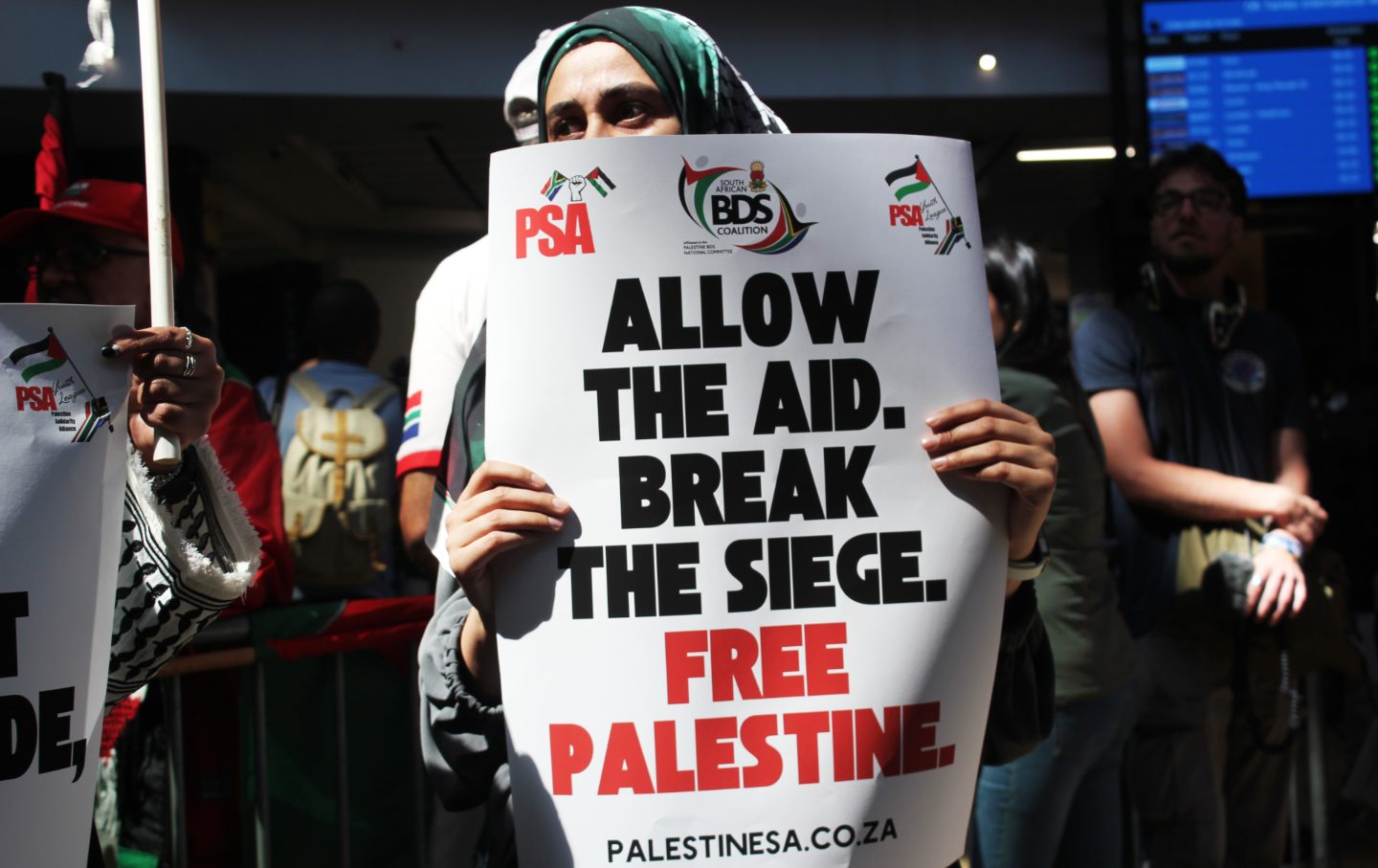
“We are journalists! We are medics!” I was chanting when the Israeli soldiers abruptly pointed their assault rifles at me. I tried to recall our medical training, but the lasers from their scopes distracted me. Was it the organs on the left or the right I was supposed to cover if they began shooting? I could not remember. I could only think of my mom’s last text: “If anything happens to you, I cannot go on.”
It was October 8, and I was sailing alongside nearly 100 others, mainly medical workers and journalists, on a ship bound for Gaza. Our boat was one of a flotilla of dozens of vessels with between 500 and 1,000 people that left for the besieged strip to deliver aid in what has been one of the worst humanitarian catastrophes of my lifetime.
For decades, I have worked as a human rights lawyer and journalist in war zones and conflict areas, but I was hesitant about this mission. Israel’s widespread and deliberate targeting of people in my profession made me—and my loved ones—worry that I might not return home.
The devastation of Gaza has been particularly lethal for journalists, with Israeli forces killing more media workers in the past two years than those killed in the US Civil War, both World Wars, the Korean War, the Vietnam War, the Yugoslavia Wars, and the post-9/11 War in Afghanistan combined. Gaza is also the deadliest place on the planet for humanitarian workers. The atrocities in Gaza are simply unprecedented.
I knew that being in international waters would not provide us protection. Israel has killed people on previous flotilla missions. In May this year, Israeli drones attacked the boat we were on, the Conscience, on a previous mission, causing a fire and forcing the volunteers to evacuate. Though the boat was fixed, it still bore the scars of the attack when we left port.
Despite the dangers of sailing to Gaza, I was drawn to participate in this historic mobilization, in part, because all other methods, including legal and diplomatic avenues, have failed. The United Nations has repeatedly condemned Israel’s war crimes in Gaza. The International Court of Justice has instructed Israel to cease its illegal occupation of Palestinian territories, while the International Criminal Court has issued arrest warrants for Prime Minister Netanyahu and Defense Minister Yoav Gallant. Yet Israel continues to carry out atrocity crimes with total impunity.
Ultimately, the resilience, bravery, and compassion of everyday Palestinians inspired me to join the flotilla. While Gaza’s medical system has been decimated, doctors are choosing to show up tirelessly and tend to their patients. Journalists are dashing into gunfire, risking their lives to ensure the stories and horrors of the genocide survive. Children, fathers, and mothers alike are evading military drones for miles to obtain bread for their families. As the world turned a blind eye, those of us aboard the Conscience could not.
On October 8, Israel illegally commandeered our boat 120 nautical miles from Gaza. Israel’s elite Shayetet 13 commandos, the Israeli equivalent of the US Navy SEALs, dropped from helicopters with their guns pointed at our heads and kidnapped us.
Over the next 12 hours, as they transported the boat to the Israeli port of Ashdod, they treated us as animals. Soldiers separated us from several of our colleagues, whom they beat in an adjoining room. As they filmed propaganda videos of them offering us food and water, pointing their guns at us and telling us to smile, some of the soldiers raided the aid we brought and indulged themselves.
When we arrived at Ashdod, they dragged us off the boat and forced us to kneel with our faces down in stress positions for hours. Soldiers walked around hitting, kicking, spitting on, and taunting us. If we looked up, the abuses worsened, as I found out on multiple occasions.
At first, the experience felt distant, almost like a movie, until soldiers smashed my face into the ground. The smell and taste of urine awakened me to the cruelty to which they were subjecting us. I was powerless to help as they beat my friends and colleagues next to me. The soldiers continued to attack the Muslim man in front of me, who kept passing out. He explained that he had low blood pressure. They called him a liar and repeatedly dropped him face-first onto the ground. Since his hands were bound, he could not brace for the falls.
Over the next several hours, they processed and interrogated us, ridiculing and mistreating us the entire time. Before putting me into a truck, a soldier blindfolded and slapped me, while another aggressively zip-tied me, yanking the ties tight several times so that my circulation was cut off.
The Israeli forces brought us to Ktzi’ot Prison. B’tselem, Israel’s most prominent human rights organization, has described it as one of Israel’s most notorious “torture camps,” with prisoners dubbing it “Israel’s Abu Ghraib.” There, they stripped us naked, deprived us of sleep, food, and sanitary facilities, arbitrarily threatened us with guns, and physically attacked us. The treatment was more violent for my Muslim, Arab, North African, and Israeli colleagues than for me.
Most of us in our block went on a hunger strike to demand that the guards allow a 69-year-old Buddhist monk imprisoned with us access to his medications for his heart condition. They refused. In fact, they beat anyone who asked for medicines, including an 83-year-old French woman I befriended on our ship.
On our third day of captivity, the prison officers woke us by banging on our cell doors, something they frequently did to harass us. This time, however, they took us from our cells and loaded us into prison trucks. Were we finally leaving?
The ride through the desert was hot, and some of my colleagues struggled to breathe. When we asked the armed soldiers on the other side of the bulletproof glass to turn on the ventilation, they laughed and went back to playing on their phones.
Moments later, we too laughed, perhaps for the first time since our kidnapping. One of the soldiers had dropped her assault rifle. Twice. The person next to me joked that if soldiers were not driving us to the desert to kill us, one of us would nevertheless end up dead if she could not keep her gun in her hand. Our chuckles felt liberating.
The truck pulled into Ramon airport near Israel’s southern borders with Egypt and Jordan, and the soldiers begrudgingly unloaded us. They quickly escorted us through the terminal, where Israelis waiting for commercial flights gave us middle fingers and called us terrorists, and loaded us on a plane chartered by Turkey. What seemed like only moments later, the plane took off, and we were leaving Israel. I was finally heading home.
As a lawyer who had documented widespread physical, sexual, and psychological torture in Ktz’iot Prison before winding up there myself, it has been strange to process what happened to us. For the first week I was back, I woke up throughout the night with my hands above my head because I was dreaming that soldiers were pointing their guns at me. Those nightmares have subsided, but not gone away completely.
Popular
“swipe left below to view more authors”Swipe →The bigger challenge I have encountered is the guilt I feel that my experience, though demeaning, was nowhere close to the terrors endured by Palestinians, who have endured chemical burns, starvation, amputations, electrocutions, and rapes. These forms of torture have been carried out systematically by Israeli forces with near total impunity. Human Rights Watch found that only 0.87 percent (yes, less than 1 percent) of complaints of mistreatment by Israeli soldiers have led to indictments. Accountability has lessened since October 7, 2023.
While we were in prison, Israel and Hamas signed a ceasefire agreement that has already been repeatedly violated. Though a pause in bombing, an increase in aid, and the release of Israeli and Palestinian hostages are worth celebrating, this deal is unlikely to bring lasting peace. Any peace deal must ensure an end to Israel’s illegal occupation of Palestinian lands and accountability for what the United Nations, Amnesty International, Human Rights Watch, Doctors Without Borders, the University Network for Human Rights, the International Association of Genocide Scholars, and Genocide Watch have classified as genocide.
Until these things happen, humanitarian organizations and concerned individuals will continue their efforts—including sailing to Gaza—to aid Palestinians in need.
Become a Sustaining Donor This September
Between the reemergence of right-wing red-baiting and Donald Trump’s use of the chilling National Security Presidential Memorandum–7 to criminalize left political organizing, we’re seeing McCarthyism reborn before our eyes.
This assault on democracy cannot be ignored or wished away. Resisting it requires bravery in the face of threats and repression, a steadfast commitment to the truth, and the unwavering belief that we can—and will—overcome this darkness.
We must have an independent media that sets the record straight, unearths corruption and abuses of power, and advances a politics of justice and dignity for all if we’re to win this fight.
That’s why I’m writing to you today. This September, The Nation needs to add 100 monthly donors to sustain our progressive journalism. Your contribution makes the next investigative report, the next truth-speaking column, and the next pathbreaking essay all possible.
I hope you’ll support our work with a recurring donation today. If you donate $10 or more a month, we’ll send you a brand new “Hands Off the Free Press!” sticker to recognise your commitment to our cause. Please, donate today.
Onward,
Katrina vanden Heuvel
Editor and Publisher, The Nation
More from The Nation
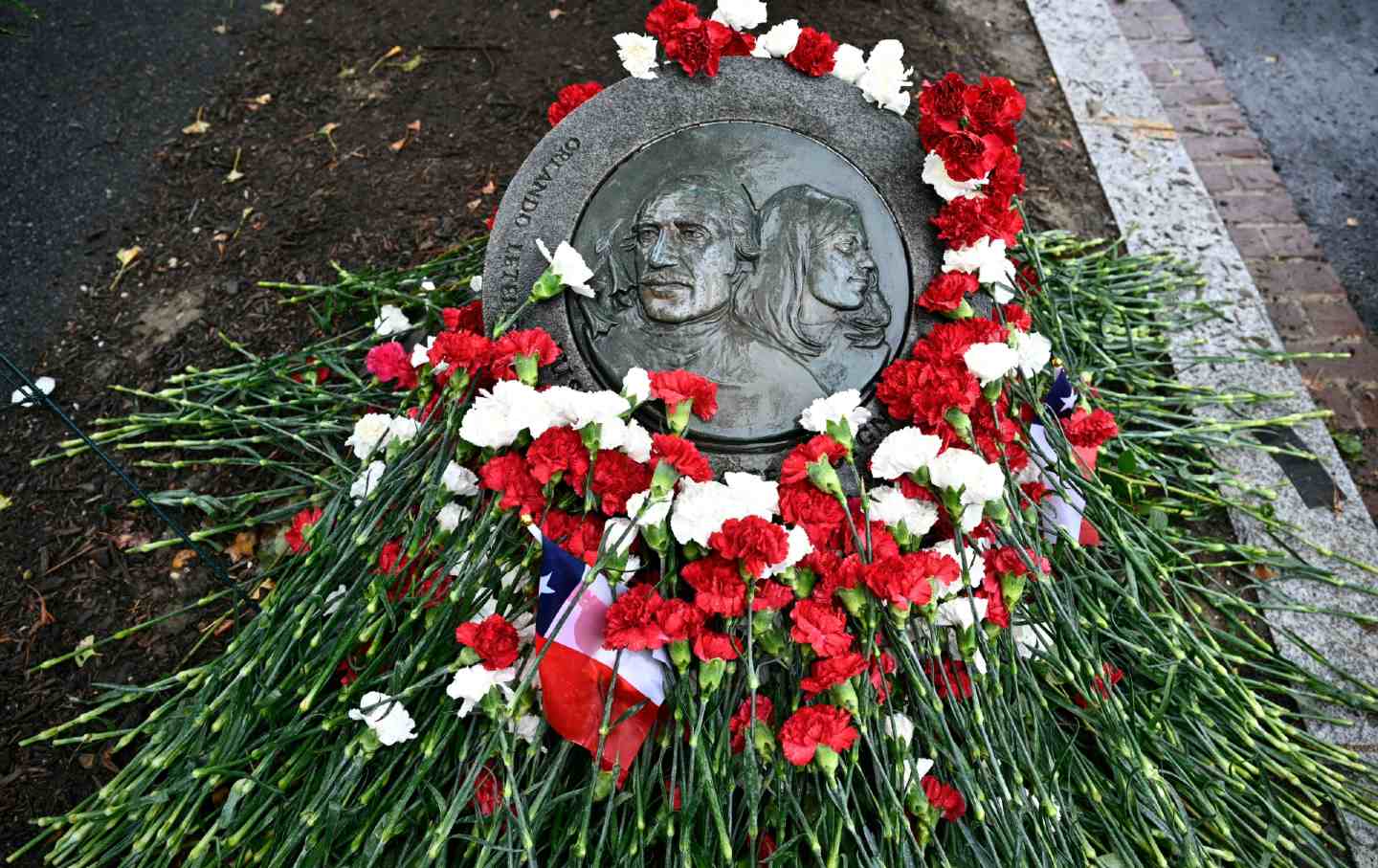
Pinochet: The Verdict of History in the Letelier-Moffitt Case Pinochet: The Verdict of History in the Letelier-Moffitt Case
An act of international terrorism on the streets of Washington, DC, still reverberates 50 years later.
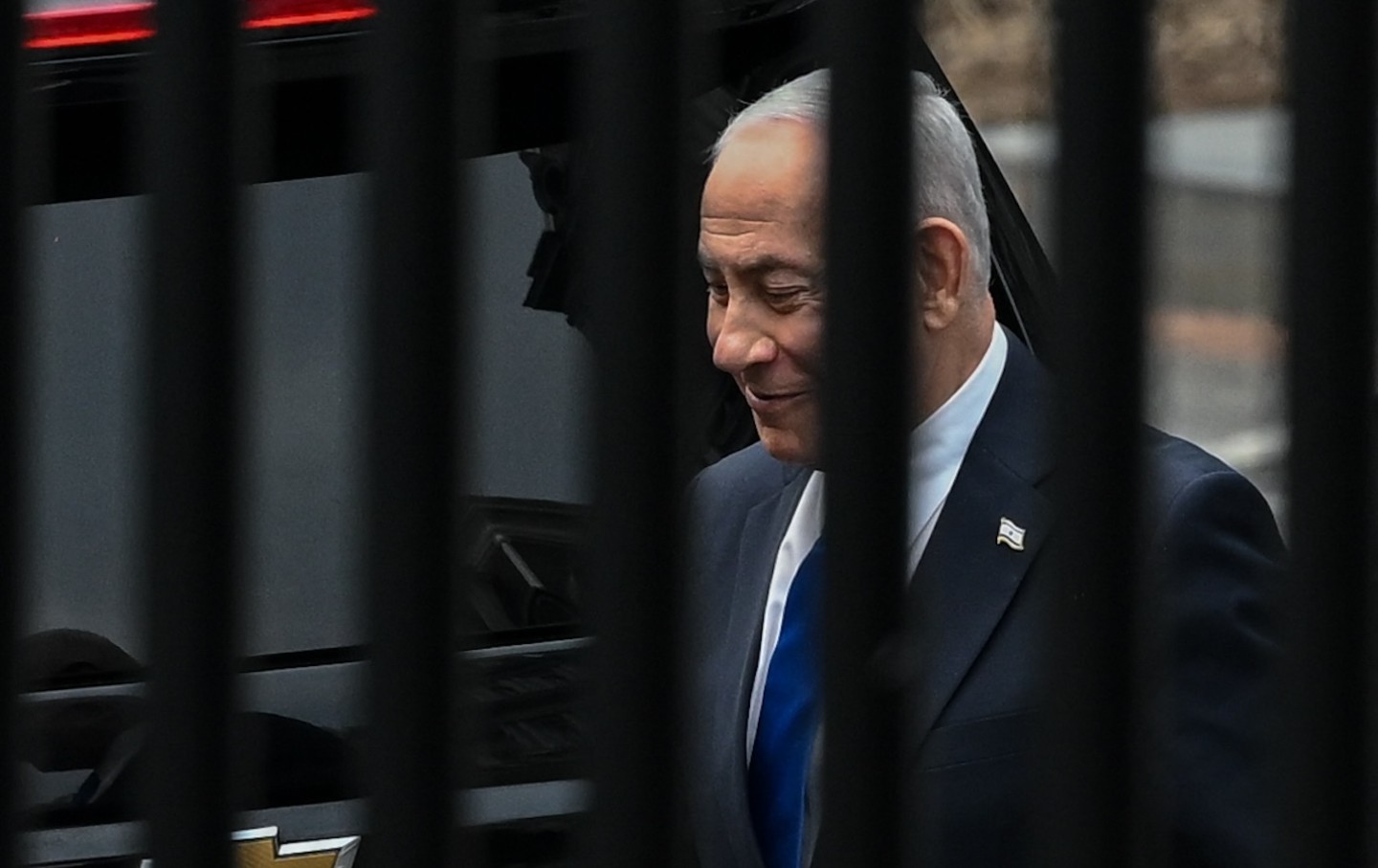
How to Arrest Benjamin Netanyahu How to Arrest Benjamin Netanyahu
Make no mistake: The United States can seize Netanyahu for crimes under US law and prosecute him in US courts when he is in New York City this week.
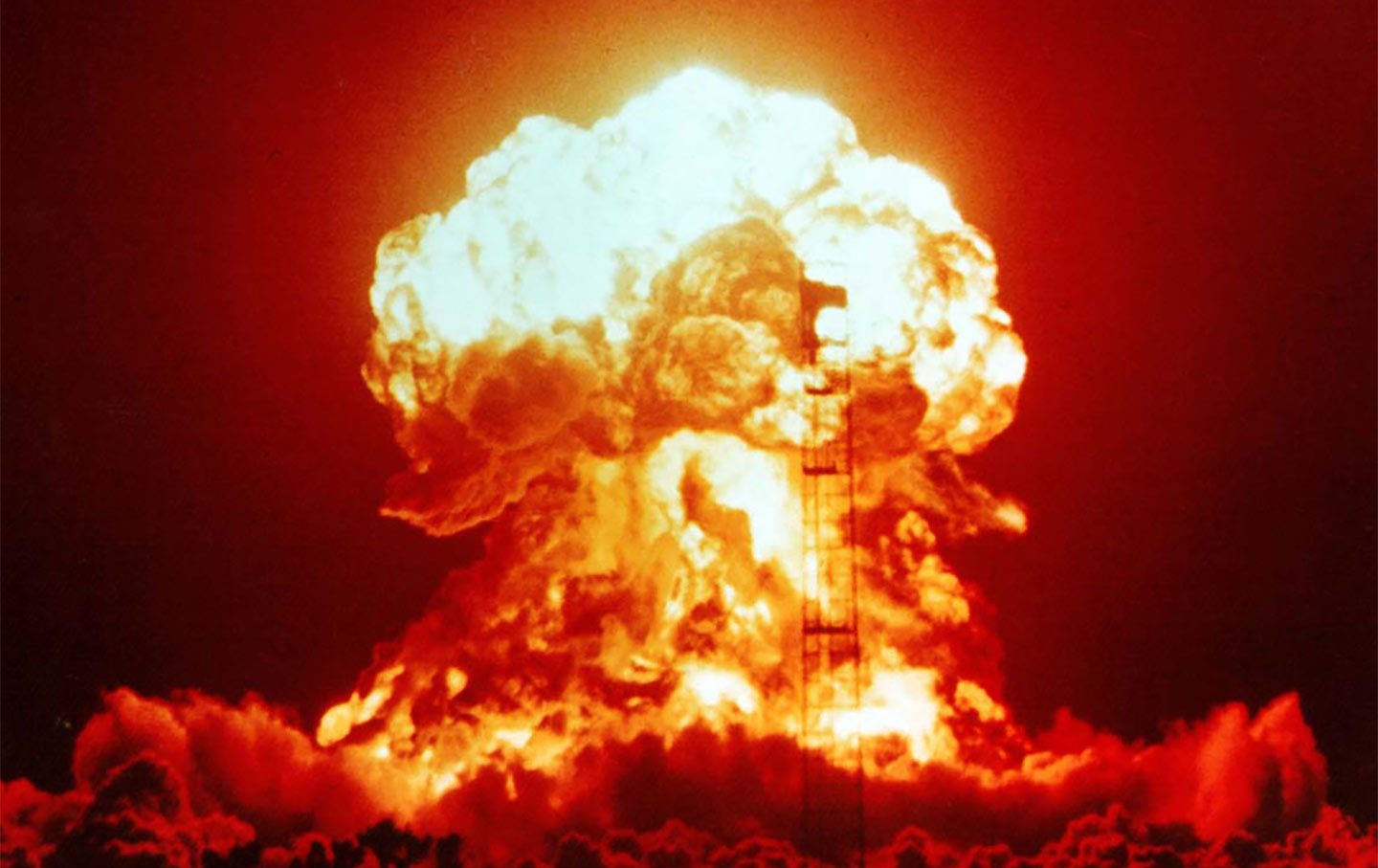
In the Age of AI, Nuclear Weapons Abolition Is a Renewed Imperative In the Age of AI, Nuclear Weapons Abolition Is a Renewed Imperative
As long as we have nuclear weapons, the job of ending humanity will continue to be as easy as the push of a button—or an AI agent hacking into a nuclear command-and-control system...
These Students Are Shaping UN Human Rights Policy These Students Are Shaping UN Human Rights Policy
Princeton undergraduates are helping the organization develop standards for post-mortem digital privacy and death in custody.
The Peril of Trump’s Final Act: Would He Use a Tactical Nuclear Weapon in Iran? The Peril of Trump’s Final Act: Would He Use a Tactical Nuclear Weapon in Iran?
Trump is trapped in a war that has already been lost, a reality that he will never allow himself to admit.
A Spreading War Rattles Global Energy Markets A Spreading War Rattles Global Energy Markets
Analysts say the consequences for energy prices and the world economy may be more serious in this later phase of a war that many had expected to be largely over by now.

