
Europe Is at Donald Trump’s Mercy. It Has Itself to Blame.
The European Union has failed to mount an alternative to Donald Trump. On defense, geopolitical alignment, and trade policy, it is ever more subservient to the United States.
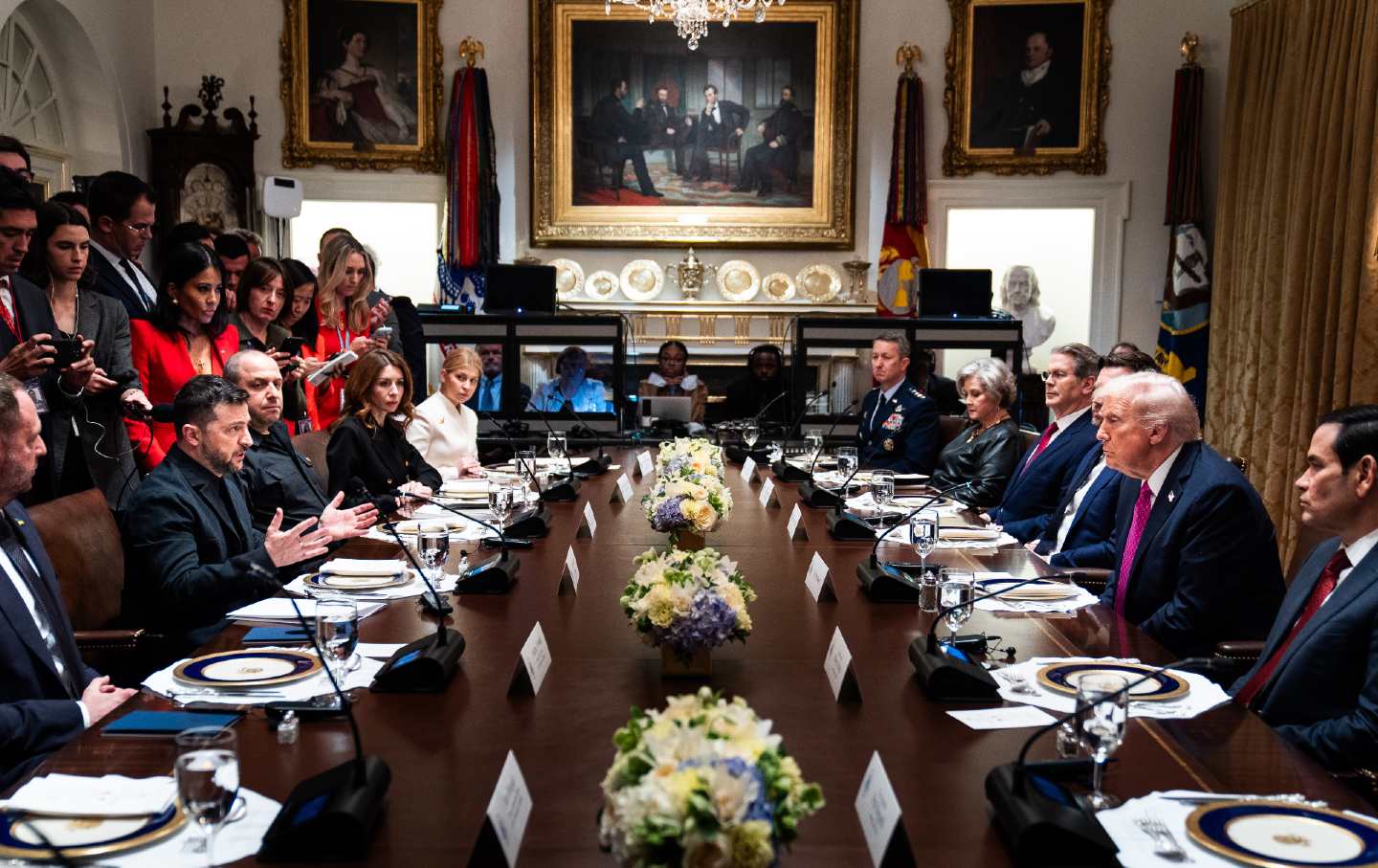
How much more can Europe give to appease Trump? Despite months of concessions on everything from trade to defense and tech regulations, ties between the United States and its traditional allies remain as unstable as ever.
In mid-October, they appeared to be taking another turn for the worse when the White House announced that the US president would hold a new round of in-person talks with Vladimir Putin, this time under the auspices of Hungarian strongman Victor Orbán. The Budapest summit was quickly canceled, and Washington moved to impose sanctions on major Russian energy companies. Yet, once again, Brussel’s charm-diplomacy offensive was revealed for what is: a teetering house of cards that could come crashing down.
In late July, European Commission President Ursula von der Leyen acceded to a deeply unbalanced trade deal with Washington designed to avert an open US-EU trade war. Many hoped that the agreement, signed at a Trump-owned golf course in Scotland and placing a 15 percent surcharge on exports to the United States without EU retaliation, would mark the beginning of a durable thaw in transatlantic relations.
Even that didn’t satisfy the US president’s insatiable desire to keep Europe under his heel. In another recent ask, the White House has demanded that Brussels exempt American corporations from the bloc’s environmental rules and due-diligence standards, which it deemed “serious and unwarranted regulatory overreach” in a position paper recently submitted to EU officials. “We are not rolling back on any of our laws,” a commission spokesperson said on October 9. However, in another sign of retreat, EU executives are reportedly preparing a “checklist” to underline how the bloc’s ongoing deregulatory push can satisfy Trump’s demands.
Then there’s the ever-thorny question of Europe’s modest tech regulations. Trump blasted the early September decision by the European Commission—the EU’s executive arm—to impose a nearly €3 billion fine on Google for anticompetitive practices in the Web advertising market. “My Administration will NOT allow these discriminatory actions to stand,” the US president wrote on Truth Social, aligning himself with a US tech sector up in arms over modest attempts by Brussels to regulate Silicon Valley.
The affair has blown over for now, but in a preliminary ruling on October 24 the commission found that Meta violated the bloc’s content-moderation guidelines on Facebook and Instagram. Regulators will try their best to slow-walk further financial sanctions, knowing that seemingly any action is liable to provoke the frustration of the White House. In December, the commission is expected to submit another package of regulatory “simplification” road maps, this time on digital and tech policy.
Perhaps Europe has no choice but to bend the knee to Trump. In a late September column for the Financial Times, Janan Ganesh offered something of an apology for European capitulation. “If the price of [US] protection is being held over a barrel on the serious but ultimately not existential matter of trade, Europe must assume the position,” the columnist wrote. This would be doubly warranted, according to Ganesh, if it serves as a “bridging tactic to a more self-reliant future.”
That argument would have more going for it if European pliancy accomplished what it is meant to achieve—and did not run the full gamut of contemporary global fractures. Months after the 12-day Israel-Iran war, European powers have fallen even closer into line behind Washington, reimposing sanctions against Tehran in late September. At the UN General Assembly, key European states such as France did go out ahead of Washington to recognize Palestinian statehood. But just what concrete significance that will have is likely to be moot, as European capitals endorse Trump’s 20-point Gaza peace plan. Spelling out a future of seemingly indefinite occupation of the Palestinian coastal territory, even that deal appears increasingly fragile as Israel renews its bombing campaign despite the return of the remaining hostages held by Hamas.
Beyond shoring up security ties, a long list of reasons can explain Europe’s capitulation.
Internal divisions between the EU’s 27 member states and institutional inertia in Brussels make a serious politics of autonomy exceedingly difficult. Italian Prime Minister Giorgia Meloni and her Hungarian counterpart Viktor Orbán are MAGA allies, to name only two leading European figures who openly admire the US president. In European lore, the common market and its regulatory framework are designed to allow the bloc to escape a global race to the bottom in labor, health, and environmental standards. But defending that ideal—and its limited translations in law and policy—in the face of US pressure would be far easier if the European Union were not facing its own libertarian revolt from wary corporate lobbies.
Or take the commission’s president, reelected to a second term in 2024. Ursula von der Leyen is a pure product of the German establishment; her worldview is rooted in the conviction that maintaining close ties with Washington is a necessity. In her State of the European Union address delivered on September 10, she called her accord with Trump “the best possible deal out there,” one that “provides crucial stability with the US at a time of grave global insecurity.”
A key question in the months and years to come is whether that stance turns into a political liability. This month, the left-wing and far-right oppositions in the European Parliament lost no-confidence votes against the EU’s chief executive that castigated the trade deal with the US and Europe’s rudderless diplomacy. The European Parliament could also turn up the pressure on the commission for a full-fledged enforcement of tech regulations.
The bloc’s repeated—and often unrequited—concessions to Washington are starting to hit home in European opinion. One study published in September by the French geopolitical revue Le Grand Continent—based on interviews with respondents in France, Germany, Italy, Poland, and Spain—suggests that a majority of Europeans felt “humiliation” in light of the terms of the trade agreement.
That sentiment is hardly surprising, even if it’s not translating into a coherent political alternative. In addition to lowering EU duties and regulatory rules, the bloc agreed to purchase €750 billion worth of US energy supplies in the coming years. Advocates of von der Leyen’s deal can point out that the terms of the deal are vague. The EU commission does not have the power to order EU firms to make specific investments in the United States—the official pledge is for $550 billion—and it doesn’t place orders for American energy products. Yet the message of the commission’s approach is clear: Washington must be kept on board, whatever the cost.
Popular
“swipe left below to view more authors”Swipe →Weapons are another bargaining chip. Since Russia’s invasion of Ukraine, the relative fragility of the European defense industry has been a subject of constant anxiety for the bloc’s elites. Facing growing calls to support domestic suppliers, EU leaders agreed to a modest, 35 percent cap on non-EU military procurements from the €150 billion rearmament fund the commission approved this spring.
But that will likely prove the exception to the ongoing dominance of the US defense sector.
Between 2020 and 2025, 64 percent of European military purchases were from US suppliers—up from 52 percent in the preceding five years. At the 2025 NATO summit in June, European member states accepted Trump’s demands that they spend 5 percent of GDP on defense, pointing to a possible windfall for US contractors. This summer’s trade deal has Europe pledging to “substantially increase procurement of military and defense equipment from the United States.” Over the summer, European leaders also agreed to finance future US weapons transfers to Ukraine. The bloc’s leaders are now vying to leverage frozen Russian assets in Europe to finance Kyiv’s future purchases of US weapons.
One comforting conceit in Brussels and autonomy-minded capitals like Paris is that mounting global tensions might finally spark a long-awaited revolution in European policymaking. That it’s time for a drastic break from the norm is something that even bona fide members of the EU’s sacrosanct technocracy can recognize. In September 2024, their fears and hopes were best articulated by former European Central Bank president Mario Draghi, who released an authoritative report on the relative decline of European capitalism. Designed to bolster European corporations amid stiffening global competition, many of Draghi’s 383 policy recommendations could hardly be called progressive. But he did argue for collective EU borrowing to allow for large-scale public investments.
One year later, and the policy outcomes are nil, Draghi warned this September. “Inaction threatens not only our competitiveness but our sovereignty itself,” the former Italian prime minister said last month.
Inertia is winning out domestically. On the diplomatic front, the EU’s handling of Trump has added insult to injury, leaving it with little alternative to subordination.
Become a Sustaining Donor This September
Between the reemergence of right-wing red-baiting and Donald Trump’s use of the chilling National Security Presidential Memorandum–7 to criminalize left political organizing, we’re seeing McCarthyism reborn before our eyes.
This assault on democracy cannot be ignored or wished away. Resisting it requires bravery in the face of threats and repression, a steadfast commitment to the truth, and the unwavering belief that we can—and will—overcome this darkness.
We must have an independent media that sets the record straight, unearths corruption and abuses of power, and advances a politics of justice and dignity for all if we’re to win this fight.
That’s why I’m writing to you today. This September, The Nation needs to add 100 monthly donors to sustain our progressive journalism. Your contribution makes the next investigative report, the next truth-speaking column, and the next pathbreaking essay all possible.
I hope you’ll support our work with a recurring donation today. If you donate $10 or more a month, we’ll send you a brand new “Hands Off the Free Press!” sticker to recognise your commitment to our cause. Please, donate today.
Onward,
Katrina vanden Heuvel
Editor and Publisher, The Nation
More from The Nation

Israel’s Election Can’t Fix What Netanyahu Broke Israel’s Election Can’t Fix What Netanyahu Broke
The fundamental problem is not the name of the prime minister, but rather the actions of the Israeli government and the urgent issues that need to be addressed.
The AfD’s Rise Isn’t Just About East Germany The AfD’s Rise Isn’t Just About East Germany
The Alternative für Deutschland has a stable national poll lead, including in the former West Germany. Its rise owes to much more than Eastern grievances.
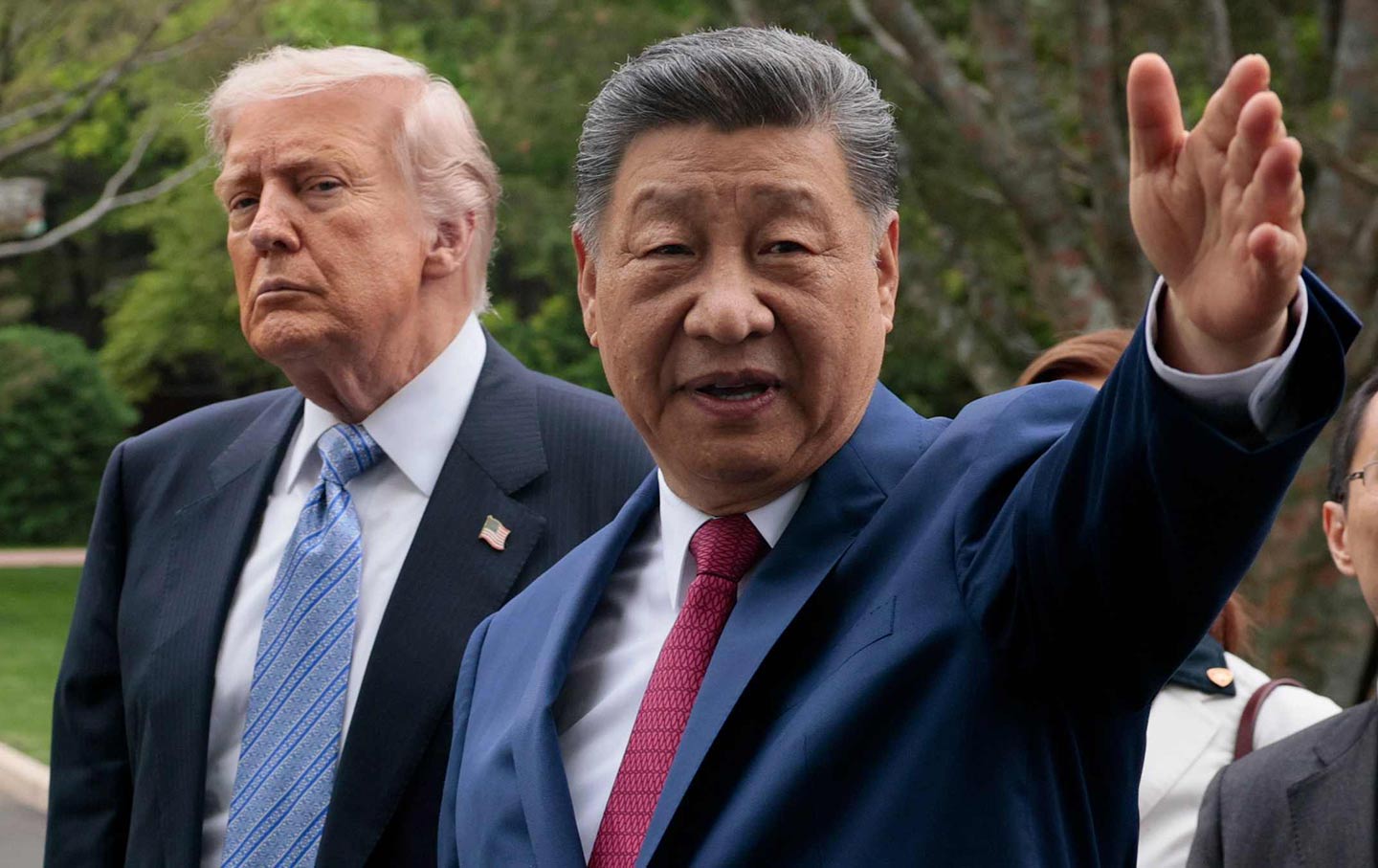
Chinese Development Is the Betrayal Washington Cannot Forgive Chinese Development Is the Betrayal Washington Cannot Forgive
The prospects for Xi Jinping’s visit are dim because American leaders are blaming China for the failures of globalization.

Pinochet: The Verdict of History in the Letelier-Moffitt Case Pinochet: The Verdict of History in the Letelier-Moffitt Case
An act of international terrorism on the streets of Washington, DC, still reverberates 50 years later.
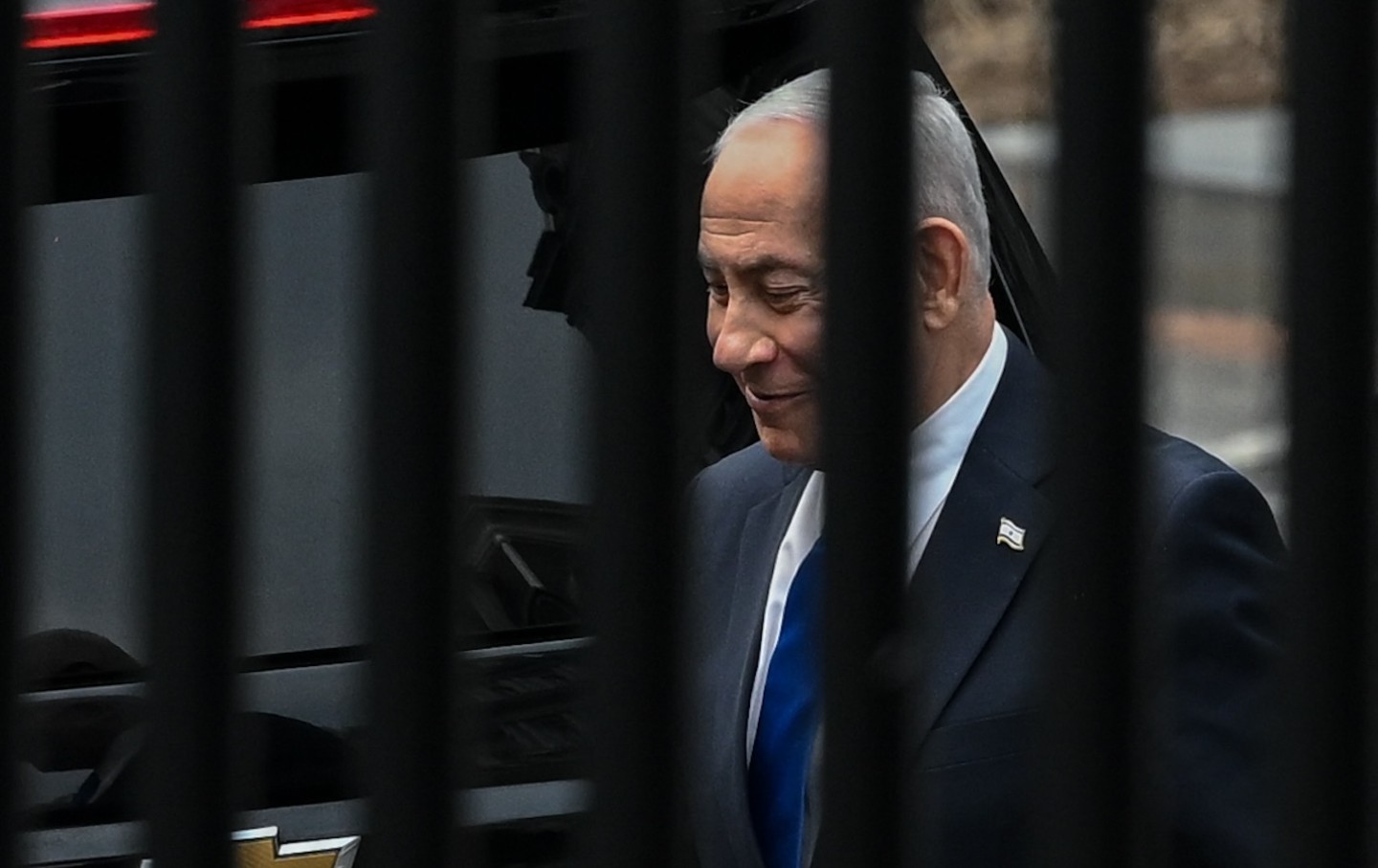
How to Arrest Benjamin Netanyahu How to Arrest Benjamin Netanyahu
Make no mistake: The United States can seize Netanyahu for crimes under US law and prosecute him in US courts when he is in New York City this week.
In the Age of AI, Nuclear Weapons Abolition Is a Renewed Imperative In the Age of AI, Nuclear Weapons Abolition Is a Renewed Imperative
As long as we have nuclear weapons, the job of ending humanity will continue to be as easy as the push of a button—or an AI agent hacking into a nuclear command-and-control system...

