
The Makings of a Mass Crisis
Unless Morocco’s government provides better jobs, education, healthcare, and human rights to young people, the crisis we witnessed this last week will happen again.
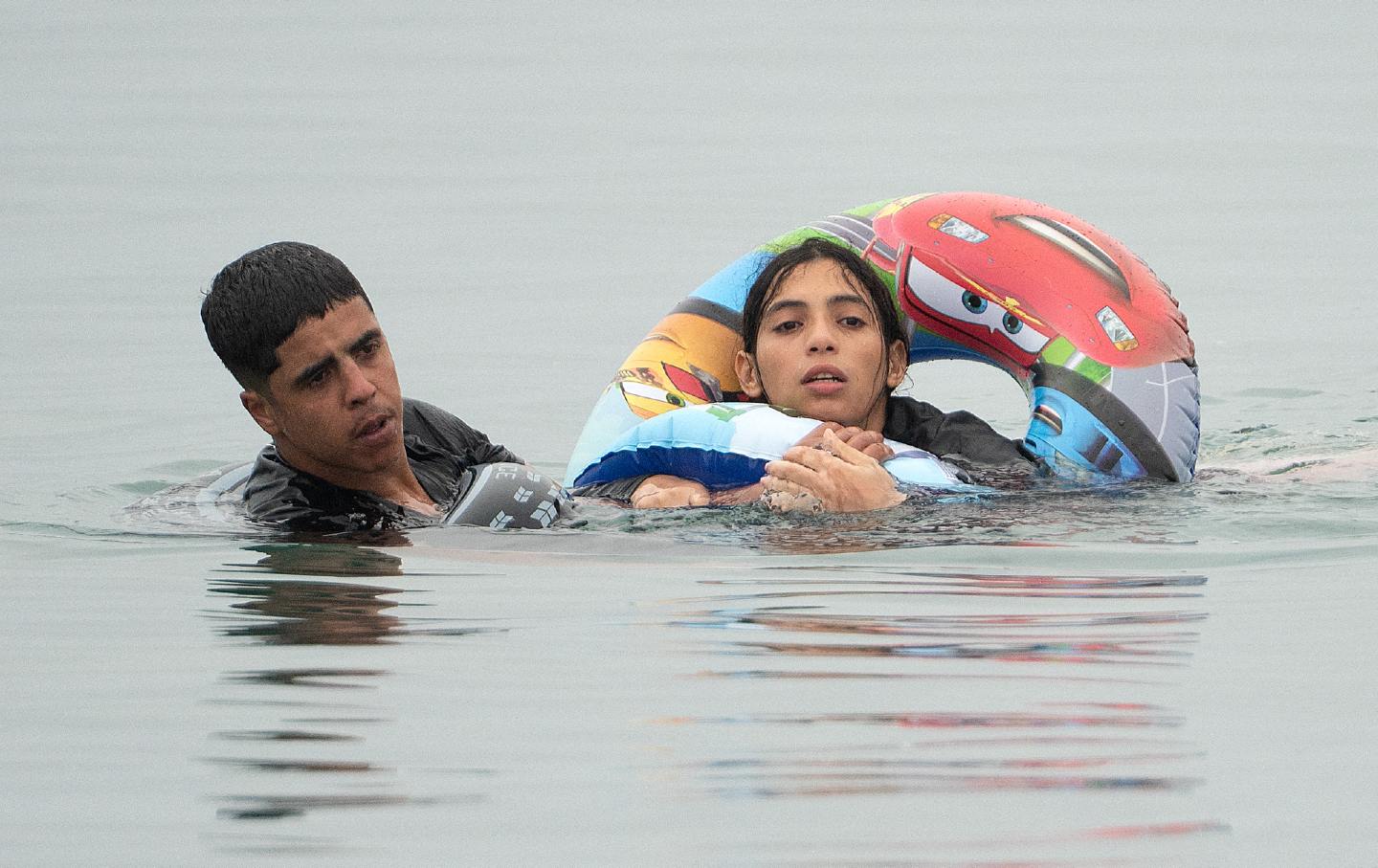
During the last week of July, as a heat wave desiccated the Mediterranean basin and wildfires ravaged cities on both sides of the sea, an estimated 50,000 Moroccan migrants crossed into the Spanish enclave of Ceuta in northern Morocco, swimming the short distance around the border post. By July 31, more than 48,300 had already returned home, after finding a local immigration processing center packed, shops and restaurants closed, and nothing to eat or drink. What looked to be a massive humanitarian crisis was defused almost as soon as it had started.
Theories quickly circulated on social media. That thousands of young Moroccans had spontaneously crossed into Ceuta after Spain’s Supreme Court ruled that migrants arriving by sea could not be sent back immediately. That Morocco had enabled these crossings after Spanish Prime Minister Pedro Sánchez visited its political rival Algeria, to remind the prime minister that Morocco can still exert control over migration flows into Europe. That Morocco had sent people to the border at the behest of the United States and/or Israel, because the Sánchez government had recognized Palestine as a state. That Morocco wanted to reassert its territorial claims over Ceuta and Melilla, Spain’s last two outposts in Africa. Everyone was grasping for a sensible explanation to the crisis or some kind of strategy behind the madness.
The influx of migrants happened on Throne Day, when King Mohammed celebrated his 27 years in power at a series of ceremonies held in the north of Morocco. Dignitaries in suits, jellabas, and caftans streamed into the palace for celebrations, while just a few miles away young Moroccans were throwing themselves into the sea hoping to cross into Spain. The contrast was jarring. To add to the surreality, that evening the Moroccan Women’s National Team defeated its Algerian counterpart in the group stage of the Women’s African Cup of Nations, a qualifying event for the World Cup. Gianni Infantino, lately embroiled in a scandal over the privatization of FIFA, was present at the palace celebrations. You can’t write coincidences like this even in a work of fiction.
But it beggars belief that, in the week leading up to Throne Day, thousands of young people could stream to the border post unnoticed and unchallenged. Posts on social media had falsely claimed that anyone who made it to Ceuta by sea could obtain legal status in Europe. (In fact, residents in the Spanish enclaves of Ceuta and Melilla are subject to identity control and cannot freely enter Schengen Area countries.) Witnesses say that the Moroccan police enabled the crossings by pointing would-be migrants in the right direction. There are disturbing precedents. Back in July 2022, an estimated 2,000 sub-Saharan migrants scaled the fence into Ceuta, leading to a stampede in which two dozen were killed. And in May 2021, in the midst of a diplomatic row between Spain and Morocco over Western Sahara, more than 8,000 migrants were allowed to cross into Ceuta.
Spain and Morocco have a history that stretches back centuries. What happened at the border last week probably has more to do with internal politics and competing interests than with anything else. There may not be a simple or single reason, though there is a wider context. Relations between the two countries, which had warmed considerably after Sánchez announced his support for Morocco’s autonomy plan in Western Sahara, have been cooling again. Not long ago, the Spanish government said it would grant citizenship to people born during its colonial rule over the desert territory, a change in status it did not apply to its former colonial areas in northern Morocco. The decision likely came as a sign of bad faith in the autonomy plan that Morocco has long championed. But this, too, is conjecture. Until we know who started the online rumors promising legal status in Europe to people who cross by sea into Ceuta, we can’t say what triggered the migration event or why it wasn’t stopped in a week as sensitive as that leading to Throne Day.
Whatever the strategic (mis)calculations behind this crisis, what is indisputable is that on any given day, there are tens of thousands of young people in Morocco who are willing to risk everything for a chance to live in Europe. Men, women, and even families with young children took part. It didn’t seem to matter what studies reveal about the actual lives of undocumented people, or what newspapers report about low wages, social alienation, or human trafficking. The viral claims of legal status proved too tempting, and the images on social media too seductive.
Compounding the problem is the fact that, every summer, Moroccans from the diaspora return to the kingdom on holiday, spending their annual savings on cash and gifts for families back home, and providing a boost to the local tourist economy. Young Moroccans see friends and family members enjoying a lifestyle that they don’t have at home and conclude, not unreasonably, that Europe holds promises that their own country doesn’t.
What promises? Jobs, for one thing. The youth unemployment rate in Morocco is notoriously high, and, despite evidence to the contrary, many migrants believe they will find well-paying jobs in Europe. At least some of the people who joined the crowds crossing into Ceuta appear to be employed, if poorly, in their own country. A nurse told a Spanish news outlet that, for all his degrees and training, he makes €300 a month. These migrants want more than underemployment; they want decent wages and healthcare and a decent standard of living.
Rights, for another thing. Spain guarantees its people freedom of expression and bodily autonomy and a chance to live your life without interference from the government. Jobs and human rights together operate as “pull” factors, drawing the imagination of young Moroccans and making them believe that a better future means a future outside Morocco.
In the last decade, we have witnessed many mass migration events: refugees fleeing Syria, Ukraine, Palestine, and Sudan, to name just a few. People who escape civil war or genocide or starvation or atrocities of all kinds are determined, no matter what happens on their long and arduous journey, to make it to safety. But the Moroccan migrants who crossed into Ceuta did not appear to share this overwhelming desperation or unshakable determination. Nearly all of them returned just 24 hours after the crossing, which suggests they are not subject to a “push” factor.
Some expressed relief at being back in their homeland. A young woman who swam around the border post and found only a beach packed with other would-be migrants, a few corpses, and no resources of any kind, returned by land to Morocco and told a local news camera, “I ask forgiveness from all Moroccans.” A young man told a Spanish journalist, “To be honest, I don’t even know why I’ve come.” It was as if thousands of young Moroccans had been gripped by a mass delusion that they would be handed legal status and jobs, then quickly found out they were wrong. The grim result is that more than 70 people died in the crossing.
Morocco will be cohosting the World Cup with Spain and Portugal in 2030, and has embarked on vast infrastructure projects, including building newer stadiums, more railroads, and updated airport terminals. That thousands of Moroccans are willing to leave the country at the first sign of opportunity is a terrible indictment of these priorities. Unless the government provides better jobs, education, healthcare, and human rights to young people, the pull factors will remain, and the crisis we witnessed this last week will happen again.
Become a Sustaining Donor This September
Between the reemergence of right-wing red-baiting and Donald Trump’s use of the chilling National Security Presidential Memorandum–7 to criminalize left political organizing, we’re seeing McCarthyism reborn before our eyes.
This assault on democracy cannot be ignored or wished away. Resisting it requires bravery in the face of threats and repression, a steadfast commitment to the truth, and the unwavering belief that we can—and will—overcome this darkness.
We must have an independent media that sets the record straight, unearths corruption and abuses of power, and advances a politics of justice and dignity for all if we’re to win this fight.
That’s why I’m writing to you today. This September, The Nation needs to add 100 monthly donors to sustain our progressive journalism. Your contribution makes the next investigative report, the next truth-speaking column, and the next pathbreaking essay all possible.
I hope you’ll support our work with a recurring donation today. If you donate $10 or more a month, we’ll send you a brand new “Hands Off the Free Press!” sticker to recognise your commitment to our cause. Please, donate today.
Onward,
Katrina vanden Heuvel
Editor and Publisher, The Nation
More from The Nation
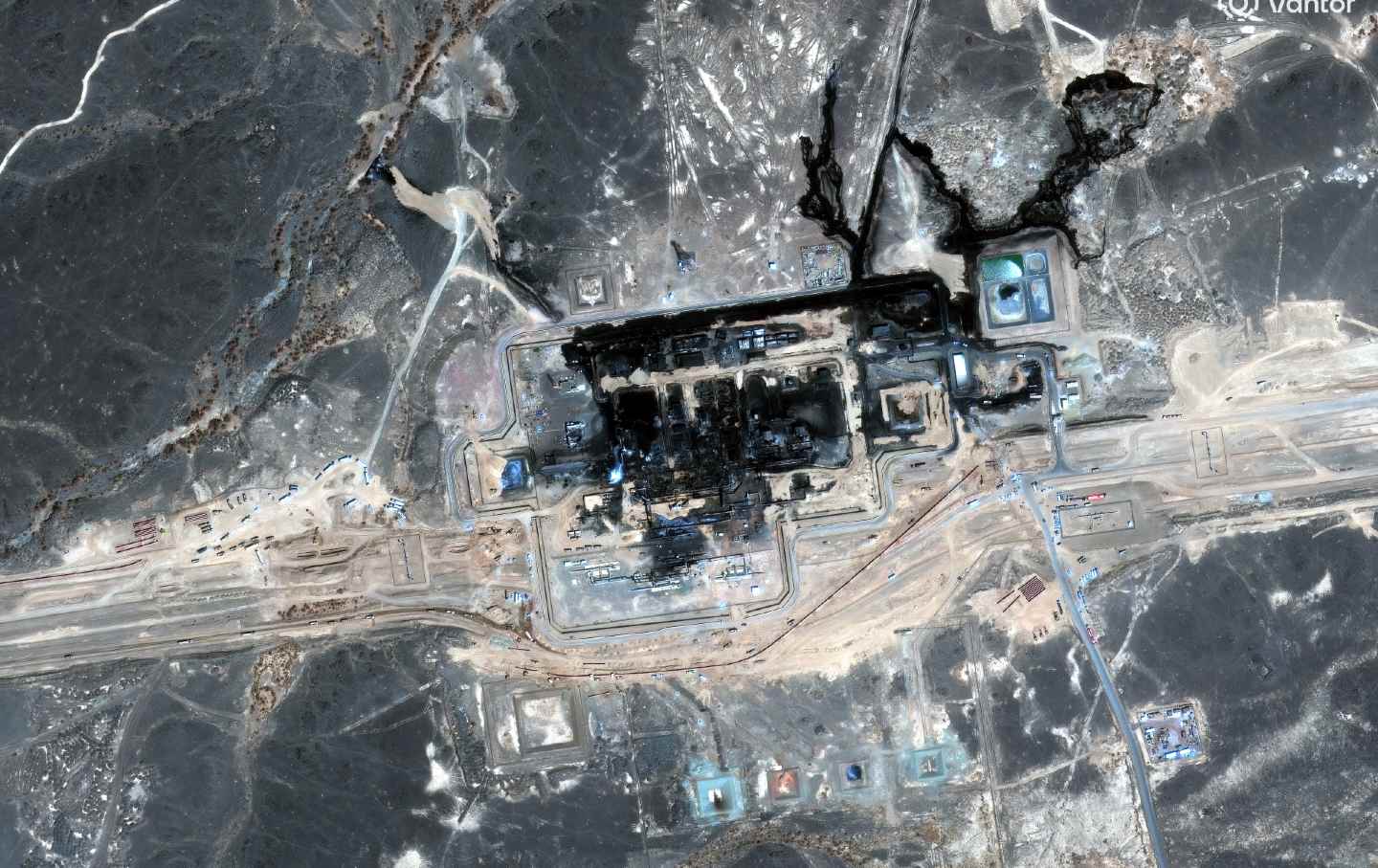
The Peril of Trump’s Final Act: Would He Use a Tactical Nuclear Weapon in Iran? The Peril of Trump’s Final Act: Would He Use a Tactical Nuclear Weapon in Iran?
Trump is trapped in a war that has already been lost, a reality that he will never allow himself to admit.
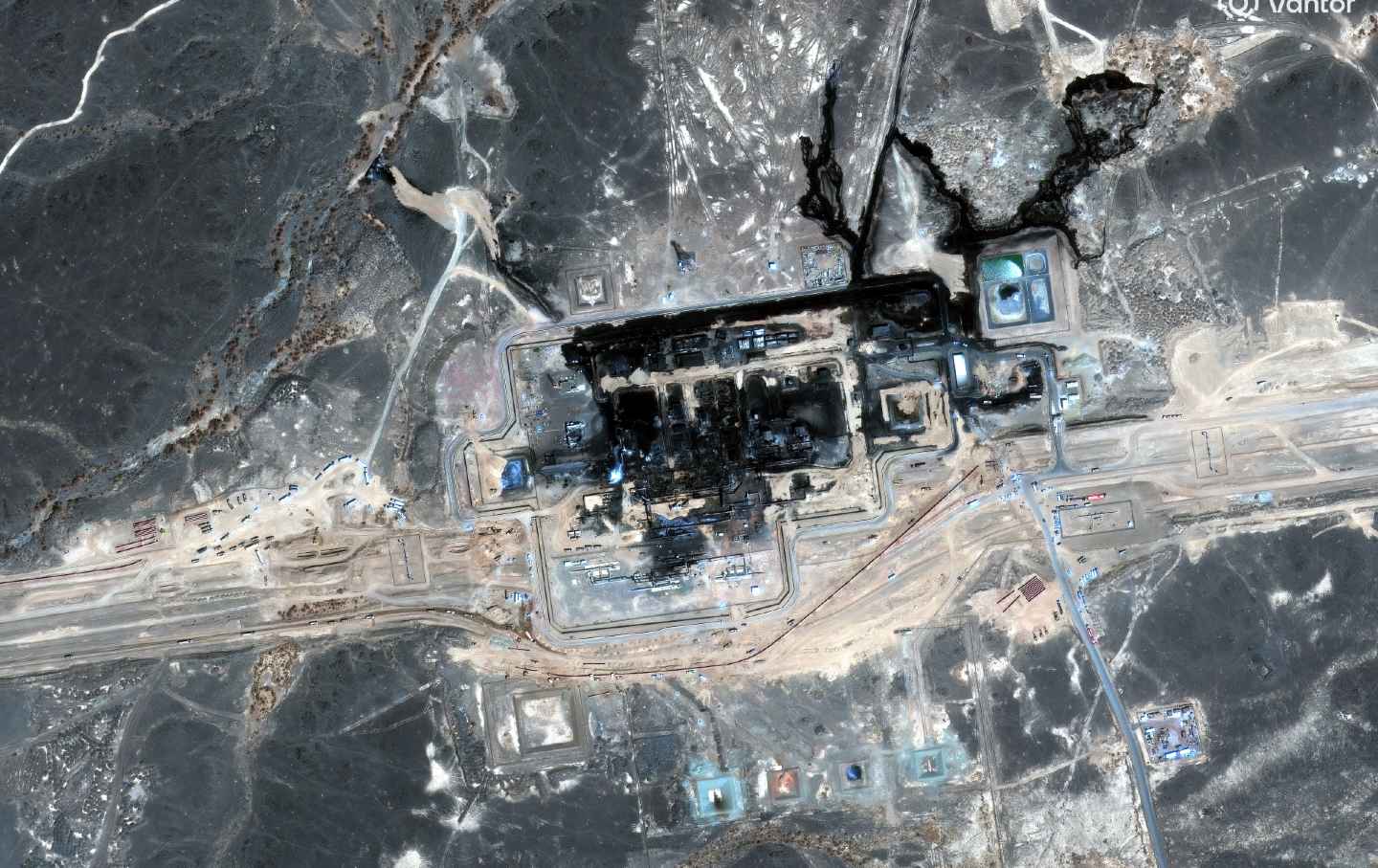
A Spreading War Rattles Global Energy Markets A Spreading War Rattles Global Energy Markets
Analysts say the consequences for energy prices and the world economy may be more serious in this later phase of a war that many had expected to be largely over by now.
The Reality Today Is That Foreign Policy Hawks Are a Minority in the Democratic Party The Reality Today Is That Foreign Policy Hawks Are a Minority in the Democratic Party
It is damn time we all started acting like it.
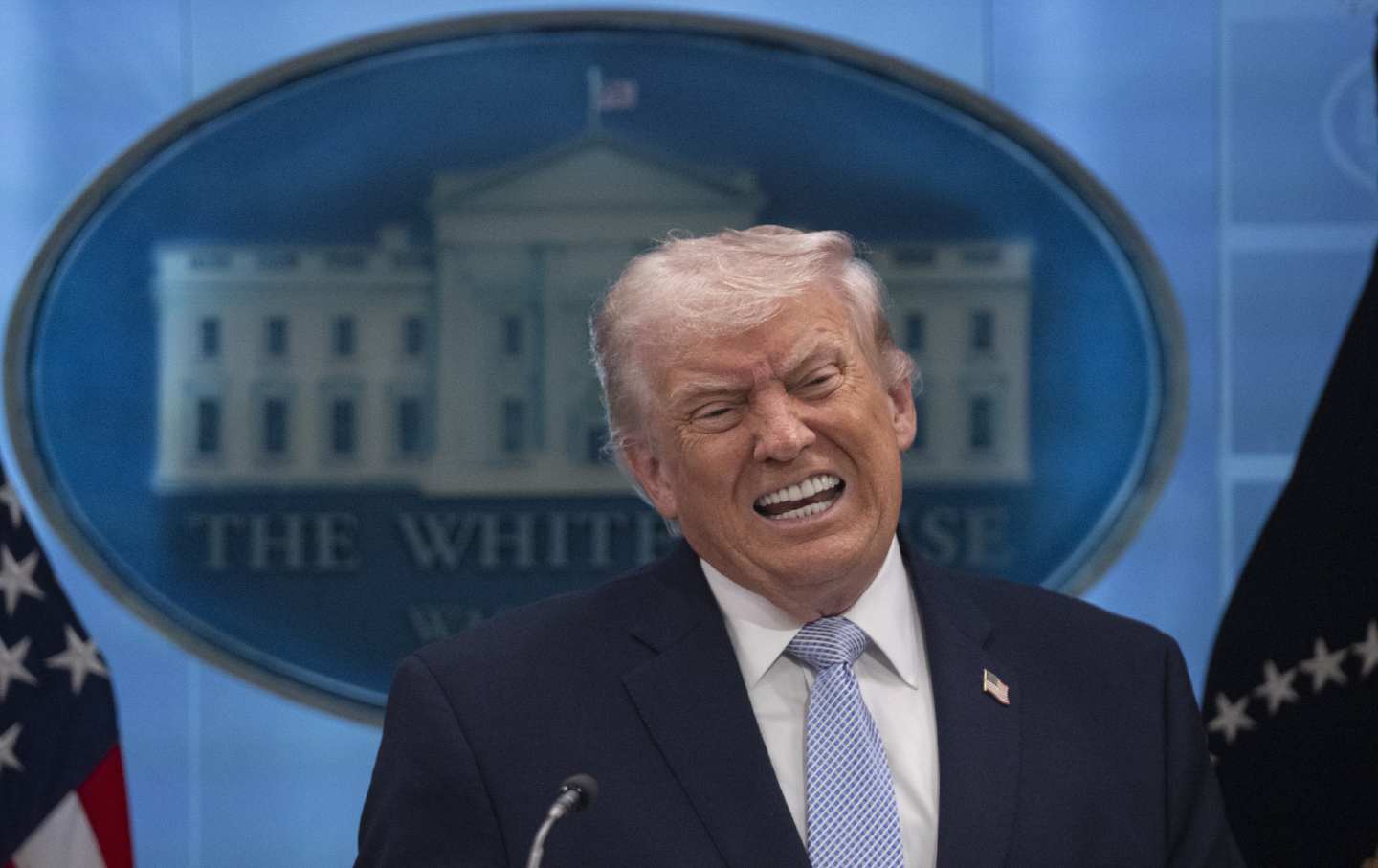
Trump Has Lost Interest in the Iran War, but It’s Still Quite Interested in Him Trump Has Lost Interest in the Iran War, but It’s Still Quite Interested in Him
The United States is losing the conflict, stoking chaos in the region, and inviting economic calamity—all with no end in sight.

Gloria Steinem: A View From 1990s Moscow Gloria Steinem: A View From 1990s Moscow
“Keep women’s solidarity in mind: Don’t forget how we empower each other through mutual support,” she reminded us.

Accountability for the Gaza Genocide Can’t Focus on Netanyahu Alone Accountability for the Gaza Genocide Can’t Focus on Netanyahu Alone
Getting rid of one bad leader won’t bring justice.

