
We Are Genocide Survivors. But Our War Is Far From Over.
We in Gaza will remember the martyrs—those who died teaching, reporting, healing, mothering, surviving. We will carry their memory like fire in our hearts. And we will begin again.
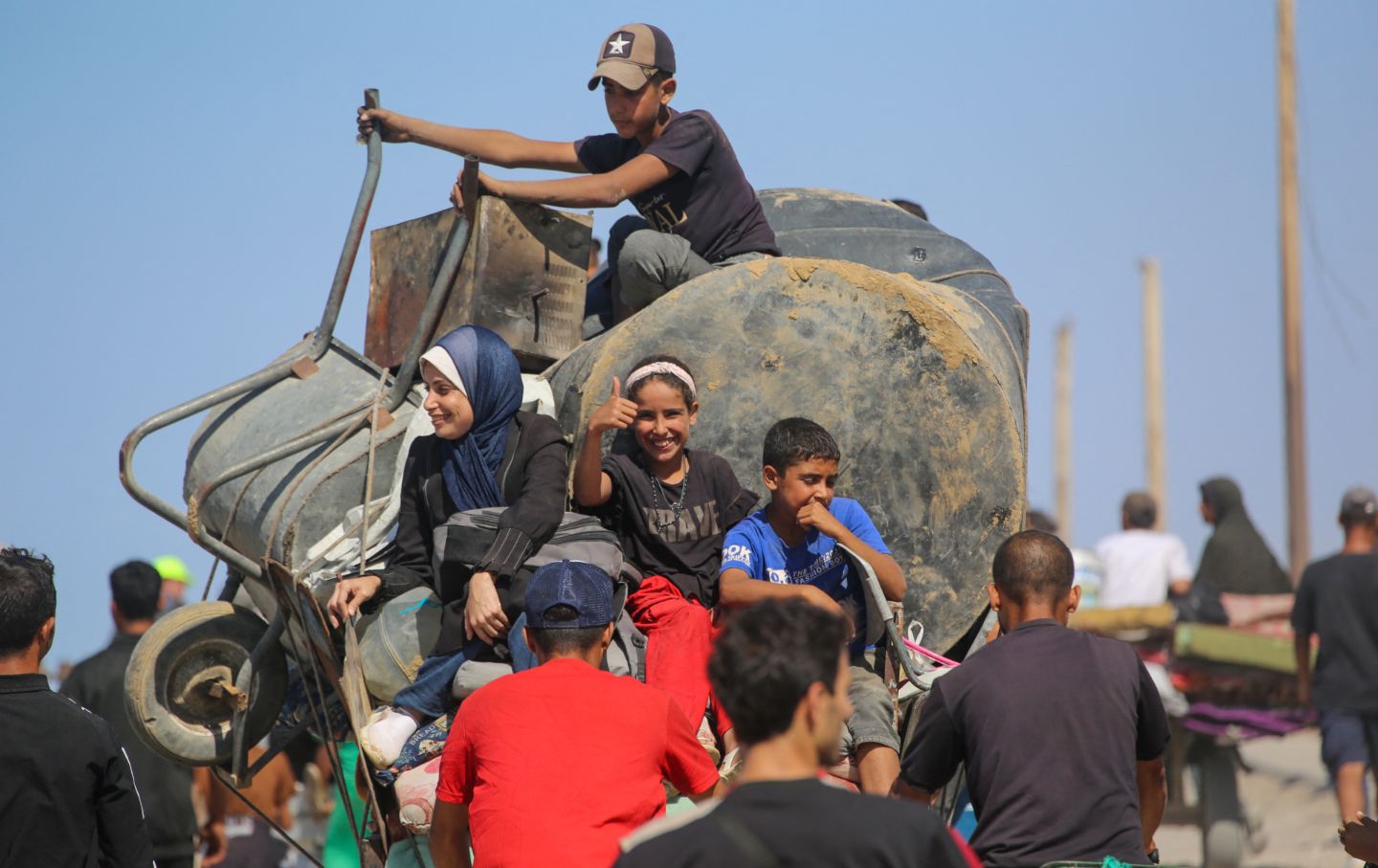
Palestinians make their way along Al-Rashid road toward Gaza City from Nuseirat in the central Gaza Strip on October 10, 2025.
(Bashar Taleb / AFP via Getty Images)After two years of relentless genocide, a ceasefire is here. We Gazans are overwhelmed with mixed emotions—joy for the silence that followed the intensive bombing, yet sorrow that lingers deep within. Hope and grief intertwine as we begin to heal amid the echoes of loss and survival.
Yes, the missiles have stopped. But our war is far from over. The real war—the one against grief, destruction, and despair—has just begun.
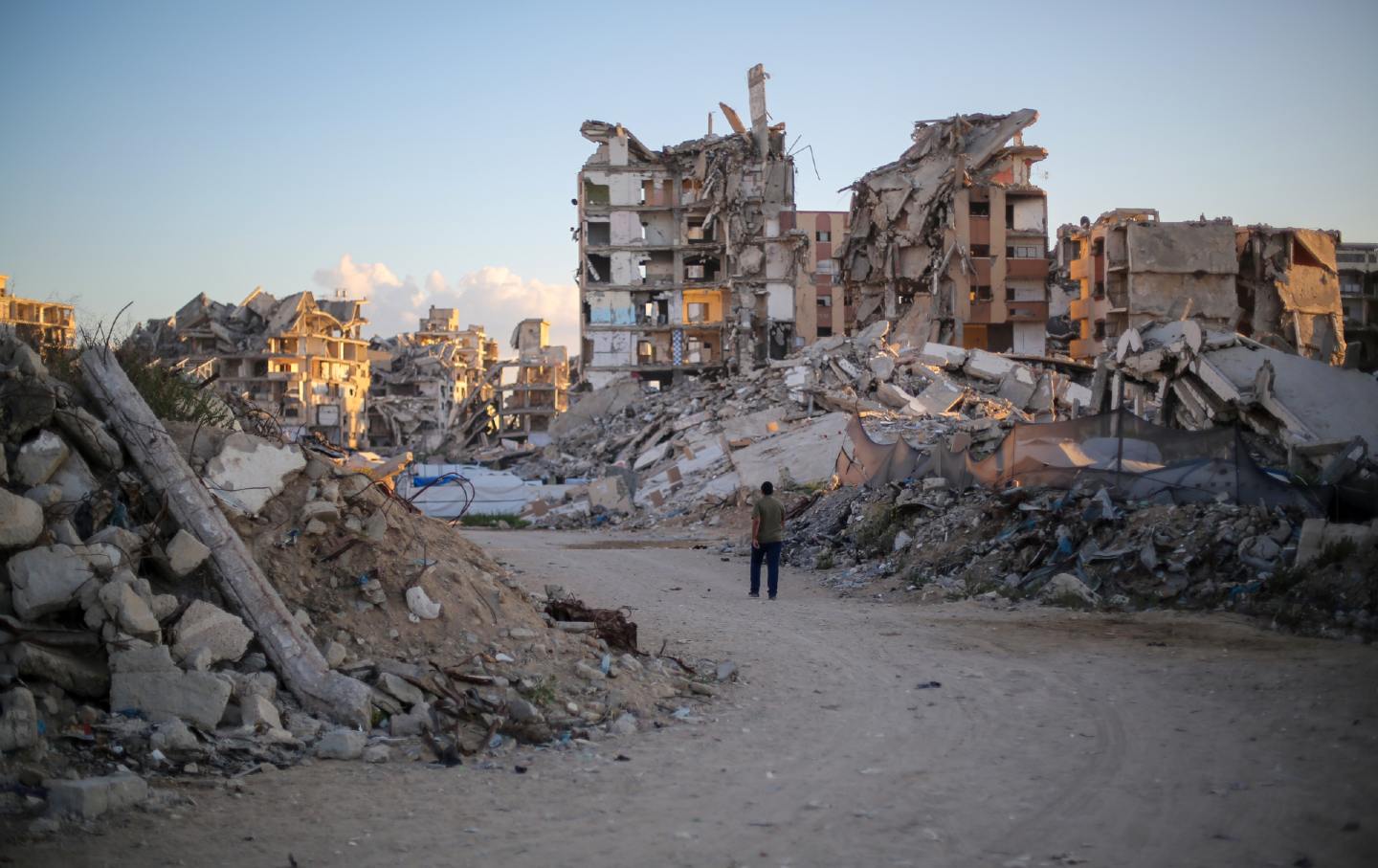
Around 70,000 people—that we know of—were killed in the past two years. Thousands are still buried beneath the rubble. We don’t even know all their names. These aren’t just numbers. These are entire families erased, students who will never return to school, newborns who never made it past their first cry. These are my neighbors, my friends, my relatives, my people. Gaza is not just rubble now; it is memory, trauma, and broken dreams wrapped in dust and blood.
“A Ceasefire! A Ceasefire!”
Yesterday, I was in our small apartment in northern Gaza, in the Al-Rimal neighborhood, where my family and I have been living since IOF soldiers destroyed our original home. I had just finished making tea and was preparing for an exam—one I had to take online, despite everything.
Then my sister Huda, 21, was awakened by a phone call. Her friend told her the ceasefire would begin at 12 pm. “A ceasefire! A ceasefire!” she shouted, her voice shaking with disbelief. The whole house erupted—some of us laughed, some of us cried, and all of us dared to hope, if only for a moment. My 10-year-old brother Abedrahim jumped from his mattress and danced around the room shouting, “The genocide is over! We’ll finally eat chicken!”
But my mother remained cautious. “God help us,” she said. “They will bomb us heavily before the ceasefire begins.” And she was right. That morning became one of the bloodiest yet.
Even amid that fragile joy, we were grieving. We grieved for our home. We grieved for the people we lost. We grieved because we had survived, and survival comes with its own weight. I told my family, “We were saying during the brutal war that another war would start once this one ends. It’s over now—and that next war has begun.”
I walked through the ruins of Al-Rimal to find a café with Internet access so I could submit my exam. The streets were unrecognizable. Shops were flattened. Homes were piles of ash and steel.
I ran into my friend Khaled Al-Saqqa, 27, the sole survivor of his entire family. When I told him about the ceasefire, his eyes filled with tears. “Why was I left to suffer alone?!” he asked. I had no answer. I simply hugged him and whispered, “God gives you strength.”
I found a café and submitted my exam under the sound of shelling.
Last night, the Occupation Forces launched a final wave of air strikes. More than 40 people were killed. Their bodies are still under the rubble—there’s no equipment to retrieve them by the Civil Defense men.
“Finally, We Will Eat Without Fear”
If this deal holds, the crossings are going to be opened, and food will reenter Gaza. Finally, vegetables and fruits will return. We will once again make the traditional Gazan salad—tomatoes, cucumbers, green peppers, and lemon. Chicken will return to our tables, and so will eggs. We’ll eat without wondering whether we’ll be able to afford food tomorrow—or whether we’ll live to see the next meal.
Cooking gas will return. No more waking up early to make fire, coughing on smoke for hours just to boil tea or warm bread. No more rubbing our eyes raw from the smoke that filled our kitchens and lungs.
And finally, my little brother Abedrahim will play football with my little cousins in the street without fear of an air strike or stray bullet.
For the first time in months, I might actually sleep at night—with my head on the pillow, without worrying whether I’ll wake up alive the next morning.
I’ll study again—not with fear and adrenaline pumping, but with some form of peace.
But the buzzing of the Israeli drones won’t stop. It’s a constant in our lives, that awful noise, that daily reminder that even in the absence of genocide, we are not free. I sometimes wonder if we were destined to live under the sound of the zannana forever.
During the war, we buried our loved ones and kept moving, we were in survival mode. We had no time to mourn. No time to sit with grief. We were too busy figuring out where to find water, how to secure food, whether we’d be bombed at any moment.
But now, we are genocide survivors. The war is over—but the funerals are only beginning. The mourning we were denied is here now, and we feel the weight of every name, every face we’ve lost. We scroll through photos and videos, haunted by the smiling faces that are no longer with us. The silence screams louder than the missiles ever did.
Where Do We Go From Here?
Gaza lies in ruin. We have no hospitals, no schools, no universities. I was a first-year student before this genocide. I only experienced university life for one and a half weeks. Now I’m studying online, like many others, but how can a screen replace the laughter of classmates, the smell of the library, the dream of a future?
Our hospitals do not lack just supplies—they lack doctors. We lost heroes like Dr. Adnan Al-Bursh. We lost our storytellers and journalists like Anas Al-Sharif, who is no longer alive to tell us the war is over.
But we survived. And as in literature, there must always be a survivor to tell the story of the dead. We, the ones who made it out alive, carry the duty of memory. We survived to speak the names of the martyrs, to share their stories, and to keep their voices alive.
So many people are still missing. My father’s friend’s son, Akram Rajab, 21, disappeared two weeks ago while fleeing from Tel Al-Hawa. No one knows if he is alive or buried beneath concrete.
Now, for the first time in months, we can start recovering bodies. But everybody pulled from the rubble is a family’s worst nightmare confirmed.
We Will Rebuild, But Nothing Will Be the Same
Yes, the genocide has stopped. The famine will, we hope, soon be over. But we are still standing in the ruins. The buildings are gone, but worse still, the foundation of our lives has cracked. We will rebuild. We must. We owe it to those who didn’t survive.
My uncles will reopen the family supermarket. I will work there again. That place once buzzed with life—Muslims and Christians stopping by in the early morning before work, children giggling on their way to school. Many of those people and children are gone now. I’ll never see Ahmed and Rasha Al-Ar’eer again—the little ones who used to drag backpacks heavier than their shoulders.
Popular
“swipe left below to view more authors”Swipe →I’ll go eat shawarma at the Thailandy restaurant. I’ll return to my favorite activity—long evening walks along the seashore, something I haven’t done in two years. I’ll walk from sunset until the moon rises, listening to the waves and the laughter of children playing in the sand. But I’ll do it without my cousin, best friend, and brother, Abed Al Wahab, who was killed in December 2024 at the age of 28. Every step will carry his memory.
We’ll welcome back loved ones who fled to the south—but not all will return. The IDF killed many who sought safety in so-called “safe zones.” Among them was the family of my father’s cousin Yusuf. A midnight strike on September 28, 2025, hit the apartment next to theirs as they prepared to pitch a tent. His wife, Nidaa, daughter, Ruaa, 18, and son, Hamoud, 11, with curly yellow hair, were killed. Yusuf survived, along with his daughter, Aya, 21, who suffered a broken leg and pelvis, and Aboud, 17, who remembers hearing his mother’s last breath.
This ceasefire marks the end of bombs, carpet bombing, tanks, and war jets but the beginning of our greatest test: the war of rebuilding. Rebuilding our homes, our schools, our hospitals, our lives. Rebuilding our hope, our dignity, our strength. Rebuilding a future in a place that has tried to kill us over and over again.
We will remember the martyrs—those who died teaching, reporting, healing, mothering, surviving. We will carry their memory like fire in our hearts. And we will begin again.
The real war is now. The war of healing. Of remembering. Of refusing to forget. Of restarting. Of chasing our dreams.
Survival is not the end—it’s our beginning.
More from The Nation
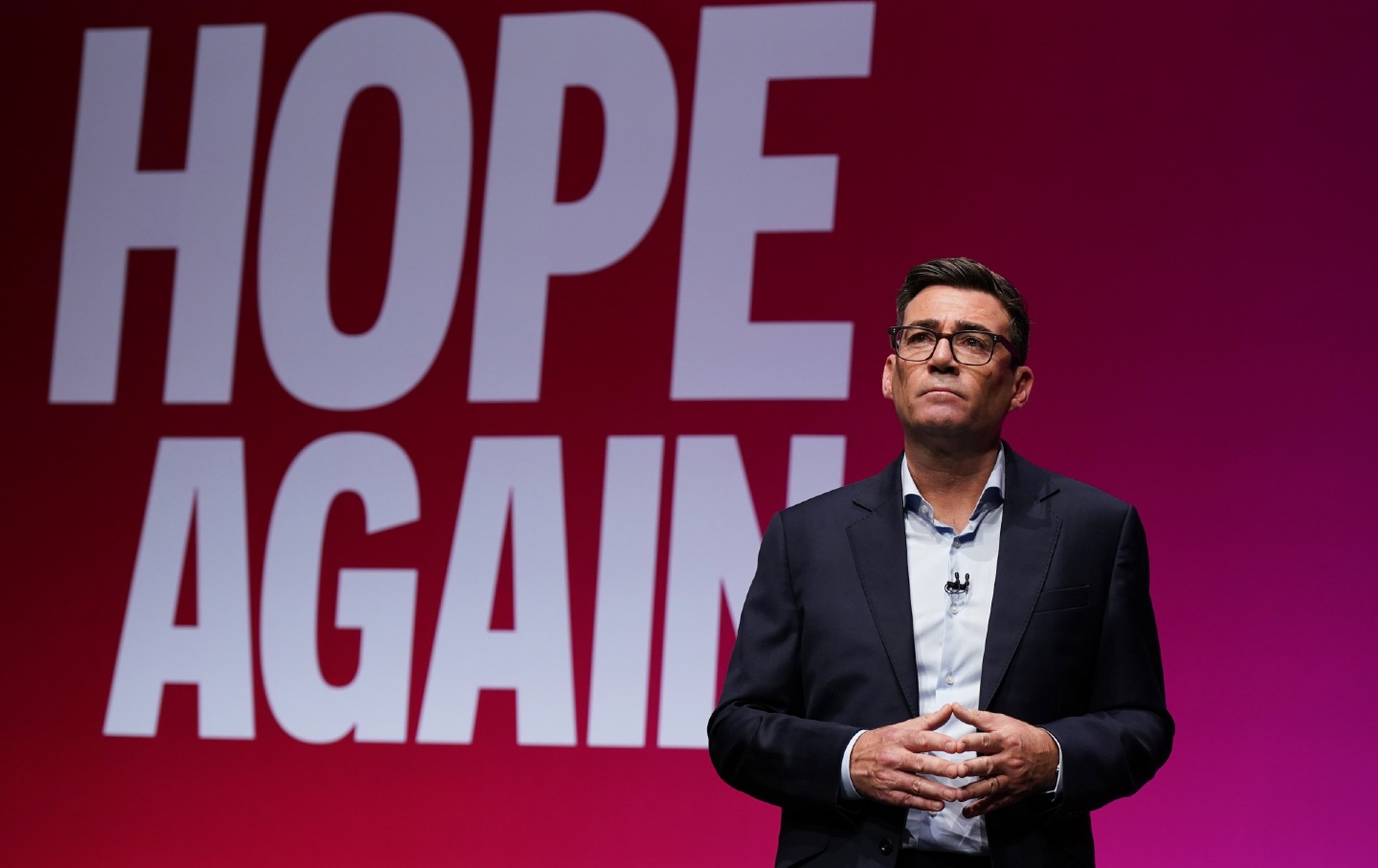
Andy Burnham’s Speech to the Labour Party Conference Could Be the Start of a Positive Social-Democratic Politics Andy Burnham’s Speech to the Labour Party Conference Could Be the Start of a Positive Social-Democratic Politics
But the autumn budget to be released at the end of October will offer needed details.
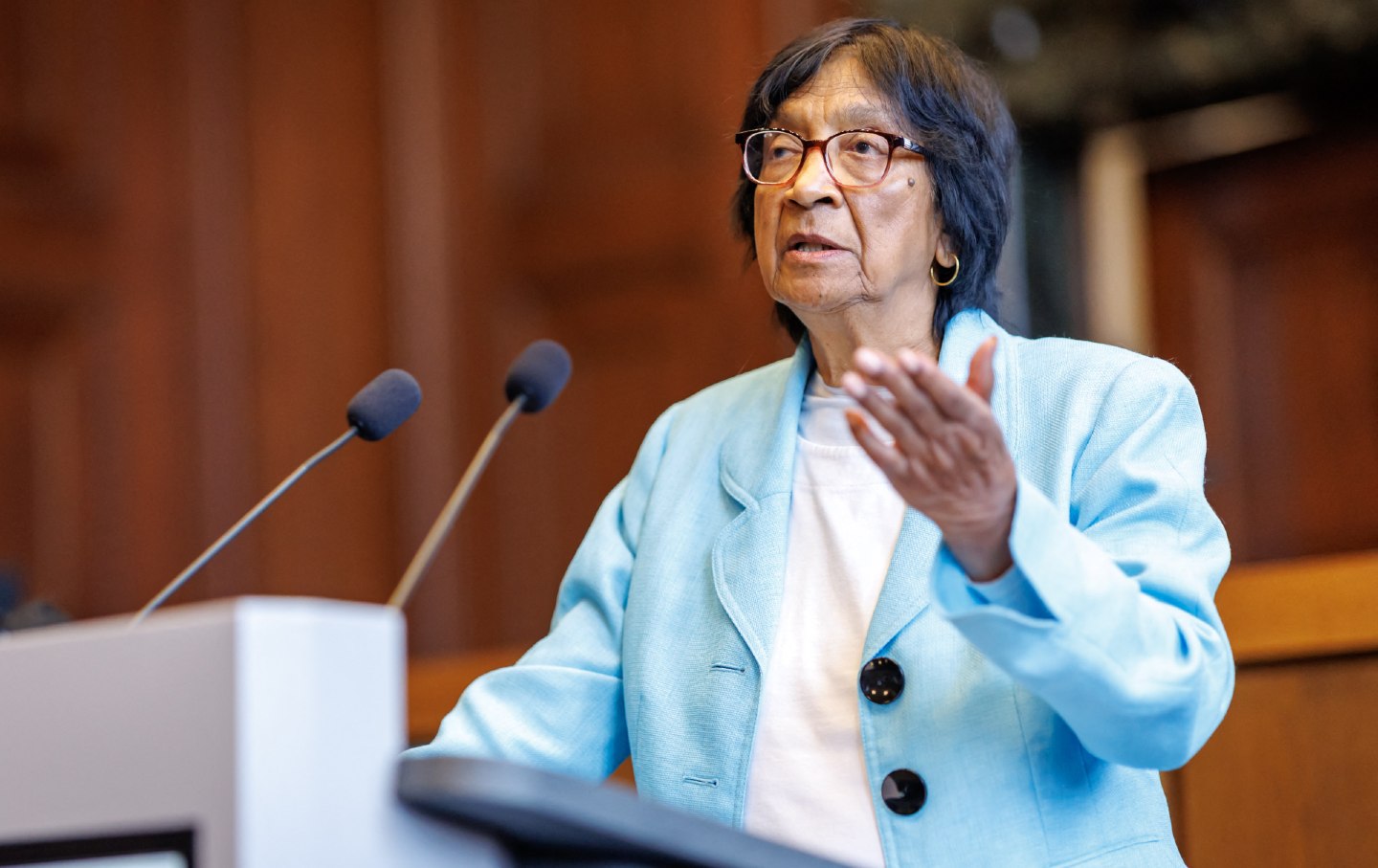
Why Navi Pillay’s Receiving the Nobel Peace Prize Is So Important Why Navi Pillay’s Receiving the Nobel Peace Prize Is So Important
She believes that human rights and international law are universal principles that must be enforced regardless of violator’s ideology, ethnicity, or geostrategic alignment.
Writing About War as Bombs Fall Writing About War as Bombs Fall
While the Israeli government launched a well-orchestrated offensive of disinformation and hyperbole that would make the illegal permissible in the war on Gaza.
Turkey Is Brutally Oppressing Queer People. Here’s What You Need to Know. Turkey Is Brutally Oppressing Queer People. Here’s What You Need to Know.
The government’s sweeping crackdown on the LGBTQ community is an escalation of a decades-long pattern.
The Anatomy of a Literary Scandal The Anatomy of a Literary Scandal
The pillorying of Canadian-Haitian novelist Thélyson Orélien, accused of using AI to write his new novel, is the latest in a chaotic year for French publishing.

