Graham Platner Is the Real Deal
The Maine oyster farmer embodies the populist energy that Americans have been looking for. He’s the best candidate to defeat Republican Senator Susan Collins.
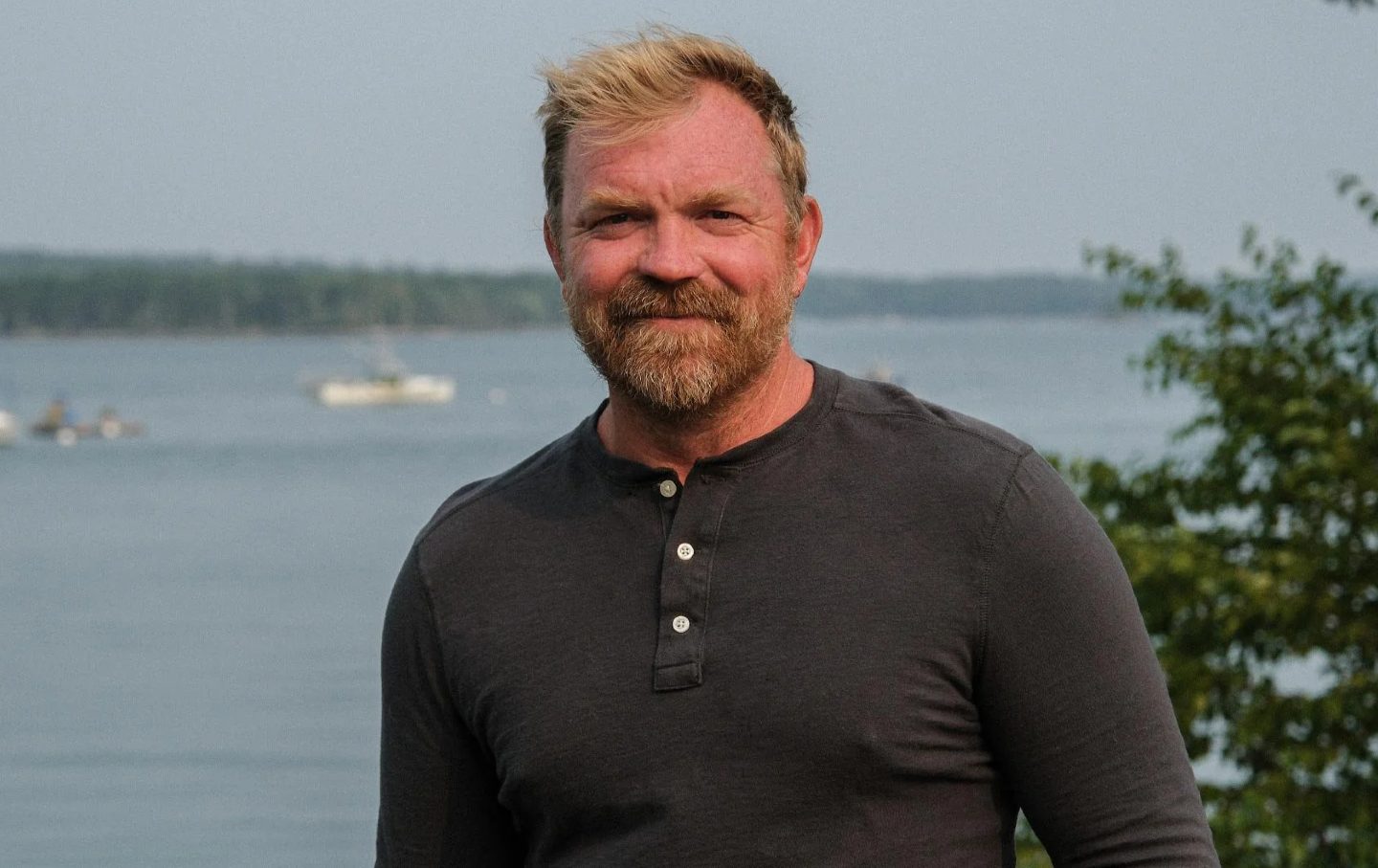
Graham Platner.
(Graham for Maine)
“I did four infantry tours in the Marine Corps and the Army. I’m not afraid to name an enemy. And the enemy is the oligarchy. It’s the billionaires who pay for it, and the politicians who sell us out.”
Graham Platner delivers these lines in the video announcing his out-of-nowhere campaign against Maine’s Republican senator, Susan Collins. In the viral clip, Platner is leaning casually against the wheel of a small boat. He’s wearing a stained sweatshirt, but without any of the Fetterman affect—this is a working oysterman in his normal attire. He’s got a gravelly voice, a bristly beard, and ruggedly casual charisma. But beyond the working-class aesthetic, it’s this line in particular—“I’m not afraid to name an enemy”—that I think explains his magnetic draw. Americans understand that the system is rigged, and we’re hungry for candidates with the guts and honesty to call out the villains causing our pain.
In his launch video—which has already racked up 4 million views on X—as well as every other statement he’s made over the last week, there is no trace of the anodyne consultant-speak that has become so synonymous with Democratic politicians. Platner does not blandly talk about an “opportunity economy”—he growls that “the fabric of what holds us together is being ripped apart by billionaires and corrupt politicians.” He doesn’t try to rise above the fray—he says outright that watching his state “become essentially unlivable for working people” makes him “deeply angry.”
In his campaign for Senate, Platner embodies the populist energy that so many Americans—Democrats, independents, and Republicans—have been looking for in their leaders, and that the Democratic Party establishment has failed to embrace, despite the urgent need to do so.
Democrats ignored alarm bells in November, when Kamala Harris rejected a populist strategy and proceeded to lose ground across the working class. With Democratic leaders clinging to the center, the party is hemorrhaging voters across the country, particularly among men and young people. The Democratic Party has a -32 approval rating. Meanwhile the populist Bernie Sanders remains the most popular politician in the United States. If you look at the Democrats who voted in 2020 but sat out the 2024 election, it’s clear what they’re looking for. As pollster Celinda Lake recently found, these voters “want leaders who will fight for everyone.… They’re very populist.”
Platner doesn’t need consultants or pollsters to tell him what working-class Mainers want, because as he said on August 22, “They’re my neighbors.” In another recent interview, he told ABC News, “I drink coffee every morning with the guys that I work next to, who are friends of mine, who all voted for Donald Trump. And they voted for Donald Trump because they wanted something new, they wanted change.” He believes that the path to winning back these voters is not cautious triangulation; it’s proving to them that the Democratic Party is “the party of fighting for big structural change to benefit working class people.”
This approach would be a different challenge for Collins than the Democratic campaigns she has bested in the past. In 2020, the DC establishment coronated former House speaker Sara Gideon as Maine’s Democratic nominee for the US Senate. Gideon—a transplant who hailed from southern Maine, the wealthier part of the state—did not associate herself with any memorable policy commitments or plans. She ran as a moderate who could get things (unclear what things) done by working across the aisle. She raised a jaw-dropping $69 million. And she lost by nearly nine points.
Democrats need to try something new. Yet the DC establishment is recruiting a candidate, Governor Janet Mills, who will bring many of the same liabilities as Gideon. There’s some logic to this push—Mills is a two-term governor, and that comes with advantages. But Mills is the second-least-popular governor in the country, and the majority of Mainers don’t want her to run for Senate. She’s also in her late 70s—in fact, she would be the oldest freshman senator in history, at a moment when the Democratic Party has a gerontocracy problem. It also doesn’t bode well that Mills has been lukewarm in her interest in a Senate run.
A frequent complaint about Gideon’s campaign was that it focused almost exclusively on advertising and failed to prioritize retail campaigning. Showing up matters in a small state like Maine, and Democrats need a candidate who’s enthusiastic about traveling across the state, campaigning in every county and town, and putting in the work to win, not one who needs to be convinced to do so.
Perhaps more importantly, Platner’s progressive populist values allow him to draw contrasts with Collins that an establishment Democrat like Mills likely wouldn’t. Israel’s genocide in Gaza offers a perfect example. Platner’s position is clear: He told Jewish Insider, “What is happening in Gaza is a genocide. I refuse to take money from AIPAC or any group that supports the genocide in Gaza.”
This is approaching a supermajority position—one Gallup poll last month found Americans disapprove of Israel’s actions in Gaza nearly two-to-one. And those numbers will likely skew even further in the context of Platner’s Maine-first framing; as he said in a recent interview, “None of this stuff benefits working-class Americans.… Nothing in Sullivan, Maine, is going to improve because of our funding of a genocide.”
As a combat veteran, Platner can also effectively fit this into his larger message of “no more endless wars.” These are all extremely advantageous fights to pick with Collins, a longtime AIPAC champion—fights that Mills likely can’t, or wouldn’t, engage in.
Popular
“swipe left below to view more authors”Swipe →Finally, Platner’s position as an outsider gives him one more advantage: In addition to running against Trump and the GOP, he can also credibly run against everything people dislike about the Democratic Party. One of Trump’s greatest strengths as a candidate in 2016 was that, by mercilessly trashing the unpopular failures of the Bush administration, he was able to run with little of the Republican Party’s long-standing baggage (just all the new baggage he brought himself).
Today, the national Democratic Party’s brand is similarly in the toilet. Longtime politicians like Mills will have trouble separating themselves from that brand, because doing so requires loudly and frequently calling out the failures of the Democratic establishment—something that’s nearly impossible for members of that establishment to pull off. Platner, fortunately, feels no such compunction—his fourth ever post on X was the relatable complaint, “Nothing pisses me off more than getting a fundraising text from Democrats talking about how they’re fighting fascism.… Because it’s such bullshit. We’re not idiots. Everyone knows most of them aren’t doing jack shit right now to fight back.” With statements like this, Platner can demonstrate his independence from an unpopular national party and appeal to independent voters in a way Mills simply can’t.
Control of the Senate may come down to whether Democrats can field a candidate in Maine who can take out Collins. This is no easy task, and it has not been—and perhaps cannot be—achieved with a politics of bland centrism that refuses to name enemies for fear of alienating elite donors. Platner’s campaign is the opposite of this failed approach. His profile, biography, and already clear talent as a communicator situate him to channel the populist frustrations being expressed by Americans across the political spectrum. This guy is the real deal, and rather than continue pushing for a worse candidate to enter the race, Democrats should thank their lucky stars that a figure like Platner has stepped up and unite to build the working-class movement necessary to defeat Collins.