
How Will the Bird Flu Affect the Trump Presidency?
Bird flu has already proven a disaster for humans and animals alike. And it could get far worse.
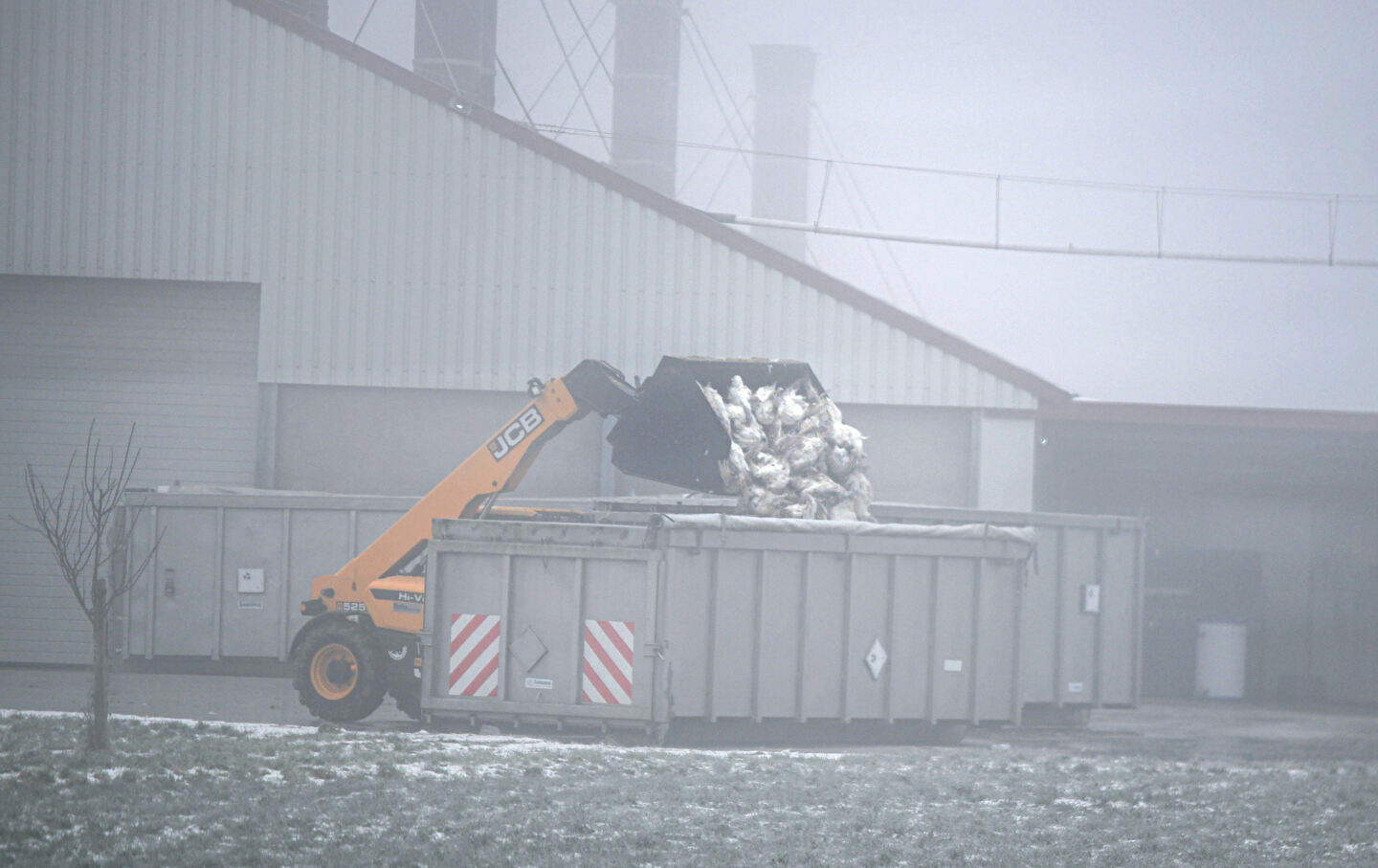
Three days after Donald Trump withdrew the United States from the World Health Organization, a Long Island farm began euthanizing 100,000 ducks due to an outbreak of bird flu. It marked the latest spread of a virus that has also killed more than 100 million chickens and turkeys nationwide. Though fewer than 70 Americans have contracted the illness so far, scientists have warned that this strain may be just “one mutation away” from achieving the capacity for rapid transmission.
Whether or not those predictions go the way of Chicken Little’s, bird flu has already proved a disaster for humans and animals alike. From infected pets to egg prices soaring by 37 percent, Americans have abundant cause for concern and complaint. Amid the pathogenic unpredictability, another fact remains clear: The main culprit here is factory farming.
By cramming animals into facilities so crowded they often can’t even sit down, industrial agriculture has assembled the perfect laboratory for novel viruses. That’s why stopping bird flu in its tracks, and preventing untold future pandemics, depends on regulating factory farming now.
Over the past couple of decades, corporate agriculture has finally begun facing scrutiny for its cruel and unusual treatment of animals. At the Obama era’s idealistic outset, documentaries such as Food, Inc., and books like Jonathan Safran Foer’s Eating Animals did much to expose the outrages being committed by the now-infamous conglomerates Monsanto and Tyson Foods. Chickens bred to grow so fast they can’t walk, pigs locked in crates too small to turn around in, dairy cows that never step outdoors or graze—these are the daily living conditions for the 1.7 billion animals currently trapped on US factory farms.
The journalist Eric Schlosser, one of Food, Inc.’s primary interviewees, has also reported on this industry’s human toll. Thanks to Reagan-era deregulation, meatpacking plants eliminated unionized positions and replaced them with undocumented immigrants toiling for half the pay, despite their job’s carrying the risk of toxic fume exposure, antibiotic-resistant E coli, and loss of limbs. Because these largely uninsured farm workers face termination and even deportation for seeking medical care, they have little incentive to self-report illnesses like bird flu, fostering ideal conditions for a virus to spread undetected.
But no amount of scandal seems to stall factory farming, which has grown by 6 percent since 2017. The explanation is the typical one for Washington: lobbyists. Big Agriculture donated nearly $200 million during the 2024 campaign, mostly to Republicans. Agribusiness also spent more than half a billion dollars to influence the farm bill that doles out the industry’s lucrative subsidies. In his first term, Trump killed new USDA regulations burnishing animal welfare standards, including for the chickens currently ravaged by bird flu. Though Joe Biden reinstated those rules, he slow-walked new restrictions by insisting on further “evaluation.”
Still, a few brave politicians have waged a rather lonely crusade against factory farming, with arguably none more devoted to the cause than now-retired representative Earl Blumenauer, a Democrat from Oregon. The progressive environmentalist spent 28 years in Congress advocating for animal welfare and family farms. As cochair of the Animal Protection caucus, he gathered bipartisan support for legislation that cracked down on animal fighting, wild animal trading, and cruel horse training techniques like soring. But his passion project was the Food and Farm Act, which would have reined in funding for factory farms. Naturally, it never left committee.
There are some signs, albeit with significant caveats, that the Trump administration could stumble into progress on this issue. The presumptive health and human services secretary Robert F. Kennedy Jr. may be the strongest critic of Big Food to join the cabinet in half a century. He has ambitiously pledged to “reverse 80 years of farm policy,” although much of that decision-making belongs to the secretary of agriculture. Still, he could use his authority over the FDA to ramp up agricultural inspections, investigate the pollution of drinking water by manure, and halt the dangerous overuse of antibiotics on factory farms. But Kennedy’s repeated endorsement of raw milk, one of bird flu’s primary vectors, doesn’t exactly inspire confidence.
For that reason—and some others—whether he will be confirmed remains an open question.
The mantle for raising the alarm falls, then, to the adviser Trump heeds most reliably: the headlines. But right now, the outcry from corporate media has sounded muffled at best. During the 2024 presidential debates, moderators didn’t ask a single question about the previous pandemic or this incipient one. While The New York Times has published a smattering of articles about bird flu, calling out the link between industrial farming and our current public health emergency has been mostly consigned to letters to the editor and a few stray op-eds. In contrast, nonprofit outlets like Sentient and Civil Eats have dedicated their entire newsrooms to covering industrial agriculture. If cable news and papers of record follow their lead, the consumer in chief’s attention or aggravation just might be piqued.
It might also inspire some déjà vu. In October of 2020, Trump lamented: “You turn on CNN, that’s all they cover. ‘Covid, Covid, Pandemic, Covid, Covid.’”
Should Trump choose to wait and see on factory farming, the chances are increasing by the day that such a chant returns—and once again, his hopes for a soaring legacy will be for the birds.
Become a Sustaining Donor This September
Between the reemergence of right-wing red-baiting and Donald Trump’s use of the chilling National Security Presidential Memorandum–7 to criminalize left political organizing, we’re seeing McCarthyism reborn before our eyes.
This assault on democracy cannot be ignored or wished away. Resisting it requires bravery in the face of threats and repression, a steadfast commitment to the truth, and the unwavering belief that we can—and will—overcome this darkness.
We must have an independent media that sets the record straight, unearths corruption and abuses of power, and advances a politics of justice and dignity for all if we’re to win this fight.
That’s why I’m writing to you today. This September, The Nation needs to add 100 monthly donors to sustain our progressive journalism. Your contribution makes the next investigative report, the next truth-speaking column, and the next pathbreaking essay all possible.
I hope you’ll support our work with a recurring donation today. If you donate $10 or more a month, we’ll send you a brand new “Hands Off the Free Press!” sticker to recognise your commitment to our cause. Please, donate today.
Onward,
Katrina vanden Heuvel
Editor and Publisher, The Nation
More from The Nation

Israel’s Election Can’t Fix What Netanyahu Broke Israel’s Election Can’t Fix What Netanyahu Broke
The fundamental problem is not the name of the prime minister, but rather the actions of the Israeli government and the urgent issues that need to be addressed.
The AfD’s Rise Isn’t Just About East Germany The AfD’s Rise Isn’t Just About East Germany
The Alternative für Deutschland has a stable national poll lead, including in the former West Germany. Its rise owes to much more than Eastern grievances.
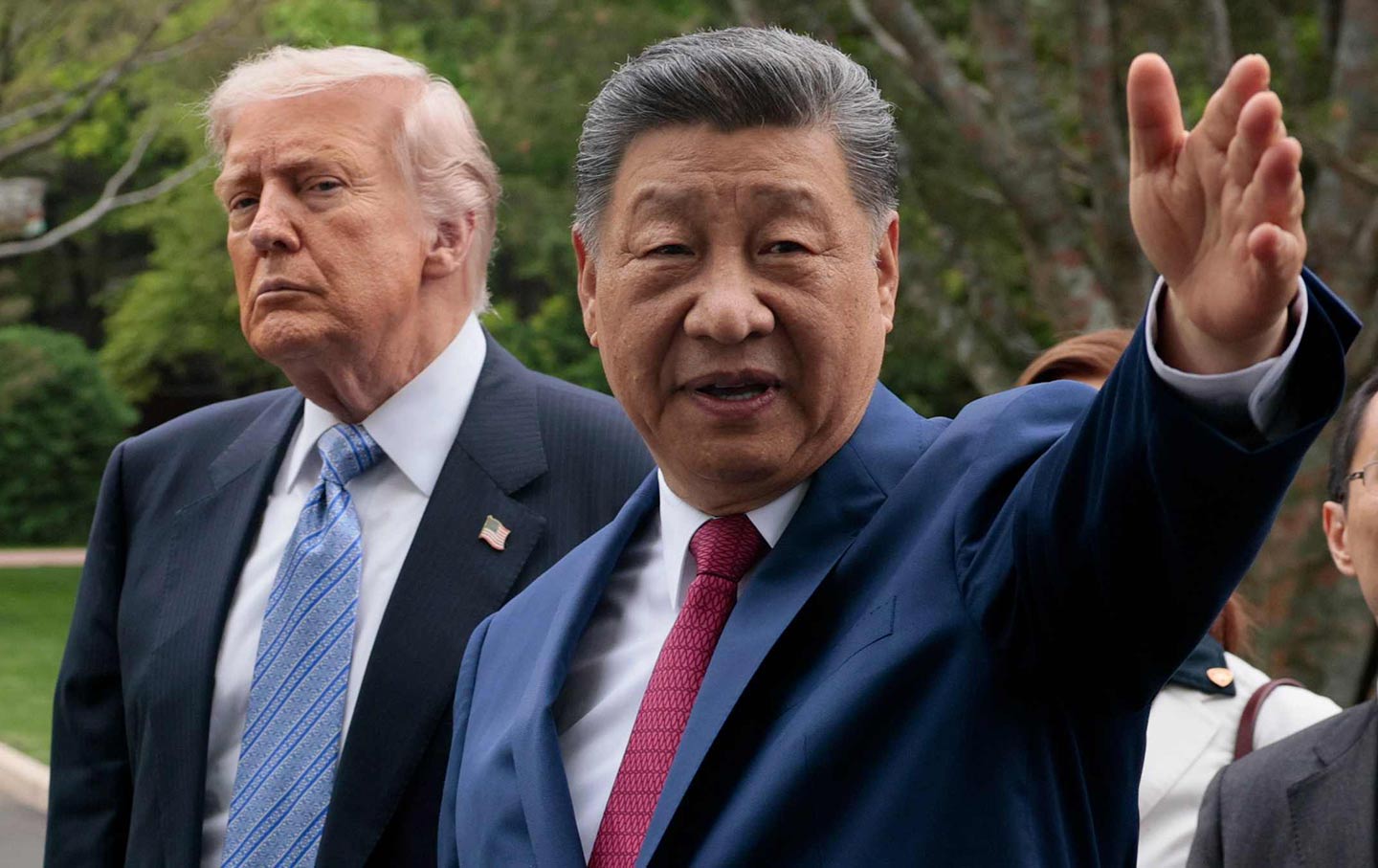
Chinese Development Is the Betrayal Washington Cannot Forgive Chinese Development Is the Betrayal Washington Cannot Forgive
The prospects for Xi Jinping’s visit are dim because American leaders are blaming China for the failures of globalization.

Pinochet: The Verdict of History in the Letelier-Moffitt Case Pinochet: The Verdict of History in the Letelier-Moffitt Case
An act of international terrorism on the streets of Washington, DC, still reverberates 50 years later.
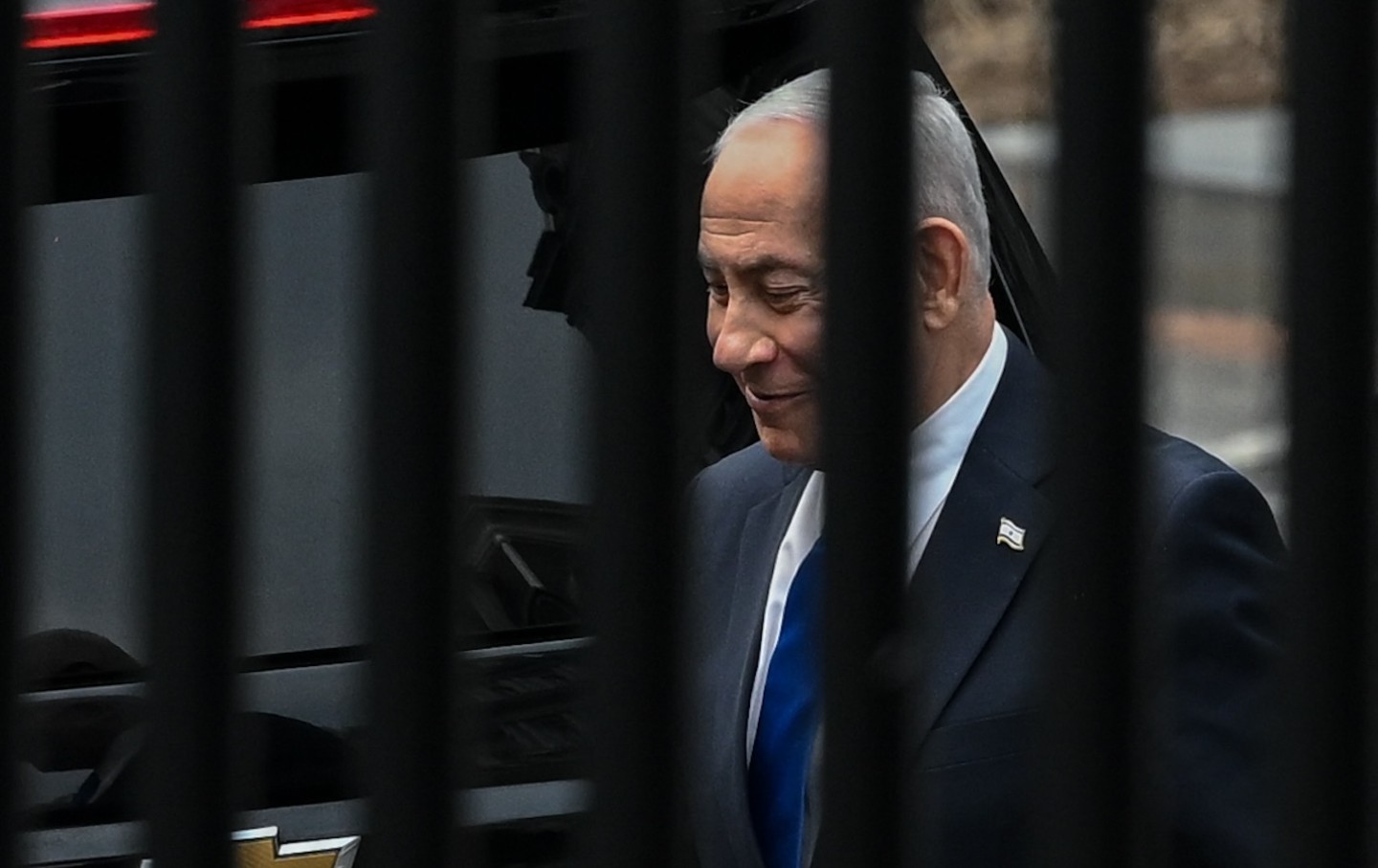
How to Arrest Benjamin Netanyahu How to Arrest Benjamin Netanyahu
Make no mistake: The United States can seize Netanyahu for crimes under US law and prosecute him in US courts when he is in New York City this week.

In the Age of AI, Nuclear Weapons Abolition Is a Renewed Imperative In the Age of AI, Nuclear Weapons Abolition Is a Renewed Imperative
As long as we have nuclear weapons, the job of ending humanity will continue to be as easy as the push of a button—or an AI agent hacking into a nuclear command-and-control system...

