
An Indigestible Nation
While the world has changed and threats are different, the Biden administration’s worldview is rooted in the assumption that America is the “indispensable nation” that will police the world.
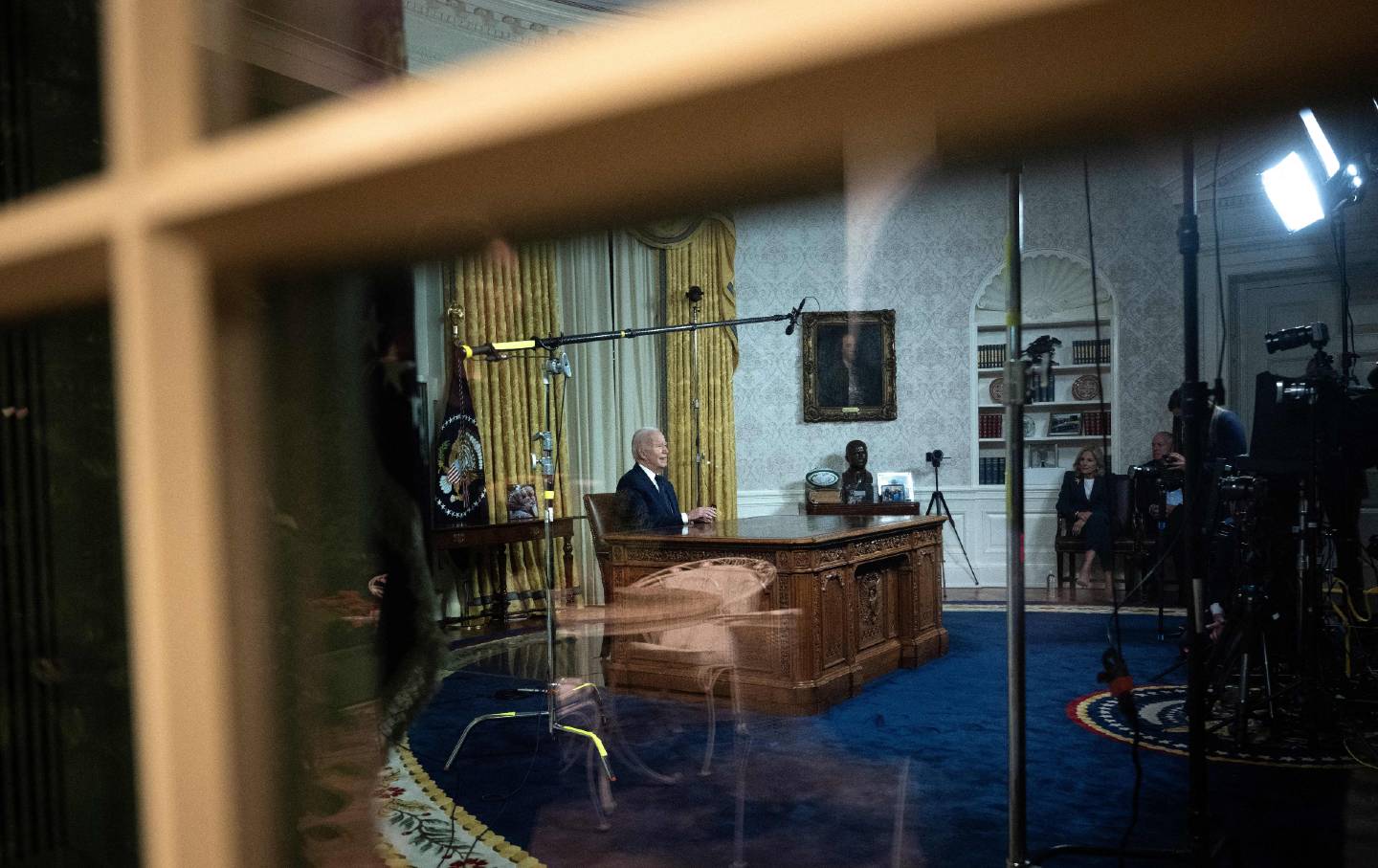
President Joe Biden delivers an address on the conflict between Israel and Gaza and the Russian invasion of Ukraine from the Oval Office in Washington, D.C., on October 19, 2023.
(Brendan Smialowski / Getty)The United States is now running the risk of war on three continents: arming Ukraine in the worst European war since World War II, deploying forces and shipping arms to Israel in the escalating violence in Gaza, and arming Taiwan amid rising tensions with China in the South China Sea, while continuing its “war on terror.” Despite a broad popular consensus that it is time to rebuild America at home, and a growing alarm at the perils of catastrophic climate change, the Biden administration is enmeshed in conflicts across the world.
President Biden justifies this because we are at “an inflection point in history,” when “the decisions we make today are going to determine the future for decades to come.” While the post–Cold War period is over and America’s “unipower moment” has passed, “American leadership,” Biden argues, is still “what holds the world together…. We are, as my friend Madeleine Albright said, ‘the indispensable nation.’”
In a recent Foreign Affairs article—“The Sources of American Power: A Foreign Policy for a Changed World”—Biden’s national security adviser Jake Sullivan reviews the elements of what the administration touts as its transformed national security strategy. Sullivan offers a tour de monde. The Biden administration will rebuild our economy, take on Russia, save Ukraine and strengthen NATO, challenge China in the South China Sea and protect Taiwan, while forging new alliances across East Asia, continue to wage the War on Terror and create stability in the Middle East, and provide a “better value proposition” to the countries in Africa and Latin America, gearing up to deal with pandemics and global warming among other things.
The list of alliances renewed or forged, international agreements, economic initiatives, crises addressed is impressive. Glaringly absent, however, is any hint of a national strategy that inevitably must entail an assessment of capacity, a choice of priorities, an awareness of limits.
While the world has changed and the threats we face are different, the Biden administration worldview is still rooted in the assumption that America is the “indispensable nation” that will police the world.
In 1998, the salad days of the post–Cold War era, Bill Clinton’s secretary of state, Madeline Albright, dubbed the United States the ‘indispensable nation,” arguing on the Today show, “If we have to use force, it is because we are America; we are the indispensable nation. We stand tall and we see further than other countries in the future and we see the danger here to all of us.”
That hubris led Albright to champion the use of NATO as an offensive force against Serbia, the “good war” in Afghanistan, the US war of choice against Iraq, the toppling of Gadhafi in Libya and the expansion of NATO to Russia’s borders. So much for seeing further.
Despite the serial catastrophes, the rise of China, the growing destructiveness of extreme weather, Biden and his crew sustain the faith that, as Biden puts it, “America is back” to “once again sit at the head of the table.”
The image of America as Atlas, holding the world on its shoulders, raises some inescapable questions. The first is solvency—does the country have the capacity to sustain this mission? After World War II, the US economy was approximately one-half of the world’s GDP. Now, it is barely one-fourth. According to the IMF, in purchasing power parity, the EU collectively is about the same size as our economy; China is already bigger. The US spends far more on its military than any other country. But our industrial base has, as Sullivan notes, so atrophied that we can’t provide enough artillery shells for Ukraine, while China builds many times as many ships as we can.
Asked whether the wars in Ukraine and in the Middle East are more than we can afford, President Biden reverted to his favorite refrain: “We are the United States of America, for God’s sake. The most powerful nation, not in the world, in the history of the world. We can take care of both of these and still maintain our international defense.” We have the money, but this is a question of priorities. It is worth noting that what US military contractors alone will receive from Biden’s 2024 Pentagon budget and the aid package for Israel and Ukraine (nearly $550 billion) is equal to the entire funding of the president’s five-year infrastructure legislation.
Solvency involves attention as well as dough. Holding the world together means dealing with constant crises. Sullivan has been mocked for celebrating the “relative stability in the Middle East” in his article released days before the Hamas terror attack on Israel. That bad luck makes the point. Policing the world always entails surprise. If “holding the world together” is the task, events dictate priorities and consume attention. And every crisis tests our “credibility,” even in countries most Americans can’t locate on a map. What happens in Ukraine what happens in [the Middle East] also matters to the Indo-Pacific” [China], argues Blinken. If Congress starts to “peel off pieces” of the aid package for Ukraine, Israel and Taiwan, our adversaries will “understand that we are playing whack-a-mole while they cooperative increasingly and pose an ever-greater threat to our security.”
The hubris of the indispensable nation impairs vision. “Whether we like it or not, the world simply does not organize itself,” Secretary of State Antony Blinken has said. “[W]hen some other country tries to take our place or, maybe even worse, no one does, and you end up with a vacuum that is filled by bad events.”
Popular
“swipe left below to view more authors”Swipe →Well. The “world” seemed to organize itself effectively to blunt what were intended to be crippling sanctions on Russia—with China and India increasing imports and most of the countries of the Global South staying neutral in the Ukraine conflict. If anything, the conflict reinforced Beijing’s efforts to build alternative global institutions—with BRICS expanding, the One Belt One Road Initiative, the Shanghai Cooperation Organization, the Russian led Eurasian Economic Union. The BRICs countries have begun building alternatives to the IMF, the World Bank and the WTO. While the US was deploying military forces to 178 countries in the world, China was becoming the leading trading partner with more than 120 countries, buying or operating a global network of nearly 100 ports in 50 countries, consolidating its hold on critical minerals, and becoming a major source of funding through its Belt and Road initiative.
Worse, urgent crises distract from real security threats. In his Foreign Affairs article, Sullivan boldly states that the “country’s future will be determined by two things: “geopolitical competition” and whether it can “rally the world to address transnational challenges from climate change and global health to food security and inclusive economic growth.”
In fact, the geopolitical competition—and the conflicts that consume headlines and resources—overwhelms the latter. Sullivan ends his article with a list of “unfinished business.” In order, these include: a free Ukraine; peace in the Taiwan Strait; integration in the Middle East, while checking Iran; modernization of our military defense base; and last, delivering on “climate commitments to the Global South.” The vital is swamped by the urgent.
On domestic policy, Biden’s initiatives have been impressive. On foreign policy, however, even Sullivan’s rhetorical skill can’t mask the reality that the blob is back, the indispensable nation fantasies continue, and America is already paying a big price for the hubris and the folly. The hard task of revising our strategy to address a transformed world—to meet real and present global threats like climate change and pandemics and multipolar challenges, and reduce the commitments far exceeding our resources—has yet to begin.
More from The Nation
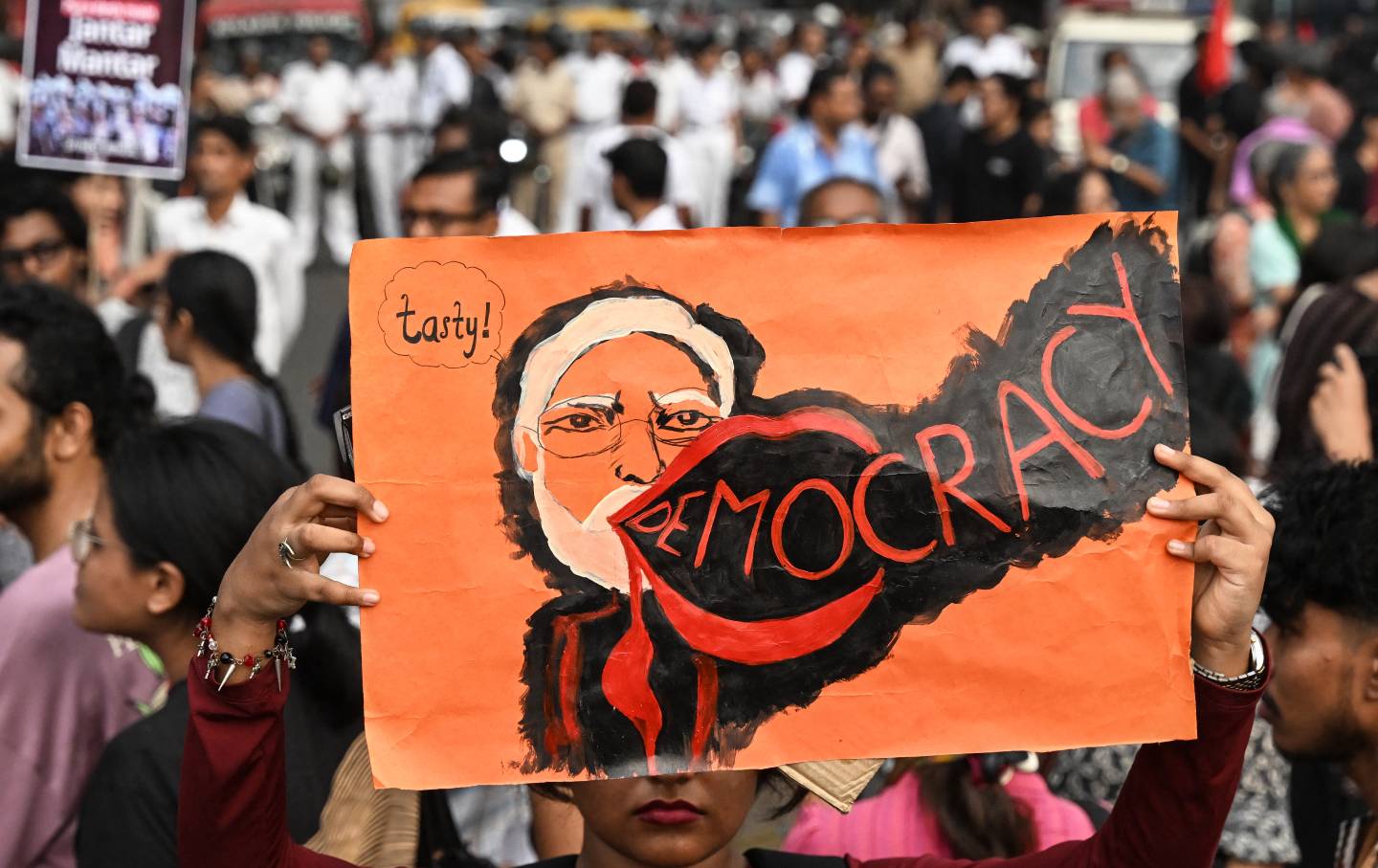
Inside India’s Gen Z Cockroach Janta Movement Inside India’s Gen Z Cockroach Janta Movement
Young Indians are challenging the purge of voter rolls by Modi’s right-wing government. Shrishti Khanna, who was detained by Delhi police while covering the protests, explains.

The Clarion Call of “NAZA” The Clarion Call of “NAZA”
Yuval Abraham and Rachel Szor’s new film not only documents the horrors of the present but give us a glimpse of a possible future too.
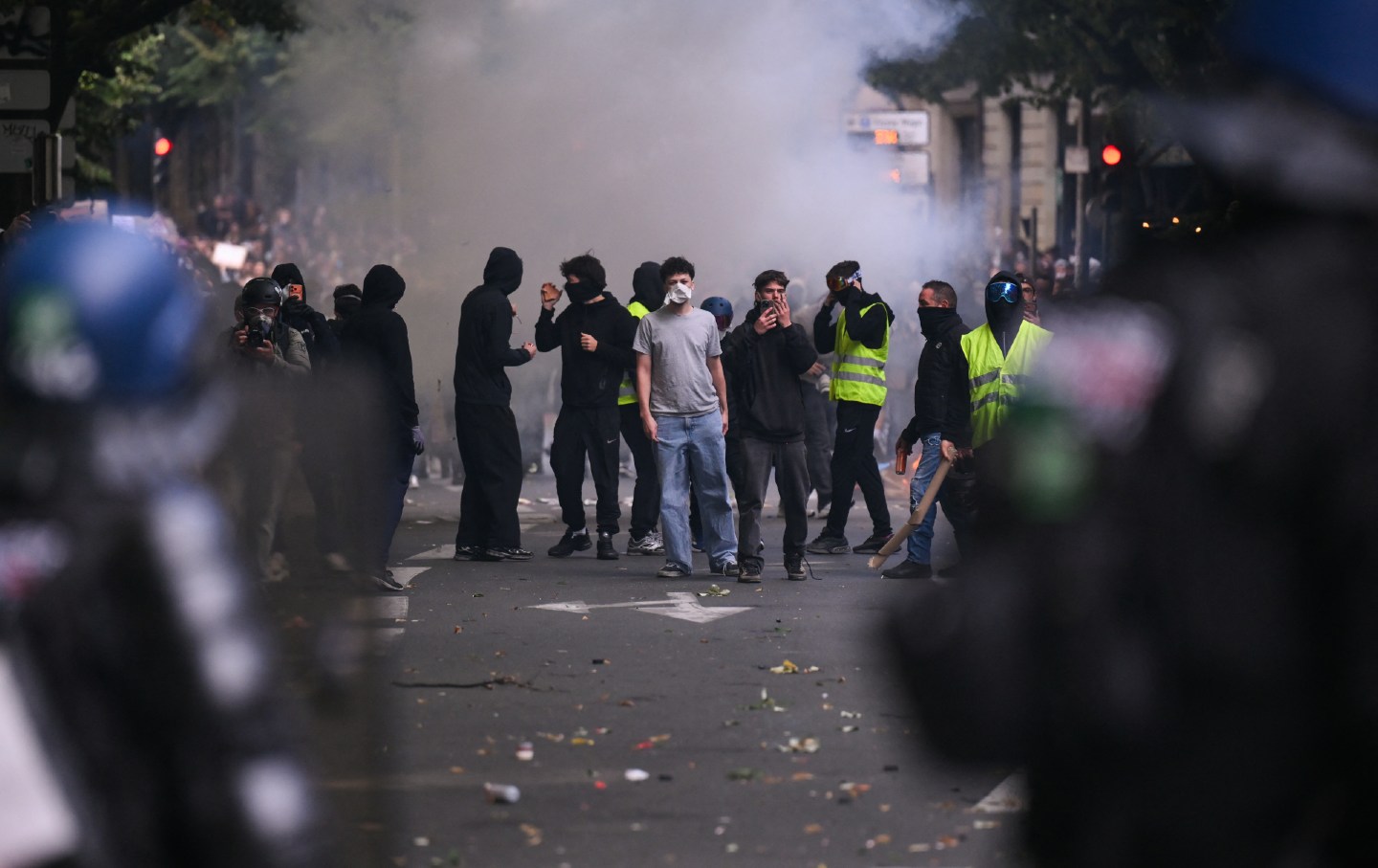
The Specter of Lepenism Looms Over France’s Social Crisis The Specter of Lepenism Looms Over France’s Social Crisis
Joining forces with the “yellow vests,” youth demonstrators are raising the alarm in a country falling to the far right.

Progressives Are Backing Puerto Rican Independence. It’s About Time. Progressives Are Backing Puerto Rican Independence. It’s About Time.
More and more leftists are concluding that statehood for the island is not enough.
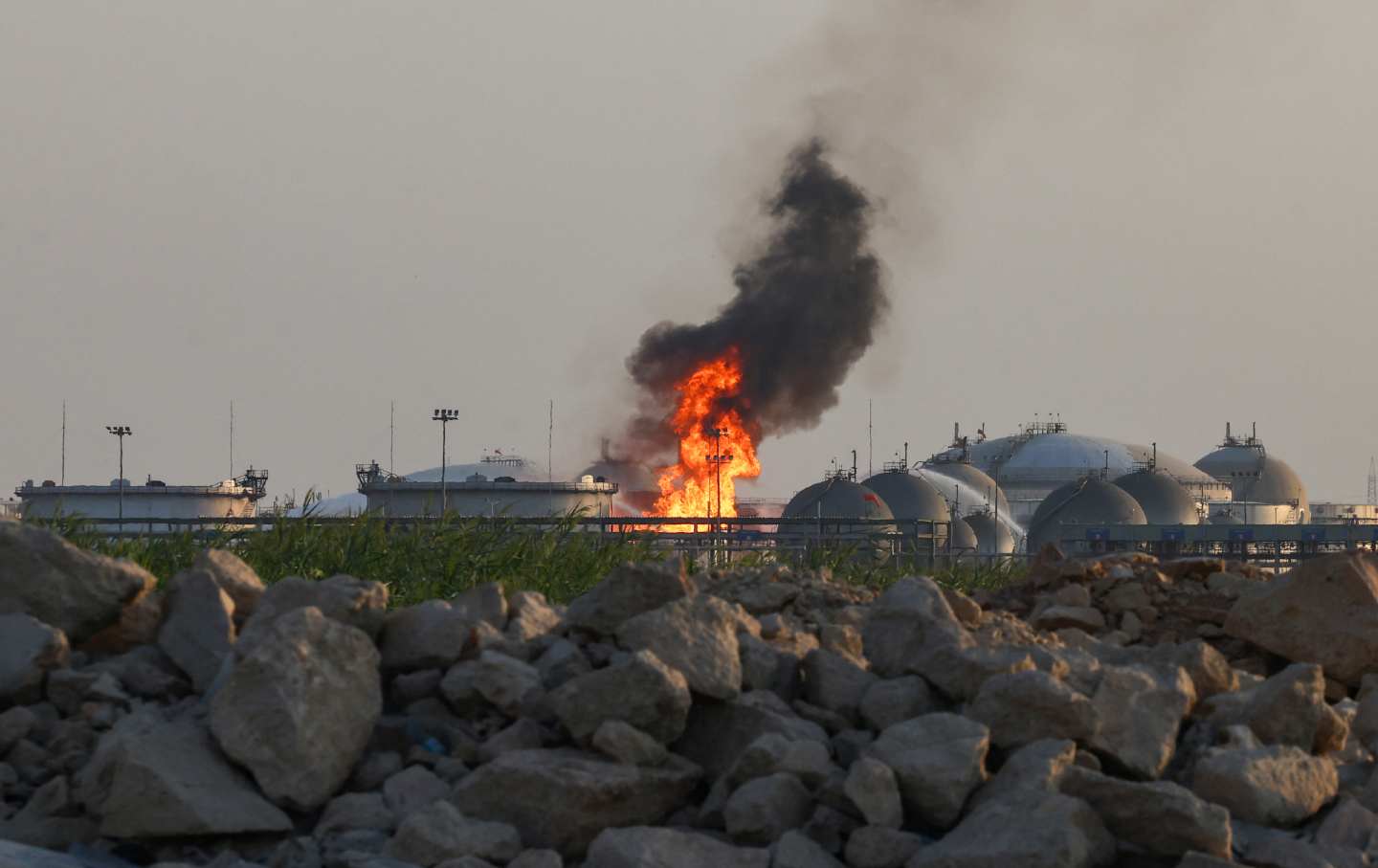
The Saudi Phase of the Iran War Signals More Chaos to Come The Saudi Phase of the Iran War Signals More Chaos to Come
The conflict that Donald Trump has repeatedly proclaimed an unequivocal American victory keeps spiraling out of control.
Andy Burnham’s Speech to the Labour Party Conference Could Be the Start of a Positive Social-Democratic Politics Andy Burnham’s Speech to the Labour Party Conference Could Be the Start of a Positive Social-Democratic Politics
But the autumn budget to be released at the end of October will offer needed details.

