
Present Present
December 28, 1964 The stranded gulch below Grand Central the gentle purr of cab tires in snow and hidden stars tears on the windshield torn inexorably away in whining motion and the dark thoughts which surround neon in Union Square I see you for a moment red green yellow searchlights cutting through falling flakes, head bent to the wind wet and frowning, melancholy, trying I know perfectly well where you walk to and that we’ll meet in even greater darkness later and will be warm so our cross of paths will not be just muddy footprints in the morning not like celestial bodies’ yearly passes, nothing pushes us away from each other even now I can lean forward across the square and see your surprised grey look become greener as I wipe the city’s moisture from your face and you shake the snow off onto my shoulder, light as a breath where the quarrels and vices of estranged companions weighed so bitterly and accidentally before, I saw you on the floor of my life walking slowly that time in summer rain stranger and nearer to become a way of feeling that is not painful casual or diffuse and seems to explore some peculiar insight of the heavens for its favorite bodies in the mixed-up air This article is part of The Nation’s 150th Anniversary Special Issue. Download a free PDF of the issue, with articles by James Baldwin, Barbara Ehrenreich, Toni Morrison, Howard Zinn and many more, here. This poem by Frank O’Hara (1926–1966) was published the same year his collection Lunch Poems brought him to fame.
Mar 23, 2015 / Books & the Arts / Frank O’Hara
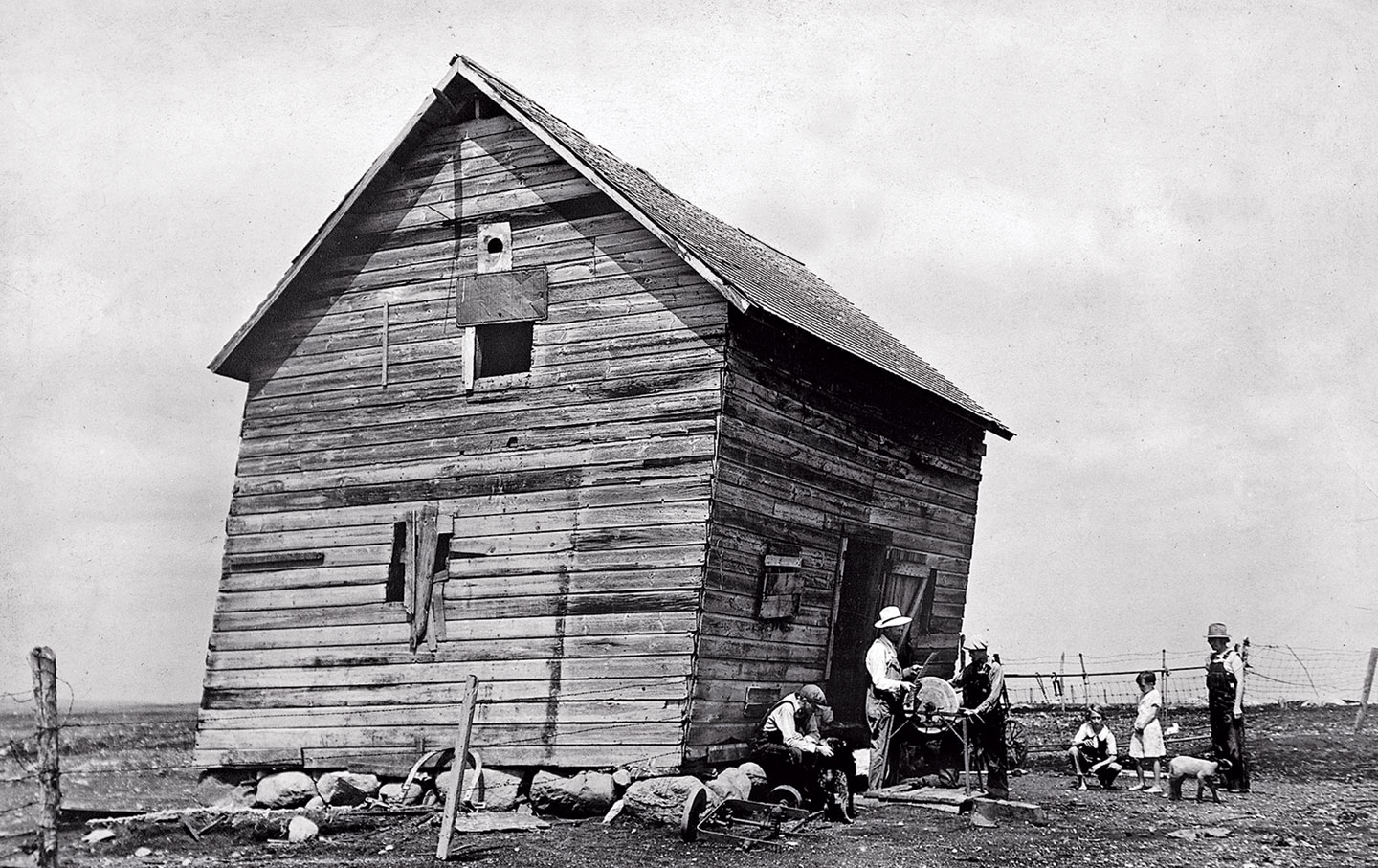
1935–1945: The Establishment of a Warless World Must Be Our Goal 1935–1945: The Establishment of a Warless World Must Be Our Goal
Communists are intolerant and ruthless, often unscrupulous, but they are also zealous, brave, and willing to put up with hardship and abuse.
Mar 23, 2015 / Feature / The Nation

When ‘Commentary’ Parroted ‘The Protocols of the Elders of Zion’ When ‘Commentary’ Parroted ‘The Protocols of the Elders of Zion’
Like it or not, Jews and homosexualists are in the same fragile boat, and one would have to be pretty obtuse not to see the common danger.
Mar 23, 2015 / Feature / Gore Vidal

Weird Bedfellows Weird Bedfellows
In their defense of “tradition” against the liberating potential of architecture, Prince Charles and Xi Jinping find unlikely common ground.
Mar 23, 2015 / Books & the Arts / Michael Sorkin

The Gospel According to Wendell Berry The Gospel According to Wendell Berry
To destroy a forest is an act of greater seriousness than we have yet grasped. But to destroy the earth itself is to destroy the possibility of recovery.
Mar 23, 2015 / Feature / Wendell Berry and Wen Stephenson

1995–2005: Our Enemies Cannot Defeat Us—Only We Can 1995–2005: Our Enemies Cannot Defeat Us—Only We Can
Nation writers on sensationalist art, financial deregulation, September 11, The Sopranos, Texas, the Iraq war and reactionary conservatism.
Mar 23, 2015 / Books & the Arts / The Nation

The Radical Future of Film The Radical Future of Film
A more convivial, expansive and life-affirming future is with us now—and the movies can help take us there.
Mar 23, 2015 / Books & the Arts / Stuart Klawans
Two Views of a Cadaver Room Two Views of a Cadaver Room
January 30, 1960 I The day she visited the dissecting room They had four men laid out, black as burnt turkey, Already half unstrung. A vinegary fume Of the death vats clung to them; The white-smocked boys started working. The head of his cadaver had caved in, And she could scarcely make out anything In that rubble of skull plates and old leather. A sallow piece of string held it together. In their jars the snail-nosed babies moon and glow. He hands her the cut-out heart like a cracked heirloom. II In Brueghel’s panorama of smoke and slaughter Two people only are blind to the carrion army: He, afloat in the sea of her blue satin Skirts, sings in the direction Of her bare shoulder, while she bends, Fingering a leaflet of music, over him, Both of them deaf to the fiddle in the hands Of the death’s-head shadowing their song. These Flemish lovers flourish; not for long. Yet desolation, stalled in paint, spares the little country Foolish, delicate, in the lower right hand corner. This article is part of The Nation’s 150th Anniversary Special Issue. Download a free PDF of the issue, with articles by James Baldwin, Barbara Ehrenreich, Toni Morrison, Howard Zinn and many more, here. Sylvia Plath (1932–1963) published four poems in The Nation between 1955 and 1960.
Mar 23, 2015 / Books & the Arts / Sylvia Plath

How I Learned to Stop Worrying and Love ‘Nation’ Readers How I Learned to Stop Worrying and Love ‘Nation’ Readers
On a Nation cruise, the maritime adventure I usually refer to as “Lefties at Sea,” I used to take it for granted that some of the guests were troubled by my presence.
Mar 23, 2015 / Feature / Calvin Trillin

The Unconvincing Semi-Socialism of ‘It’s a Wonderful Life’ The Unconvincing Semi-Socialism of ‘It’s a Wonderful Life’
Many small towns are “backward” in a likable way, but I have never seen one so Norman-Rockwellish.
Mar 23, 2015 / Feature / James Agee