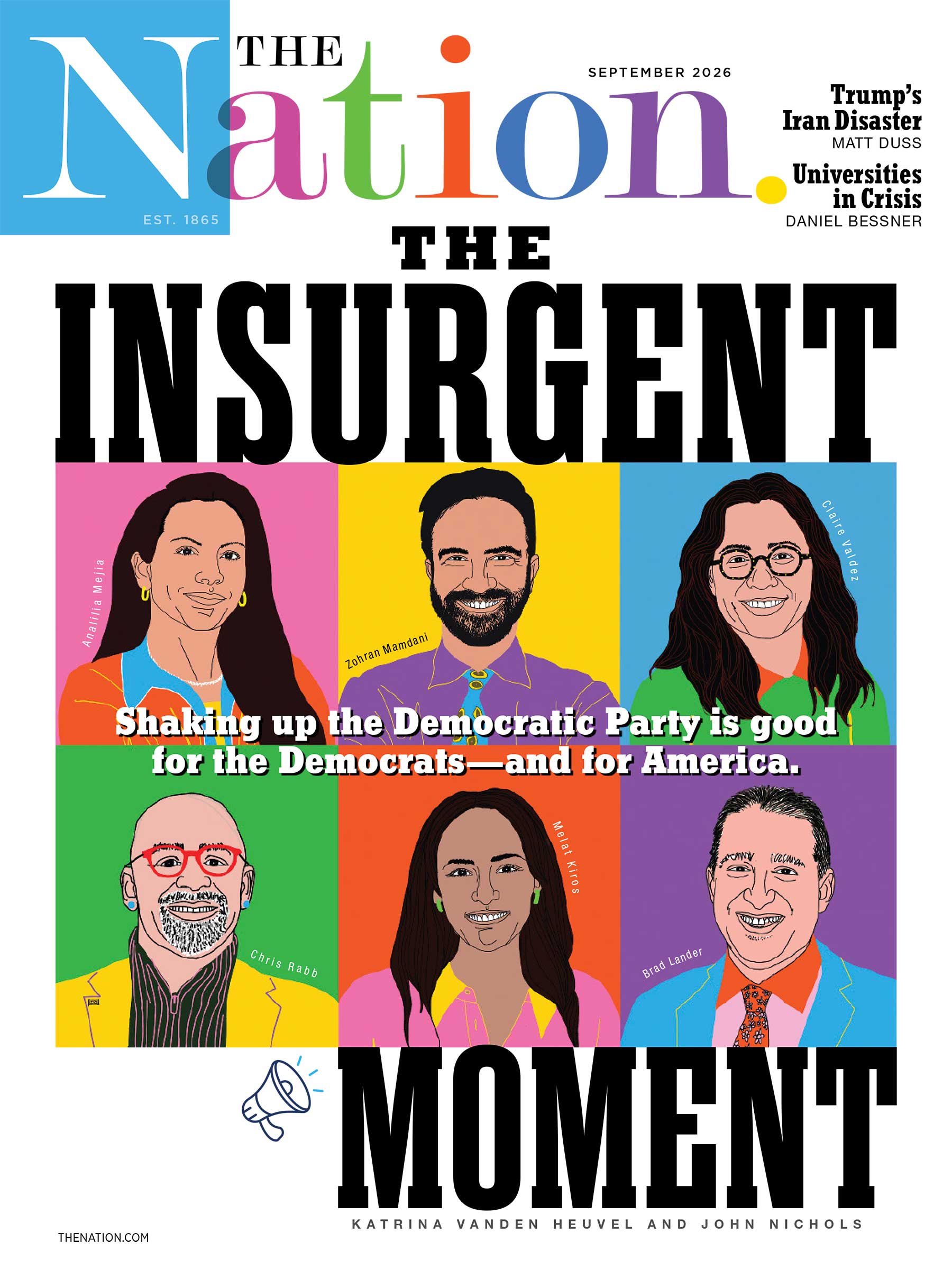
Are Women Morally Superior to Men? Are Women Morally Superior to Men?
Woman as sharer and carer, woman as earth mother, woman as guardian of small rituals—these images are as old as time.
Mar 23, 2015 / Books & the Arts / Katha Pollitt
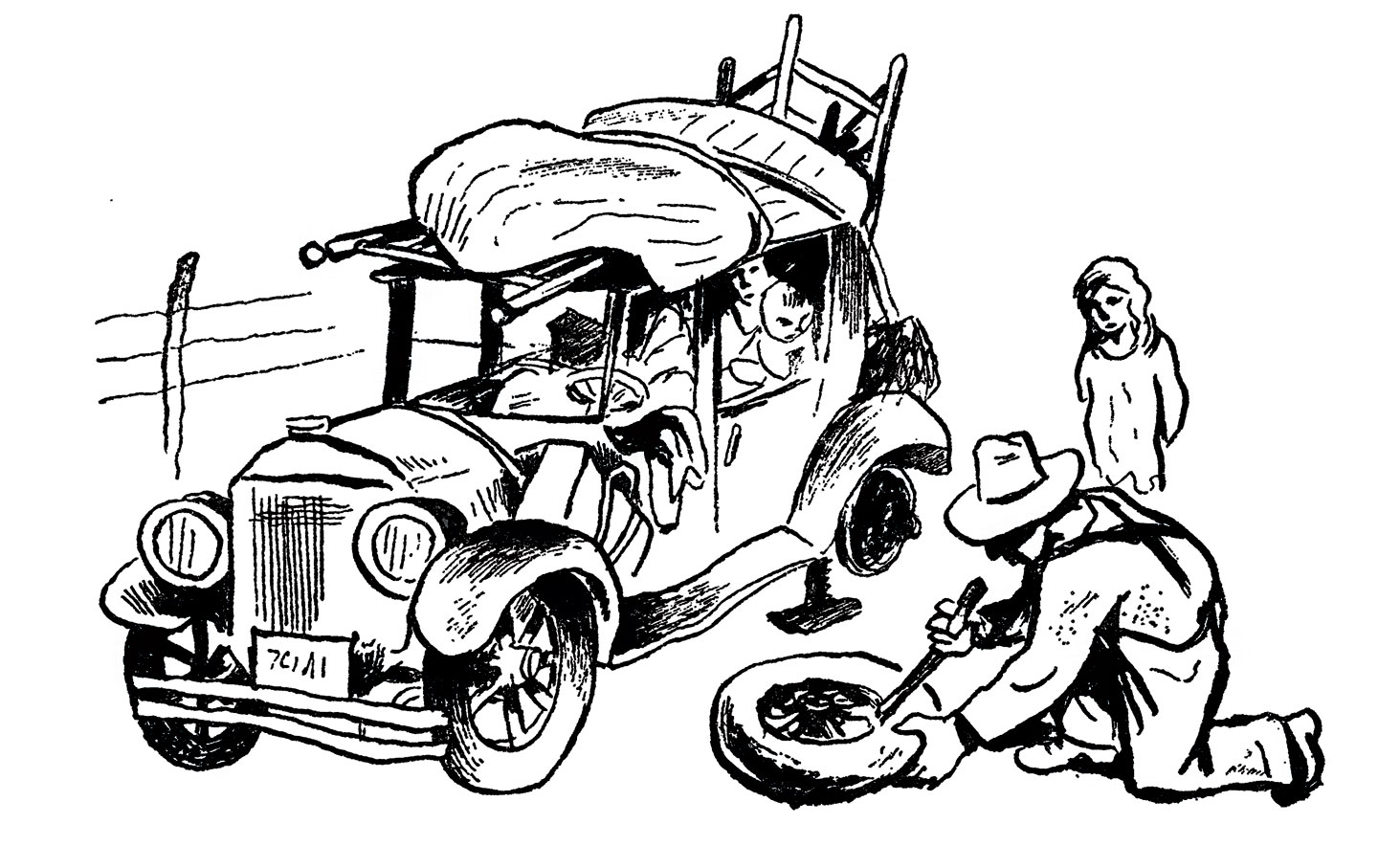
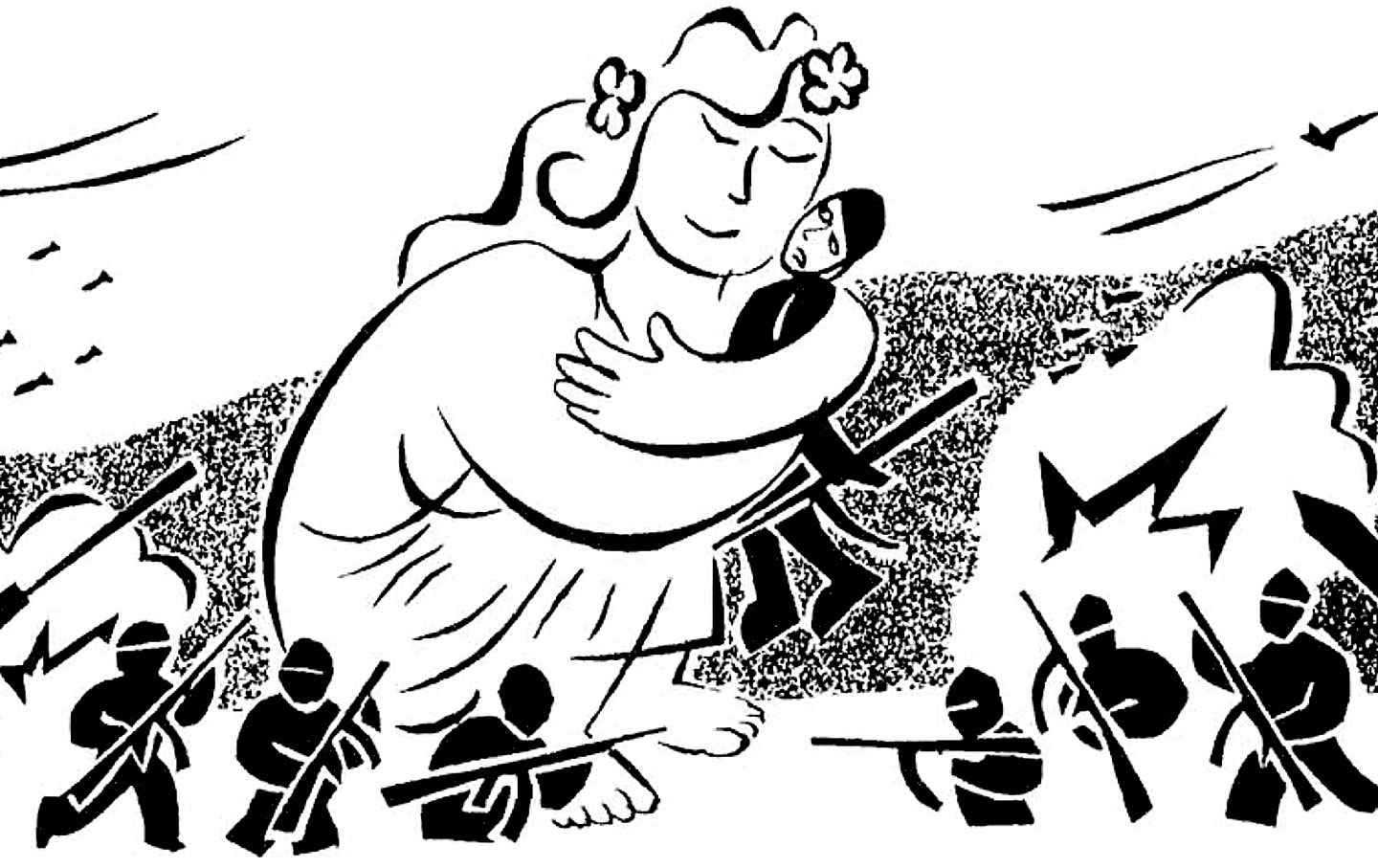
John Steinbeck on the Violent Repression of the Fight for Migrant Workers’ Rights John Steinbeck on the Violent Repression of the Fight for Migrant Workers’ Rights
We now know that workers are being attacked not because they want higher wages, not because they are Communists, but simply because they want to organize.
Mar 23, 2015 / Feature / John Steinbeck

Young ‘Nation’ Writers On Creating Our Radical Future Young ‘Nation’ Writers On Creating Our Radical Future
As The Nation looks forward to the next 150 years, we asked some contributors to StudentNation, the campus-oriented section of our site, and former Nation interns what a radical fu...
Mar 23, 2015 / Feature / The Nation
The Starry Night The Starry Night
September 2, 1961 “That does not keep me from having a terrible need of—shall I say the word—religion. Then I go out at night to paint the stars.” —Vincent Van Gogh, in a letter to his brother The town does not exist except where one black haired tree slips up like a drowned woman into the hot sky. The town is silent. The night boils with eleven stars. Oh starry starry night! This is how I want to die. It moves. They are all alive. Even the moon bulges in its orange irons to push children, like a god, from its eye. The old unseen serpent swallows up the stars. Oh starry starry night! This is how I want to die: into the rushing beast of the night, sucked up by that great dragon, to split from my life with no flag, no belly, no cry. This article is part of The Nation’s 150th Anniversary Special Issue. Download a free PDF of the issue, with articles by James Baldwin, Barbara Ehrenreich, Toni Morrison, Howard Zinn and many more, here. Anne Sexton (1928–1974) won the Pulitzer Prize for poetry in 1967 for Live or Die.
Mar 23, 2015 / Books & the Arts / Anne Sexton
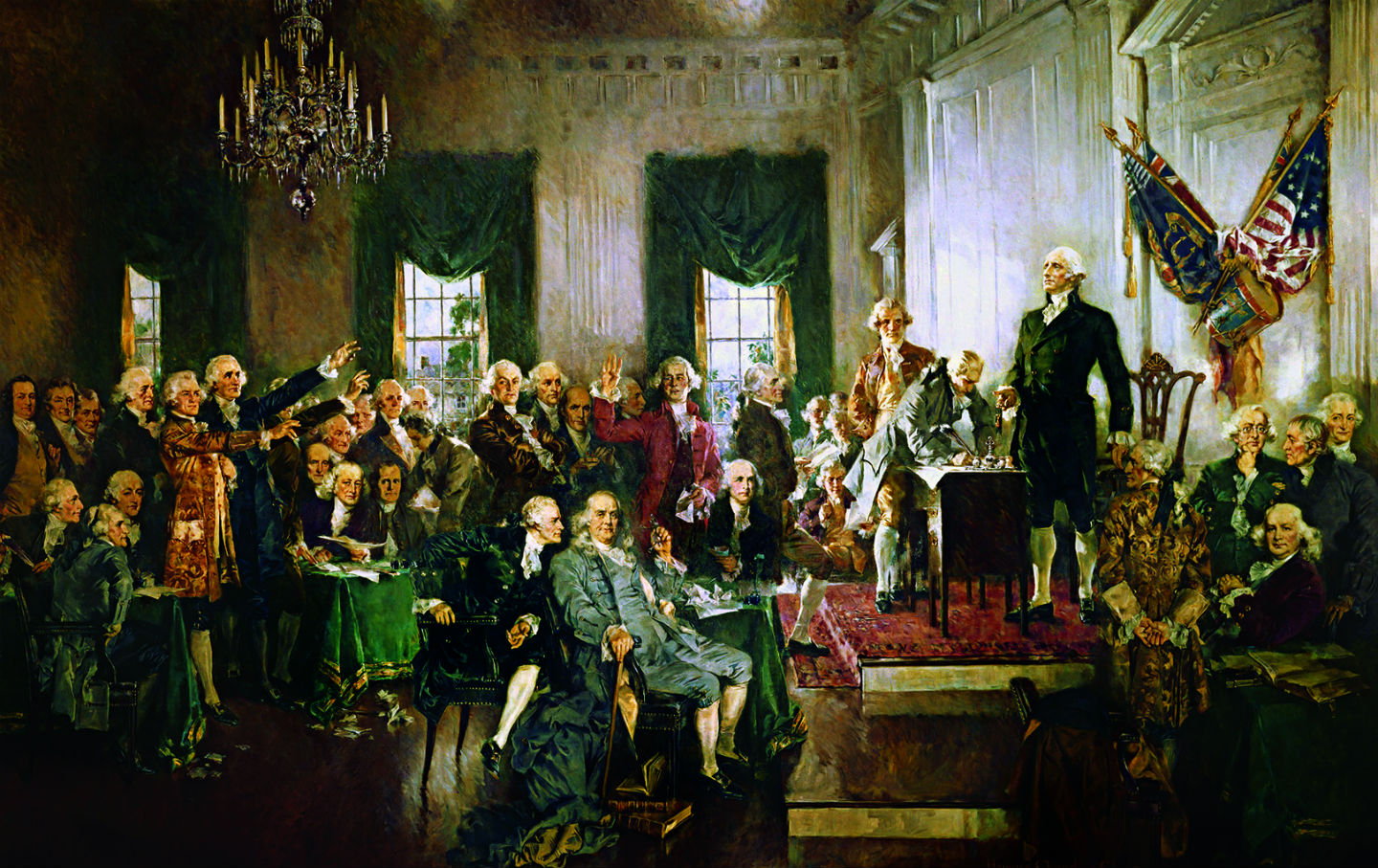
When the Constitution Becomes The Last Resort of Scoundrels When the Constitution Becomes The Last Resort of Scoundrels
We know today the Founders were not Fathers to be proud of.
Mar 23, 2015 / Feature / Simeon Strunsky and Richard Kreitner

Adolph Reed Destroys ‘The Bell Curve’ Adolph Reed Destroys ‘The Bell Curve’
Despite their concern to insulate themselves from the appearance of racism, Herrnstein and Murray display a perspective worthy of an Alabama filling station.
Mar 23, 2015 / Books & the Arts / Adolph Reed Jr.
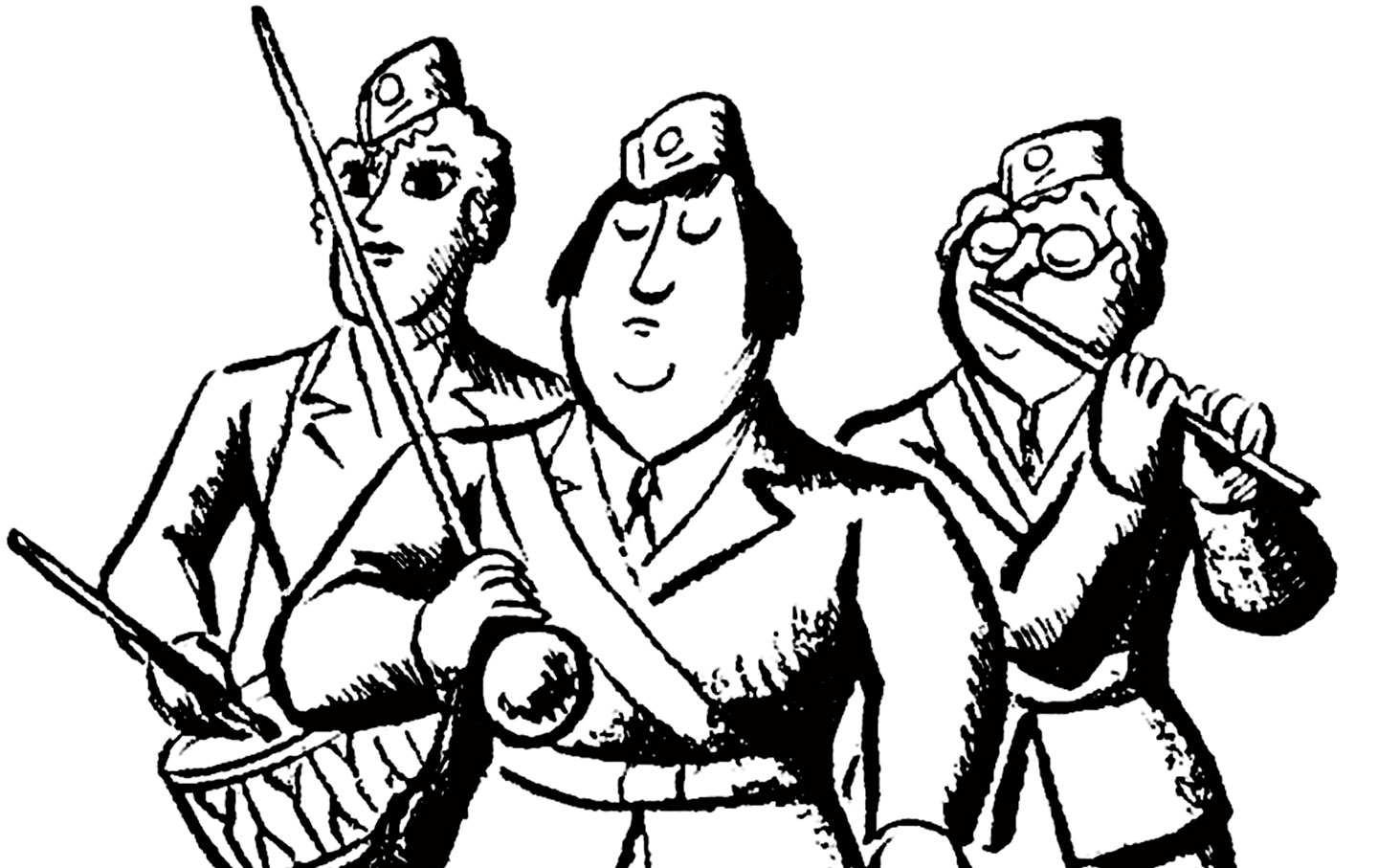
Which Direction Is the American Parade Headed? Which Direction Is the American Parade Headed?
Marching with the American Legion during the New Deal.
Mar 23, 2015 / Feature / John Dos Passos
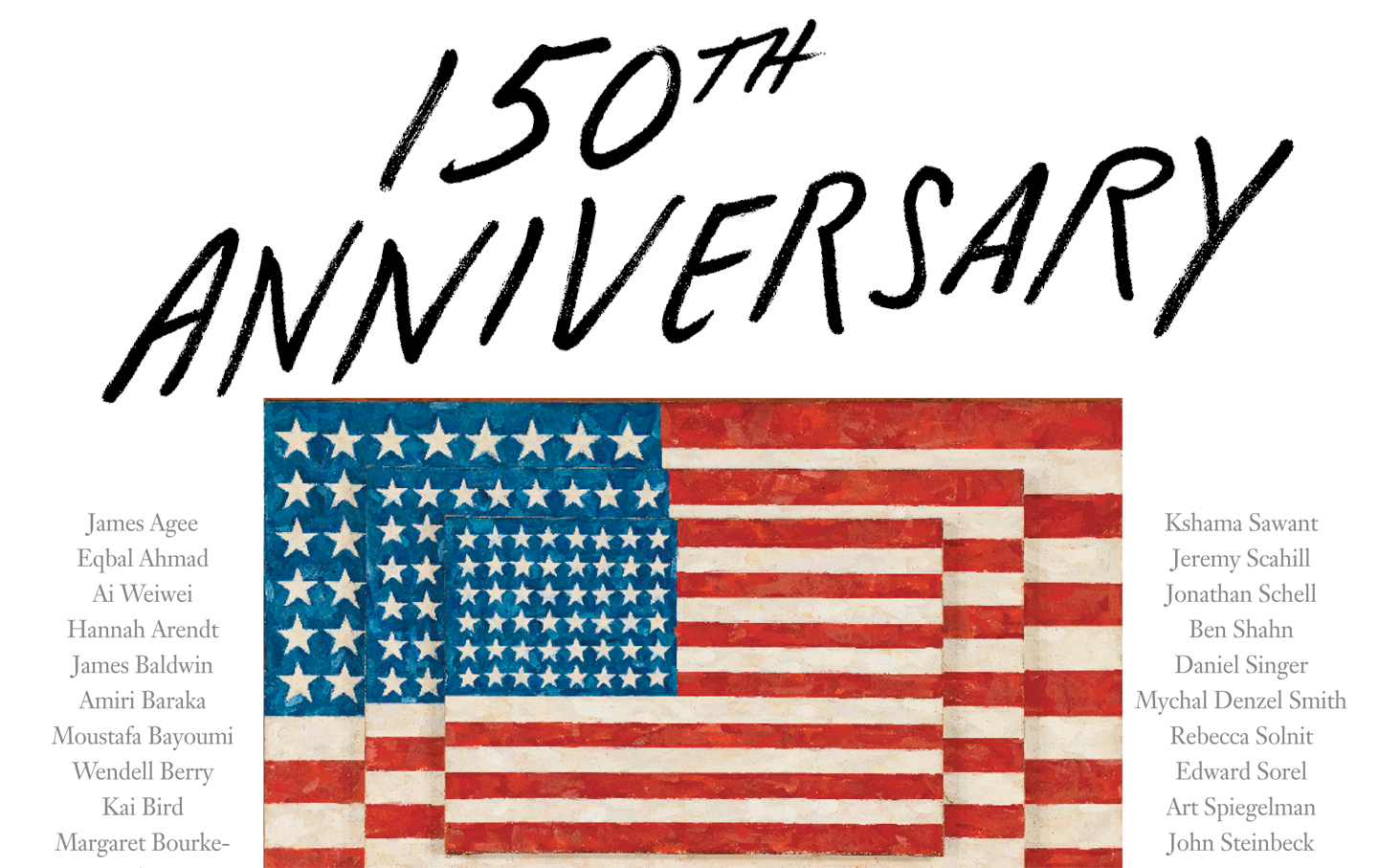
Testimonials to ‘The Nation’ Testimonials to ‘The Nation’
Encomiums from Elizabeth Warren, Rev. Jesse Jackson, Bernie Sanders and many more.
Mar 23, 2015 / Feature
The Plain Sense of Things The Plain Sense of Things
December 6, 1952 After the leaves have fallen, we return To a plain sense of things. It is as if We had come to an end of the imagination, Inanimate in an inert savoir. It is difficult even to choose the adjective For this blank cold, this sadness without cause. The great structure has become a minor house. No turban walks across the lessened floors. The greenhouse never so badly needed paint. The chimney is fifty years old and slants to one side. A fantastic effort has failed, a repetition In a repetitiousness of men and flies. Yet the absence of the imagination had Itself to be imagined. The great pond, The plain sense of it, without reflections, leaves, Mud, water like dirty glass, expressing silence Of a sort, silence of a rat come out to see, The great pond and its waste of the lilies, all this Had to be imagined as an inevitable knowledge, Required, as a necessity requires. This article is part of The Nation’s 150th Anniversary Special Issue. Download a free PDF of the issue, with articles by James Baldwin, Barbara Ehrenreich, Toni Morrison, Howard Zinn and many more, here. Wallace Stevens (1879–1955) published ten poems in The Nation between 1936 and 1952.
Mar 23, 2015 / Books & the Arts / Wallace Stevens
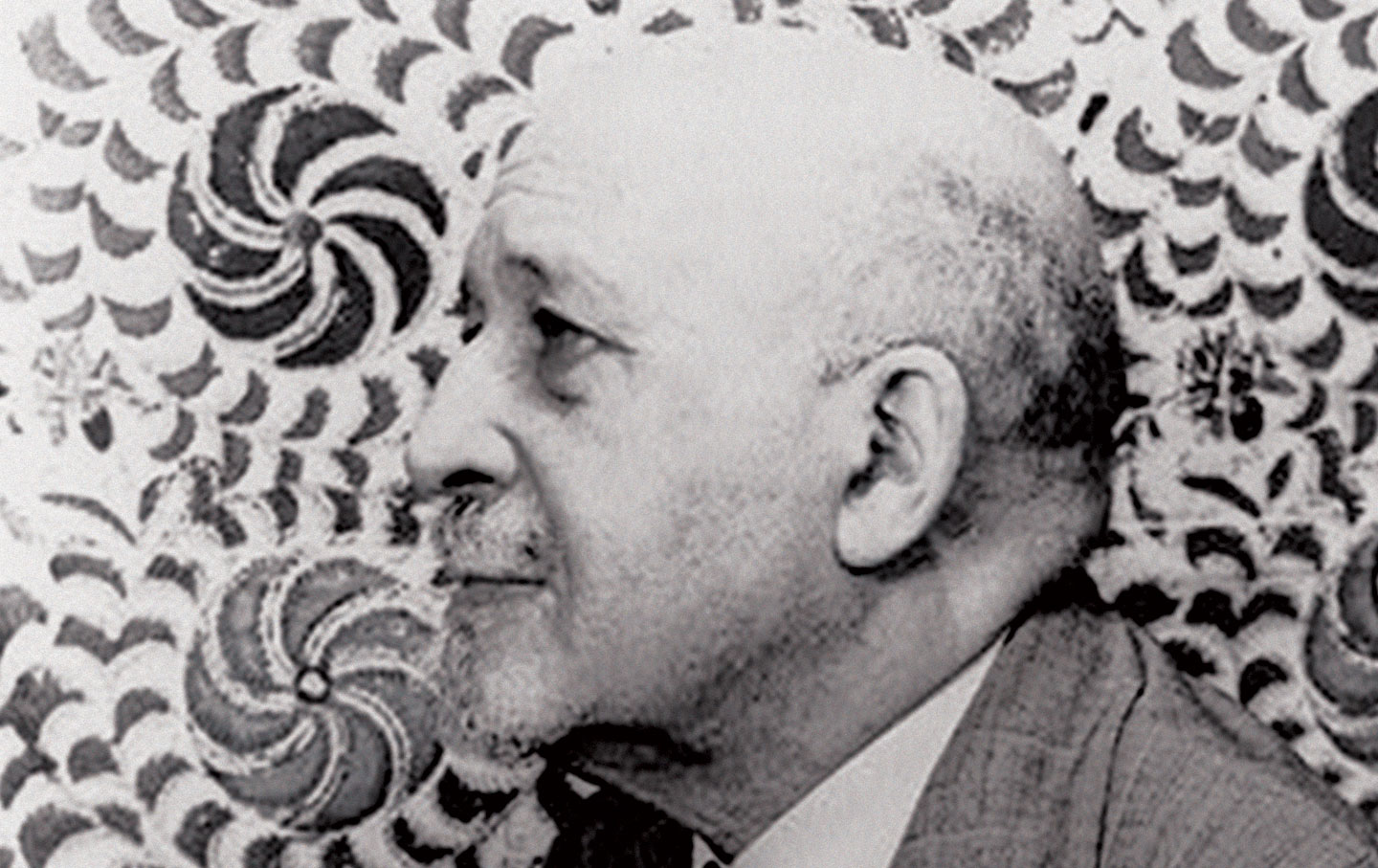
Voting Does Not Make a Difference Voting Does Not Make a Difference
Democracy is dead in the United States. Yet there is still nothing to replace real democracy.
Mar 23, 2015 / Books & the Arts / W.E.B. Du Bois