Editorial / October 25, 2024

Stop Sending American Bombs to Israel

Halting offensive arms transfers now would put the administration on a new path—and align Harris with the majority of Democrats who support conditions on weapons aid to Israel.

Waleed Shahid for The Nation
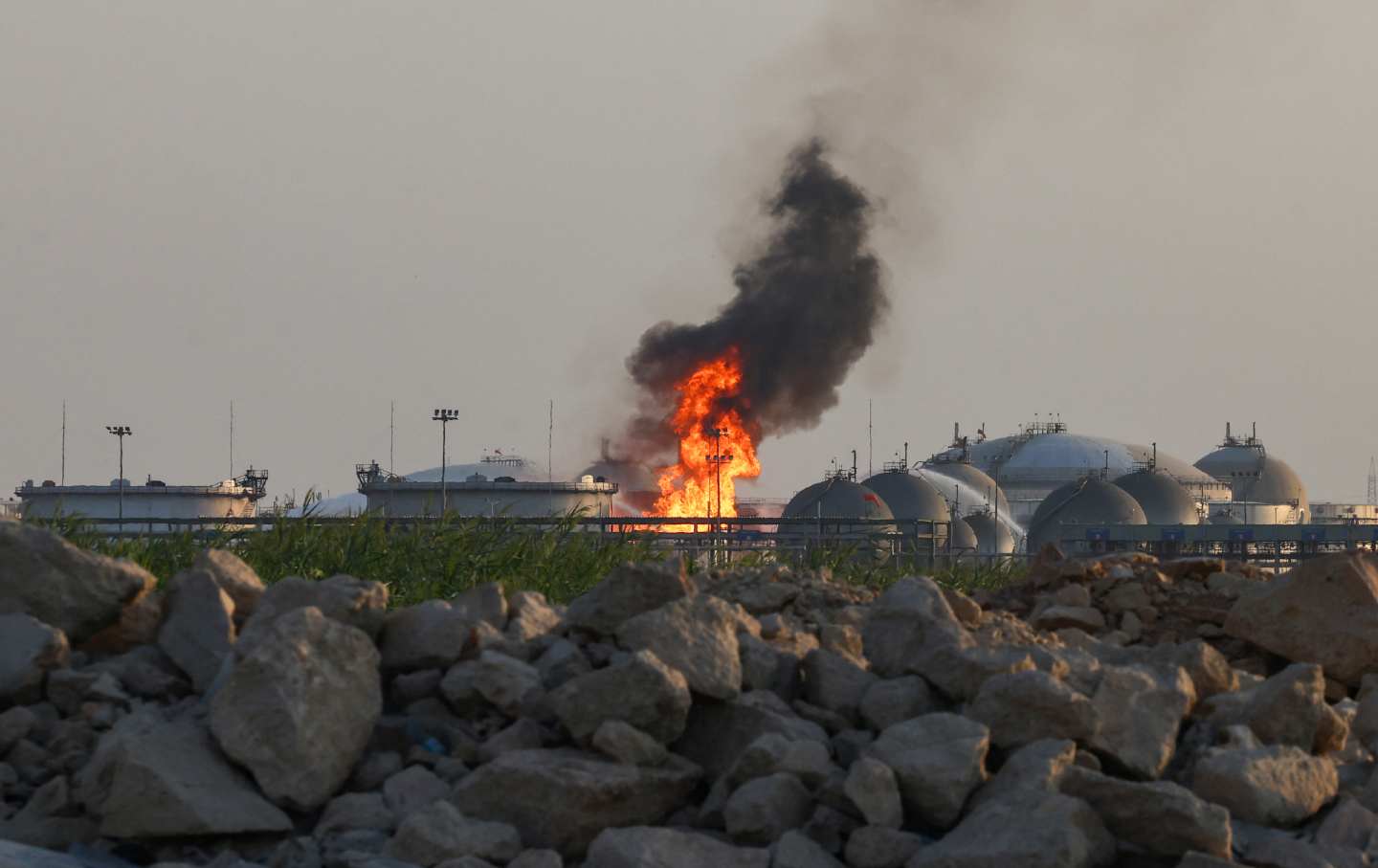
Made in the USA?: Aftermath of an October 22 Israeli strike on the Jnah district of Beirut. According to rescue teams on the ground, this bombing killed at least 16 people—including two children.(Photo by Nael Chahine / Middle East Images / Middle East Images via AFP)

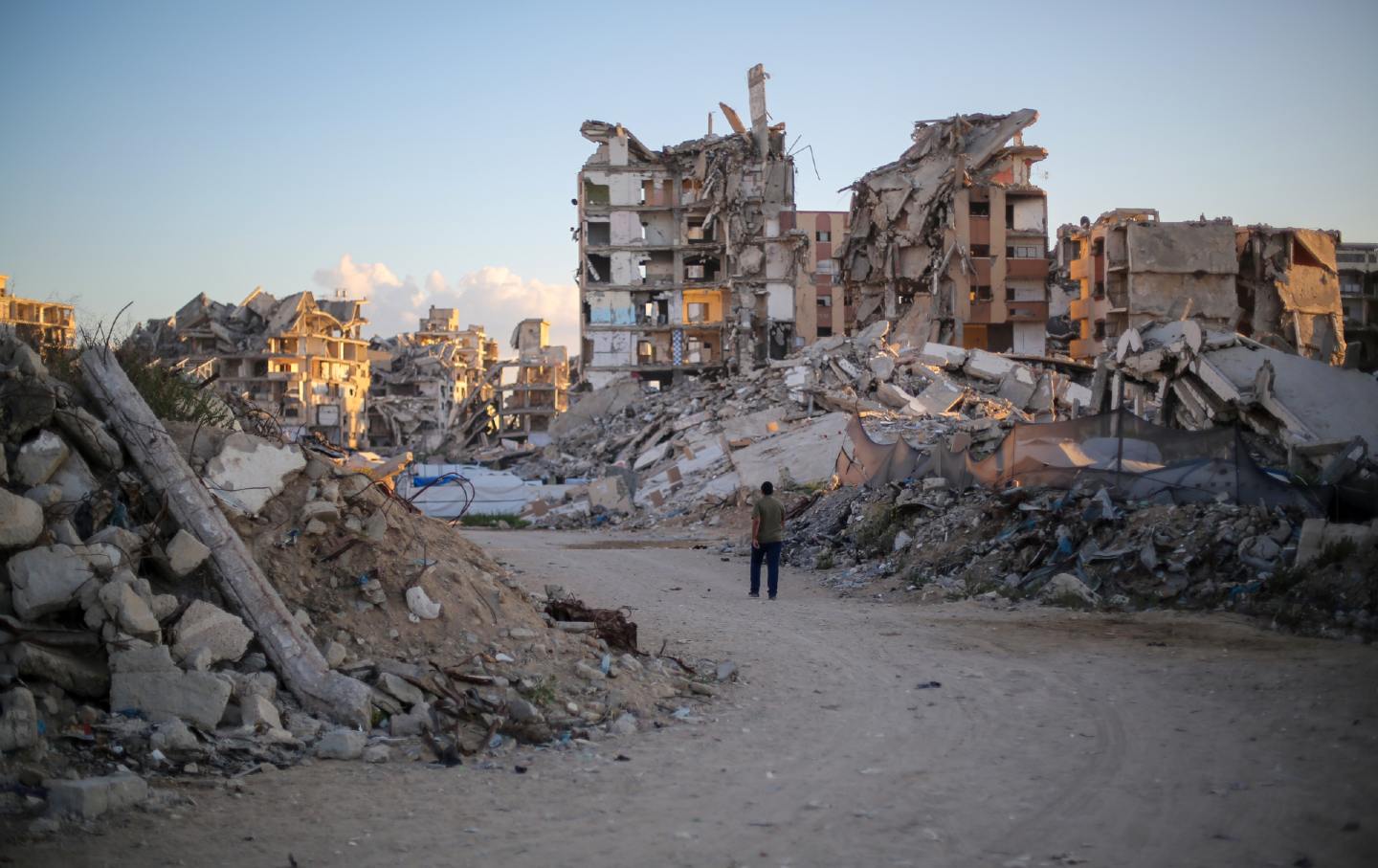
President Biden’s legacy is being written in Gaza’s rubble. Over the past year, his administration has sent billions of dollars in weapons aid to Israel, enabling a campaign that has triggered a humanitarian catastrophe, one that the International Court of Justice is investigating as a plausible case of genocide. At a minimum, suspending offensive arms transfers to Israel is necessary to realign the United States’ actions with its stated values. This is about more than legality—it’s about avoiding a moral stain that will linger long after the bombs stop falling. Lyndon Johnson’s Great Society was overshadowed by the Vietnam War; Biden’s domestic ambitions risk being eclipsed by his blank check for Israel’s war crimes. If he doesn’t take action, his presidency may be remembered not for “building back better” but for enabling a humanitarian disaster.

Even Ronald Reagan temporarily suspended F-16 deliveries after Israel’s 1981 bombing of Iraq’s Osirak reactor, questioning whether they were being used for self-defense purposes, as required by US law. George H.W. Bush used loan guarantees in the 1990s to pressure Israel into freezing settlement expansion. Both presidents understood that US influence doesn’t require unconditional support. Today, Biden faces the most extreme government in Israel’s history—one that openly discusses violating international law. He has the tools to remind the world that American support has limits and that American power can forge peace. But he hesitates as Gaza’s devastation mounts, even after the killing of Hamas’s leader, Yahya Sinwar, removes the last fig leaf of a strategic rationale for Israel’s war.

Biden’s reluctance undermines US laws, such as the Leahy Law and the Foreign Assistance Act, which prohibit weapons aid to countries engaged in human rights abuses. The message is unmistakable: The United States condemns Russia’s invasion of Ukraine while turning a blind eye to Israeli aggression. In the Global South, many see this double standard as a glaring example of Western hypocrisy.

This isn’t just about restoring US credibility; it’s about safeguarding the country’s strategic interests. Biden’s unwavering support for Israel’s actions in Gaza has undermined even America’s own stated goals, like a two-state solution and the Abraham Accords—objectives that many, myself included, view as unrealistic and deeply flawed. By halting offensive arms transfers, Biden can chart a new path: one that values human rights and international law while still supporting Israel’s legitimate security needs.

This call for a change in US policy has gained unprecedented support from seven major American labor unions and the NAACP—key Democratic stakeholders. Even Thomas Friedman has called for restricting weapons aid to Israel. When establishment figures start urging restraint, it has become clear that the status quo isn’t just unsustainable—it’s dangerous.

Kamala Harris faces a critical decision, too. She has a chance to distinguish herself by endorsing a policy shift that aligns with the 77 percent of Democrats who support placing conditions on weapons aid to Israel. This is her opportunity to become a voice for accountability and human rights, offering a vision that Biden has so far lacked.

Of course, challenging this status quo means confronting AIPAC, the powerful pro-Israel lobby that has long sought to block any constraints on weapons aid. But Biden wouldn’t be the first president to take on this challenge. Barack Obama faced down AIPAC during the negotiations for the Iran nuclear deal and succeeded. Like the NRA, AIPAC represents an extreme viewpoint that’s increasingly out of step with American public opinion. Standing up to it would signal that the administration is willing to prioritize America’s long-term interests over the demands of a rigid, out-of-touch lobby.

Biden supported the Iraq War—which has haunted US foreign policy for two decades. Today, he warns Israeli leaders not to make the same mistakes the US made after 9/11, including letting military force run unchecked. The lesson from the War on Terror is clear—indiscriminate force only breeds further violence—but Biden seems unwilling or unable to apply that wisdom when it matters most.

We need a ceasefire, the release of Israeli and Palestinian captives, and an end to decades of US-backed Israeli military rule over Palestinians. This moment is about defining who we are as a nation, and finding the courage to uphold the values we claim to champion. Biden’s legacy, Harris’s potential, and even averting a looming regional war are all on the line. History will judge whether they met this crisis with courage—or let it define them by their cowardice.

Disobey authoritarians, support The Nation

Over the past year you’ve read Nation writers like Elie Mystal, Kaveh Akbar, John Nichols, Joan Walsh, Bryce Covert, Dave Zirin, Jeet Heer, Michael T. Klare, Katha Pollitt, Amy Littlefield, Gregg Gonsalves, and Sasha Abramsky take on the Trump family’s corruption, set the record straight about Robert F. Kennedy Jr.’s catastrophic Make America Healthy Again movement, survey the fallout and human cost of the DOGE wrecking ball, anticipate the Supreme Court’s dangerous antidemocratic rulings, and amplify successful tactics of resistance on the streets and in Congress.

We publish these stories because when members of our communities are being abducted, household debt is climbing, and AI data centers are causing water and electricity shortages, we have a duty as journalists to do all we can to inform the public.

In 2026, our aim is to do more than ever before—but we need your support to make that happen. 

Through December 31, a generous donor will match all donations up to $75,000. That means that your contribution will be doubled, dollar for dollar. If we hit the full match, we’ll be starting 2026 with $150,000 to invest in the stories that impact real people’s lives—the kinds of stories that billionaire-owned, corporate-backed outlets aren’t covering. 

With your support, our team will publish major stories that the president and his allies won’t want you to read. We’ll cover the emerging military-tech industrial complex and matters of war, peace, and surveillance, as well as the affordability crisis, hunger, housing, healthcare, the environment, attacks on reproductive rights, and much more. At the same time, we’ll imagine alternatives to Trumpian rule and uplift efforts to create a better world, here and now. 

While your gift has twice the impact, I’m asking you to support The Nation with a donation today. You’ll empower the journalists, editors, and fact-checkers best equipped to hold this authoritarian administration to account. 

I hope you won’t miss this moment—donate to The Nation today.

Onward,

Katrina vanden Heuvel 

Editor and publisher, The Nation

Waleed Shahid

Waleed Shahid is the director of The Bloc and the former spokesperson for Justice Democrats. He has served as a senior adviser for the Uncommitted Campaign, Alexandria Ocasio-Cortez, and Jamaal Bowman. He is a member of The Nation’s editorial board.

The Nation

Founded by abolitionists in 1865, The Nation has chronicled the breadth and depth of political and cultural life, from the debut of the telegraph to the rise of Twitter, serving as a critical, independent, and progressive voice in American journalism.

More from The Nation

Trump and Putin walk side-by-side silhouetted

The US Is Looking More Like Putin's Russia Every Day The US Is Looking More Like Putin's Russia Every Day

We may already be on a superhighway to the sort of class- and race-stratified autocracy that it took Russia so many years to become after the Soviet Union collapsed.

Andrea Mazzarino

Hend’s family during their olive harvest season in 2024. Photo courtesy of Hend Salama Abo Helow

Israel Tried to Destroy Our Olive Trees. But They Resisted—and So Did We. Israel Tried to Destroy Our Olive Trees. But They Resisted—and So Did We.

These trees have endured drought, pollution, toxic mines, uprooting, bulldozing, and burning—much like the people of Gaza. But they fought to survive.

Hend Salama Abo Helow

Trump Foreign Policy

Trump’s National Security Strategy and the Big Con Trump’s National Security Strategy and the Big Con

Sense, nonsense, and lunacy.

Robert L. Borosage

Sunset over Christ the Saviour cathedral in Moscow

Does Russian Feminism Have a Future? Does Russian Feminism Have a Future?

A Russian feminist reflects on Julia Ioffe’s history of modern Russia.

Nadezhda Azhgikhina

Oleksandr Ibrahimov, 56, a security guard working for 35 years at the House of Trade Unions, finds a sunflower growing amidst wreckage.

Ukraine’s War on Its Unions Ukraine’s War on Its Unions

Since the start of the war, the Ukrainian government has been cracking down harder on unions and workers’ rights. But slowly, the public mood is shifting.

David Zauner

Young learners listen to an educator during the start of classes at Latin Patriarchate School inside the Holy Family Catholic Church compound sheltering displaced Palestinians in Gaza City, on December 3, 2025.

I’m a Teacher in Gaza. My Students Are Barely Hanging On. I’m a Teacher in Gaza. My Students Are Barely Hanging On.

Between grief, trauma, and years spent away from school, the children I teach are facing enormous challenges.

Ghada Eyad