Why the European Left Should Support Peace in Ukraine
Endorsing a negotiated settlement does not require the left to justify Russia’s invasion or advocate legal recognition of its territorial gains.
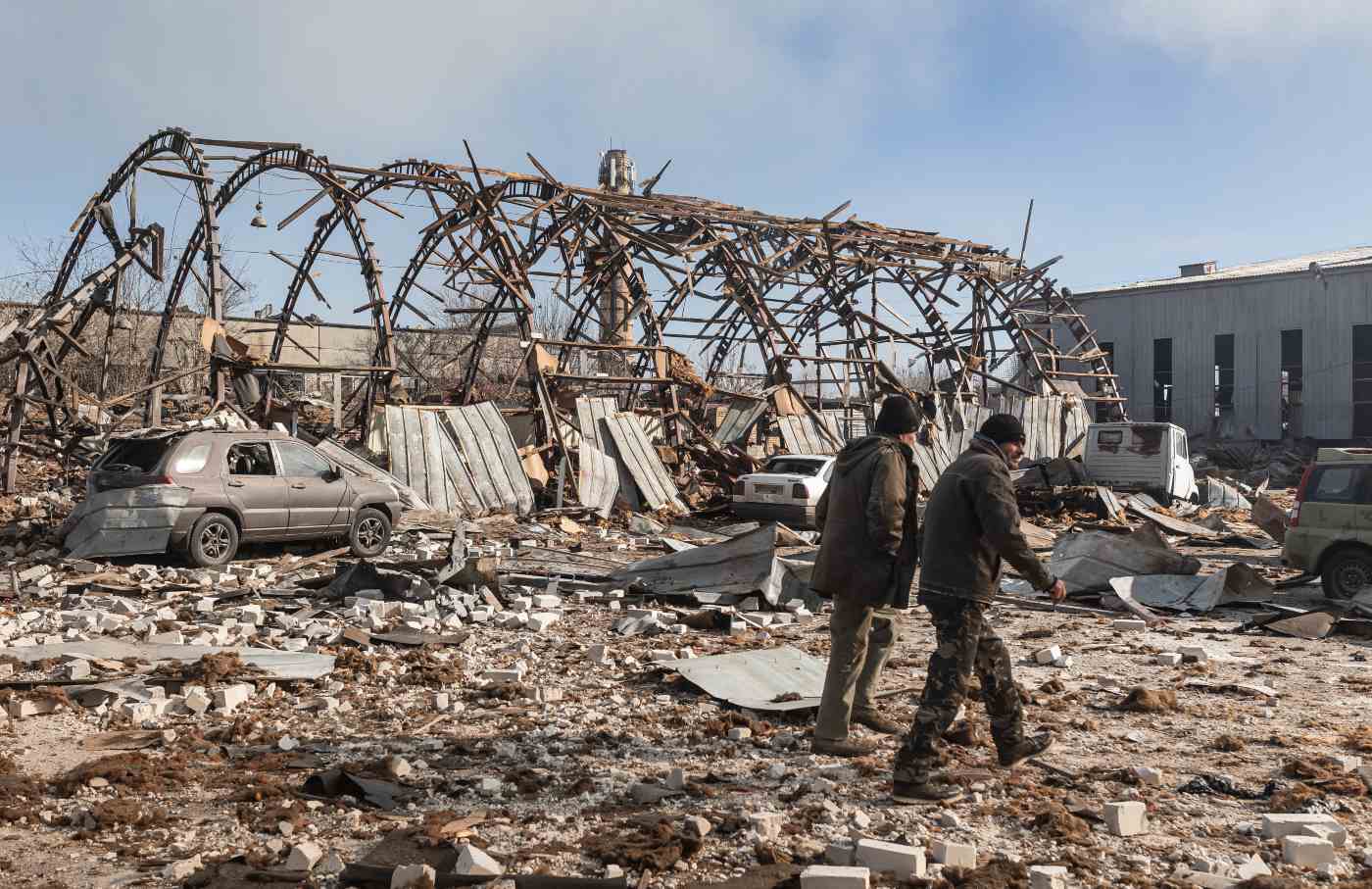
Anegotiated end to the Ukraine War now seems possible, if the last remaining obstacles can be overcome. Of these, the most important is Russia’s demand that Ukraine leave the last remaining part of the Donbas region that it still holds. Putin apparently needs this if he is to be able to claim a qualified victory in a war that has cost Russia enormously for very limited gains. It is, however, obviously extremely hard for Ukraine to withdraw from part of its national territory, for which it has sacrificed so many lives.
The European Union and its leading members could make a valuable contribution to peace if, in return for Russia’s dropping this demand, they were to offer to suspend sanctions against Russia, resume purchases of Russian oil and gas (though without returning to prewar levels) and abandon the idea of a European “reassurance force” on Ukrainian territory—something that Russia has categorically rejected.
European leaders are now calling for the resumption of direct talks with Russia, and it is reported that former Finnish president Sauli Niinistö is being considered as an EU envoy to the Russian government. But Russian sources have told me an offer to talk is meaningless. The EU must put forward concrete proposals.
European progressive parties and groups could play a useful part in urging their governments toward making such proposals. Tragically, with rare exceptions, they are largely silent or opposed.
Feelings of shock and anger on the left at Russia’s invasion were entirely justified, as was support for the sanctions that the EU imposed on Russia and the aid the West gave to Ukraine. The goal of this strategy however should have been a compromise peace—one that indeed seemed possible (and on far better terms for Ukraine) in the first weeks of the war, but that was opposed by key Western governments.
Instead, the Biden administration and its European satellites sought the defeat and permanent weakening of Russia—or even, in some Russophobe fever dreams, its dissolution. And this goal persisted long after the complete failure of the Ukrainian offensive in 2023 made clear that it was impossible. Indeed, some leading figures, like EU foreign policy chief Kaja Kallas, still seem to be dreaming of this. US and European officials went on parroting their commitment to support Ukraine for “as long as it takes,” without ever asking their populations, “Takes to achieve what exactly?”
It is time for the European left to break decisively with this approach and give full support to a compromise peace including the suspension of sanctions (with a “snap-back” provision that they would automatically resume if Russia resumed aggression). There is an urgent moral imperative to do this in order to end the suffering of the Ukrainian population on terms that will preserve the independence—and insofar as this is realistically possible, the security—of by far the greater part of Ukraine.
However, equally important as a consideration should be the future of progressive agendas in Europe as a whole, as these will be mortally threatened if European establishments are able to create a permanent atmosphere of emergency and militarization justified by a supposed threat from Russia. It is therefore essential not just that peace be achieved in Ukraine, but that this peace should form part of a general reduction of tension in Europe and restoration of reasonably stable and predictable relations with Russia. It is also essential that support for peace should not be left to the radical right—as at present it seems to be.
The costs to Ukrainian lives and well-being if the war continues should be obvious. As Ukraine runs dangerously low on air defense missiles (and with US and European production capacity unable to match Kyiv’s needs), Russia’s escalating strikes on Ukrainian energy infrastructure have left some 1 million ordinary Ukrainians without electricity and heating amid a winter freeze.
According to members of Ukrainian civil society who support a negotiated resolution to the fighting, the fundamental concern for all Ukrainians has been how the war has divided families. “We need to reunite our families, to have physical access to our loved ones, and to see our husbands, brothers, and fathers return from the frontlines alive and unharmed. We want to focus on rebuilding cities and villages—the restoration of human ties is essential for societal healing,” says one Ukrainian living in the northeast of the country along the front line. Some 3.5 million Ukrainians are internally displaced, while over 5 million are refugees outside the country. An end to the fighting and the accompanying investment and reconstruction plans may offer a chance for their return.
As increasing numbers of Europeans become reluctant to spend the money necessary to keep Ukraine in the fight, and with the Americans largely halting financing to Kyiv, support for a negotiated settlement will not only help regain important political space but also, hopefully, begin to address Europe’s economic woes.
Since the war began, the EU and its member-states have made available almost $200 billion to Ukraine for financial, military, and humanitarian support. This backing has included grants, in-kind support, and highly concessional loans. With reconstruction costs in Ukraine approaching the $1 trillion mark, European budgets are likely to be further strained as the continent seeks to increase military spending while supporting Ukraine and at the same time not allowing their social safety nets to become too degraded. Russia’s frozen assets in Europe, totaling some $200 billion, will undoubtedly play a crucial role in Ukraine’s reconstruction and help offset some of Europe’s direct financial support.
The Ukraine War has become a cultural and narrative conflict, too, one that European establishments have turned to their own advantage. The left, therefore, needs to pay greater attention to how the conflict has been used in the West to strengthen the state’s security and surveillance networks. This, in turn, has been used to suppress not just allegedly “pro-Russian” voices, but also protests against Israeli policy, among others.
The left would be wise to remember previous periods of anti-Communist panic, like those after the First World War and during McCarthyism when those who questioned the official narrative faced far stricter censure than social media “cancellations.” The entire present approach of most European governments points towards a permanent state of mobilization against Russia, fueled by fear of a deliberate Russian attack on NATO that exists chiefly in their own imaginations—or propaganda.
For how on earth can any serious analyst believe that a Russia that has been fought to a near-standstill in eastern Ukraine would plunge into a war with the whole of NATO? Or that Putin, who has consistently resisted pressure from Russian hard-liners to launch mass conscription and full economic mobilization to win the war in Ukraine would do so for the sake of a horribly risky direct war with the West? What could Russia possibly hope to gain, compared to the dangers involved? It is true that European states need to strengthen their defenses; but if defense is really their goal, then (as Ukraine has shown) new drone technology allows states to achieve that for a fraction of the amounts that European establishments are now planning to spend on tanks and warplanes that may be obsolescent by the time they are built. At some point, no doubt, new technologies will change this balance—but at present, they are in prospect.
Endorsing a negotiated settlement does not require the left to justify Russia’s invasion or advocate legal recognition of Russia’s territorial gains. It does require a recognition of how hostility to Russia has been mobilized by forces of unrestrained militarism and ethnic nationalism that have also always been bitterly hostile to the left. Some of the accusations of atrocities against the Russian army have been true. But it should not be difficult to remember how such charges were exaggerated and manipulated to justify US imperial aggression in Iraq, Libya, Venezuela, and elsewhere. Given this record, and whatever the anger at Russia’s invasion, there is no excuse for left-wing journalists and politicians to unthinkingly accept and repeat whatever Western and Ukrainian official propaganda tells them.
Anyone who opposed those US and European operations should have thought twice for example about repeating the charge of “genocide” against Russia, on the ludicrous grounds that Putin has spoken of Russians and Ukrainians as “one people”—as if Hitler had spoken of Germans and Jews as “one people,” or the Rwandan Hutu extremists had argued their historically brotherly relations with the Tutsi.
Popular
“swipe left below to view more authors”Swipe →The current deal being negotiated represents close to the best compromise possible given the battlefield dynamics and available Western resources and resolve. The agreement will offer the Ukrainians—whose armed forces and civil society have performed with the utmost courage and resilience—the opportunity to preserve the independence and sovereignty of 80 percent of their country and to rebuild and integrate into the EU. Furthermore, this agreement will allow Ukrainians to maintain a formidable army backed by Western security pledges that will be trained and supplied by Western partners to offer a credible deterrent against future Russian attack.
From Europe’s perspective, the last four years of war have led to hostilities with Russia reaching levels not seen in generations and a danger of nuclear war at its highest since the Cuban missile crisis. This situation will take many years to redress, but this process can only begin with peace in Ukraine. This is a task that corresponds to the interests of Europe and the traditions of the left.
More from The Nation
The Saudi Nuclear Deal Is a Typical Trump Fiasco The Saudi Nuclear Deal Is a Typical Trump Fiasco
Yet again, the president trumpets a foreign-policy agreement steeped in recklessness, lies, and corruption.
I Thought I Knew Gaza. Then I Went Back. I Thought I Knew Gaza. Then I Went Back.
After nearly three years, I finally returned to my homeland. I wasn’t prepared for what I found.
Marco Rubio’s Cuba Fantasies Are More Dangerous Than They Seem Marco Rubio’s Cuba Fantasies Are More Dangerous Than They Seem
Little Marco is a modern-day Joe McCarthy, brandishing a list of supposed Cuban influence agents.
Cuba Will Not Be Starved Into Submission Cuba Will Not Be Starved Into Submission
A Cuban diplomat talks about the human cost of the US blockade, Cuba’s economic liberalization, and the gains of the revolution that Havana says are not up for negotiation.
15 Years Ago, Anders Breivik Massacred 77 People. Norway Is Determined to Treat Him Humanely. 15 Years Ago, Anders Breivik Massacred 77 People. Norway Is Determined to Treat Him Humanely.
Our prisons, ourselves.
Francesca Albanese Won’t Back Down Francesca Albanese Won’t Back Down
Talking to the UN special rapporteur on the occupied Palestinian Territories about genocide, standing up to the hatred of the establishment, and ending war.

