
How a French City Kept Its Soccer Team Working Class
Olympique de Marseille shows that if fans organize, a team can fight racism, keep its matches affordable, and maintain a deep connection to the city.
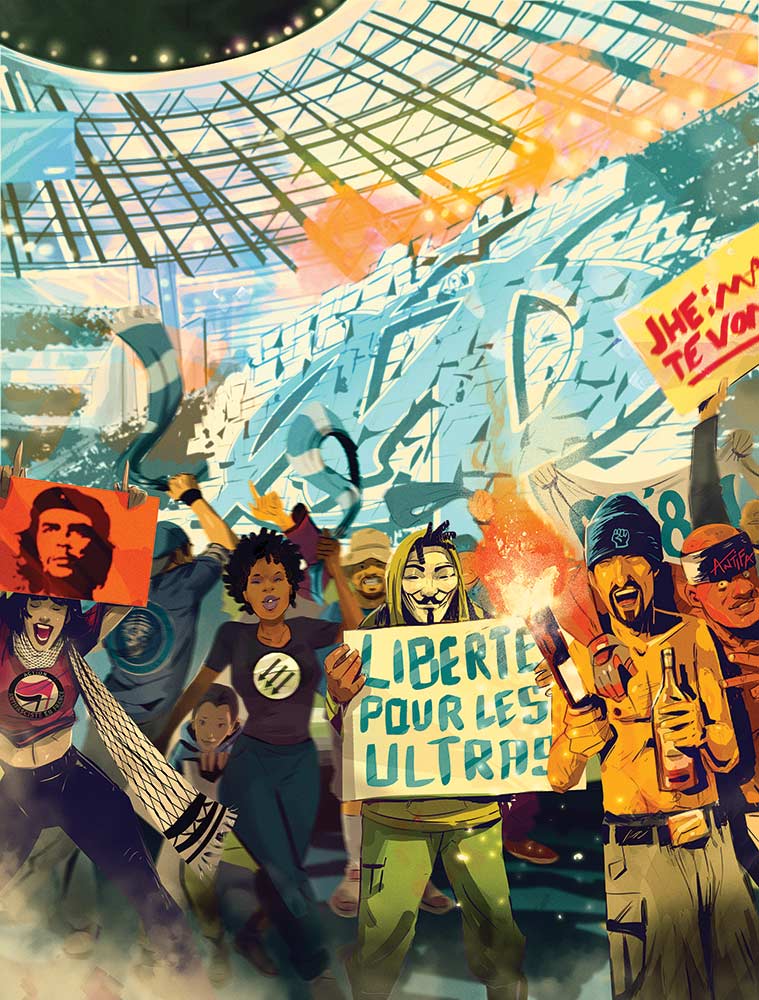
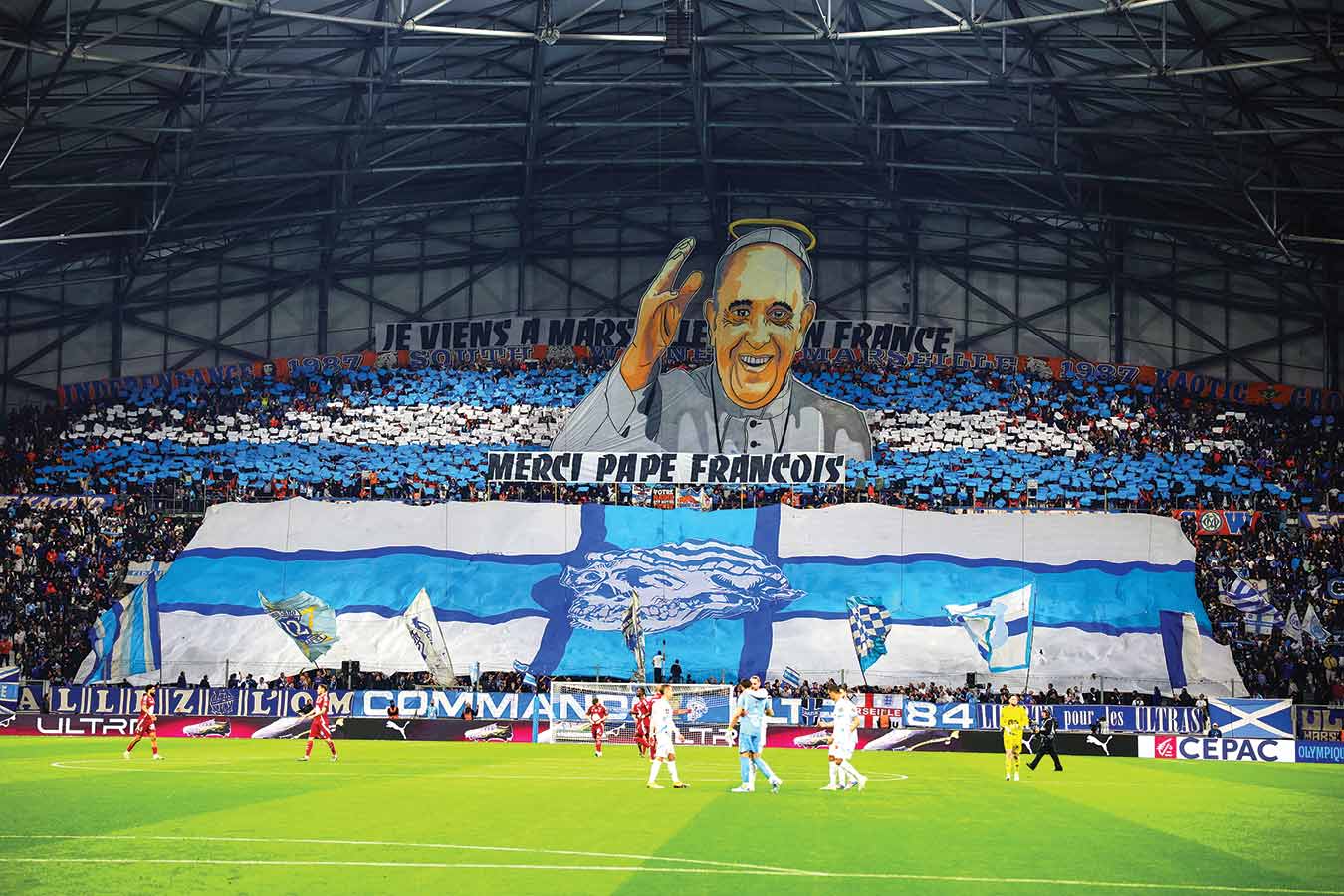
Marseille, France—If you get to the Velodrome, the home stadium of the olympique de Marseille soccer club (OM), before the crowds arrive on match day, you’ll see the blue-and-white graffiti blanketing the front steps that lead to the main gate. You’ll probably stumble into a pack of bare-chested young men waving flares. During the match, a firecracker might go off. If you’re not invested in what’s happening on the field—and that would make you an outlier—it’s easy to become hypnotized by the choreographed spectacles unfolding behind each goal: the visual arrangements unveiled just before kickoff, known as tifos; the banners that run the gamut from critiques of the team’s owners to takedowns of the far-right National Rally party; the call-and-response chants; the Palestinian and Algerian flags fluttering in the maritime breeze.
But perhaps the most extraordinary thing about the Velodrome is the people in the seats. Yes, there are luxury boxes packed with suits tapping away on their cell phones, mainstays of top-tier sporting events from London to Los Angeles. But Marseille’s stadium is otherwise filled with the kinds of working-class people who make up the vast majority of this soccer-crazed Mediterranean city—the types of fans whom multibillion-dollar sports franchises tend to celebrate as part of a team’s storied past, but who are priced out of attending games today.
That includes people like Robert, a 75-year-old retiree who used to work as a technician in the construction industry. A season-ticket holder since 1992, he pays just €180 for a year of OM matches, the standard rate for the roughly 26,000 seats behind each goal reserved for members of the various supporters’ groups. “You’ll find everyone in the stands,” Robert told me over a beer outside the stadium after the first home match of the year. “There are families, there are young people, there are unemployed people, blue-collar workers, all religions, all colors—that’s what Marseille is. It’s a cosmopolitan city.”
Rates are higher for the roughly 41,000 seats that are not reserved for supporters’ groups, but they’re still low enough to enable people like Stéphane, a 53-year-old nurse who pays €440 for season tickets, to attend. “I don’t want to sound like a beauf [French slang for an uncultivated person], but OM is the DNA of this city,” he said, as his friend Giani, a 44-year-old prison guard from the island of Réunion, nodded along. “My grandparents used to watch—our whole family did. You can’t be unmoved by OM. Either you catch the bug early or, if you don’t, then you kind of have to follow because everyone around you does.”
The Velodrome’s affordability and diversity are the product of features specific to this port city—a place long accustomed to immigration—but they’re also a testament to the power that fans have when they organize. And in today’s increasingly inaccessible sports world, it suggests that another type of fandom is possible. Through their supporters’ groups, OM fans haven’t just created one of Europe’s most impressive stadium atmospheres; they’ve used their political leverage to win concessions from ownership. Chief among them: cheap tickets.
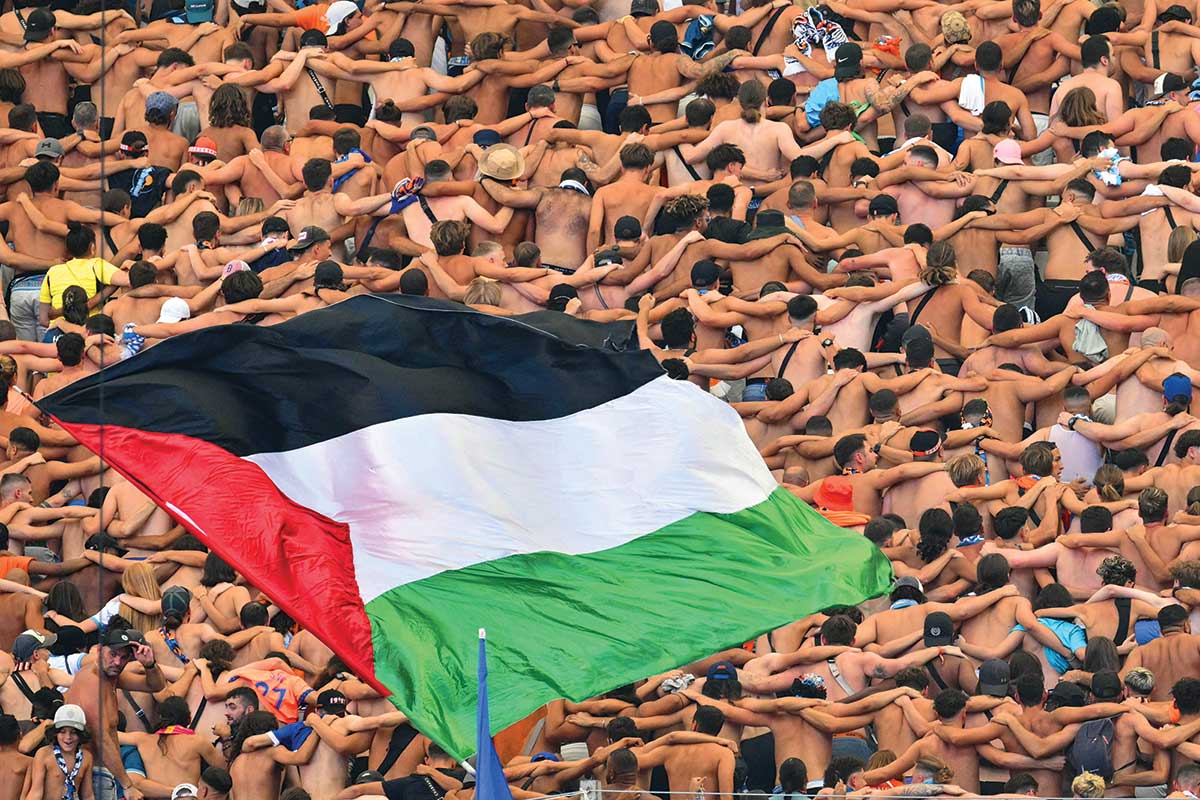
Even by European standards, Olympique de Marseille has a passionate local following. “You don’t have to like soccer—maybe you don’t care at all about it—but you can’t really understand the city if you don’t understand why it’s important,” said Médéric Gasquet-Cyrus, a linguist at Aix-Marseille University, the author of several books about the city, and a member of Commando Ultra ’84, one of the supporters’ groups in the south stand.
The OM obsession, Gasquet-Cyrus told me, reflects the city’s local character. “By proxy, OM represents Marseille. And in Marseille, there’s a strong identity. It’s a cliché—you feel more Marseillais than French—but it’s true,” Gasquet-Cyrus said. “There’s this idea of a city that’s separate, that’s not autonomous but thinks of itself as autonomous and wants to be independent, even if it’s not at all realistic.”
Political autonomy was not always just a fever dream. Founded by Greek settlers in the sixth century bce, the city would not be controlled by the French monarchy until more than 20 centuries later. Today, Marseille’s distinctiveness is perhaps most synonymous with the diversity of its residents. Large shares of the population have roots outside of France, especially in former French colonies in the Maghreb. As with many other port cities, Marseille’s melting pot has produced a culture different from that of its immediate surroundings.
At the same time, the city has battled prolonged socioeconomic distress, with the economy struggling for decades to weather the fallout of deindustrialization. When Marseille makes international headlines, it’s often due to drug-related violence in the quartiers nord, the isolated and impoverished northern neighborhoods. “It’s a rough city, so I think you can have the impression that the team is fighting for you, your honor,” Gasquet-Cyrus said. “The more people have a negative image of us, the more it gives the feeling of defending or standing up [for our city].”
The idea that OM represents a downtrodden but resilient city is most apparent in the club’s rivalry with Paris, the center of the nation’s economic, cultural, and political power—and a place where people still use the term province to describe the 98 percent of land in metropolitan France that sits outside the capital region. OM, which is owned by the Boston-born businessman and philanthropist Frank McCourt, isn’t exactly a small-market team. But its budget pales in comparison with that of Paris-Saint-Germain (PSG), which is majority-owned by a branch of Qatar’s sovereign-wealth fund and paid more than €1 billion to field this season’s squad. When the two teams faced off last September, PSG’s starting 11 was valued at roughly four times that of OM.
Paris has largely dominated in recent years, but in that match, OM eked out its first home league win against PSG since 2011, and the victory set off scenes of joy that rivaled those of a French World Cup victory. Exiting the Velodrome beneath thundering fireworks, I chatted with a family of four from the quartiers nord, all of them wearing OM jerseys. “This is great for the city,” declared Cyprien, a construction worker who immigrated from Romania. When asked to describe PSG, he shook his head: “I don’t know if you can print what I think.” But his daughter Anna, born in Marseille, jumped in: “Paris is the enemy.”
Our chat was instructive for another reason too: Marseille’s obsession with soccer is intertwined with its history of immigration. “It’s been said a thousand times, but OM is something that brings people together, and it’s also a way of integrating people,” François Thomazeau, a novelist, a former sportswriter for Reuters, and the author of Marseille: A Biography, told me over coffee downtown. “It’s true in Marseille like it’s true in the United States: Sports have been a factor of integration for minorities.”
Despite the recent success of France’s national team, soccer’s status as the de facto national pastime is a fairly new development. Marseille is on the short list of French cities where the game was instantly popular, largely due to immigration from neighboring Italy around the turn of the 20th century. As Thomazeau put it, “Soccer was a religion in Italy well before France, and Italians brought this religion with them to Marseille.”
Over the following decades, that faith united believers who initially had little else in common. As immigrants flocked to the city from a growing number of countries—Armenia, Algeria, Tunisia, and the Comoros—they embraced a team whose roster filled rapidly with players who shared their backgrounds. “If you look at the team and see there’s three Armenians, you can say to yourself, ‘OK, I’m here. I can root for this team, and I’m a part of this city,’” Thomazeau said. “Marseille is a city of immigrants, and soccer enabled people to get their unofficial stamp of being Marseillais. They went to the stadium and found players that looked like them.”
Against this backdrop, scores of local teams took root, and the city’s talent went on to shine internationally—among them Zinedine Zidane, the son of Algerian immigrants from the quartiers nord who led France to its first World Cup victory in 1998. But what pushed Olympique de Marseille’s fandom to stratospheric levels was the team’s success on the field. After the businessman Bernard Tapie acquired OM in 1986, the team won a spate of French league titles before taking home the nationally televised European Cup in 1993. As Mathieu Grégoire, the OM correspondent for the French sports daily L’Équipe, told me, the European Cup victory made OM a rarity in France: the only club with a passionate following both locally and nationally.
It was a pair of closely related developments in the Tapie era that definitively set Marseille on a course of its own. For one, fans in the Velodrome began to emulate the organized supporters’ groups in Italy known as ultras, coordinating chants and visuals and incorporating themselves as nonprofit associations. Then, in 1990, Tapie made a decision that at the time seemed to make little financial sense but which ultimately cemented a role for the ultras to play for years to come: He turned over the management of ticket sales at both ends of the stadium to these groups. Under the arrangement, the ultras sold the seats directly to their dues-paying subscribers.
In 2015, OM reached a deal with the supporters’ groups to restore the club’s monopoly on ticket sales—but it still reserves the 26,000 seats at both ends of the stadium for members of the groups, and it caps the prices at relatively modest levels. This year’s €180 season-ticket cost is a fraction of the lowest rates charged by clubs like Arsenal (£921), Liverpool (£713 for adults), AC Milan (€430), and Real Madrid (€370). When asked what would happen if OM abandoned this pact, Grégoire chuckled: “It would be a civil war.”
He likened the seven officially recognized supporters’ groups to trade unions. “If management isn’t strong enough, they can take down the leadership of the team, sort of like how unions can take down the government,” Grégoire said. “I don’t think there’s really an equivalent in France or Europe, apart from maybe Turkey. In Spain and Portugal, you have the phenomenon of the socios, where supporters have a say through the election of presidents, but it’s more formalized through elections. In Marseille, it’s more about informal deals and sometimes about power relations.”
If Marseille’s ultras are like trade unions, they’re closer to the IWW than to the UAW: They don’t sign agreements, and they don’t shy away from direct action to achieve their goals. In 2021, the groups even managed to force the firing of the unpopular OM president Jacques-Henri Eyraud, a Paris-born graduate of Harvard Business School and a former Disney executive, after he floated the possibility of significantly raising ticket prices for the general public. “There was a bit of a cultural gap to begin with,” Grégoire recalled. “At a certain point, Eyraud tried to flex his muscle and say, ‘I’m the one who decides, and if I decide to make the stadium the way I want it, you’re going to keep quiet.’ And the ultras went to war with him.”
Tensions peaked in January 2021, when 300 unidentified fans invaded the team’s training ground, attacking officers, burning trees, and damaging vehicles. It caused several hundred thousand euros’ worth of damage, and owner Frank McCourt bizarrely compared it to the January 6 US Capitol insurrection. In response, Eyraud called on the French Interior Ministry to dissolve a handful of OM supporters’ groups and crossed a red line by hinting at opening up ticket sales to the general public for the entire stadium. The ultrasfired back by dropping banners calling for his resignation all over the city. And they had an impressive list of allies: Marseille’s socialist mayor, Benoît Payan, called on Eyraud to “calm things down” and not punish fans over the actions of a violent minority. In February 2021, OM’s ownership finally turned on Eyraud, replacing him with a president who has since managed to maintain more cordial relations with the supporters’ groups.
The attack on the training ground drew comparisons to the hooliganism that ravaged the UK in the 1980s and ’90s. But as Franck Haderer, a sound engineer who’s working on a documentary about the OM ultras, stressed, the two have vastly different origins and cultural codes. Unlike the hooligans who emerged in Thatcher-era Britain and engaged in largely spontaneous action in and outside stadiums, the ultra movement has revolved around organizations since it gained traction in Italy in the mid-’70s and came to France via Marseille. “There’s a willingness to want to scare and shock the opponent,” Haderer said. “It’s part of this spirit of showing that one is superior to the opponent but also superior to the opponent’s supporters.” Still, he noted, that shouldn’t be confused with a willingness to actually use force.
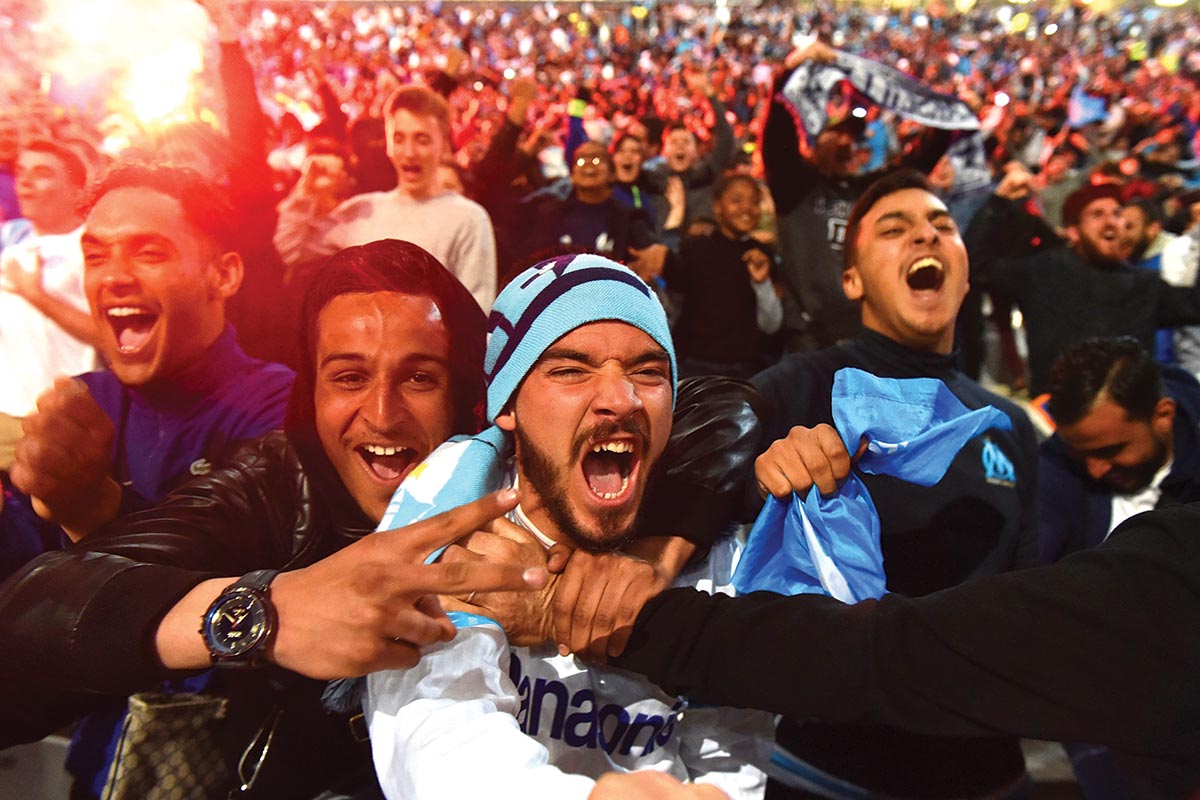
Indeed, despite the supporters’ sometimes tempestuous image, the ones I spoke with were exceptionally friendly—like Swal, a 33-year-old member of Commando Ultra ’84 who works in the restaurant industry. Sipping on pastis, the anise-flavored spirit that’s the unofficial alcohol of Marseille, he told me that his engagement with the group is as much about supporting the team as it is about finding a sense of community outside the stadium. “We see each other outside of matches too—all the time, really,” he said. “But we’re always talking about OM. It’s always about the next match.”
Haderer also drew attention to the ultras’ charity work and other activities outside the stadium. One group organizes food and aid deliveries for the homeless. Another, the South Winners, is funding the construction of a temporary residence for the parents of children requiring overnight hospital stays. It has also launched an initiative to help high school students from poor and working-class neighborhoods prepare for entrance exams to France’s top schools. Ahead of Pope Francis’s mass at the Velodrome, the archdiocese of Marseille turned to the South Winners to prepare a giant tifo that paid homage to the head of the Catholic Church.
More than any other group, the South Winners are responsible for the OM supporters’ reputation of being broadly left-wing. Publicly describing themselves as “anti-racist” and “anti-fascist,” the South Winners proudly use images of Che Guevara among their several logos. Even their adoption of the color orange originated in opposition to the far right: During an away match against Paris in 1989, members turned their bomber jackets inside out to signify opposition to the radical-right skinheads then dominating the opposing stand, who had adopted the jackets as their unofficial uniform.
Still, ultras told me that many members would bristle at the idea of being viewed as politically partisan. “I know a lot of people who are very hardcore antifa, and they show it at the stadium—they have their Palestinian flags and they have their anti-fascist flags,” said Roger, 33, a member of the north-end group Marseille Trop Puissant. “But there’s others who might say, ‘We don’t want politics at the stadium.’”
For his part, Swal told me he wasn’t “a fan of politics at the stadium.” All the same, he said he cherished his “antifa friendships” with the famously leftist supporters of AEK Athens and Hamburg’s FC St. Pauli, with whom the Marseille ultras have close ties. “We don’t want people at the stadium who are there to ‘eradicate the savages’ and hurt others,” Swal said. “We want there to be cohesion.”
Contradictions notwithstanding, OM ultras do tend to share a general commitment to Marseille as a multicultural city. And that commitment is amplified by the codes of the ultra subculture, in which insults from rivals are often flipped into badges of honor. “When Lyon supporters break out their French flags and identity cards, well, we say, ‘We’re not racist,’ and we become known as not racist,” Gasquet-Cyrus said. Or as one of the many slogans of the South Winners proclaims, “Your hatred is our pride.”
Still, the limits of the supporters’ groups’ broader commitment to social justice were on display after OM signed the star Manchester United forward Mason Greenwood in the summer of 2024. (Greenwood had been charged with sexual assault after his former partner made public allegations against him; British prosecutors dropped the charges in 2023.) Marine Pattyn, an OM supporter and a soccer writer for the local newspaper La Provence, told me she was disgusted by the relatively warm welcome for Greenwood in Marseille and now avoids sitting with the ultras. “It’s not exactly reassuring to be a woman in a crowd of men who are jumping, yelling, and running around,” Pattyn said. “And I’ve kind of lost my love for OM since Mason Greenwood. I tell myself that when I’m at the stadium, I’m surrounded by maybe 60 people who are his fans, who condone the acts of an aggressor.”
Still, Pattyn decided to buy season tickets in the main section of the stadium for the second straight season. And, she said, the gender balance at the Velodrome is slowly improving—though it has less to do with Marseille than with a more general form of social progress. “Soccer used to be a thing for boys and not for girls,” she said. “When you see younger girls at the stadium, it’s heartwarming, because it’s their passion. They’re not just there because their boyfriend took them or they’re with family. They’re there because they love soccer and because women are playing soccer more and more, even if it’s far from perfect and equal. Much like the practice of soccer overall, supporterism is developing for women, too.”
OM does have a women’s team, Les Marseillaises, though it plays its matches in Martigues, 40 kilometers northwest of the city. In October, the club set a new attendance record with more than 2,000 supporters on hand.
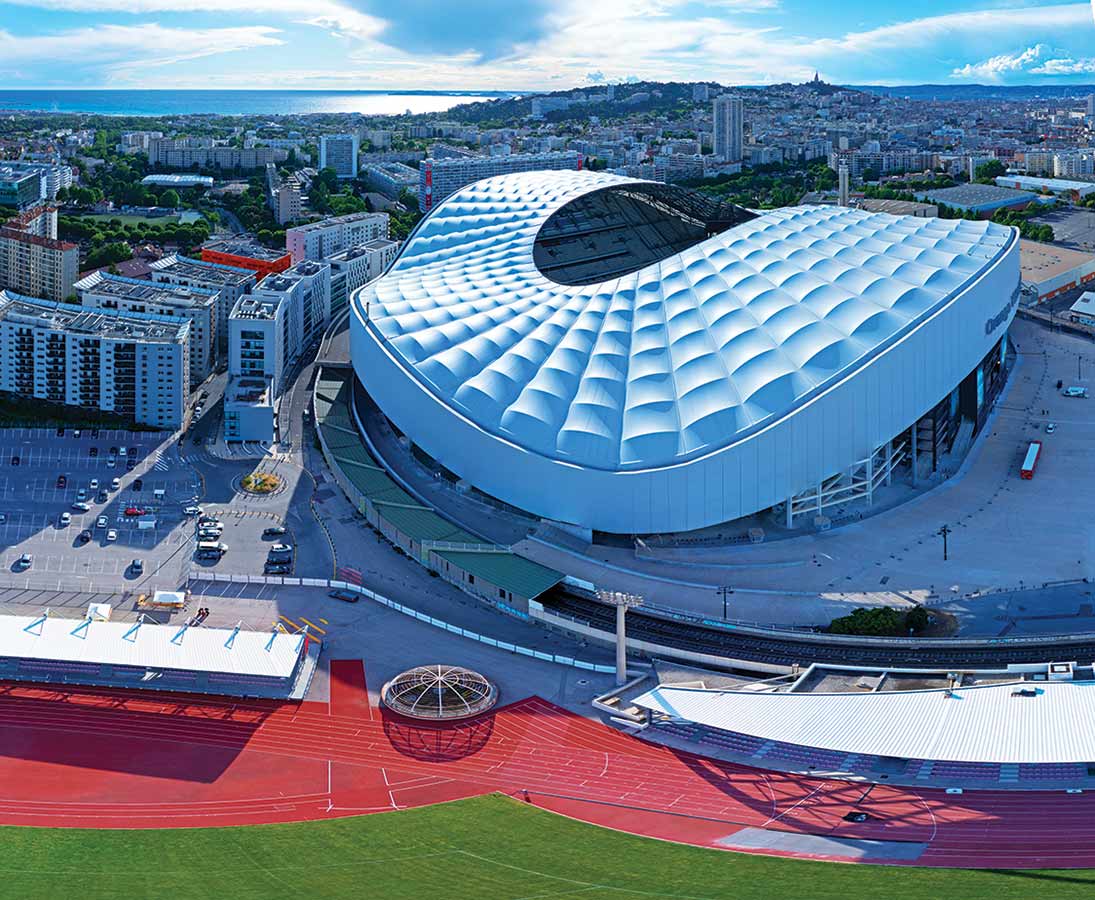
In a city where soccer is so central, it’s nearly impossible not to consider the role of the ultras ahead of the March 2026 mayoral elections. Polls project a tight race among the incumbent left-wing coalition, the city’s old conservative establishment, and a surging far right that thrives on backlash to immigration and crime.
In the last election, South Winners president Rachid Zeroual reportedly backed Martine Vassal, the influential head of both the département and the larger metropolitan region, who unsuccessfully sought to prolong the right-wing dynasty that had run Marseille since 1995 and who is running again for city hall. But in 2023, Marseille’s current mayor, Benoît Payan, was welcomed to the South Winners’ section during a match. (I showed up at the South Winners’ headquarters to interview Zeroual on three occasions but was told each time that he was unavailable.)
It may seem paradoxical for a man who runs an organization that sells anti-fascist T-shirts to even consider backing a conservative politician. But Christian Pellicani, a Communist and the deputy mayor for the First and Seventh arrondissements of Marseille, pointed to the history of clientelism in the city—a tradition practiced by Vassal and her predecessors. “It’s not unimaginable that certain associations might feel like they owe something to certain politicians because they’re given generous funding,” Pellicani said. “Still, just because the president of an association supports someone, it doesn’t mean everyone involved follows along.”
I thought back to my conversation with Swal. Although he seemed fairly apolitical, he also knew who his enemies were: the people obsessed with dividing populations according to skin color, religion, or national origins. And at a time when the demagoguery of Donald Trump, Marine Le Pen, and their allies is gaining traction just about everywhere, that kind of cultural hostility toward the far right is maybe more valuable than ever. “Being anti-racist in Marseille is important,” he told me. “It’s important to know the city you’re in.”
More from The Nation
Opposing Trump’s Cruel Assault on the Cuban People Opposing Trump’s Cruel Assault on the Cuban People
An interview with Representative Jim McGovern.
A New Report on Alexey Navalny’s Death A New Report on Alexey Navalny’s Death
Boris Kagarlitsky and hundreds of unknown political prisoners remain in Russia’s prisons.
Rubio, Rodeo, and Tall Tales of Empire Rubio, Rodeo, and Tall Tales of Empire
The secretary of state has provoked the ire of Britain’s first black woman lawmaker and put the spotlight once again on how the US has historically treated people of his own herit...
Mexican President Claudia Sheinbaum and the San Quintín Justice Plan Mexican President Claudia Sheinbaum and the San Quintín Justice Plan
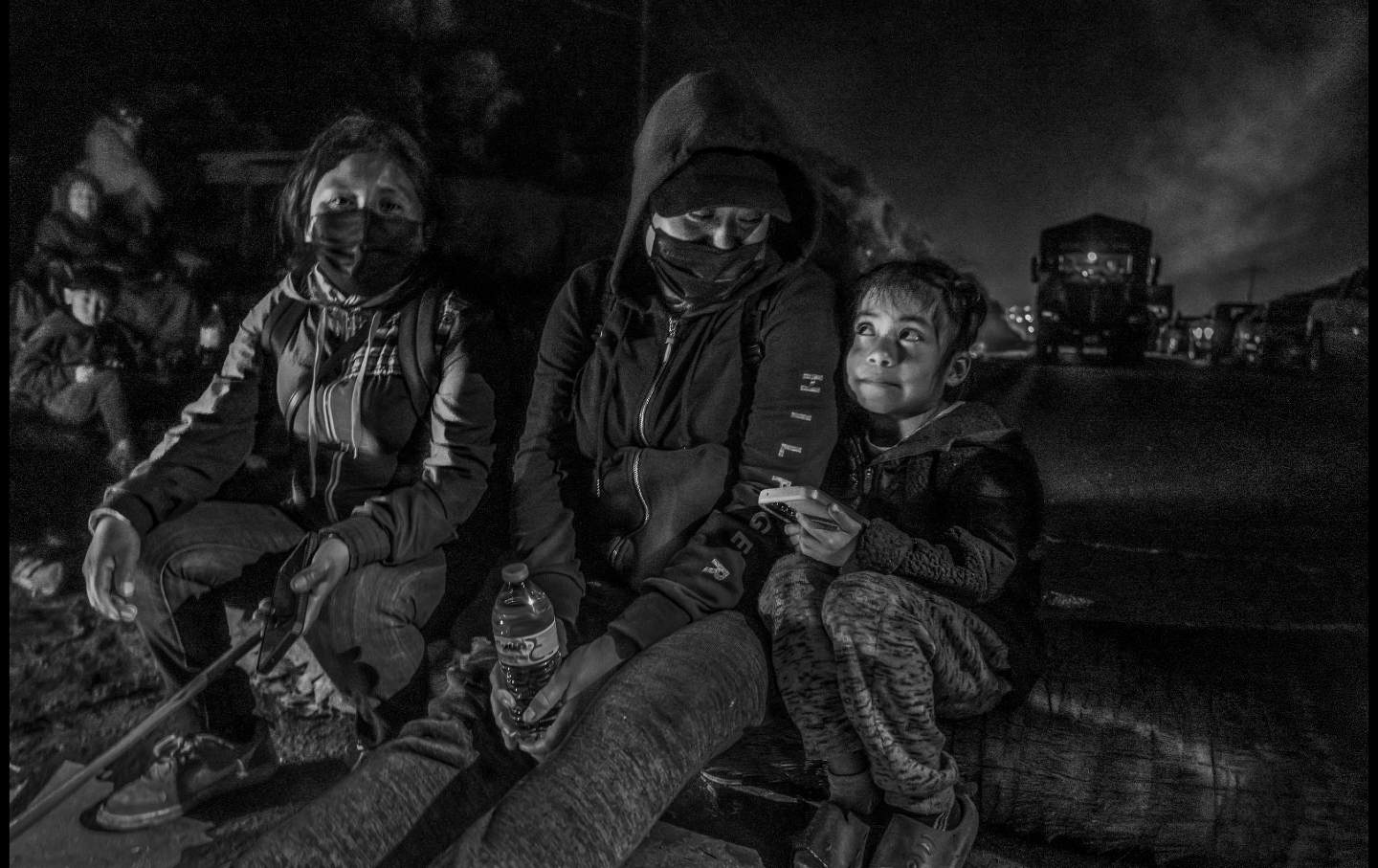
Field workers’ highway blockades send a warning to Mexico’s president.
Inside the Iran War Industry Inside the Iran War Industry
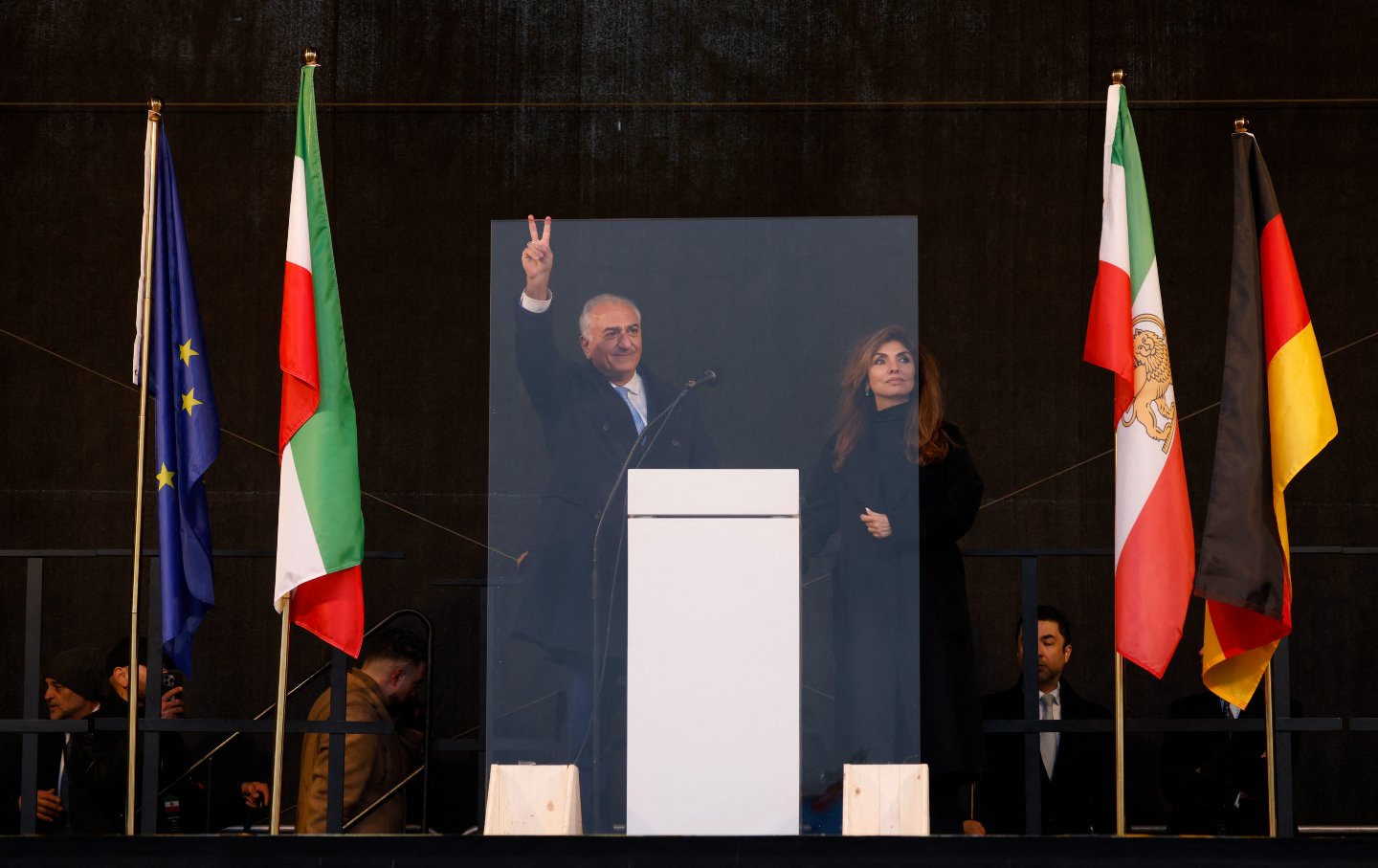
Using an old playbook with powerful new tools, it may be closer than ever to turning a US–Iran war into reality.
The Cost of US Withdrawal From 66 International Organizations, Conventions, and Treaties The Cost of US Withdrawal From 66 International Organizations, Conventions, and Treaties
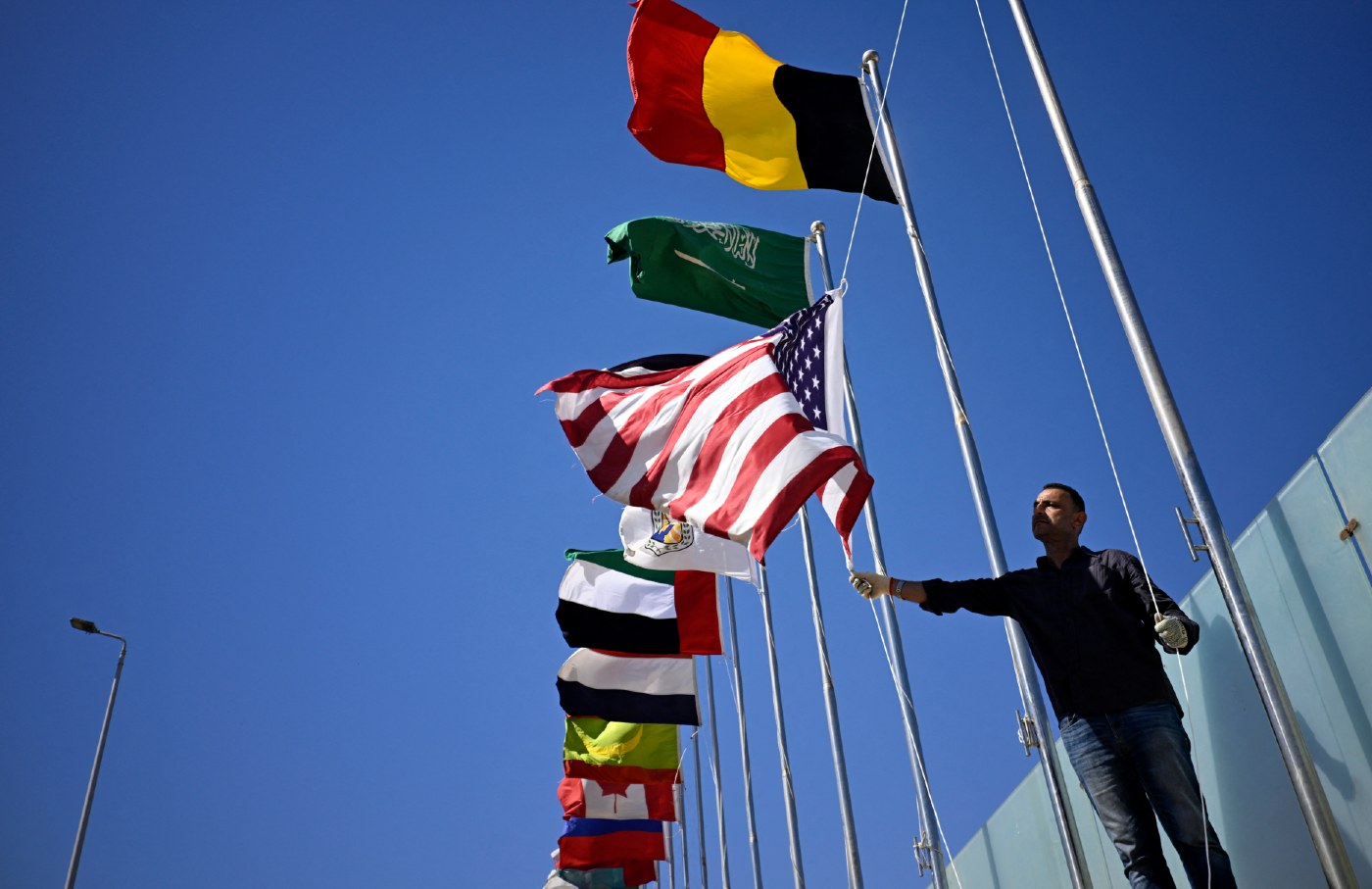
How going it alone reduces our own sovereignty.

