What the US Can Learn From the French Left
The New Popular Front bloc denied the far right a victory by doing things the Democratic Party consistently fails to do.

Called “the year of the elections,” 2024 has seen a withering of political objectives to their lowest common denominator: blocking the far right from power. From the United States and Europe to Narendra Modi’s India, it’s hard to deny which camp has the momentum in the 2020s. In many of the world’s democracies, a commanding plurality—what Henrik Ibsen called the “compact majority” in his 1882 drama An Enemy of the People—is turning toward authoritarian ethno-nationalism. The ideas and leaders that offered some hope only a few years ago are in retreat. In the United Kingdom, a de-Corbynized Labour Party may have won a majority in early July, but the best that can be said of new Prime Minister Keir Starmer is that he’s not 14 years of Tory rule. Having strained relations with the social movements to its left, the Democratic Party’s main case for a new term is that it’s still not Donald Trump.
France is a stubborn exception. The New Popular Front (NFP)—a broad left-wing coalition—was indeed critical in denying Marine Le Pen’s far-right National Rally a victory in this summer’s snap elections. Formed just days after President Emmanuel Macron dissolved the National Assembly on June 9, the NFP emerged as the largest bloc in France’s hung Parliament and is demanding the right to govern. But the alliance did it on a comprehensive program to turn the page on Macronism and avert the slide to the hard right, calling for the repeal of recent immigration laws and the legislation passed during the Macron era to constrain civil society. The alliance is promising to invest in public services, freeze prices on daily necessities, and reindustrialize through “ecological planning”—the French equivalent of the Green New Deal. And the NFP doesn’t beat around the bush about how to pay for it: Corporations and the wealthy would have to pony up more in taxes.
This is a coherent road map for what the alliance’s legislative contract calls “rupture.” But it’s well within the bounds of France’s political tradition, which explains the appeal of the NFP and the popular dismissal of claims that it’s too extreme. The New Popular Front harks back to the original: the 1936 alliance of liberal, socialist, and communist forces that briefly governed France amid the first pan-European rise of fascism. The NFP’s demands—an increase in the national minimum wage, dignified retirement at 62 and maybe even 60—recall key victories of 1936 like the 40-hour workweek and paid vacation. This is what France’s tradition is really about: common political and social rights. No, Léon Blum is not rolling over in his grave.
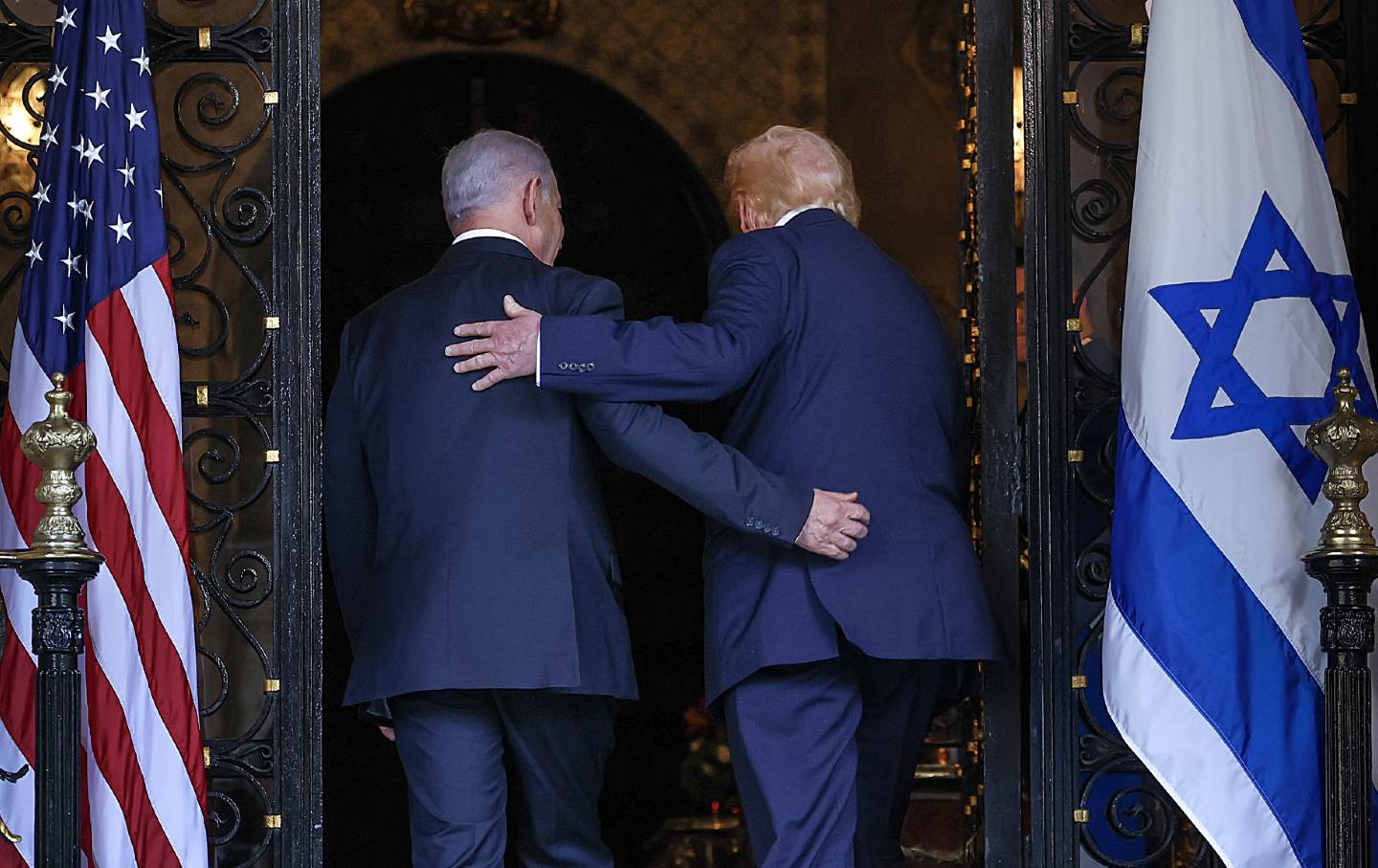
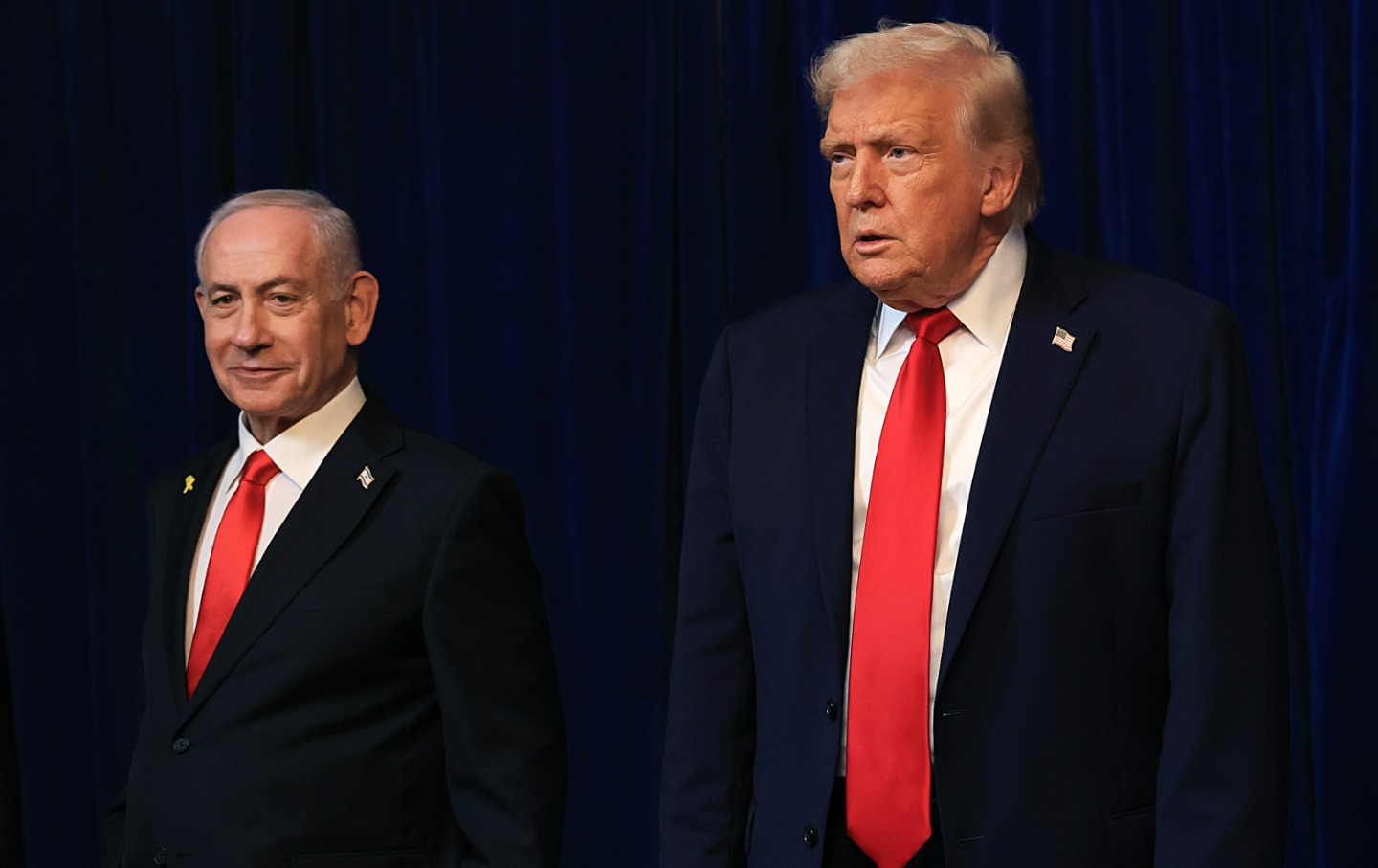
Americans often claim that politics stops at the water’s edge. The saying aptly describes US foreign policy’s imperviousness to criticism, but it doesn’t mean that what happens internationally won’t reverberate domestically. Biden’s blank check for Netanyahu’s war on Gaza has shredded the president’s credibility in the eyes of many progressive voters. Abroad, the claim by Western powers that they are defending international law in the face of Putin’s invasion of Ukraine rings hollow next to their refusal to pressure Israel to end its wanton aggression against Palestinian lives and rights.
What will it take to break the West’s isolation? The NFP combines the defense of Ukrainian sovereignty with the promise to use leverage to get Netanyahu to end his war. An NFP government would immediately recognize Palestinian statehood and impose an embargo on arms exports to Israel. In the French context, this too could be considered something of a restoration: Many rightfully look back with pride at the country’s threat to veto the 2003 UN Security Council resolution on the invasion of Iraq. The alliance’s program falls short of the diplomatic revolution implied by the rise of the so-called Global South, but it points to the type of thinking that is needed.
The NFP is one beneficiary of the breakdown of the French party system since the mid-2010s—something that has also enabled the rise of the far right and Macron’s centrist rule since 2017. When the left-wing veteran Jean-Luc Mélenchon abandoned the Socialist Party in 2008, he set off on a long march to rebuild French progressivism on a new footing. Mélenchon has largely succeeded: The democratic demands of his party, La France Insoumise, are the lead inspiration for the NFP program. There are legitimate critiques to be made of Mélenchon, whether it’s his occasional dogmatism or the lack of internal democracy within his party. These flaws have destabilized past attempts to build a progressive front, and other left-wing forces often point to them to make the case for going it alone.
Something like the New Popular Front goes against the entire institutional DNA of the modern Democratic Party. But for those who are serious about wanting to prevent the return of Trumpism, France’s left has one simple lesson: The best defense is a good offense. There’s no substitute for unity around a detailed plan for wealth redistribution and public investments, or for the social movements that have emerged in the past decade. With the Supreme Court in conservative hands for a generation, the American right is going for its version of rupture. When will liberals?