
India Has Killed Off the Remains of Kashmir’s Free Press
No one is willing to utter a word about the government attacks on journalists, a Kashmiri reporter says. “It’s as if we don’t exist.”
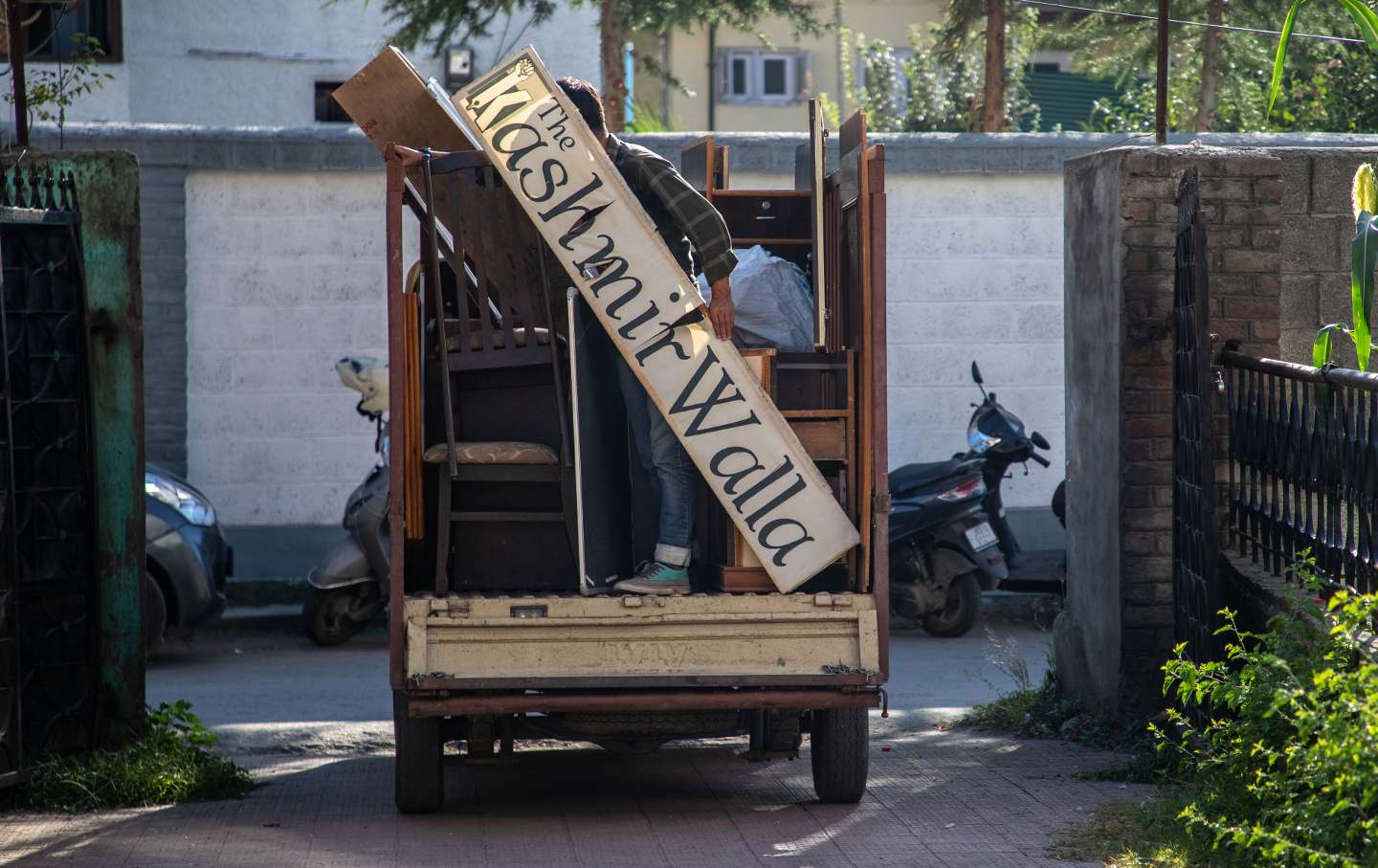
A vehicle carries office furniture of The Kashmir Walla while vacating its office in the Kashmir capital, Srinagar, as it has been served notice by the landlord after its website and social media were blocked by the Indian government under the Information Technology Act, 2000, according to a statement published by the prominent independent regional news organization, founded in 2009 by Fahad Shah, who is currently in jail for 18 months over press coverage of a gunfight.
(Photo by Faisal Bashir / SOPA Images / LightRocket / Getty Images)On August 19, India’s Ministry of Electronics and Information Technology blocked the website of The Kashmir Walla, an independent news outlet based in Srinagar from its country’s readers. The publication’s Facebook page, with close to half a million followers, is no longer available in India, and its Twitter (now X) account, with more than 50,000 followers appears with a message “blocked in response to a legal demand.” On the same day, they were evicted them from their offices.
Police charged Fahad Shah, the editor in chief of The Kashmir Walla and a Nation contributor, with sedition in February 2022 for publishing a report about a gunfight. Four other charges were filed against him under the Unlawful Activities Prevention Act (UAPA) and a preventive-detention law. Since then, Shah has been granted bail on three charges against him. A judge quashing Shah’s preventive detention order determined that “no compelling reasons have been given or shown” and the detention order “cannot sustain the test of law.” Yet, despite the court order, Shah remains imprisoned under UAPA terror laws in Jammu’s Kot Bhalwal jail 186 miles from his home. The state is charging him as a terrorist for publishing the essay “The Shackles of Slavery Will Break” by scholar Abdul Aala Fazili in 2011. Shah is one of four imprisoned Kashmiri journalists charged under India’s terror laws.
In February 2021, the Indian government published the Information Technology Rules. Under these laws, the government has absolute authority to determine what content is left online, modified, or deleted, without judicial oversight. A Srinagar-based lawyer who asked to remain anonymous for fear of government reprisal told me, “The IT Act is one of many authoritarian tools at the disposal of the Indian state.… There is no process or procedure, no law or legality. They are not required to provide any reasons or justifications for their decisions. They can do whatever they want.”
Read Fahad Shah on India
The Kashmir Walla’s decade-long reportage is no longer accessible in India. Since the revocation of Art 370 unilaterally abrogated Kashmir’s semiautonomous status in 2019, almost all reportage critical of the Indian state has disappeared from local news websites. Publications have deleted thousands of articles from their archives. Speaking to the Committee to Protect Journalists, Journalist Aakash Hassan called this disappearance an “erasure of memory.”
This, however, is the first time the government has shut down an entire newspaper. A Kashmiri journalist who left the valley after Shah’s arrest last year told me, “For over four decades, thousands of Kashmiris have been forcibly disappeared; now we see fact, reality, and words disappearing. We also have mass graves for memory now.”
In November 2021, the Jammu and Kashmir government created a specialized investigative body, the State Investigation Agency, for the “speedy and effective investigation and prosecution of terrorism-related cases.” So far, the SIA’s main targets have been journalists. When asked about the SIA, the lawyer added that the word most often used to describe the agency is “dreaded.”
In April 2022, the SIA raided The Kashmir Walla’s office and Shah’s home in Srinagar to investigate the 11-year-old Fazili piece. During the raid, SIA officials seized computers, hard drives, notebooks, and phones and interrogated The Kashmir Walla’s staff and reporters. The SIA also searched Fazili’s home. It arrested him, and he too remains incarcerated.
Indian authorities in Kashmir now use the word “terrorism” to mean any reporting, documenting, and writing that doesn’t align with the state. Jammu and Kashmir state police deploy terms like “journo terrorist” and “white-collar terrorist” to describe journalists. For its part, the SIA accuses Shah and Fazili of “narrative terrorism.”
Since the 1990s, Kashmiris have endured curfews, closures, and arrests, and witnessed enforced disappearances, torture, and extrajudicial killings. In 2019, Prime Minister Narendra Modi’s ruling Bhartiya Janata Party revoked Article 370, which granted semiautonomous status to the erstwhile state of Jammu and Kashmir during its accession to India in 1947. Article 370 had allowed the region to make its laws except for matters concerning finance, defense, and foreign affairs. But after its repeal, India immediately deployed thousands of additional troops, and shut down all communications, silencing some 10 million Kashmiris for over 145 days. Access Now, a digital rights body, called the Internet shutdown “the longest ever in a democracy.”
Since then, journalists have been summoned, interrogated for hours, and had their houses raided in counterinsurgency-style operations. Many Kashmiris have been put on a no-fly list, and others have had their passports taken away. Last year, India stopped Kashmiri photographer Sanna Irshad Mattoo from traveling to receive her Pulitzer Prize, which she shared for her work with Reuters covering Covid-19’s toll in India. In July of this year, it was reported that journalists in Kashmir writing for international publications received e-mails from Indian authorities “to surrender their passports for being a security threat to India, or face action.” Another journalist told me, “They want journalists to be copywriters producing ads for this occupation.”
Since Shah’s arrest, The Kashmir Walla’s reporters and staff have endured what the publication calls a “horrifying nightmare.” They have faced intimidation, threats, and raids. In the past 18 months, the SIA summoned, questioned, and interrogated its interim editor, 24-year-old Yashraj Sharma, five times. Under mounting costs, the burden of legal expenses, and constant run-ins with the police, the once-bustling 16-member office struggled financially. The staff had to defend themselves against summonses, court cases, and police interrogations. Faced with harassment and starved of funds, Kashmir Walla saw its resources became scarce. Over half its staff was laid off, and others who decided to stay took multiple pay cuts to keep the organization afloat. The Kashmir Walla was reduced to six people when the outlet was finally evicted.
A former reporter with The Kashmir Walla said the Indian authorities “strangled us little by little” and added, “It would be so much easier if they had just killed us. Instead, they made us realize our helplessness every day for over a year. They could have shut us down anytime— immediately after Fahad’s arrest. They could have done this six months back, but they made sure that we died a slow, painful death and that we remember this. Now we are in mourning.”
Popular
“swipe left below to view more authors”Swipe →Another Kashmiri journalist observed that The Kashmir Walla “is an organization made of very young reporters who have nothing. Yet, they got up every morning and went to work; they risked everything they had, including their lives, to ensure this small news organization survived. Now, they have erased the entire newspaper from the Indian Internet.”
Many local papers did not carry the news about what happened to The Kashmir Walla. “What is alarming is the lack of anger and attention to what is happening,” a former journalist at Kashmir Walla said.
More on Modi’s India
US-based Kashmiri journalist Raqib Naik told me, “The decimation of the press in Kashmir is one the biggest tragedies of our times, and no one is willing even to utter a word as if we don’t exist.” He said that India has turned the region into a black hole for the news and the government has demolished the media landscape that he worked in when he started his career in 2014: “It won’t be an exaggeration to say there is no press in Kashmir today.”
He said a handful of newspapers have been coerced and threatened to disseminate state propaganda. He said Kashmiris have been stripped of their identity as a human community: “Our collective suffering has evaporated from the world’s consciousness.”
Naik lamented that the journalists who proudly proclaim themselves as defenders of press freedom in the US, the UK, and Europe are now silent. He told me, “Our stories would have been flashing on CNN if Kashmir were in Europe and our skin and hair color differed.”
Support independent journalism that does not fall in line
Even before February 28, the reasons for Donald Trump’s imploding approval rating were abundantly clear: untrammeled corruption and personal enrichment to the tune of billions of dollars during an affordability crisis, a foreign policy guided only by his own derelict sense of morality, and the deployment of a murderous campaign of occupation, detention, and deportation on American streets.
Now an undeclared, unauthorized, unpopular, and unconstitutional war of aggression against Iran has spread like wildfire through the region and into Europe. A new “forever war”—with an ever-increasing likelihood of American troops on the ground—may very well be upon us.
As we’ve seen over and over, this administration uses lies, misdirection, and attempts to flood the zone to justify its abuses of power at home and abroad. Just as Trump, Marco Rubio, and Pete Hegseth offer erratic and contradictory rationales for the attacks on Iran, the administration is also spreading the lie that the upcoming midterm elections are under threat from noncitizens on voter rolls. When these lies go unchecked, they become the basis for further authoritarian encroachment and war.
In these dark times, independent journalism is uniquely able to uncover the falsehoods that threaten our republic—and civilians around the world—and shine a bright light on the truth.
The Nation’s experienced team of writers, editors, and fact-checkers understands the scale of what we’re up against and the urgency with which we have to act. That’s why we’re publishing critical reporting and analysis of the war on Iran, ICE violence at home, new forms of voter suppression emerging in the courts, and much more.
But this journalism is possible only with your support.
This March, The Nation needs to raise $50,000 to ensure that we have the resources for reporting and analysis that sets the record straight and empowers people of conscience to organize. Will you donate today?
More from The Nation
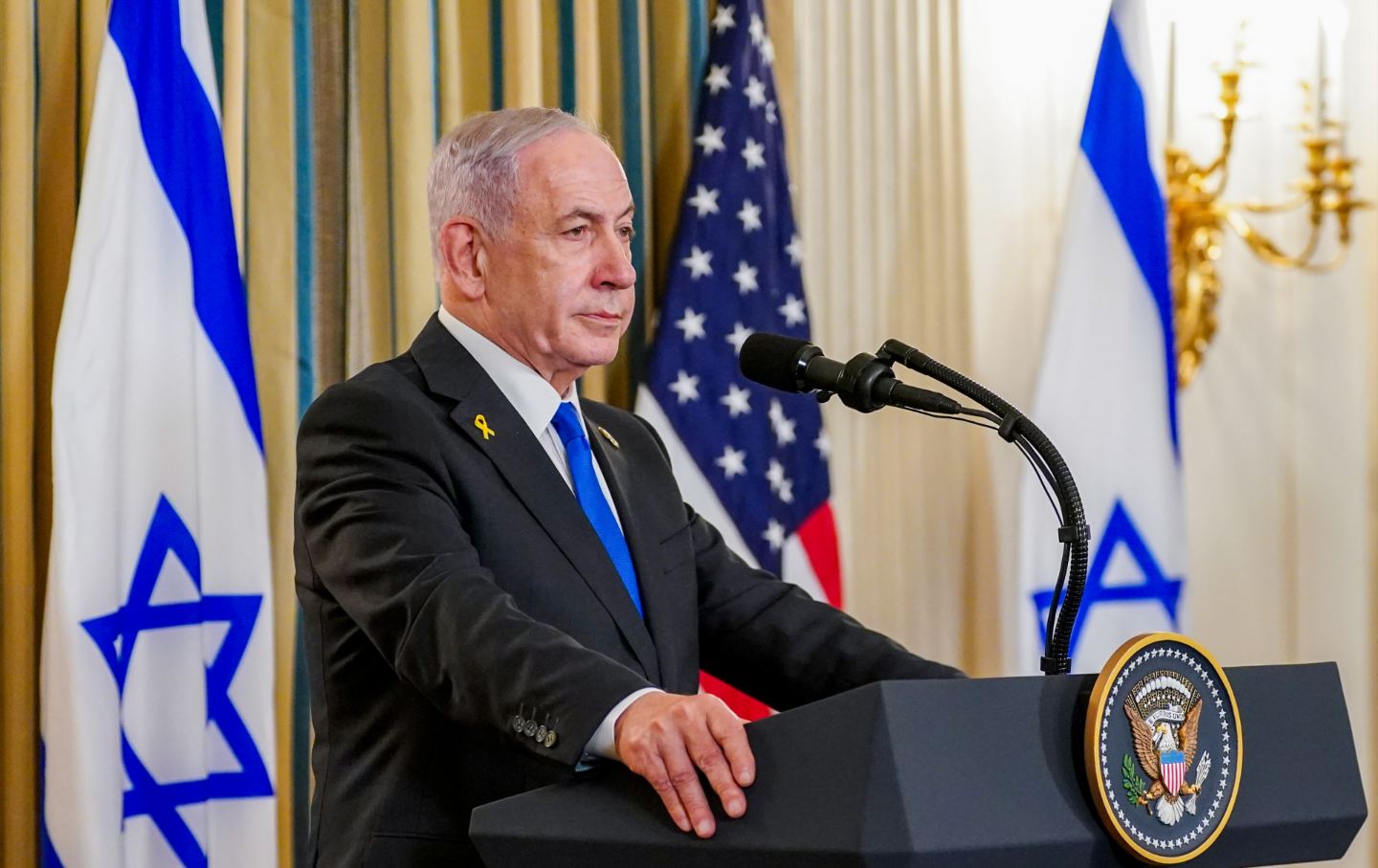
Israel Is Using Its Genocidal Gaza Playbook on Iran Israel Is Using Its Genocidal Gaza Playbook on Iran
Just as in Palestine, the Israeli government is framing its latest conflict as a holy war of extermination.
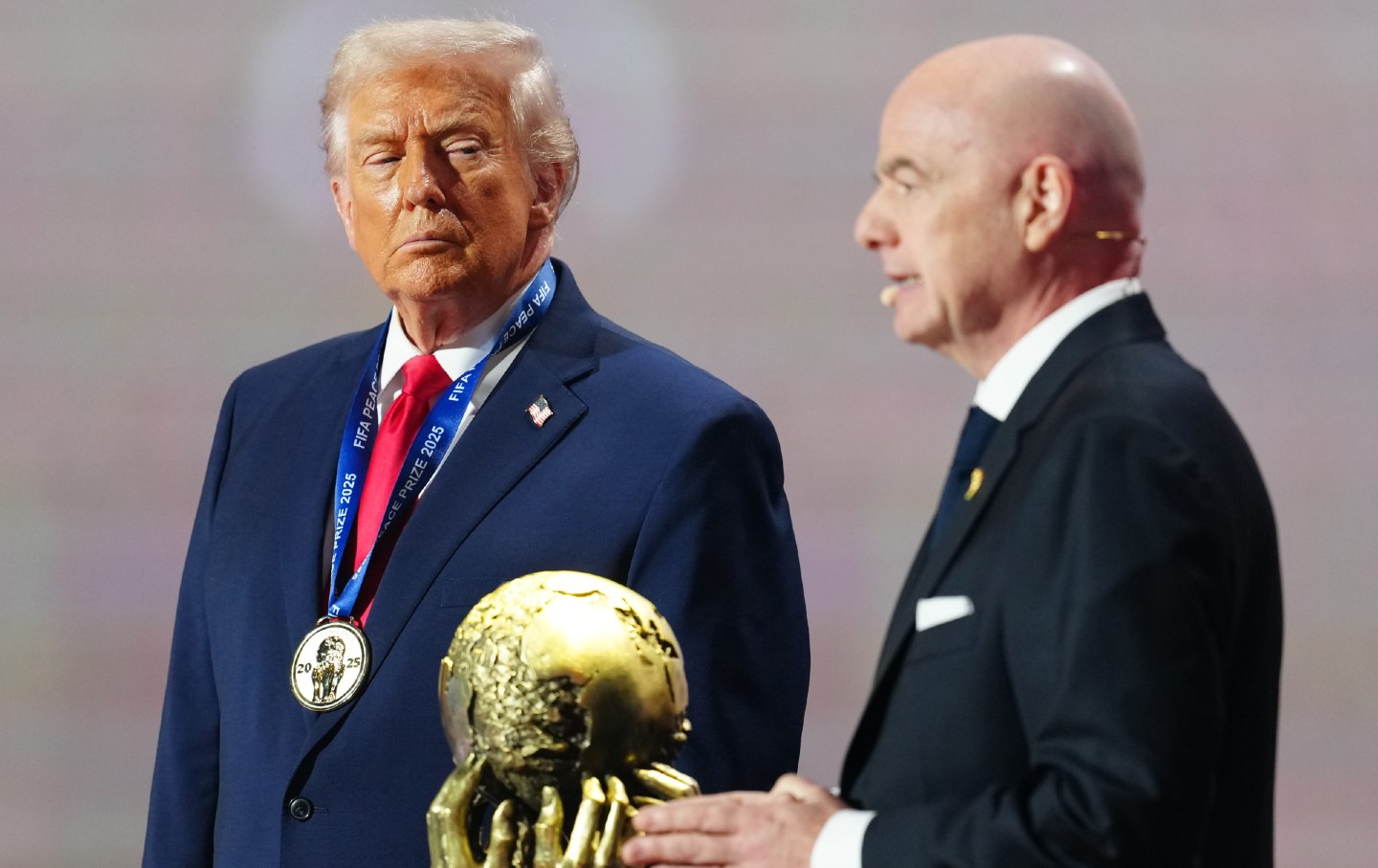
Trump and His Soulless Cronies Have Managed to Suck the Joy Out of the World Cup Trump and His Soulless Cronies Have Managed to Suck the Joy Out of the World Cup
Not even soccer is immune from Trump’s reverse Midas touch.
Garbage In, Carnage Out Garbage In, Carnage Out
The harrowing lessons of the Pentagon’s recently dissolved partnership with Anthropic.
The Iran War Could Be Catastrophic for the US-Israel Alliance. Good. The Iran War Could Be Catastrophic for the US-Israel Alliance. Good.
As Israel’s role in pushing the war with Iran comes into ever sharper focus, it’s up to us to turn outrage into change.
An Unlawful War An Unlawful War
The precedent being set by the US in launching this war of aggression against Iran will long live in infamy.
Trump and Netanyahu Want to Turn Iran Into a Failed State Trump and Netanyahu Want to Turn Iran Into a Failed State
This war looks designed to cause maximum chaos and instability. The world will pay a high price.

