A Ceasefire in Name Only
The language of ceasefire has been repurposed in Gaza: It no longer describes a pause in violence but rather a mechanism for managing it.
This piece is part of A Day for Gaza, an initiative in which The Nation has turned over its website exclusively to voices from the Gaza Strip. You can find all of the work in the series here.
What do you call a ceasefire agreement under which people keep dying? That is the question the people of Gaza have been asking themselves for the past few months.
In October, Hamas and Israel signed a peace deal supposedly intended to stop two years of slaughter in Gaza. Since then, more than 420 Palestinians have been killed by Israeli fire—an average of about four people a day—in what international mediators continue to describe as a successful de-escalation. The distance between that official narrative and the facts on the ground reveals how the language of ceasefire has been repurposed: It no longer describes a pause in violence but rather a mechanism for managing it, sanitizing ongoing military force under the guise of restraint.
Those killed—many of them women and children—have been routinely described as threats, trespassers, or collateral casualties of the enforcement of the ceasefire. This has included families attempting to return to their homes, only to find their neighborhoods designated as off-limits beyond an ever-shifting “yellow line” drawn by Israel. Palestinian health officials have documented more than a thousand Israeli violations since the ceasefire took effect, including air strikes, artillery fire, and fatal shootings. The ceasefire has thus functioned precisely as intended: a framework for killing and controlling Palestinians at a slower, more diplomatically acceptable pace.
A Day for Gaza
-
A Ceasefire in Name Only
-
The Gaza Street That Refuses to Die
-
A Catalog of Gaza’s Loss
-
My Sister’s Death Still Echoes Inside Me
-
What Gaza’s Photographers Have Seen
-
How to Survive in a House Without Walls
-
What Edward Said Teaches Us About Gaza
-
What Happens to the Educators When the Schools Have Been Destroyed?
-
At the Doorstep of Tomorrow
-
“We Have Covered Events No Human Can Bear”
The yellow line—which theoretically demarcates the boundaries of Israel’s physical occupation of Gaza—is perhaps the clearest symbol of this semantic ceasefire. It’s a border that exists on maps and in military briefings but means nothing to people trying to survive in what’s left of their homes. The line’s position keeps shifting, and neighborhoods that were supposed to be accessible are now military zones—including huge parts of eastern Gaza City, all under intensifying Israeli presence despite the supposed pullback. Israeli forces reserve the right to shoot anyone who crosses it. For Palestinians living on the wrong side, it marks an ever-shrinking corner of Gaza where Israeli control keeps expanding.
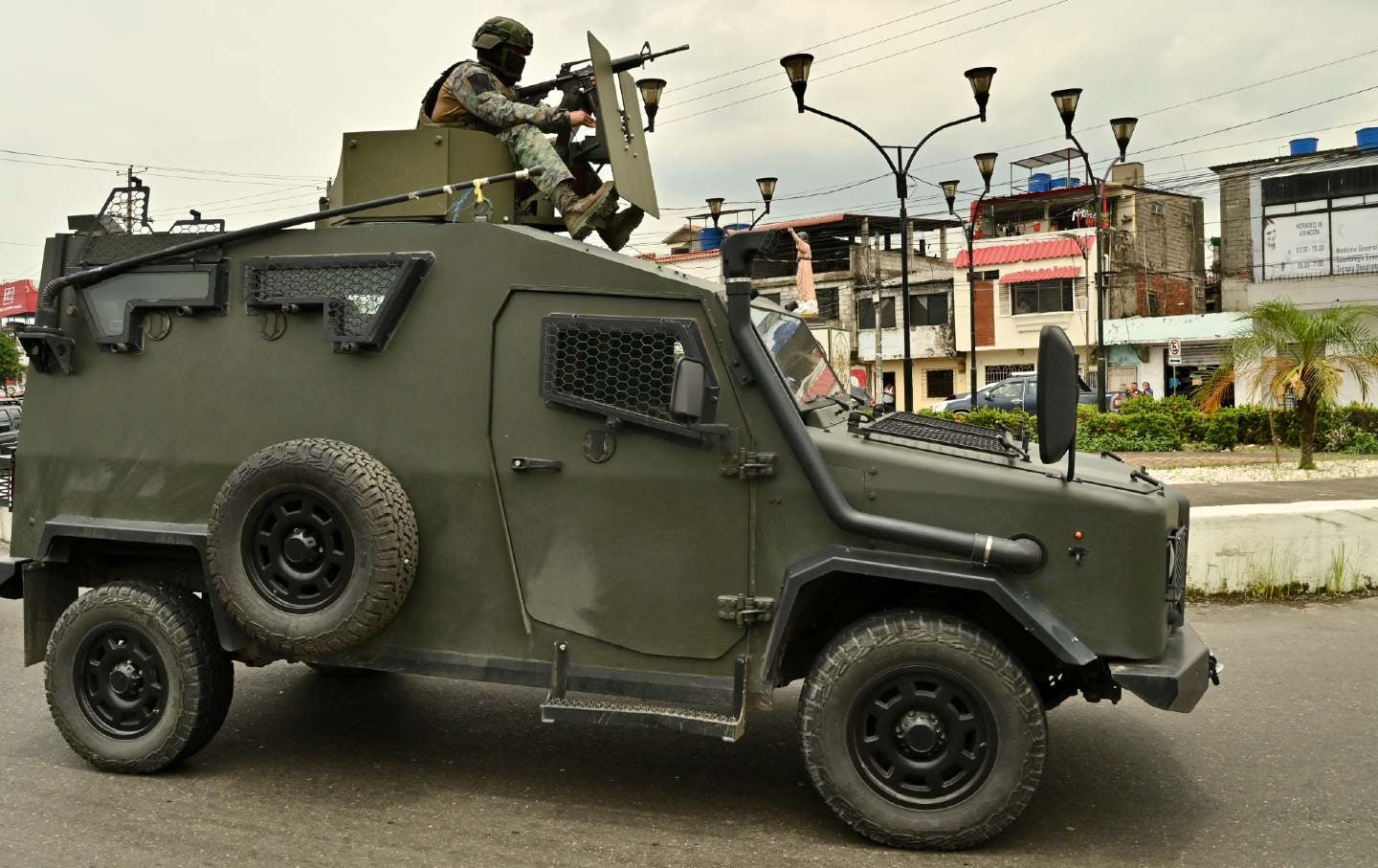
Israel now maintains a military presence in more than half of the Gaza Strip. The ceasefire was meant to include Israeli withdrawals and the return of displaced Palestinians to their neighborhoods. Instead, the Israeli army has been demolishing homes and infrastructure in northern Gaza, pushing the yellow line deeper into territory it’s supposed to have vacated.
All of this has occurred during the first phase of what was supposed to be a comprehensive peace plan. The phase included specific commitments: 600 aid trucks entering Gaza daily, the opening of the Rafah crossing, Israeli forces pulling back to predesignated positions, Israeli hostages released, and Palestinian prisoners exchanged. Some of that happened in the initial days—living hostages came home, and Palestinian prisoners were released. But within weeks, aid trucks were cut to numbers much below the amount needed, Rafah was closed again, and Israeli strikes ramped up. The gap between what was promised and what’s been delivered shows the fundamental disconnect between a ceasefire framework built on mutual concessions and a reality where one side retains total military control.
The second phase of the deal—the one that would involve Hamas disarming, further Israeli withdrawals, and the establishment of a “Board of Peace” to oversee Gaza’s reconstruction—has just been announced by President Trump. Steve Witkoff, Trump’s special envoy, has been appointed to lead the day-to-day operations of the reconstruction. International figures have been assembled, with Palestinian technocrats chosen to lead a future interim administration. It all sounds very official and organized. But scratch the surface and the hollowness of these announcements becomes clear. Israel is still arguing about the terms of the second phase, while Palestinians keep dying in what’s technically peacetime. The humanitarian situation in Gaza remains catastrophic. Famine conditions had improved slightly after the ceasefire, but that could change in a heartbeat. The fragility of the deal is becoming more concrete, as Israel continues to ban more than 30 aid organizations from operating in Gaza, including Doctors Without Borders and Oxfam. Huge parts of the aid infrastructure are now gone. In other words, the conditions required for the second phase to begin are nowhere to be found.
This is what a ceasefire looks like when the international community settles for calling something peace because it’s technically less violent than what came before.
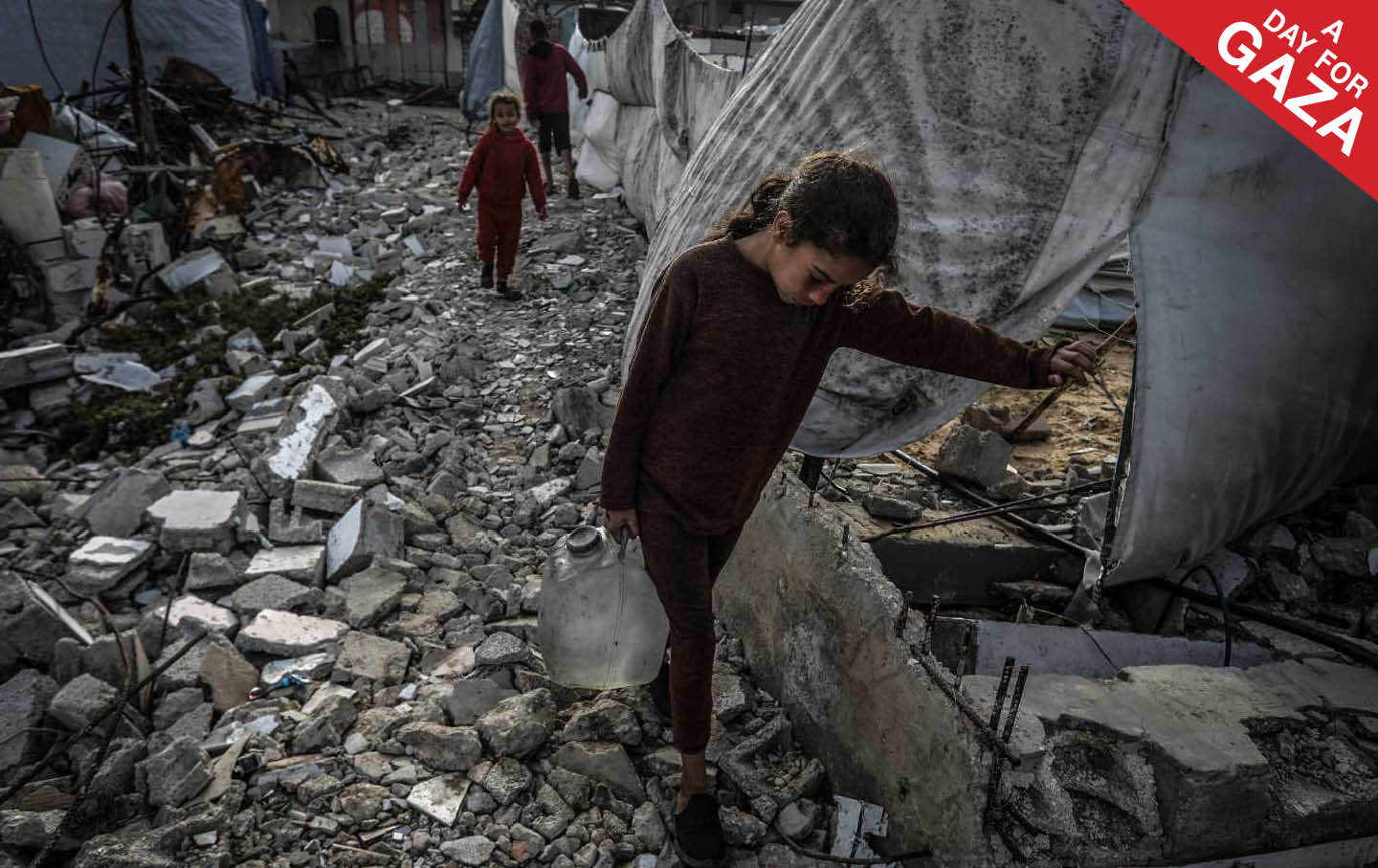
For Gaza’s people, nearly all displaced, living in damaged buildings or makeshift shelters, the distinction between war and ceasefire has become academic.
This may be the best arrangement Palestinians can expect under the current framework—a managed status quo that staggers on while satisfying no one. Displacement, insecurity, and death continue, just at a pace that doesn’t trigger international intervention. Israeli forces justify their lethality as a security response to Palestinian provocations. What matters is that this managed level of devastation is low enough to preserve the ceasefire’s diplomatic framework but high enough to maintain tactical pressure. Through it, Israel allows continued military presence without the political costs of full-scale war.
What makes this arrangement so revealing is that it represents the international community’s definition of success. This is what ending the Gaza war looks like: reduced daily death tolls, intermittent aid delivery, partial hostage releases. The UN Security Council endorsed this framework, deployed monitors to oversee compliance, and granted it legal legitimacy. The gap between war and peace has narrowed to a question of pace rather than principle—the same military control and displacement, with the same structural killing machine, just calibrated to a level that allows diplomatic progress to be claimed. Gaza knows the distinction between phases matters less than the continuity of conditions. The framework succeeds because it renders suffering sustainable in a way that’s bad enough to continue but controlled enough to ignore.