My Sister’s Death Still Echoes Inside Me
Rewaa was killed by an Israeli bomb. Her absence has broken me in ways I still cannot describe.
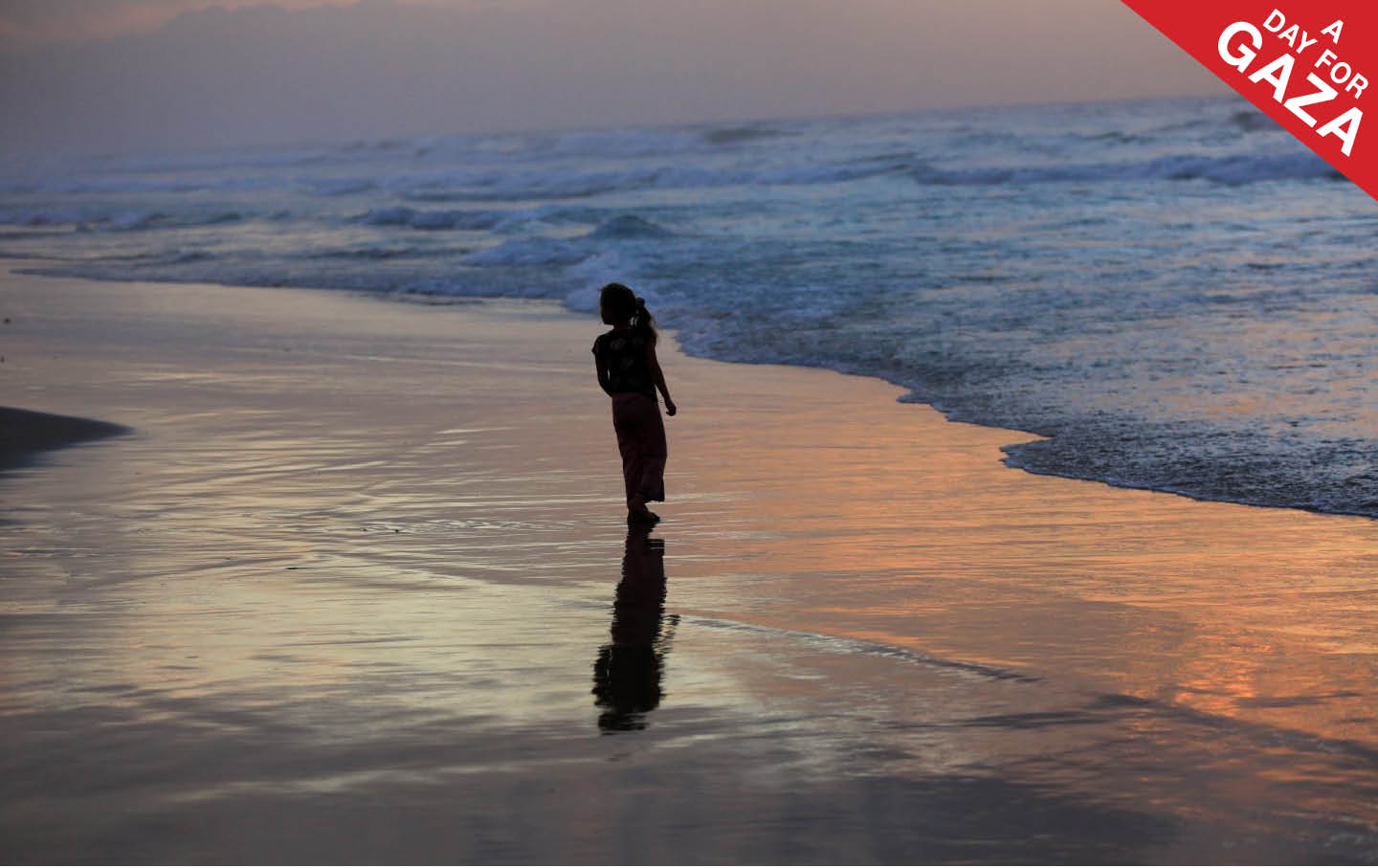
Gaza City, December 8, 2025.
(Abdalhkem Abu Riash / Anadolu via Getty Images)This piece is part of A Day for Gaza, an initiative in which The Nation has turned over its website exclusively to voices from the Gaza Strip. You can find all of the work in the series here.
Ioften think of my sister Rewaa as the “bride of heaven.” She moved through our lives with a calm, light spirit—someone whose presence made everything around her feel warmer and brighter. I still remember her dimples, her soft smile, my Shelter of Arms, and her generous nature, always giving more than she had.
My longing for her stumbles at the shroud that veiled her face, and at the soil that hid her fragile body—the grave. That moment forms a permanent barrier in my life: the line between the years we lived together and everything after. She was not only a sister to me. She was my closest companion, the person who shared every stage of my life—from childhood laughter to adult burdens.
She disappeared from us on the night of July 25, 2025. At around 10:30 pm, I was sitting with my mother, eating grapes. Suddenly, my sisters Aya and Shaima burst in crying. They told us that a bombing had struck the building where Riwaa and her children were staying. My brothers rushed to Al Ahli Baptist Hospital, and we waited desperately for news. When we heard she was injured and unconscious but receiving blood units, we still clung to hope.
Minutes later, everything shattered.
A Day for Gaza
-
A Ceasefire in Name Only
-
The Gaza Street That Refuses to Die
-
A Catalog of Gaza’s Loss
-
My Sister’s Death Still Echoes Inside Me
-
What Gaza’s Photographers Have Seen
-
How to Survive in a House Without Walls
-
What Edward Said Teaches Us About Gaza
-
What Happens to the Educators When the Schools Have Been Destroyed?
-
At the Doorstep of Tomorrow
-
“We Have Covered Events No Human Can Bear”
They told us, “Rewaa is dead.”
That sentence still echoes inside me. My mother collapsed in grief. My sisters screamed. Our house shook with pain.
We didn’t sleep that night. At dawn, we went to Al-Ahli Hospital. Behind a red curtain lay my sister’s body, wrapped in white. Next to her was Fadi, her youngest, his small body still and swollen. He had followed his mother even into death.
I lifted the shroud from her face. She looked like she was sleeping. I called her by her nickname, “Awwa’,” again and again. She didn’t answer. Her hands stayed still. Her eyelids didn’t flutter. She didn’t ask me to go out with her, or suggest tea by the seaside, or talk about buying clothes for her daughter.
She chose silence.
My sister—my heart, my companion, the tender, generous, quick-witted mother of three—was gone.
Rewaa and I shared everything. She filled my days with jokes, mischief, and endless laughter.
I miss the ordinary moments: finding her in the kitchen preparing a surprise cake, rushing around the stove with enthusiasm, covering every pot in an attempt to hide the evidence of her “crime” to produce a simple sponge cake. I miss her making lentils—her unexpected comfort food during the war—despite the fact that she used to insist on eating only from Gaza’s best restaurants before. I even recorded her once as she cooked in the kitchen of our shelter in Deir Al Balah. In the video, she laughs at my teasing in the childish voice she adored.
Now I watch that video constantly. I would give anything to taste one more spoonful of lentils made by her hands.
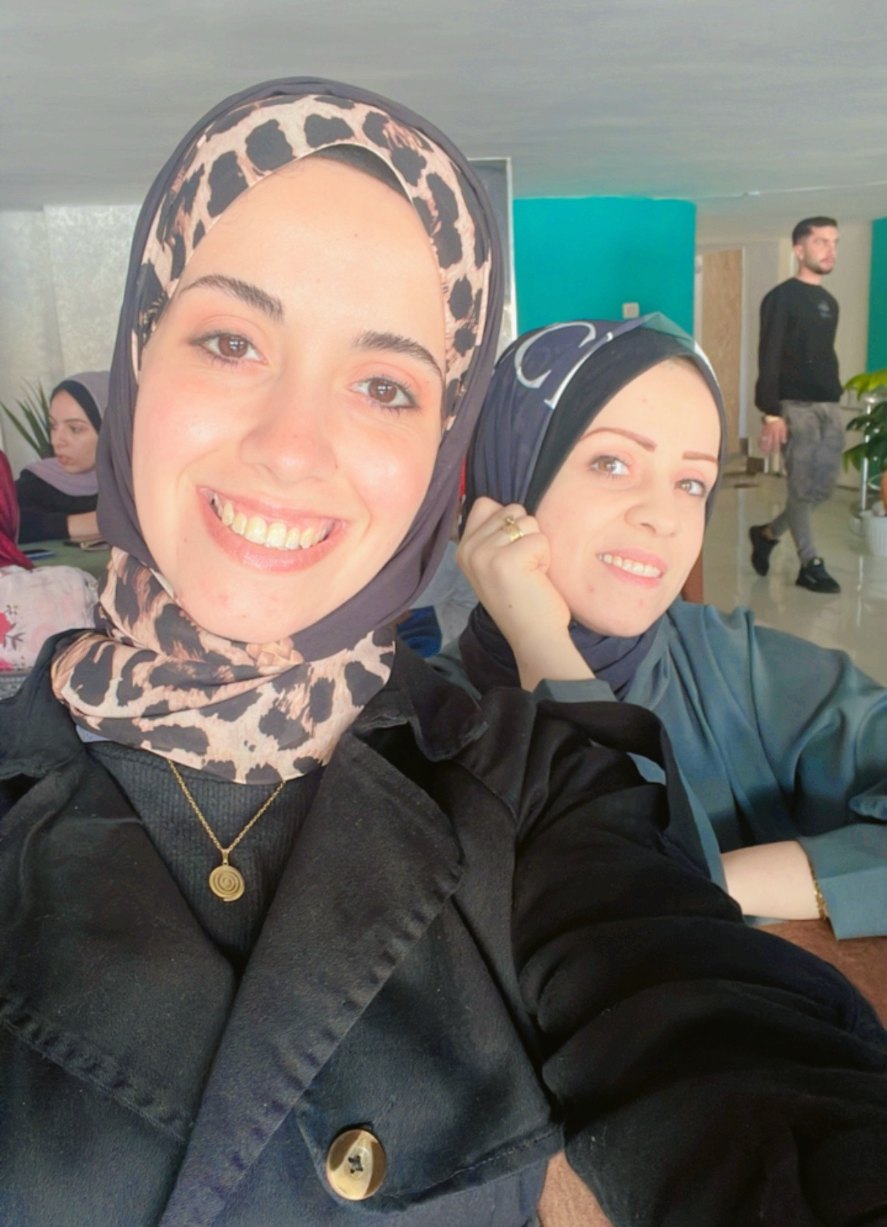
I also miss how she used to burst into my room while I was studying dentistry. She always seemed determined to pull me out of my routine. “Come on,” she would say, “let’s get dressed, go for a walk, get ice cream, go to the seaside—anything.” I used to pretend to resist, but she never gave up. Eventually, I’d give in, and she would run off excitedly to get ready like a little girl aged 29; her happiness came from simple things: a walk, an ice-cream cone, the sea.
During my five years of dental school, and even afterward, I ate more meals in her home than in my own. I would call her to ask what she had made, and she would always say the same thing: “Come over… even if I didn’t cook, I’ll make something for you, or we’ll cook together.” Her apartment was close, and I always hurried to her. We either cooked together or ordered food—usually after a long debate that ended with her favorite dishes: cordon bleu, grilled food, or meals from another restaurant nearby, where her children spent countless afternoons bouncing on the trampoline its owners had set out to entertain kids. That same restaurant still holds the echo of our laughter as we waited for the circular pager that shook violently when the food was ready.
She was also the one I called every time no one could decide on a lunch plan. She had tried every dish in every restaurant, driven by her simple love of life and new experiences.
After eating, we often sat in front of the TV while her three children—Nada, Ezzedine, and Fadel—watched cartoons. I once photographed them asleep together on their small trampoline, lying side by side like identical copies. Rewaa stood next to me in that quiet moment and told me she was almost 30, admitting that the thought unsettled her. Then she laughed it off, saying she still looked younger than her age, because she has a tiny body.
None of us knew she would never reach her 30s. She will remain forever young in my memory.
Rewaa and I shared so many moments that now feel like scenes from another life. Once, during a family outing to the sea, we slipped away from the adults and ran toward the giant swinging ship ride, like two little girls living inside adult bodies. We chose the last row and spent the whole time screaming, laughing, and asking the operator to make it go faster. We flew into the sky like two birds, smiling wing to wing. We were always meant to fly together. Why did you, Rewaa, fly alone this time?
Another time, at a kids’ playground, we tried the “bees” ride with the children. My seat didn’t move, and the operator blamed it on “extra weight.” Rewaa and our sister Amal laughed so hard they could barely breathe. I laughed too, despite myself, because she looked so full of life—radiant and happy.
She was endlessly generous. Her heart overflowed. She cared about every detail in our lives. After I graduated from dental school, she surprised me with a huge pink cake and arrived singing, with her children carrying little cupcakes decorated with graduation caps. I jumped off the couch, hugged her too tightly, and almost made her drop the cake. We laughed, sang, and celebrated that day with a joy that now feels suspended in time.
Now, when I replay that memory, I ask myself why I didn’t hold onto her longer—why I ever let her go.
On every Mother’s Day, she used to send extravagant gifts to our mother—flowers, fruit baskets, chocolates, even kitchenware. We always knew they were from her, even without a card. She visited our grandmother with milk, yogurt, and biscuits. She showered everyone with love, care, and attention. She gave each family member their own nickname, even our youngest brother Hamza, whom she called “Hameez.”
She was present in everything, leaving traces of herself everywhere.
A week before her death, she dubbed herself “the auntie of the baby” in reference to the child our sister Amal was expecting. Amal gave birth to her son, Moein, on August 19. I called and messaged Rewaa repeatedly that day, instinctively wanting to share the news with her.
She never answered.
Moein was born 25 days after she died. He entered this world missing the aunt who would have adored him.
Rewaa died just weeks before the ceasefire arrived, slowing the killing but failing to end it. Survival had been within reach, almost … hers.
Every day, every hour, I miss her soft voice—the way she replaced emphatic Arabic letters with lighter ones, turning them into something playful and feminine. Even her teasing carried warmth.
She was the vibrant presence in every room, the one who gave until nothing was left, the laughter that carried us through the hardest times. She brought color wherever she went. Her absence has broken me in ways I still cannot describe.
I picture her now as a bride in white, resting in a place where no shell can reach her, no stray bullet, no random death. A place where everything is eternal.
A place where someday, I hope, I will meet her again.