Why Have Feminists Been So Slow to Condemn the Hamas Rapes?
Israel’s war in Gaza is an atrocity. But we can deplore its actions while also condemning the atrocities perpetrated by Hamas.
On October 7, Hamas fighters raped Israeli women and girls. Whatever may have been unknown in the immediate aftermath of the attack, the rapes are by now as substantiated as anything ever can be in an ongoing war. There is eyewitness testimony. There are reports from doctors and others who saw bodies of women who had been sexually abused. There are photographs. You have to be a conspiracist or rape denialist to dismiss all that as fabricated. And yet, social media is crammed with dismissals of the evidence as Israeli propaganda. Take journalist Max Blumenthal, who claimed in a tweet last week that “Israel is inventing stories of mass rape on October 7.” His Grayzone colleague Aaron Maté demanded to see “purported rape victims offering direct testimony.” Never mind that they are dead.
All that is to be expected in the more overzealous corners of the Internet. More concerning is that up until recently, feminist groups in the United States have had little to say. This silence sits oddly with how quick our movement has been to credit much iffier claims and to raise consciousness around sexual misconduct that falls far short of rape. What happened to the clarion call to “believe women”? What happened to #metoo? Even in the early days after October 7—and despite the fact that most rape victims were dead or possibly among the hostages, preventing the kind of personal testimony that skeptics demanded—there was evidence of sexual violence. Take the photo of the young woman being carried off to Gaza with blood on the rear and crotch of her pants. Which is more likely: that this woman had been violently raped, or that a Hamas leader was telling the truth when he asserted that rape could not have occurred because sex outside marriage is forbidden by Islam?
Where’s the Women’s March? Feminist Majority? The National Women’s Studies Association? Despite much urging, It took the United Nations Entity for Gender Equality and the Empowerment of Women eight weeks to issue a statement condemning the October 7 attacks, finally expressing alarm over “the numerous accounts of gender-based atrocities and sexual violence” and calling for investigation and prosecution. At a December 4 UN special session on the rapes, convened by Israel, the keynote speaker was former Meta COO Sheryl Sandberg, who had helped organize it. Sandberg is anathema to many progressive feminists. But credit where due: At least she spoke up loudly and in public, which is more than our movement leaders have done.
Slowly, under pressure from the media, some feminist organizations are finally chiming in. On November 30, the National Organization for Women issued a press release in which national president Christian F. Nunes said “rape must never be part of a battle plan” and condemned the “deafening silence” around “these widespread crimes against humanity.” Oddly, the words “Israel,“ Hamas,” and “October 7” do not appear. Talk about a deafening silence!
In the wake of the UN session, more groups are answering the call. Planned Parenthood released a statement on December 5: “On October 7, Hamas unleashed a brutal attack in Israel, killing over one thousand civilians, sexually assaulting women and girls, and kidnapping over 200 people, many of whom remain captive.” On December 6, V-day, the organization founded by the playwright and activist V (formerly known as Eve Ensler) to fight violence against women, posted a statement on its website that alluded to the rapes, but without mentioning Hamas or October 7. (“We know how rape and sexual assault is used as a weapon of war and we have always unequivocally condemned it wherever it has happened, whenever it has happened. And we do so now.”) The next day, the Women’s Media Center issued a statement condemning Hamas for “sexualized violence.”
Here is my question: Why should there be so much doubt that Hamas fighters—who undeniably killed in the most brutal way some 1,200 people, including whole families, women, children, babies, and even Thai farm workers—would also commit rape? Rape has always been a part of war, from Troy to Bosnia to the many wars raging around the globe today. When the Red Army conquered Germany at the end of the Second World War, Russian soldiers—our allies!—raped every woman they could find. Israel itself is not blameless: One Palestinian woman arrested after October 7 told the BBC she and other captives had faced rape threats from Israeli prison officers.
I’m not saying this to diminish rape as just one of those things that happen in war, as Representative Pramila Jayapal has been unfairly accused of doing in her CNN interview with Dana Bash, where she condemned Hamas’s actions while calling for consideration of Palestinian casualties as well. I’m asking why feminists, who are so often quick to believe the worst of men, and are right to be skeptical of rape rationalizations and denials, are hanging back now. Has the vastly disproportionate retaliation by Israel overshadowed the October 7 atrocities so much that protesting the latter seems like a justification for the former? Is it the kind of anti-Zionism one finds, for example, on some campuses, where Hamas are portrayed simply as ”freedom fighters” and all Israeli Jews as white settler colonialists?
Whatever the reason, it shouldn’t have taken this long to acknowledge reality. It shouldn’t have been this hard. It shouldn’t take conservatives like Bret Stephens and the right-wing Independent Women’s Forum to speak plain truths about rape—if about little else. Meanwhile, the left spouts extravagant slogans like “Palestinian liberation is queer liberation”—the ultimate in “everything is connected” politics. In a similar vein, the Georgia-based abortion fund ARC-Southeast put out a long statement headed “Reproductive Justice Includes Palestinian Liberation” without so much as mentioning that abortion is illegal in both Gaza and the Palestinian Authority. Maybe they don’t know. That statement has been cosigned by over 50 reproductive rights and justice organizations, including the National Network of Abortion Funds.
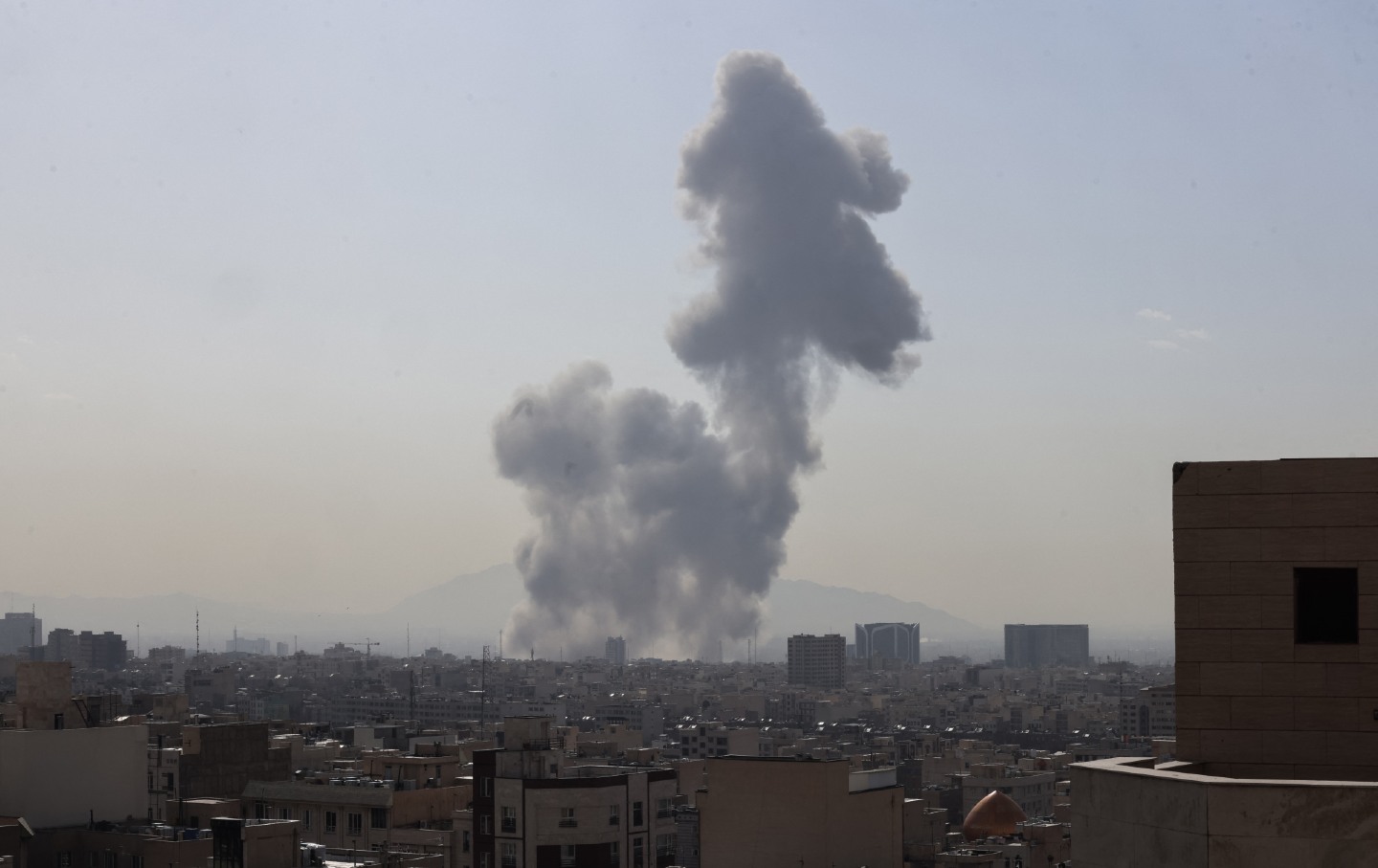
Is it so hard to say Hamas fighters committed war crimes including rape on October 7 and that Israel’s retaliatory mass bombing of Gaza is also a war crime? Must one negate the other? It is impossible to watch what is happening in Gaza now and not be appalled—the killing of some 18,000 innocent people, the horrific injuries to many more, the destruction of half, or by now maybe more than half, of the enclave’s housing and infrastructure, including hospitals. As always in modern warfare, women and children get the worst of it. All that state-sponsored mayhem is happening in the name of vengeance, which accomplishes nothing, and eradicating Hamas—a likely impossibility. How the siege of Gaza is supposed to lead to anything but more violence and mutual hatred is beyond me.
Surely there is horror enough to go around. Nationalism, tribalism, patriarchal religion—these are the enemies of women’s liberation, safety, and flourishing, and always have been. Women are being used and abused by both sides: Hamas is flagrantly misogynistic, and Israel’s current government wants to roll back women’s rights as fast as it can. To see feminists overlooking violence against women because of their allegiance to either Israel or Palestine makes a mockery of feminism.
Virginia Woolf wrote, “As a woman, I have no country. As a woman I want no country. As a woman my country is the whole world.” A noble thought—whatever happened to it?