
In Gaza, Eid Is an Act of Resistance
This year, Eid was a declaration: We are here. We pray. We dress in our best. We love, even when the world tries to convince us that we have nothing to love or to live for.
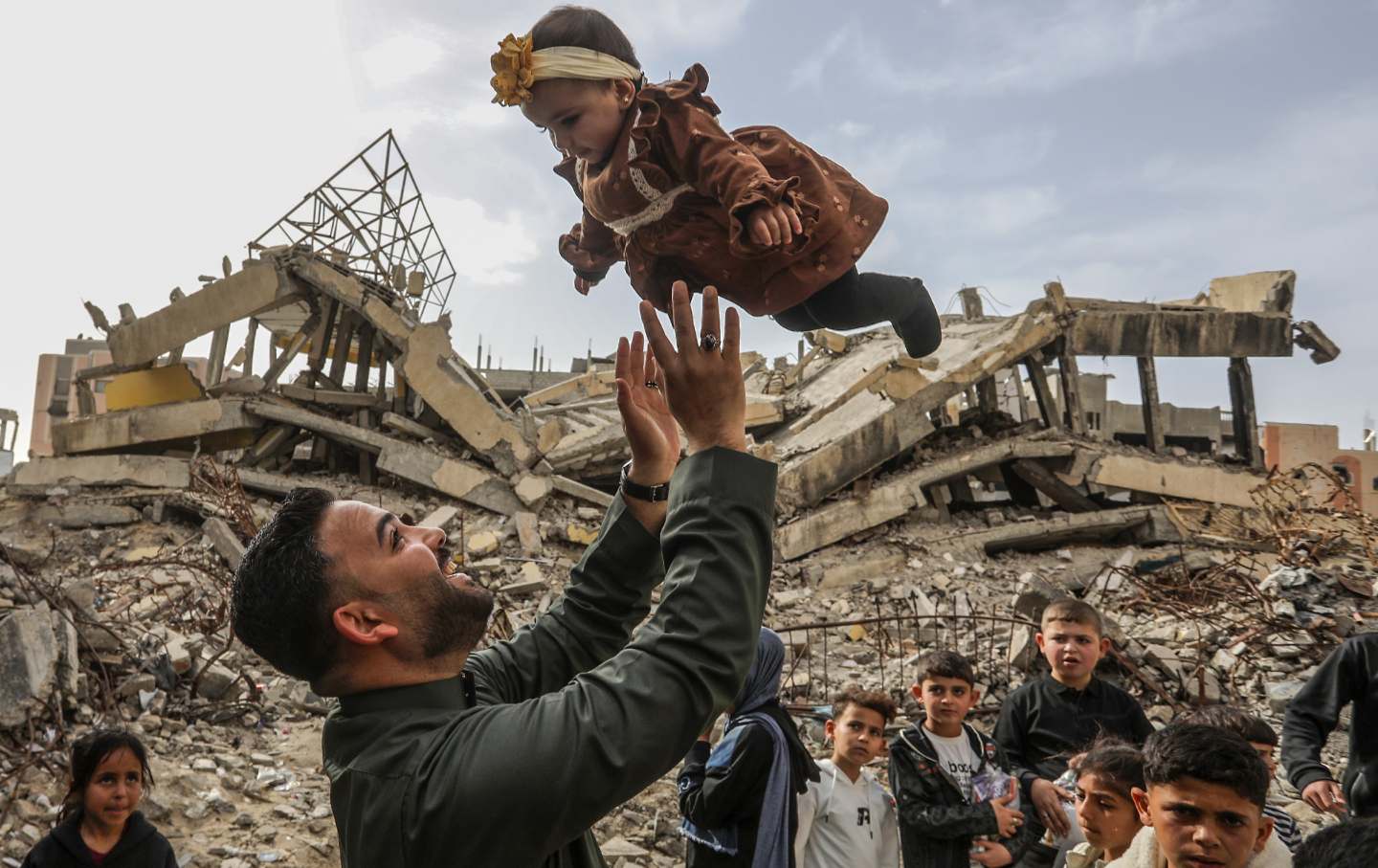
A man tosses a baby into the air as Palestinian children receive Eid treats distributed volunteers of a charity organization on the second day of Eid al-Fitr amid rubbles in Khan Yunis, Gaza, on March 21, 2026.
(Abed Rahim Khatib / Anadolu via Getty Images)In Gaza, Eid al-Fitr—the “Festival of Breaking the Fast” that marks the end of the holy month of Ramadan—does not arrive as an ordinary visitor. It arrives as an act of defiance. It knocks on the flaps of tents and the skeletal remains of homes, carrying the scent of ma’amoul—traditional date-filled cookies—mixed with the persistent dust of bombardment.
This year, Eid was not just a religious observance; it was also a profound political statement and a declaration of existence. We are here. We pray. We dress in our best. We distribute love, even when the world tries to convince us that we have nothing to love or to live for.
My first day of Eid this year began with a longing I had never known. Last year, fear was the master of the scene; performing Eid prayers under the thud of shells was a gamble with death, attended by only a few. It was bleak; there wasn’t the huge crowd of people like there was before the war or like there was this year. Everyone was consumed with thoughts of what they had lost and how to survive.
People only attended because they felt it was their religious duty, and we didn’t embrace or congratulate one another after the prayer as we did this year.
This year, I decided to reclaim my soul. On the eve of Eid, I stayed awake all night, watching the dawn like a prisoner watching for freedom. When the morning came, I put on my black galabeya—a traditional floor-length robe—specially bought for this day, wore my silver watch, and put on some cologne as if I were going to meet a long-lost lover.
I headed to al-Kinz Mosque. Like most landmarks in Gaza, it now bears the scars of genocide. Over 1,160 mosques—roughly 95% of our places of worship—have been systematically destroyed in the Strip. Yet, the will of the people proved sturdier than reinforced concrete; we built makeshift alternatives from the rubble, because restoring the mosque is a restoration of the soul, as I once wrote.
Inside, the atmosphere was surreal. Children gathered at the front, their Takbeerat—the rhythmic chants of “God is Great” traditionally recited during Eid—rising loud enough to drown out the hum of the surveillance drones.
But even as we chanted, the reality of the so-called ceasefire loomed.
On the third day of Eid, I passed by al-Taj, one of Gaza’s most iconic and popular restaurants. I was in the car with my friend Jaafar Abu Shaban, who was giving me a ride home. When we saw the crowds, especially the children, whose faces radiated pure joy at the simple prospect of getting a shawarma wrap, it filled us with an overwhelming sense of hope. Jaafar even hopped out to grab some for us and his son, Laith, who was with us. While I waited in the car, I found myself staring at the kids and the incredible decor they had managed to put together. It was moving to see such beauty, knowing the occupation prevents even basic building materials from entering Gaza. In that moment, seeing life thrive against all the odds, I felt a profound sense of optimism.
Two hours later, an Israeli strike targeted a residential apartment directly above al-Taj. We feared a catastrophic massacre. There was a moment of collective terror, followed by a heavy sigh of relief when we learned the strike hit the upper floors and wasn’t as devastating as it could have been. It was a place where people had gathered, trying to steal a final moment of joy before the holiday ended. The fire and the screams served as a brutal reminder that even in the final hours of Eid, there is no lasting sanctuary.
At the mosque, I instinctively looked beside me for my cousin and soulmate, Abdel Wahab Skaik, but his seat has been empty since he was killed on December 7, 2024. Next to me was my neighbor, Sami Abu Khdair, 20, scrolling through photos of his brother Mahmoud, who was killed while trying to fetch a bag of flour in the Netzarim area in August 2025. In Sami’s eyes, I saw a haunting mix of suppressed tears and a defiant smile.
Behind me sat my father’s cousin Yousef Skaik, a man who lost his wife, Nidaa, his daughter, Roua, 19, and his son, Hammood, 11, during their displacement to the south in September 2025. Despite this crushing burden, Yousef came to pray. When we visited him on the second day of Eid, he embraced my 11-year-old brother, Abdul Raheem, kissing him repeatedly and saying, “You are just like my son Hammood.” My mother stood nearby, unable to contain her tears, realizing that in Gaza, every surviving child becomes a surrogate for a grieving parent.
After the prayer, a large mural was displayed bearing the names of the young men from our neighborhood martyred during the genocide. We stood there gazing at their faces; it felt as though they were with us, their spirits joining in our celebration.
Eid in Gaza is also a battle with a harsh economic reality. Just before the holiday, Israeli authorities further restricted the entry of goods, including ones that would normally be used for Eid. What was available of clothes and sweets in the market was sold at predatory prices. For many, a new Eid outfit was an impossible dream.
This scarcity brought back bitter memories of the famine during the previous Eid. When my father’s cousin, Mahmoud, visited us this year, he laughed as I served him sweets and coffee. “Last year, Ali,” he reminded me, “you had nothing to offer us but a little bit of water.” We thanked God for the ma’amoul, yet the struggle remained.
Popular
“swipe left below to view more authors”Swipe →The acute shortage of physical cash and suffocating banking restrictions made the tradition of Eidiya—the custom of giving monetary gifts to children and relatives during Eid—a logistical nightmare. I managed to strike a deal with a grocery owner to get 300 Shekels in cash in exchange for a bank transfer from my uncle’s restricted account.
In our rented house which we have lived in since our family home was bombed, I gave my sisters Huda and Nada, and my brother Abood, 50 Shekels each. Huda said, “50 in cash! I’ll hide this for absolute emergencies,” which made us laugh. Abood spent the next half hour planning to buy snacks that have become luxury items due to the blockade.
The day before Eid, I saw the twins Abdul Rahman and Abdullah al-Najjar, 13. Beaming in their new clothes for the first time in two years, they joked that they had bought identical outfits so no one could tell them apart.
In our house, Huda prepared small gift packets of candy for the children, including little Mahmoud, 2.5, who has grown up in war and barely recognizes what chocolate is.
However, the joy was shadowed by profound loss. The second day of Eid coincided with Mother’s Day, doubling the agony for those who visit graves instead of homes. My neighbor Najla al-Saqqa, who lost her son Ameen, spoke of him as if he were still here.
She told us her other son, Abdul Kareem, gives her a monthly allowance, saying, “This is from me, and this is from Ameen,” after dreaming that Ameen told him to take care of her.
I spent two hours watching a reel of two mothers weeping over their children’s graves, calling it a “Black Eid.” We remembered the journalists Anas al-Sharif and Ismail al-Ghoull, whose children spent Eid without their fathers.
Walking past our destroyed home, I saw a camp of torn tents and smelled the failing sewage, a scene that reminded me of the year we spent in a tent in Khan Younis.
Despite all of this, we celebrate. They try to turn our Takbeerat into screams of pain. They try to strip us of our faith by leveling our mosques and starving our children. But they do not understand that in Gaza, we “love life whenever we can find a way to it.”
Our celebration is an act of resistance and existence. Our laughter amidst the ruins is a defeat for their project of erasure. We are the ones who manufacture joy from nothingness. They tried to deprive us of Eid, so we became the Eid ourselves.
We will continue to love our religion, honor our rituals, and plant hope in our children, because simply put—we are a people who refuse to be extinguished.
Support independent journalism that does not fall in line
Even before February 28, the reasons for Donald Trump’s imploding approval rating were abundantly clear: untrammeled corruption and personal enrichment to the tune of billions of dollars during an affordability crisis, a foreign policy guided only by his own derelict sense of morality, and the deployment of a murderous campaign of occupation, detention, and deportation on American streets.
Now an undeclared, unauthorized, unpopular, and unconstitutional war of aggression against Iran has spread like wildfire through the region and into Europe. A new “forever war”—with an ever-increasing likelihood of American troops on the ground—may very well be upon us.
As we’ve seen over and over, this administration uses lies, misdirection, and attempts to flood the zone to justify its abuses of power at home and abroad. Just as Trump, Marco Rubio, and Pete Hegseth offer erratic and contradictory rationales for the attacks on Iran, the administration is also spreading the lie that the upcoming midterm elections are under threat from noncitizens on voter rolls. When these lies go unchecked, they become the basis for further authoritarian encroachment and war.
In these dark times, independent journalism is uniquely able to uncover the falsehoods that threaten our republic—and civilians around the world—and shine a bright light on the truth.
The Nation’s experienced team of writers, editors, and fact-checkers understands the scale of what we’re up against and the urgency with which we have to act. That’s why we’re publishing critical reporting and analysis of the war on Iran, ICE violence at home, new forms of voter suppression emerging in the courts, and much more.
But this journalism is possible only with your support.
This March, The Nation needs to raise $50,000 to ensure that we have the resources for reporting and analysis that sets the record straight and empowers people of conscience to organize. Will you donate today?
More from The Nation
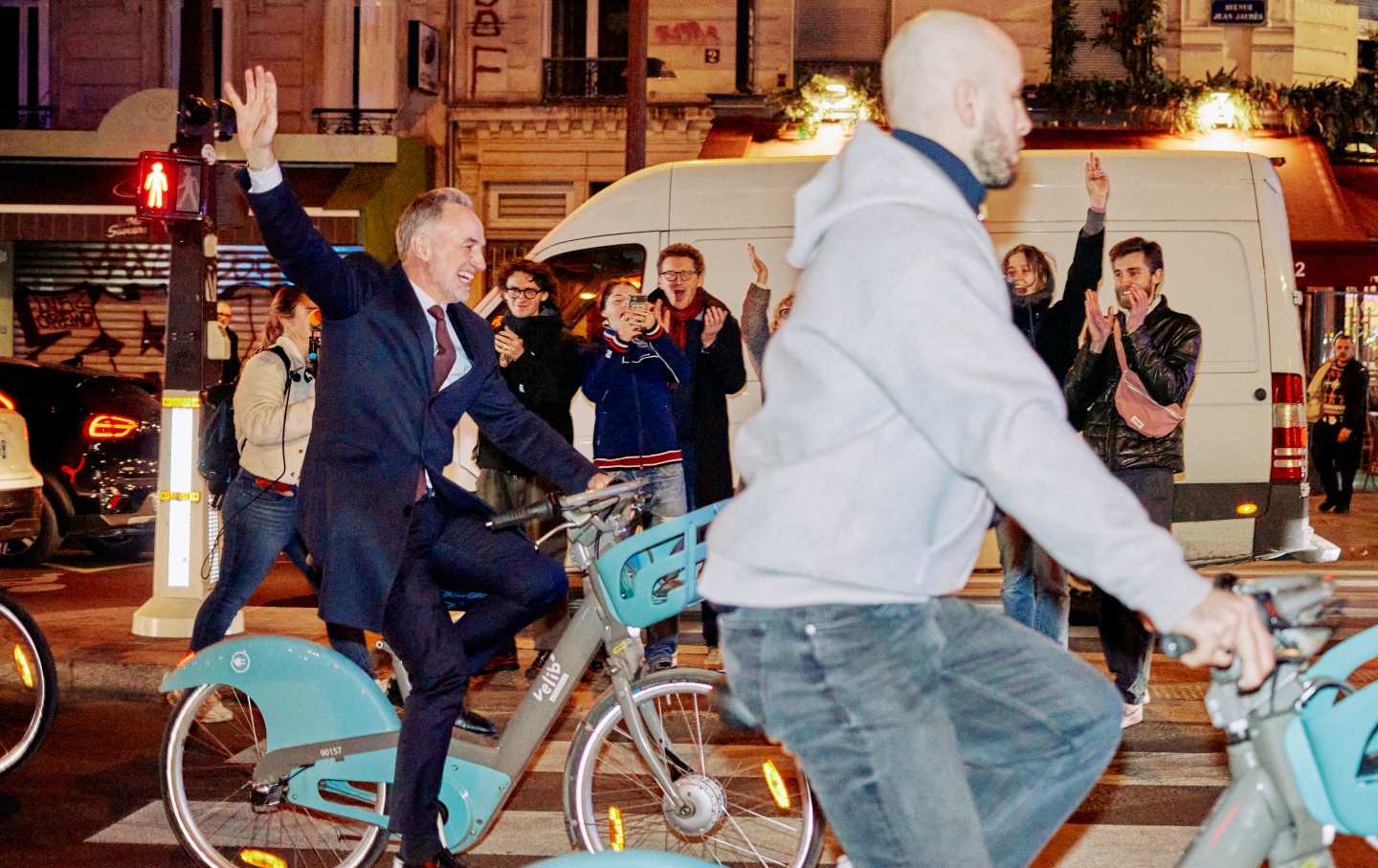
Paris, a Capital in “Resistance”? Paris, a Capital in “Resistance”?
Barring a few big-ticket victories in this month’s local elections, the French left is more divided than ever—one year from a pivotal fight for the presidency
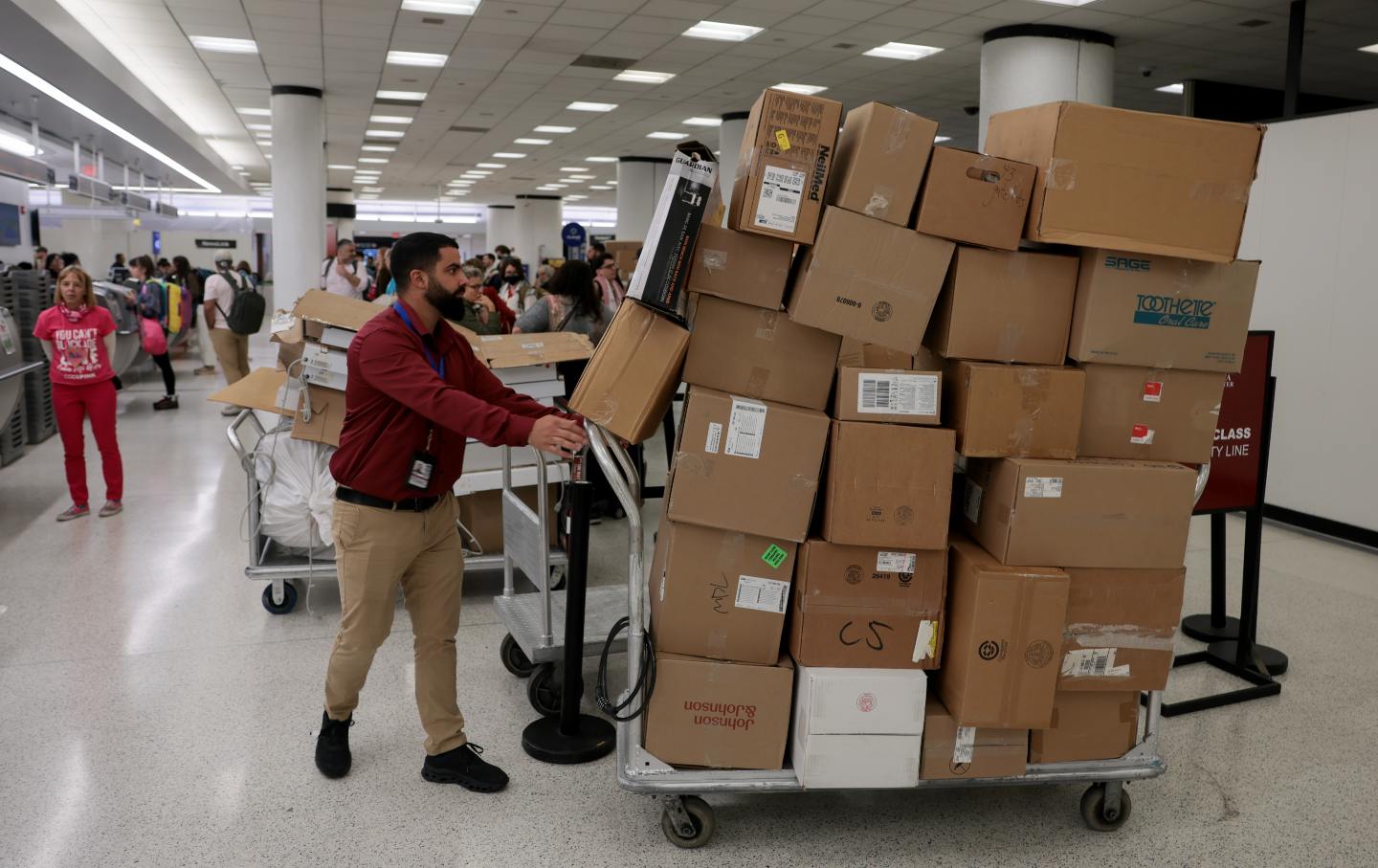
Dispatch From Cuba Dispatch From Cuba
The Nuestra América Convoy delivers humanitarian aid as US sanctions deepen a humanitarian crisis.
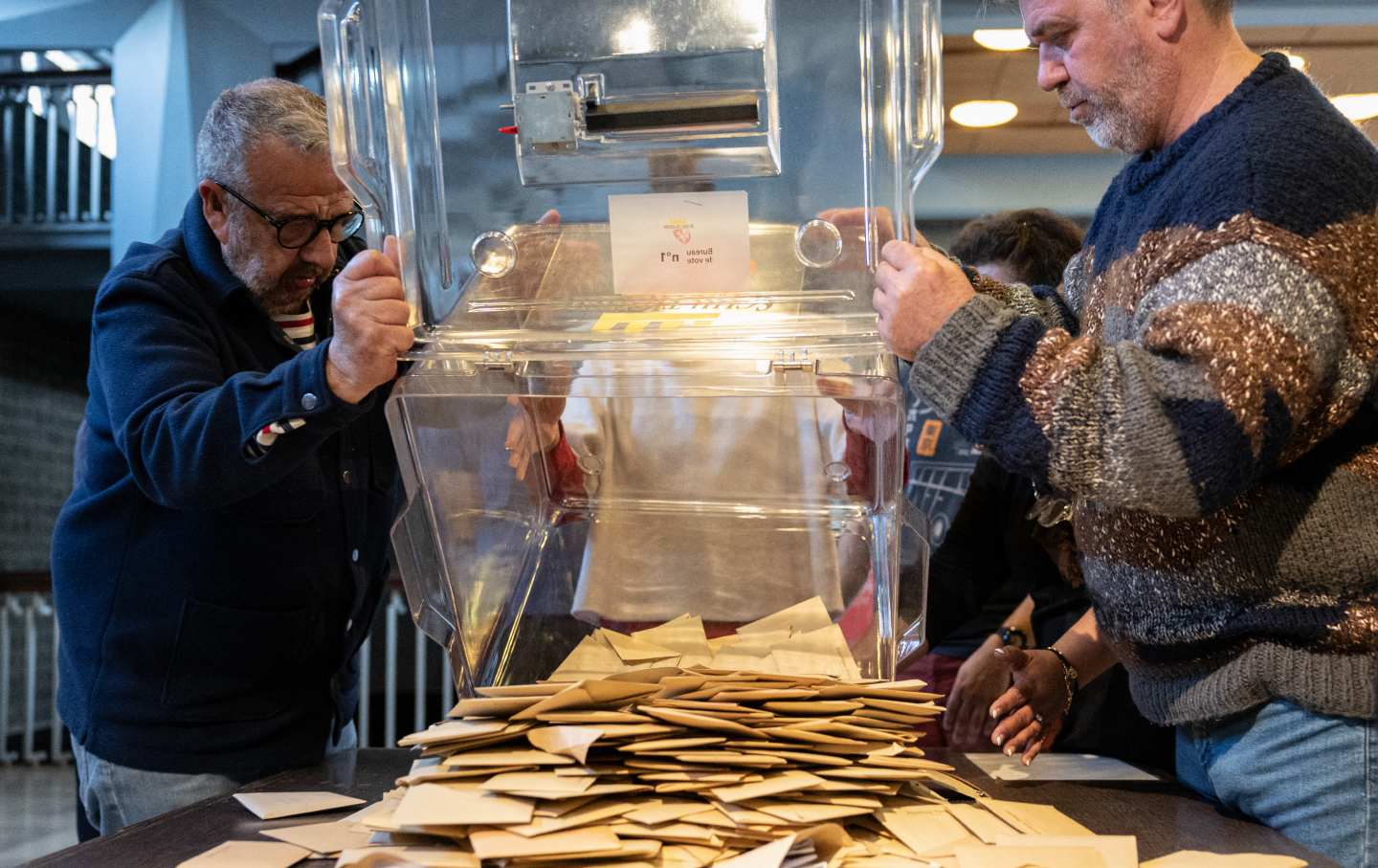
It Could’ve Been Worse—but France’s Local Elections Are a Warning to the Left It Could’ve Been Worse—but France’s Local Elections Are a Warning to the Left
The French left managed to hold on to key cities, but the far right and mainstream right also won key victories—and the intra-left bickering shows no signs of subsiding.
Democrats Have a Chance to Offer a Smarter China Policy. Will They Take It? Democrats Have a Chance to Offer a Smarter China Policy. Will They Take It?
It’s time to pursue a more pragmatic strategy—one that prioritizes domestic strength, targeted competition, and continued engagement.
Trump’s Plan for “Taking” Cuba Trump’s Plan for “Taking” Cuba
“I can do anything I want with it,” the president says. Can he?
In Ukraine, Weaving Grief Into a New Collective Memory In Ukraine, Weaving Grief Into a New Collective Memory
After four years of war, Ukrainians are reckoning with irreparable loss and finding ways to persist in the face of it.

