
Solidarity Under Siege
Humanitarian aid convoy members returning from Cuba stopped, searched, and questioned by US Customs and Border Protection officers.
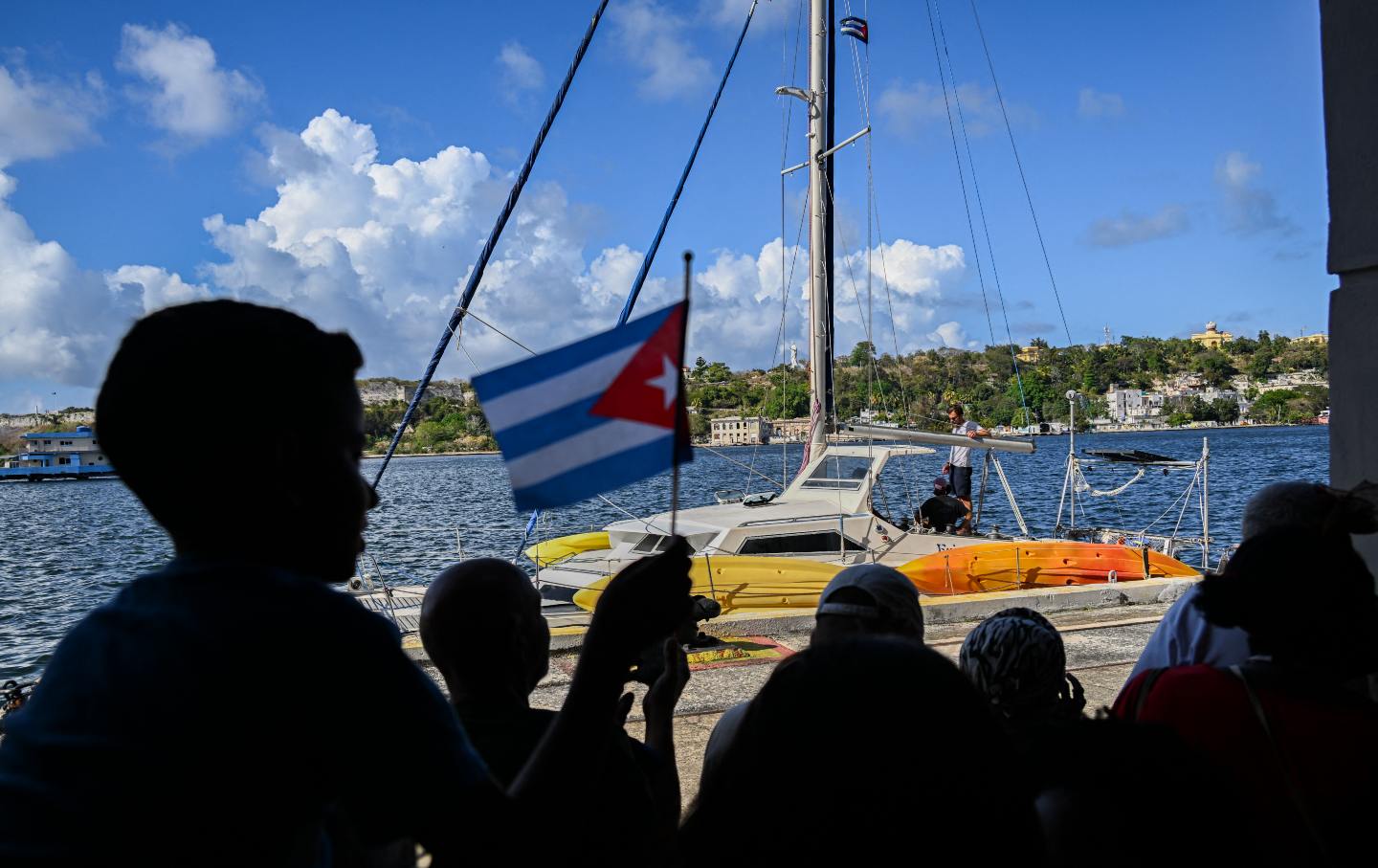
The potential penalty for trying to help the Cuban people amid the Trump administration’s unprecedented economic crackdown, bellicose threats, and oil blockade became clear for two dozen American citizens returning home last week after participating in an international humanitarian aid convoy. Arriving from Havana to make connecting flights at the Miami International Airport, they were stopped, searched and questioned about their activities in Cuba for more than two hours by US Customs and Border Protection officers. At least 18 travelers had their cell phones, tablets, laptops, and Kindles seized. While agents returned a handful of devices at the airport, they retained the bulk of the electronics, saying they’d mail them in the coming days.
It bears repeating that travel to Cuba and carrying desperately needed medicine and food is entirely legal. A record 638,000 Americans traveled to the island in 2018 for any of several permitted purposes enshrined in US law, including “support for the Cuban people.” Nevertheless, certain restrictions—tourism must not be the purpose of the visit; Americans can stay only in private homes or the few hotels approved by the US government; they must not bring home rum or cigars—have become settled law, unless Congress acts, since activists lost a series of legal challenges going back to the 1980s, according to human rights and immigration lawyers.
However, the apparent targeting of convoy participants seeking to support the Cuban people amid the current heightened tensions suggests that border police are focused on something beyond ferreting out contraband bottles of Havana Club, lawyers say.
“It is clearly meant to harass,” said Stanley Cohen, a human rights and criminal defense lawyer in New York City whose name and number were carried by many members of the convoy, speaking to The Nation. “This is designed to intimidate and…to send a political message from law enforcement and from the US Department of Justice.”
“I regard a lot of this as just harassment,” added Ira Kurzban, an immigration lawyer in Miami. “It’s sending a message: If you go to Cuba and come back, we’re going to harass you.”
The maximum civil penalty for, say, staying in a prohibited Havana hotel, is $111,000, with the criminal maximum set at $250,000 and up to 20 years in prison—though lawyers say actual sentences would likely be far lower. Yet the price of losing a phone or laptop for several days or weeks when so much of our lives depends on data stored there can feel steep indeed. Convoy participants were stranded in Miami without access to contacts, flight reservations, or documents they might need for work when they got home.
“It is absolutely disgusting, when you go on a humanitarian mission, that your computer and your phones are taken away from you,” said Medea Benjamin, cofounder of the human rights advocacy group Code Pink, which had helped arrange the trip for many of those interrogated in Miami. “What kind of totalitarian government do we live in that does that kind of thing?” Benjamin, who says she has been stopped after numerous pervious missions to Cuba, was not questioned this time. She was scheduled to return to Cuba this week with 2,500 pounds of lentils.
Besides the 18 whose devices were taken, five others associated with Code Pink who passed through Miami on a different day were led aside for questioning, though their devices weren’t examined. In addition “several” participants in the Let Cuba Breathe brigade organized by the People’s Forum were detained and questioned in Miami, according to the group, and Brazilian activist Thiago Ávila, who led a separate delegation of 32 activists and journalists who arrived in Cuba on a boat carrying solar panels and bicycles, was temporarily detained at an airport in Panama on his way home, according to convoy organizers.
All were participating in the Nuestra América Convoy, which was coordinated by Progressive International and included more than 500 participants from 33 countries who delivered an estimated 35 tons of medicine, food, and other supplies. The convoy came in response to the oil blockade of Cuba that President Donald Trump announced in late January. The blockade has caused widespread blackouts, household water cutoffs, and reductions of the school day and workplace hours. Economic conditions in Cuba have deteriorated markedly since Trump’s first term when he canceled President Barack Obama’s easing of tensions and ratcheted up sanctions, which President Joe Biden did not reverse. Code Pink had arranged for 170 people to bring 6,300 pounds of medical supplies as part of the Nuestra América Convoy.
“Solidarity is not a crime,” said Katie Halper, journalist and host of The Katie Halper Show and cohost of Useful Idiots on YouTube and via podcasts, whose phone and laptop were examined by border agents. “What our government is doing to Cuba is illegal and immoral and unjust and criminal. And this is the domestic front of that same war.”
Customs and Border Protection officers seemed to be ready and waiting for the Cuba travelers. Olivia DiNucci, a Code Pink organizer from Washington, DC, heard her name called as she was still standing in line to show her passport. Cory Lee Stowers, a mural artist also from the DC area, found an officer already had his photo displayed on a tablet before he said a word.
In response to questions from The Nation, a spokesperson for Customs and Border Protection said by e-mail that border searches are a routine part of the agency’s “national security mission.” The spokesperson added that “for travelers arriving from Cuba,” agents consider existing sanctions “and regulations that permit travel under specific licenses but impose strict restrictions on financial transactions, lodging, and the importation of certain goods.” The spokesperson didn’t respond to questions about why phones were seized and why nearly everyone from one group was scrutinized.
Popular
“swipe left below to view more authors”Swipe →The officers seemed interested in more than hotels and cigars. They asked what conditions in Cuba are like, whether the travelers had met Cuban President Miguel Díaz-Canel, and what group they were part of, according to six interviewed by The Nation. The officers also paged through diaries and papers they found in travelers’ backpacks and luggage.
“This will not deter us,” said DiNucci, who had traveled to Havana aboard the convoy’s “flotilla” boat that motored from Mexico. “Our solidarity has to escalate as the [US] government escalates. And that means going back to Cuba, bringing more people, exposing the everyday hardships.”
Benjamin said that in the future, Code Pink will advise Cuba travelers to carry only burner phones. Lawyers Cohen and Kurzban said that while border police have broad discretion at the border, travelers who are American citizens are still within their rights not to answer questions. They don’t have a right to an attorney unless they are suspected of a crime, but they can’t be held for an extended period and must be granted entry into the US The laws governing cellphone searches at the border are murkier, Kurzban said, while CBP asserts the right to examine devices.
“This was like kicking the hornet’s nest,” Caroline Kingsbury, a registered nurse from New York City, said of her border experience. She was planning to talk about Cuba to raise awareness at a community meeting this week. “I’m only going to double down and get more intense about it.”
Asked by agents what they had been doing in Cuba, mural artists Stowers and Francisco Letelier, from Venice, California, recounted collaborating with Cuban artists and art students to cover a chipped wall overlooking Havana’s Malecón seawall with a vibrant work of art that includes giant letters spelling the word “Humanidad.”
The border search shows “we’ve been effective,” Letelier said. “They’re worried about us. About the international outcry for humanity and for finding peaceful methods and for allowing countries to have self-determination. In no way am I deterred.”
More from The Nation
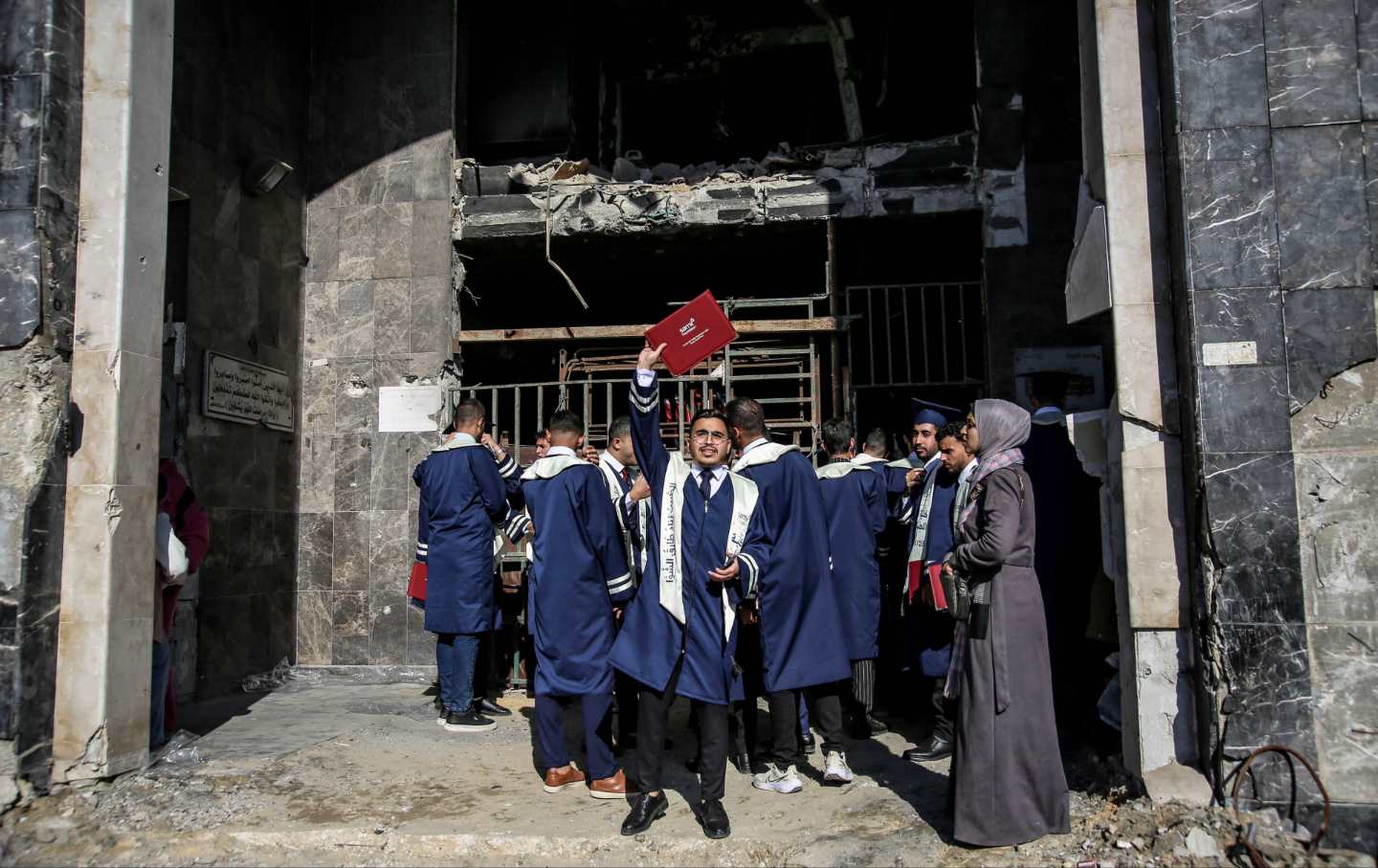
“I Refused to Let the Genocide Steal My Dreams” “I Refused to Let the Genocide Steal My Dreams”
For these medical students in Gaza, completing their studies was an act of defiance.
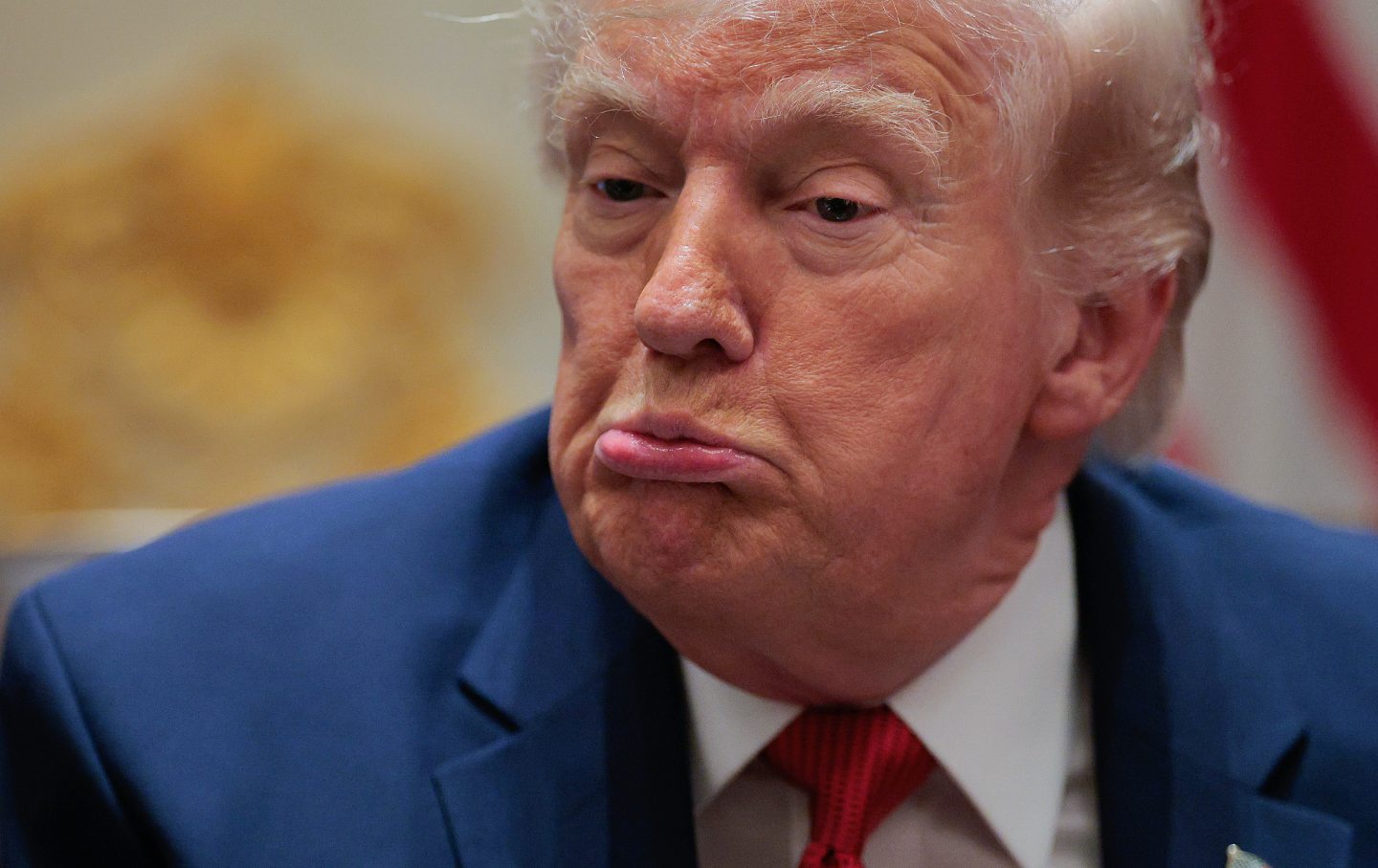
Donald Trump Is Losing the Iran War Donald Trump Is Losing the Iran War
Despite his constant declarations of victory, the truth about this conflict is clear.
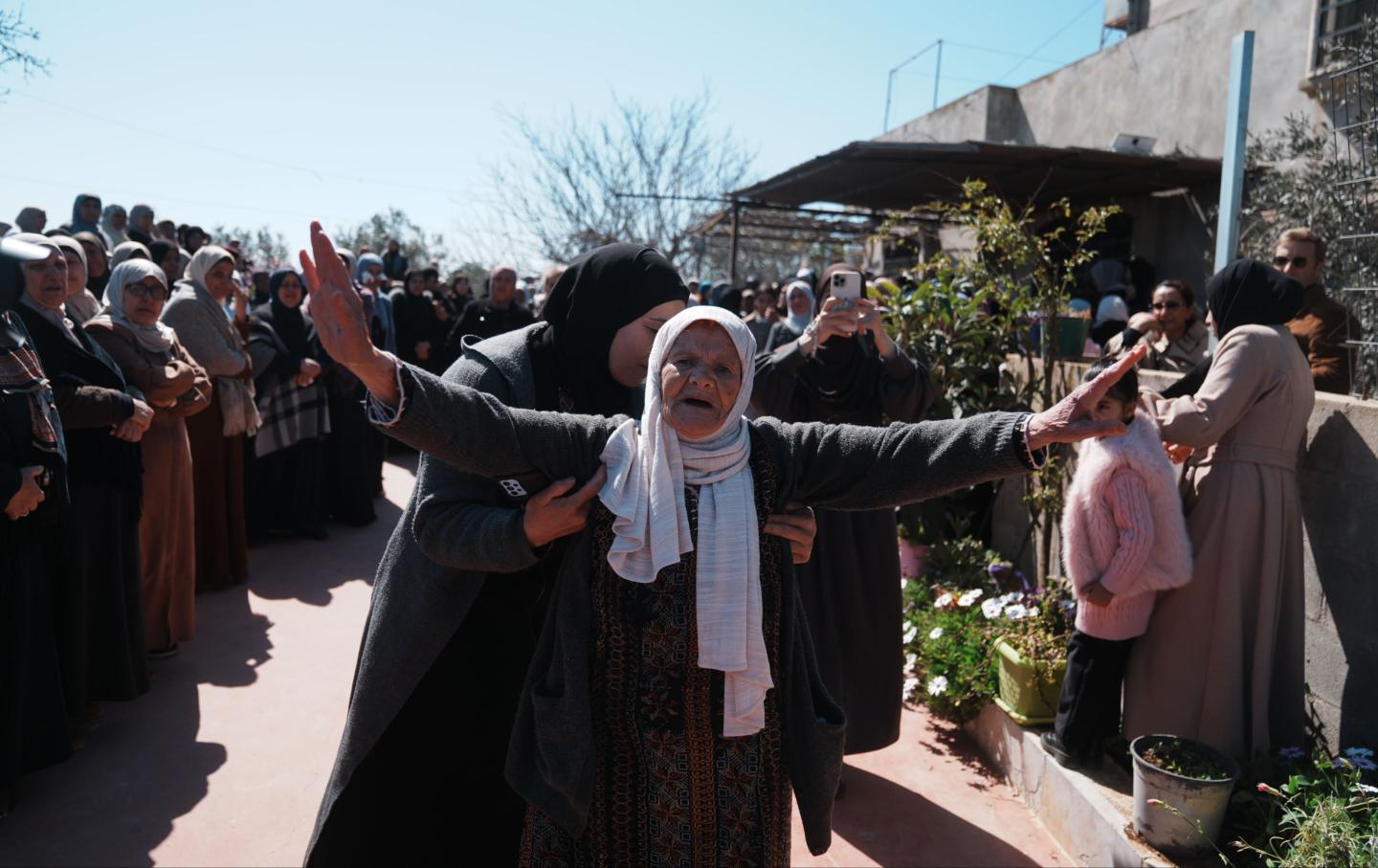
Israel Is Also Committing Genocide In the West Bank Israel Is Also Committing Genocide In the West Bank
It’s not just Gaza—Israel wants to exterminate all Palestinians, everywhere. We are one people being destroyed as one people.
How the War Has Led to the Largest Disruption of Energy Supplies in Decades How the War Has Led to the Largest Disruption of Energy Supplies in Decades
Unless a resolution is found, the impact is likely to grow.
“Erasing the Lines”: How Settlers Are Seizing New Regions of the West Bank “Erasing the Lines”: How Settlers Are Seizing New Regions of the West Bank
After decades consolidating their control over Area C, Israeli settlers are expanding into Areas B and A—nominally under Palestinian Authority jurisdiction—and displacing communit...
Feature / Oren Ziv with Ariel Caine
In Gaza, Eid Is an Act of Resistance In Gaza, Eid Is an Act of Resistance
This year, Eid was a declaration: We are here. We pray. We dress in our best. We love, even when the world tries to convince us that we have nothing to love or to live for.

