
What Made This Seder Different From Any Other Seder?
Answer: The presence of New York’s first Muslim mayor.
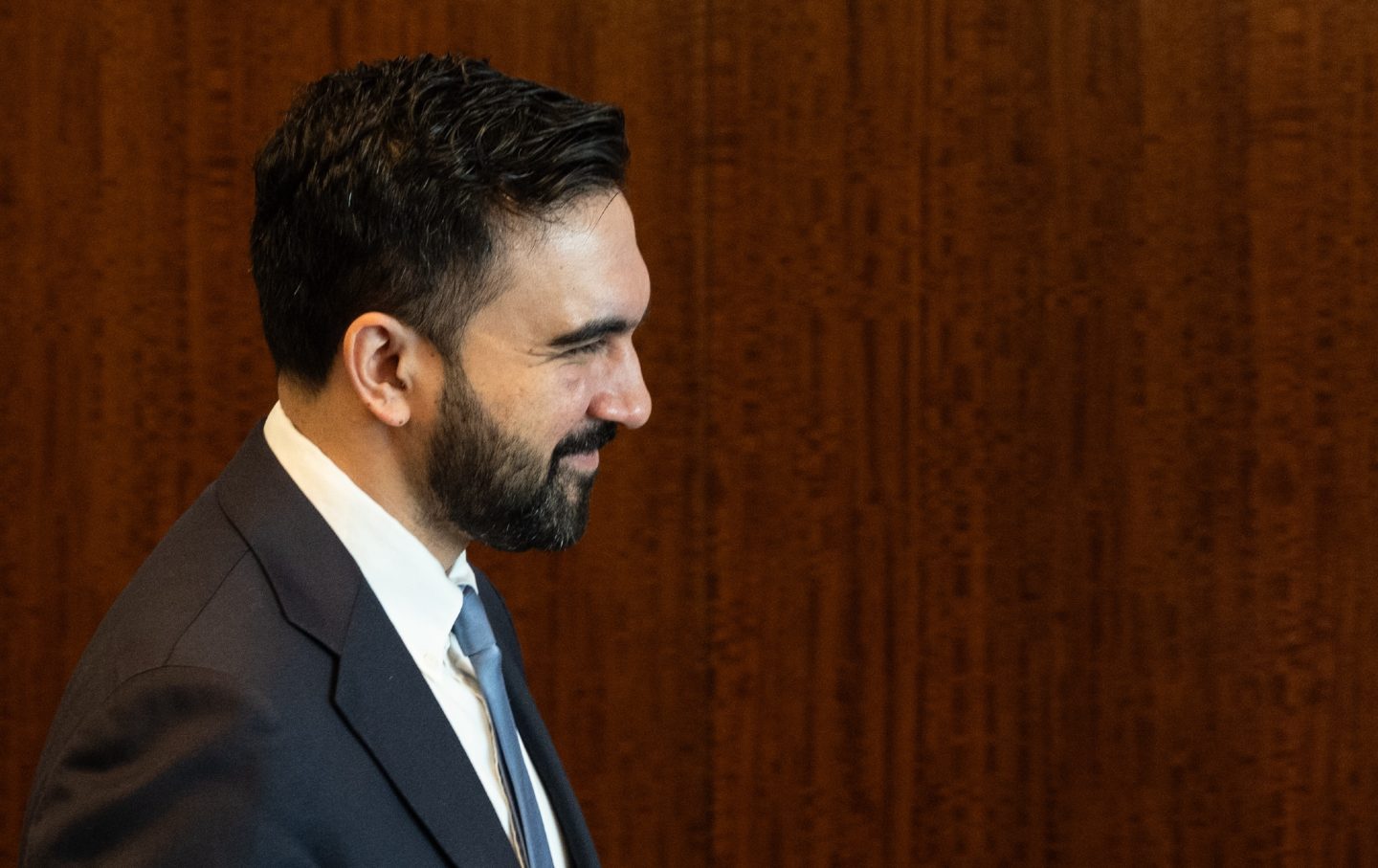
Zohran Mamdani on March 31, 2026.
(Lev Radin / Sipa USA via AP)One of the few genuine pleasures I can recall from the five years I attended three-day-a-week Hebrew school in Northeast Philadelphia was the model seders—child-friendly, radically slimmed-down versions of the annual Jewish celebration of our people’s deliverance from slavery and subsequent Exodus from Egypt. The food served during these events was lighter than my mother’s notoriously heavy cooking (even her matzoh balls were “sinkers”), while the presence of my school friends provided opportunities for horsing around undreamt of during the strict recitation of the entire Haggadah (in Hebrew) by my father and uncle.
Yet over time, the full-fat version of Passover I had once yearned to escape became my favorite Jewish holiday. Maybe it was my mother’s desserts—still not light, but very tasty—or the chance to hang out with my older cousins. Or our loud singing, both of traditional seder songs like “Dayenu” and “Chad Gadya” and also of the spiritual “Go Down Moses.” By the time we got invited to a model seder at Union Temple in Brooklyn, where my oldest son was in nursery school, I was happy to go.
But that was over 30 years ago, and although our family eventually developed its own set of rituals for the holiday—Sephardi lamb instead of Ashkenazi brisket, abridged versions of the Hebrew songs—and even our own Haggadah, I assumed my model seder days were in the past.
Until Monday, when I learned that Mayor Zohran Mamdani would be attending an adult version—a Downtown seder—at City Winery that evening and asked if I might come along. City Winery owner Michael Dorf, who has been a macher in New York’s arts scene since he founded the Knitting Factory in 1987, has been hosting these gatherings for over 30 years. The event was once described by The New York Times as “a cross between a Jewish summer camp in the Catskills and a progressive jazz concert.” Past incarnations have featured Laurie Anderson, Philip Glass, Lou Reed (cast as “the wise child” in the Hagaddah), and Peter Yarrow. The lineup this time included the indie rock trio Betty, David Broza, Jesse Malin, Meg Okura and Yola, economist and podcaster Stephen Dubner, and, in a video reprise of his in-person 2024 appearance, Al Franken singing “Go Down Moses.”
But it was the political performers who provided the draw for many of those present: Besides former CNN host Don Lemon (offering a riff on the Four Questions, which, as the 60-year-old YouTuber noted, is a task traditionally assigned to the youngest person present) and Mamdani, Council Speaker Julie Menin and former NYC Comptroller Brad Lander were also on the program.
Not everyone was thrilled to see the mayor. On the way to my seat, a woman, noticing the media badge around my neck, asked me which outlet I was from. When I told her, she asked if The Nation had supported Mamdani’s campaign, and when I confirmed we had endorsed him, responded, “So you’re one of those Jews who supports antisemites!” At least she had turned up; Mamdani’s mere presence was sufficient to prompt the Israeli-American Orthodox comedian Modi Rosenfeld, also listed on the program, to withdraw from the event. (I will leave it to more skilled Talmudists to explain how to square the Torah’s condemnation of gay sex with Modi’s life as a married gay man.)
In the event, the mayor’s drash on “the broken middle matzo, a physical reminder of the ruptures that have defined so much of Jewish history, a physical reminder of how much of our world today remains broken and incomplete,” was both respectful and timely.
Condemning “the rising tide of antisemitism [that] has caused enormous pain for so many Jewish New Yorkers,” Mamdani called on his audience to “build a city where every New Yorker is accorded the dignity of rest. Where even the poorest among us know their cup will be filled. And we all know that if they seek shelter, they will find it. If they are hungry, they will be fed.”
“There is a crack, a crack in everything,” he concluded. “But as Passover teaches, and as Leonard Cohen sings, ‘That is how the light gets in.’ Though things may be broken, so too do they become whole again.” Heckled even before he started speaking, Mamdani handled the interruptions deftly, quipping, “We know that if there was complete decorum anywhere that we were, we would have to ask ourselves if we had left the city that we love.” By the end of his remarks, Mamdani drew warm applause from the room.
At the time he spoke, the mayor and council speaker Menin were not yet in open warfare over the budget. Those hostilities didn’t break out until Wednesday, when the council released its own plan to balance the city’s finances—without either raising taxes on the wealthy or (the mayor’s threatened alternative) increasing property taxes.
“Any proposal that claims we can close this gap without significant new revenue is unrealistic,” Mamdani said in a statement, adding that the council proposal “would force the City to cut services.” He also tried to lean on one of his most potent weapons—his ability to create viral content—by releasing a scathing video denouncing Menin’s plan. That particular drama still has several months to run, but at least now we know the lines of battle.
In her remarks at the seder, the speaker allowed herself a brief victory lap celebrating the council’s recent passage, by a veto-proof 44–5 margin, of her bill to establish “buffer zones” around the city’s houses of worship—a bill the mayor has not supported, citing concerns over the right to protest. But that bill—originally submitted in response to protests outside Park East Synagogue in November—was just a small symptom of a larger fracture between Mamdani and even many of his supporters present on Monday night.
For decades, Jews on the left have applied a “Palestine exception” to our calls for social justice. As it happens, the most sophisticated rationale, both for the flattering claim that our history gives Jews a special role in liberation struggles, and for the belief that somehow the Palestinian cause is exempt from such demands, was articulated by the political philosopher Michael Walzer in his 1985 book Exodus and Revolution. Like many of the speakers on Monday, Walzer sought “to trace a continuous line from Exodus to the radical politics of our own time.”
But for anyone who actually reads the Bible, there are serious problems in deriving your politics from Exodus: not just the slaying of the Egyptian firstborn celebrated in the Passover story, but the divine injunction to exterminate all the indigenous inhabitants of the lands the Israelites go on to conquer.
Mamdani was too polite—or perhaps to politic—to puncture his audience’s comfortable illusions. Or even to mention the word “Palestine.” Which was probably the right call, since, as he has often said, his responsibility is to be the mayor of all New Yorkers, including some who will never be reconciled to his presence in office owing to his religion or his support for the Palestinian cause.
Popular
“swipe left below to view more authors”Swipe →So, on the evening of the very day the Israeli Knesset passed a law to hang Palestinians for killings classified as “acts of terrorism,” it was left to Brad Lander to reckon with the ghosts of Zionism. “Since October 7, I feel broken in ways in which it is very hard to imagine being put back together,” he said. Recalling the progressive Zionist values of his own upbringing, Lander said he “just can’t square that with Israel’s destruction of schools and hospitals” in Gaza. In his anguish, at last, could be heard the note of prophecy.
As for me, I went home and picked up Edward Said’s “Canaanite reading” of Exodus—a thoroughgoing demolition of Walzer’s moral evasions and philosophical pretension that remains bracingly relevant 40 years after its publication.
Said’s argument is worth reading in full—especially if you still harbor illusions about the future of “liberal Zionism,” or view the Jews as mere interlopers in the Middle East. But if I had to pick out one line, it would be this: “Exodus may be a tragic book in that it teaches that you cannot both ‘belong’ and concern yourself with Canaanites who do not belong.”
A tragic book, indeed. By the time you read this I will be on my way to my son’s house outside Philadelphia, where we will tell the story of slavery and redemption, break matzoh, sip wine, and sing Dayenu—along with “Go Down Moses.” I’m told the mayor will also be holding an actual seder for his staff this week. For all of those who celebrate with us, I wish you a zissen pesach. And for all of us, since we are allowed to dream, peace and justice in our lifetimes.
Become a Sustaining Donor This September
Between the reemergence of right-wing red-baiting and Donald Trump’s use of the chilling National Security Presidential Memorandum–7 to criminalize left political organizing, we’re seeing McCarthyism reborn before our eyes.
This assault on democracy cannot be ignored or wished away. Resisting it requires bravery in the face of threats and repression, a steadfast commitment to the truth, and the unwavering belief that we can—and will—overcome this darkness.
We must have an independent media that sets the record straight, unearths corruption and abuses of power, and advances a politics of justice and dignity for all if we’re to win this fight.
That’s why I’m writing to you today. This September, The Nation needs to add 100 monthly donors to sustain our progressive journalism. Your contribution makes the next investigative report, the next truth-speaking column, and the next pathbreaking essay all possible.
I hope you’ll support our work with a recurring donation today. If you donate $10 or more a month, we’ll send you a brand new “Hands Off the Free Press!” sticker to recognise your commitment to our cause. Please, donate today.
Onward,
Katrina vanden Heuvel
Editor and Publisher, The Nation
More from The Nation
Clavicular’s Charges Are One Thing. Rape Culture Is Another. Clavicular’s Charges Are One Thing. Rape Culture Is Another.
Braden Peters consistently acts as though the autonomy of women is a maladaptive trait, and dogmatically dismisses any claim to female equality as an outlying aberration.

Kimberly Guilfoyle Is a Master of Mafia Diplomacy Kimberly Guilfoyle Is a Master of Mafia Diplomacy
The US Ambassador to Greece is making suspicious deals for her buddies.
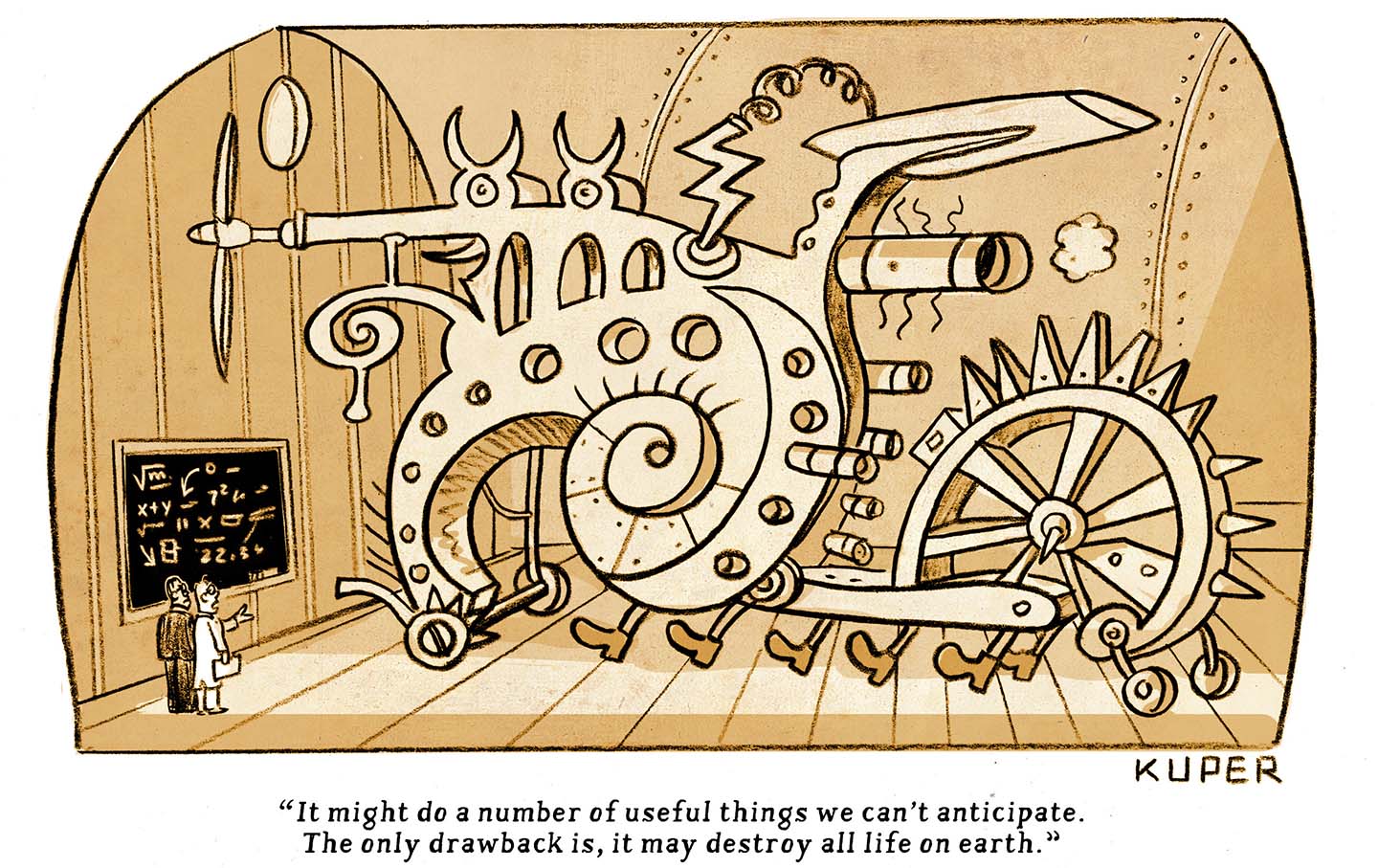
Missing Guardrails for AI Missing Guardrails for AI
Trump ignores the threat of extinction.
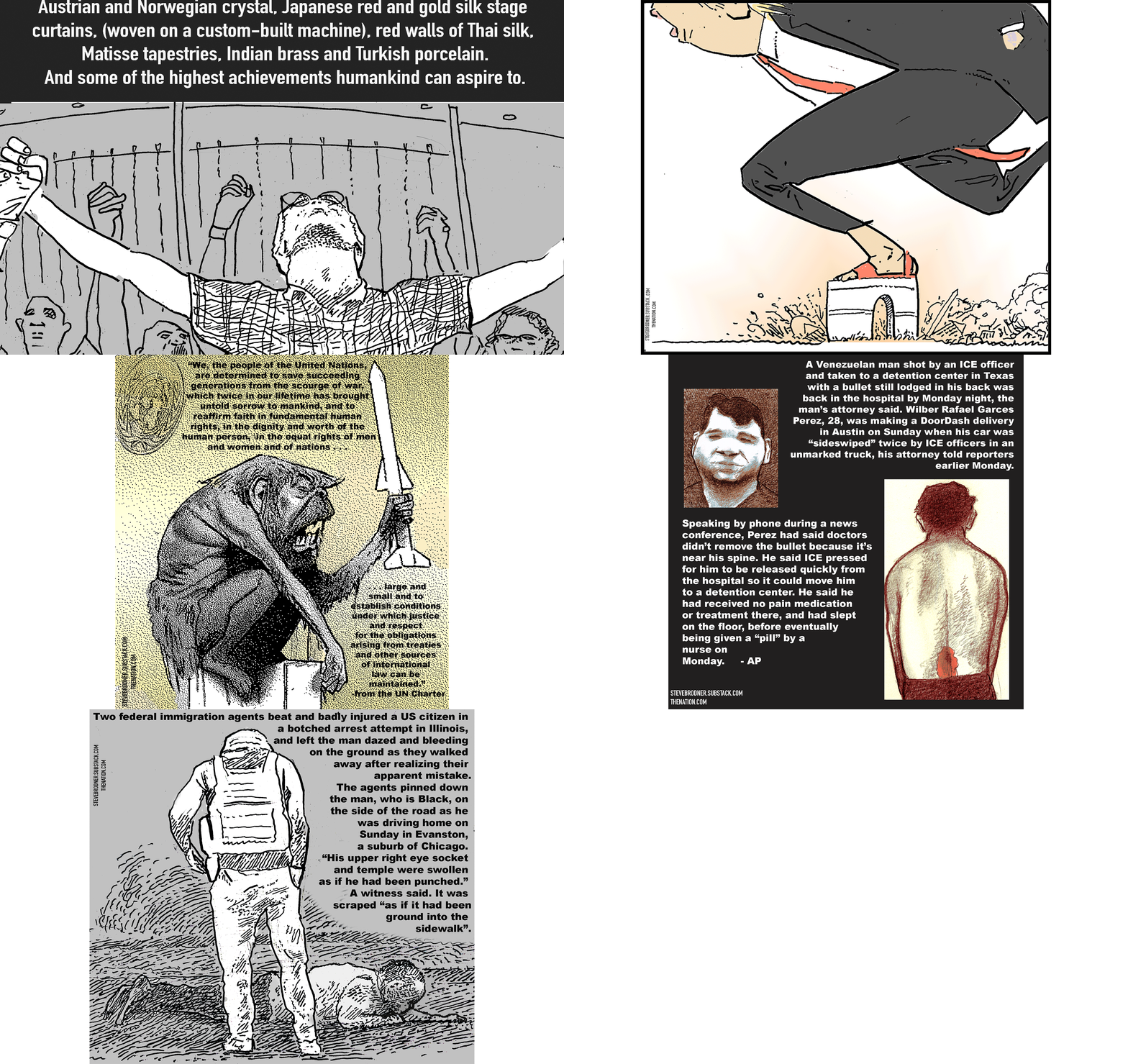

The First Amendment Lives for Another News Cycle—Maybe The First Amendment Lives for Another News Cycle—Maybe
In this week’s Elie v. U.S., our justice correspondent parses Trump’s attacks on CNN, MS NOW, and Politico. Plus: it’s time to impeach the judges!
Susan Collins Is Corrupt. She Still Might Be Reelected. Susan Collins Is Corrupt. She Still Might Be Reelected.
Despite being embroiled in scandal, the Maine senator is benefiting from Democratic Party divisions.

