
How the War Has Led to the Largest Disruption of Energy Supplies in Decades
Unless a resolution is found, the impact is likely to grow.
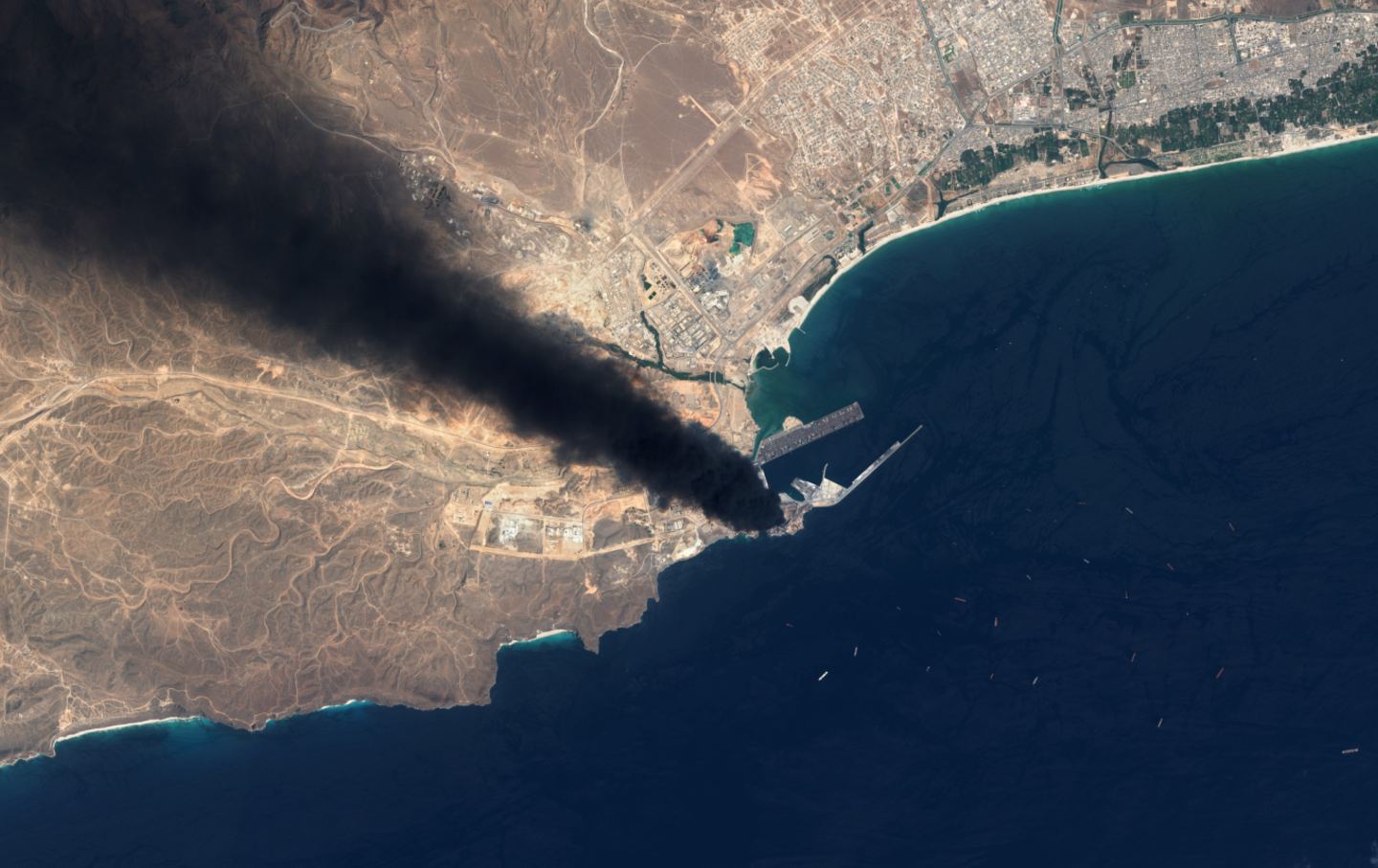
The war that Israel and the United States launched in the Persian Gulf has already led to what some analysts say is the largest disruption of energy supplies in decades. Unless a resolution is found, the impact is likely to grow. “We’re already in a very serious scenario, but there is still scope for it to get worse,” said Richard Bronze, head of geopolitics at Energy Aspects, a London-based market research firm.
While the United States and Israeli militaries have pulled off startling assassinations of Iranian leaders and smashed up a lot of weaponry, Iran has managed to score points of its own. “Iran has figured out where our pain point is,” said Sam Mundy, a retired US Marine lieutenant general, during a webinar held by the Middle East Institute, a Washington-based research group.
In what may have been in part an effort to soothe roiled markets, President Trump on Monday said in a social media message that the United States and Iran had held “very good and productive conversations regarding a complete and total resolution” of the conflict.
Brent crude had spiked to around $114 a barrel on Monday after President Trump’s weekend threats to strike Iran’s electric power plants unless Iran opened the Strait of Hormuz. Trump said Monday that he would postpone those attacks for five days to allow for negotiations.
Iranian officials denied that talks had taken place. On social media,, Mohammad B. Ghalibaf, Iran’s speaker of parliament, dismissed Trump’s account as an effort to “manipulate the financial and oil markets.”
The Strait, a narrow egress from the Persian Gulf, is the main pressure point mentioned by General Mundy. Threats to shipping backed up by actual attacks have reduced flows of tankers through the Strait, normally about 20 percent of global oil consumption, to a trickle of ships, mostly of Tehran’s choosing.
The removal of so much oil has sharply altered the mood in the market, turning expectations of a glut into fears of shortage. On Monday, Brent crude, the international benchmark, was trading at about $102 a barrel, up about 40 percent since the war began.
Other oil types and products like jet fuel are going for much higher prices, especially in Asia, the main destination of oil from the Gulf. Crude from Oman, which is outside the entrance to the Gulf, was selling for $185 a barrel on Monday “as refiners in Asia panic-bought to meet demand,” wrote Henning Gloystein, director for energy at Eurasia Group, a political risk firm.
Energy prices are surging for Americans as well. The average price of regular unleaded gasoline in the United States has risen by almost $1 to $3.93 a gallon compared to February, according to GasBuddy, a consumer website.
The high prices for oil and natural gas are already feeding into expectations of higher inflation, as shown by the rise in interest rates on government bond yields in countries like Britain and the United States.
The war seemed to be threatening to enter a dangerous new phase when Israel on March 18 struck processing facilities of Iran’s giant South Pars natural gas field, which supplies much of the country’s energy needs. Iran hit back by launching missiles at Ras Laffan, an area of the emirate of Qatar, hitting gas processing installations part-owned by energy giants Shell and Exxon Mobil. Saad Sherida Al-Kaabi, Qatar’s minister of state for energy, said in a statement on Friday that the damage would require three to five years to repair and would cost the country $20 billion a year.
Iran’s warning to the nearby Arab states like Qatar, the United Arab Emirates, and Saudi Arabia that are closely allied with the United States is hard to miss. Not only will Iran try to target the oil and gas developments that have made these countries wealthy, but continued war risks blighting the futures they aspire to as financial and artificial intelligence hubs.
Popular
“swipe left below to view more authors”Swipe →The war is not only damaging infrastructure and curbing exports but threatens to make these countries less attractive to the bankers and information technology professionals they likely need to fulfil their ambitions. The war could “damage the ability to attract the creative classes,” said Mehran Kamrava, a professor of government at Georgetown University’s Doha, Qatar campus.
“These are states whose developmental ambitions by far outweigh their demographic realities,” he added.
More from The Nation

Japan’s Far Right Is Courting Young Voters Japan’s Far Right Is Courting Young Voters
Sanseitō has attracted young voters through a robust social-media strategy, Charlie Kirk–like public speaking events, and anti-establishment messaging.
This AI Panic Is Nothing New This AI Panic Is Nothing New
In the 1940s, The Nation asked questions about the atomic bomb we’re asking of artificial intelligence today.

The Decades-Old Roots of Trump’s War on Iran The Decades-Old Roots of Trump’s War on Iran
An interview with historian Behrooz Ghamari-Tabrizi about the generations of US presidents who have tried to destroy the Iranian regime.

Emmanuel Macron’s Turbulent Exit Emmanuel Macron’s Turbulent Exit
Between a budget crisis and a cost-of-living squeeze, Macron is leaving a country feeling more insecure than ever—and ready to take to the streets.
Israel’s Election Can’t Fix What Netanyahu Broke Israel’s Election Can’t Fix What Netanyahu Broke
The fundamental problem is not the name of the prime minister, but rather the actions of the Israeli government and the urgent issues that need to be addressed.

The AfD’s Rise Isn’t Just About East Germany The AfD’s Rise Isn’t Just About East Germany
The Alternative für Deutschland has a stable national poll lead, including in the former West Germany. Its rise owes to much more than Eastern grievances.

