
After Texas’s DEI Ban, College Students Are Reconsidering State Schools
In June, Governor Greg Abbott signed a law banning diversity, equity, and inclusion programs in the state university system—including multicultural centers and campus identity groups.

A student student sits in a lecture hall while class is being dismissed at the University of Texas at Austin.
(Brandon Bell / Getty)In 2023, the Texas Legislature proposed SB 16, banning the teaching of critical race theory at Texas universities. Among the right, CRT has become a scapegoat, with legislators railing against public schools’ teaching the history and legacy of racial injustice in the United States.
Now, Texas politicians have gone even further, targeting diversity, equity, and inclusion (DEI) programs in state colleges.
SB 17, which went into effect January 1, has been a ticking time bomb since it was signed by Governor Greg Abbott in June. The bill bans DEI and its programs, clubs, and organizations within the University of Texas college system, the largest university system in the state with more than 250,000 enrolled students and 21,000 faculty.
During the months-long transition period, UT schools had to close down multicultural centers and realign their practices to comply with SB 17, remove specialized inclusion programs, and defund campus identity groups. Two months after the law went into effect, prospective students are reconsidering what these universities can do for them.
In an e-mail to students on January 23, the director of the Multicultural Engagement Center, Brandelyn Flunder, said that “our doors remain open (for now at least), our programs do not.” The e-mail also shared the loss of several special campus activities like New Black Student Weekend, Adelante, CultivAsian, and graduation ceremonies for Black, Latinx, and Asian students.
“The MEC, an office where many students of color would go to meet with friends, study, talk to their advisers, and where many of the organizations that garnered safe spaces for students of color would meet and stash their things is now closed,” said Katherine Ospina, a senior at the university studying International Relations, and the director of Latinx Community Affairs. “This was the one place I would go to get work done every day, and there was a collective sentiment of relaxation past those doors. My experience at UT has changed drastically as a result of this bill.”
“It seems as though we are taking a step back in reforming an ideal, equitable society,” says Samantha Alvarez, a freshman at UT Austin studying Public Relations. “Coming from a family of immigrants, knowing UT eliminated a scholarship program for undocumented students is both frustrating and saddening.”
In a joint statement on February 2, five community organizations at UT Austin shared how shutting down the engagement center was “part of a larger pattern of over-compliance of SB 17 at the hands of UT Administration.” According to the statement, the center, which was originally supposed to remain open and to restructure, was “wrongfully” shut down.
“These acts push the idea that our spaces are invalid, that our communities are illegal, and that the people in these organizations exclude anyone,” says Xochimilo Vazquez, a junior at UT studying psychology and government and the community engagement chair of the Native American & Indigenous Collective. “This also endangers my friends, family, and peers. Why should I have to take into consideration my safety when applying to a higher academic institution that boasts about being an intellectually pioneering institution? What intellectually pioneering institution ever led with racism?”
Following the bill’s passage, these organizations were informed that they would no longer be allowed to continue operating as sponsored student organizations. Former UT clubs, which were once reliant on annual funding from the university, have started seeking donations to continue operating.
At UT Dallas, one of the largest UT schools, the bill eliminated the Office of Diversity Equity, and Inclusion and created a new Office of Campus Resources and Support. The ODRS “is entirely separate and will lead activities that are SB 17 compliant,” according to their website. “As a new entity, the entire scope of OCRS is still being determined.”
“These clubs provided a sense of community where I could connect with others who shared similar experiences and cultural backgrounds,” says Sahil Lalani, a freshman studying business administration. “The closure of these vital spaces would have influenced my decision-making when considering Texas colleges.”
“I would not have worked in admissions if the metrics in place were the same two years back,” says Ospina, who also works as a student recruiter. In high school, she says, she would have been reluctant to apply to the university if these bills had been passed. “The idea of staying here postgraduation is extremely narrow.”
For current high school seniors in the state who are considering attending colleges within the UT system, this legislation has clouded their decisions. “I anticipate SB17 definitely affecting the decisions some students make regarding post–secondary education options, especially POC university enrollment in the state, specifically those who seek a more inclusive environment to attain their education,” said Nancy Sutherland, a high school counselor in Texas.
Popular
“swipe left below to view more authors”Swipe →“Eliminating DEI offices as a whole strips away many potential students’ motivation to attend higher education,” says Haala Tariq, a high school senior in Houston. “One of my goals was to explore the cross-sections between marginalized communities and the conventional healthcare system. Senate Bill 17 will make it harder for the university to receive research funding from organizations that consider commitments to diversity when awarding grants.”
“The elimination of DEI on college campuses may lead to less cultural awareness and political participation as well as a decline in resources for people of different backgrounds,” said Sutherland. “Without DEI resources, this could potentially result in a decline in student success, and ability to perform in a global environment, particularly for minority populations.”
“I wanted to send my child and my nephews to the University of Texas, but now I don’t know,” says Dr. LaShawn Washington, who got her master’s and bachelor’s degrees at UT Austin and worked at the Division of Diversity and Community Engagement as a student. “SB 17 is based on the argument that DEI doesn’t work, but a lot of these people are white conservatives, or it is conservative political think tanks making arguments about something that wasn’t made to serve them,” said Washington.
“I fear Texas has taken a big step away from the celebration of equality,” says Alyssa Perez, a high school senior who was recently accepted into UT Austin and UT El Paso. “And I fear what other freedoms they can take away.”
While Perez is choosing to attend a school in-state because of financial constraints, other high school seniors are willing to take the hit economically for a more fulfilling college experience outside of Texas. “I feel unsafe with our political climate, so much so that I’ve essentially resigned myself to debt and student loan stress,” says Greg Rico, a transgender high school senior from Texas. “I applied to two Texas public schools, but I don’t plan on attending either of them.”
More from The Nation

The Endless Hypocrisy of Bari Weiss The Endless Hypocrisy of Bari Weiss
She claims to be a free speech champion. But as her actions at CBS News keep showing, she seems to think free speech should run only in a rightward direction.
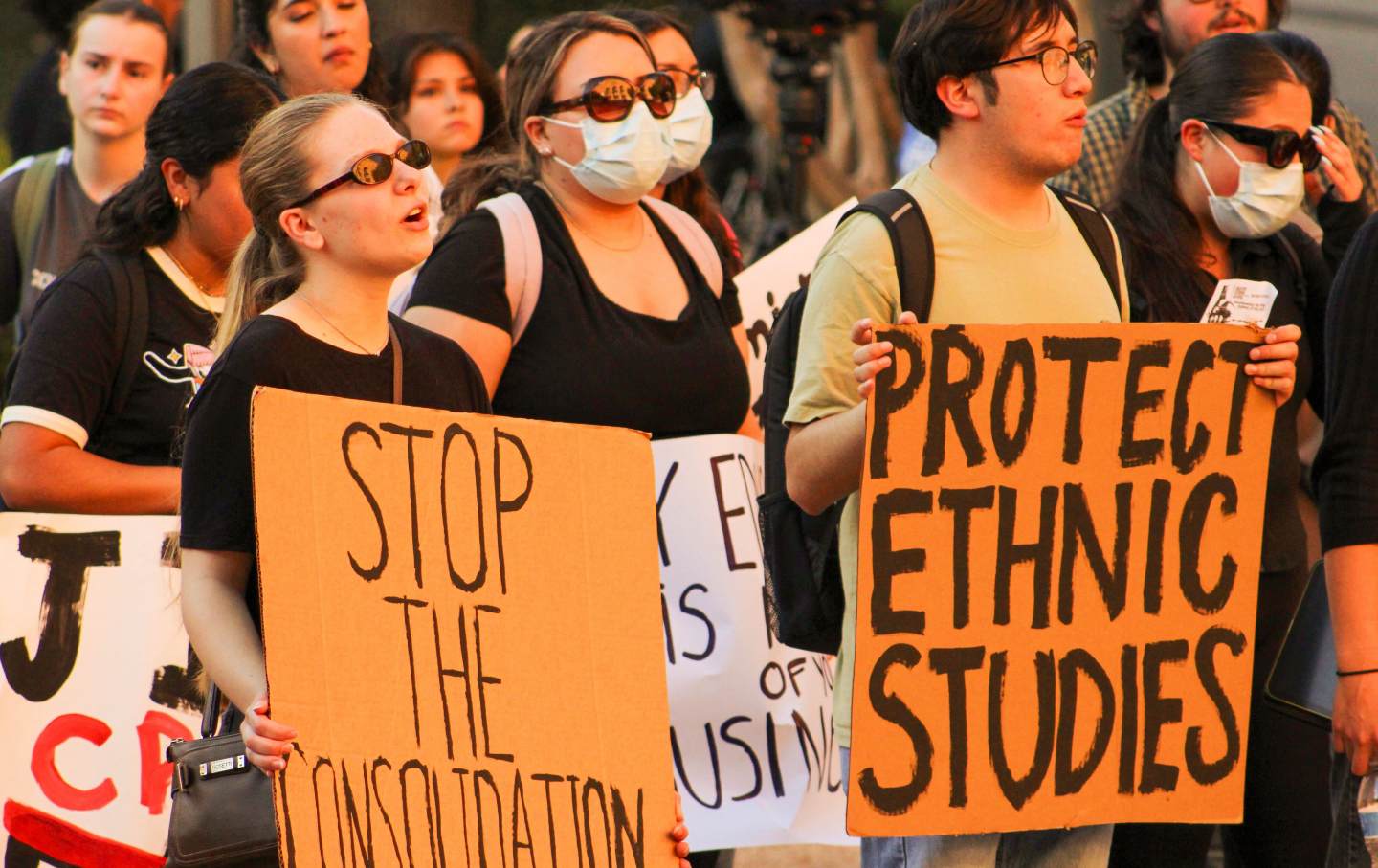
What Will Be Left After the University of Texas Destroys Itself? What Will Be Left After the University of Texas Destroys Itself?
UT-Austin has collapsed its race, ethnic, and gender studies into a single program while a new policy asks faculty to avoid “controversial” topics. But the attacks won’t end there...

The Corporate Media Is Head Over Heels for the Iran War The Corporate Media Is Head Over Heels for the Iran War
Donald Trump’s attack may be surreal, unjustified, and illegal. But that’s not stopping the press from turning the propaganda dial way up.

The Disturbing History of ICE’s “Death Cards” The Disturbing History of ICE’s “Death Cards”
The Vietnam-era practice is yet another example of ICE agents thrilling to the brutality they have been encouraged to cultivate.

The Red State–Blue State Healthcare Divide Is Dangerous for Everyone The Red State–Blue State Healthcare Divide Is Dangerous for Everyone
Whether or not you have access to independent, scientifically sound public health guidance may depend on how your state voted for governor.

The American Universities Programming Israel’s Killer Drones The American Universities Programming Israel’s Killer Drones
Industry partnerships in higher education are pushing STEM graduates into the business of weapons manufacturing and genocide profiteering.

