
This Is an Unnecessary, Unauthorized, and Unconstitutional War
Congress has a duty to take up War Powers resolutions and assert its primacy over matters of war and peace.
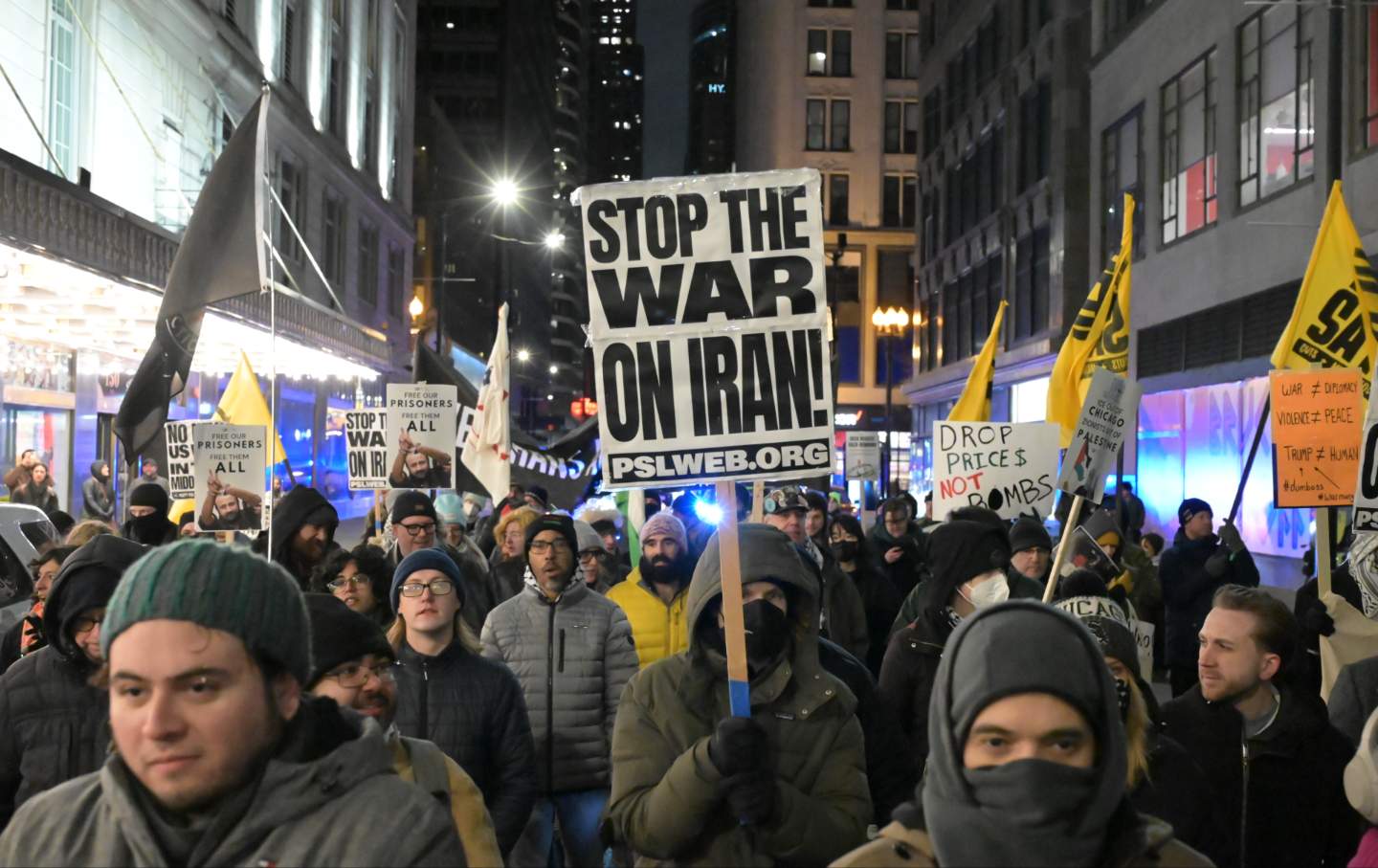
Protesters gather at Federal Plaza on February 28, 2026, in Chicago, Illinois, to demonstrate against the joint US and Israeli military operation in Iran.
(Jacek Boczarski / Anadolu via Getty Images)On Saturday morning, after President Trump launched an unnecessary, unauthorized, and unconstitutional attack on Iran, US Representatives Ro Khanna and Thomas Massie did their jobs as members of Congress.
The California Democrat and the Kentucky Republican had already cosponsored a War Powers Act resolution in hopes of thwarting a rush to war with Iran. Now the war was on. Bombs were dropping, missiles flying, and people dying. So the bipartisan team demanded that Congress step up. Khanna immediately announced, “Trump has launched an illegal regime change war in Iran with American lives at risk. Congress must convene on Monday to vote on US Rep. Thomas Massie[’s] & my [War Powers Resolution] to stop this.”
Seeking to force a congressional debate about the war—as Khanna and Massie are doing in the House, and as Tim Kaine (D-VA) has proposed in the Senate—is a vital first step in pushing back against Trump.
It won’t be easy. Despite a notable level of congressional opposition to Trump’s new war, efforts to establish even the most basic counterbalances to presidential war making will face overwhelming odds. House Speaker Mike Johnson, the Louisiana Republican who serves as Trump’s enforcer in the chamber, will do everything in his power to thwart any meaningful effort to renew the constitutionally mandated role of Congress as the arbiter of matters of war and peace. The same goes for the president.
Yet that does not change the fact that Khanna, Massie, and Kaine are doing their constitutional duty.
Like all members of the House, Khanna and Massie took office only after swearing oaths to “support and defend the Constitution of the United States against all enemies, foreign and domestic.” By reasserting the role of Congress as a check and balance on presidential war making, they are honoring that oath.
The question at this point is whether a sufficient number of House members, and their Senate colleagues, will join them and use their authority under the Constitution to object to Trump’s open-ended attack before it metastasizes into a broader war that could engulf the Middle East.
Even as apologists for executive overreach in general—and this president in particular—spin their self-serving arguments regarding war powers, the constitutional primacy of Congress when it comes to war and peace is not up for debate. Article I, Section 8, Clause 11 of the US Constitution plainly reads, “The Congress shall have Power…to declare War.”
No mention is made of the president in that essential statement by the initiators of the American experiment. And in case you need even more evidence that this is what the drafters of the Constitution intended, just look at the notes from the 1787 Constitutional Convention in Philadelphia.
Roger Sherman, a delegate from Connecticut, moved to establish that nothing in their exposition of the powers of the executive branch of the federal government they were establishing should be conceived as authorizing the president to “make war.”
“The executive should be able to repel and not to commence war,” explained Sherman. The resolution was resoundingly approved by the convention.
Pennsylvania delegate James Wilson confirmed that assessment, explaining, “This system will not hurry us into war; it is calculated to guard against it. It will not be in the power of a single man, or a single body of men, to involve us in such distress.”
That should have settled it: An executive might assume the mantle of commander in chief, but only to defend the country; never to wage a kingly war of whim—as Trump has done in Iran.
But what of the War Powers Act of 1973? Tortured readings of the act by successive Democratic and Republican administrations have tried to suggest that the measure gives presidents flexibility with regard to war-making. But that flexibility is explicitly limited. According to an assessment of the act by the Congressional Research Service, “the powers of the President as Commander in Chief to introduce US Armed Forces into hostilities are limited, ‘exercised only pursuant to’ a declaration of war or other specific statutory authorization from Congress, or a ‘national emergency created by attack on’ the United States or its Armed Forces.”
It’s stating the obvious to say that Trump’s war on Iran does not meet these criteria. When announcing the attack, Trump claimed, “Our objective is to defend the American people by eliminating imminent threats from the Iranian regime, a vicious group of very hard, terrible people.” But instead of discussing “imminent threats,” he recalled complaints that were, in some cases, decades old.
As CNN explained, “The US and Israel launched this attack without obvious provocation.” Even after the assassination of Iranian Supreme Leader Ayatollah Ali Khamenei was confirmed on Saturday, the president was still struggling to articulate a mission statement.
So where does that leave us? When asked by Time magazine to explain whether Trump’s strikes on Iran were legally justified, David Janovsky, of the Constitution Project at the Project on Government Oversight, answered,
Popular
“swipe left below to view more authors”Swipe →The short answer is no. There’s no indication that there’s any sort of circumstance that would give the President the unilateral authority to order military action. It’s true that presidents have some inherent authority to deploy the military as Commander in Chief, but that’s really limited to true emergency circumstances where there is an attack underway that needs to be repelled, or maybe an extremely clear imminent attack. But there’s no suggestion that that’s the case today—that would make the strikes illegal.
Bottom line: This is an illegitimate and illegal war in which Iranian civilians—many of them schoolchildren—and US troops have already been killed, and in which more deaths are tragically predictable.
“There’s nothing in the Constitution that authorizes the president to do this,” Massie says of Trump’s war. “If we’re going to put lives at risk, we need to say what the boundaries are for the engagement and what success looks like so that they can come home when it’s over, when we’ve reached our objectives.”
That is the sworn duty of Congress.
Speaker Johnson may refuse to recognize that fact. So, too, may Senate majority leader John Thune (R-SD).
But Massie is right when he says, “This is not our war. Even if it were, Congress must decide such matters according to our Constitution.”
More from The Nation

What Are Democrats Prepared to Do if Trump Rigs the Election? What Are Democrats Prepared to Do if Trump Rigs the Election?
In this week’s Elie v. U.S, our justice correspondent challenges Democrats' lack of a plan if Trump steals the midterms. Plus: the most racist, and honest, AI add ever.
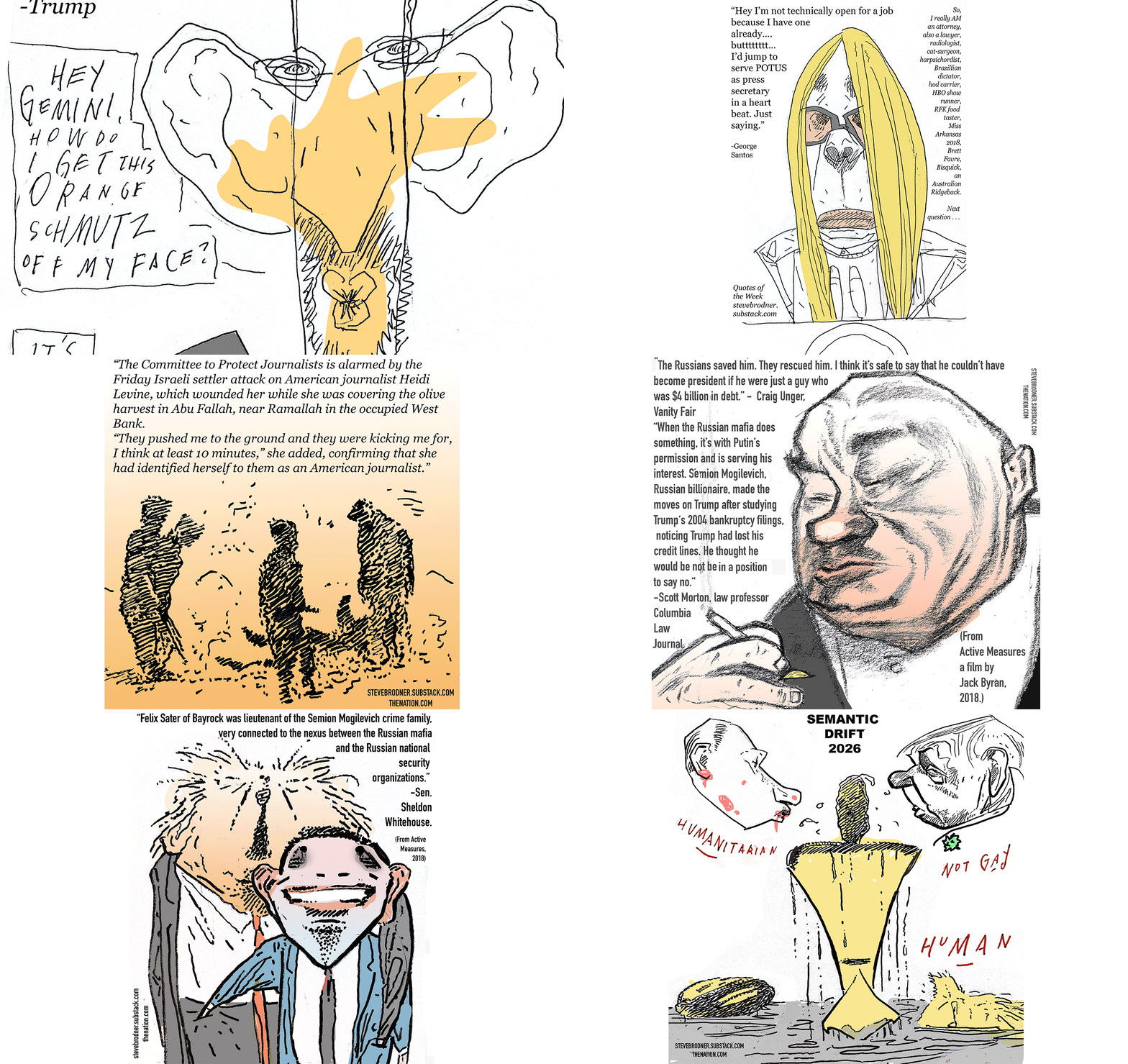
Ramaswamy’s Guide to a Better Vocabulary Ramaswamy’s Guide to a Better Vocabulary
Quotes of the Week.
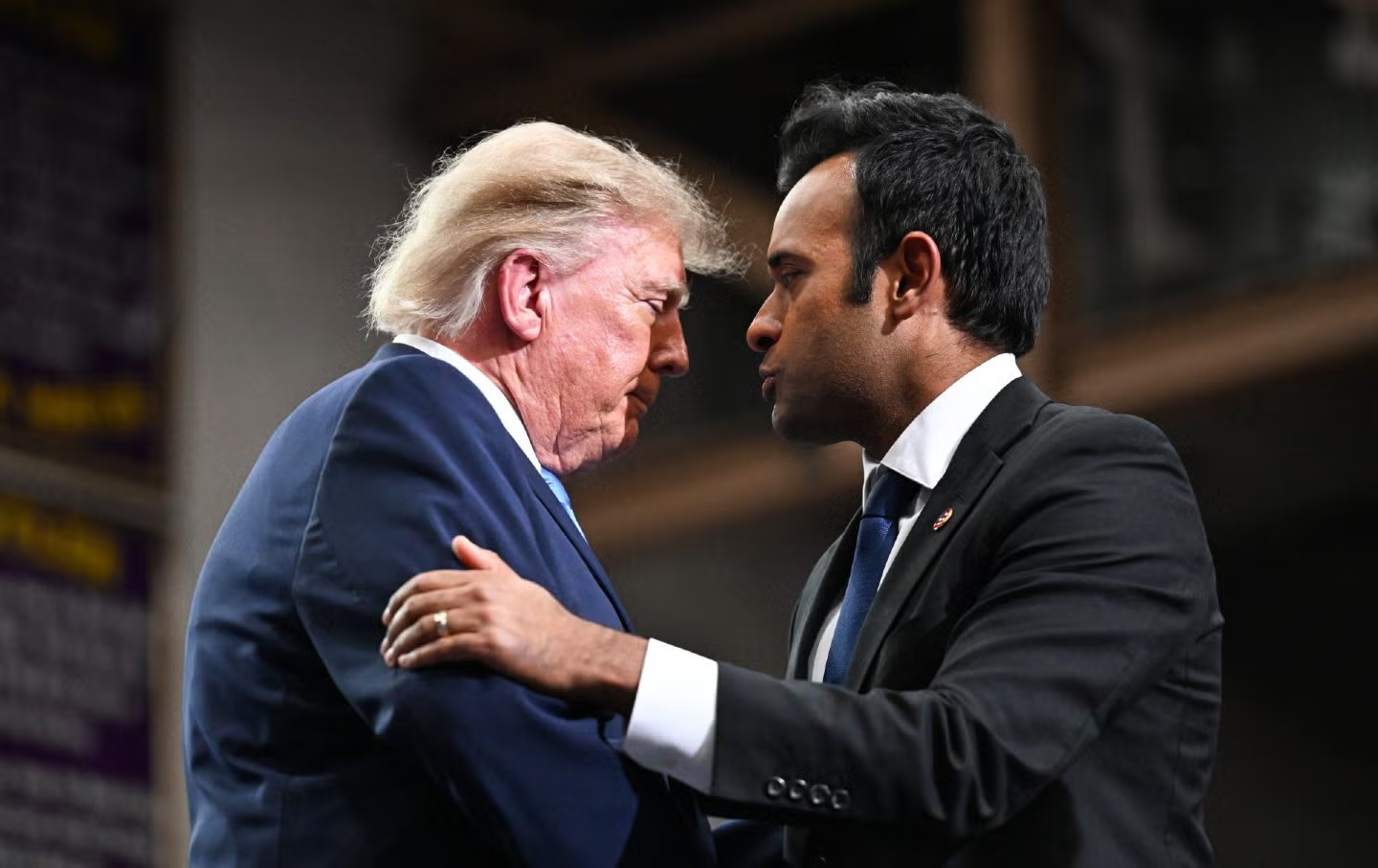
Why Trump Is Embracing Vivek Ramaswamy’s Vile Ad Why Trump Is Embracing Vivek Ramaswamy’s Vile Ad
The president is leaning into the politics of toxic parenting.
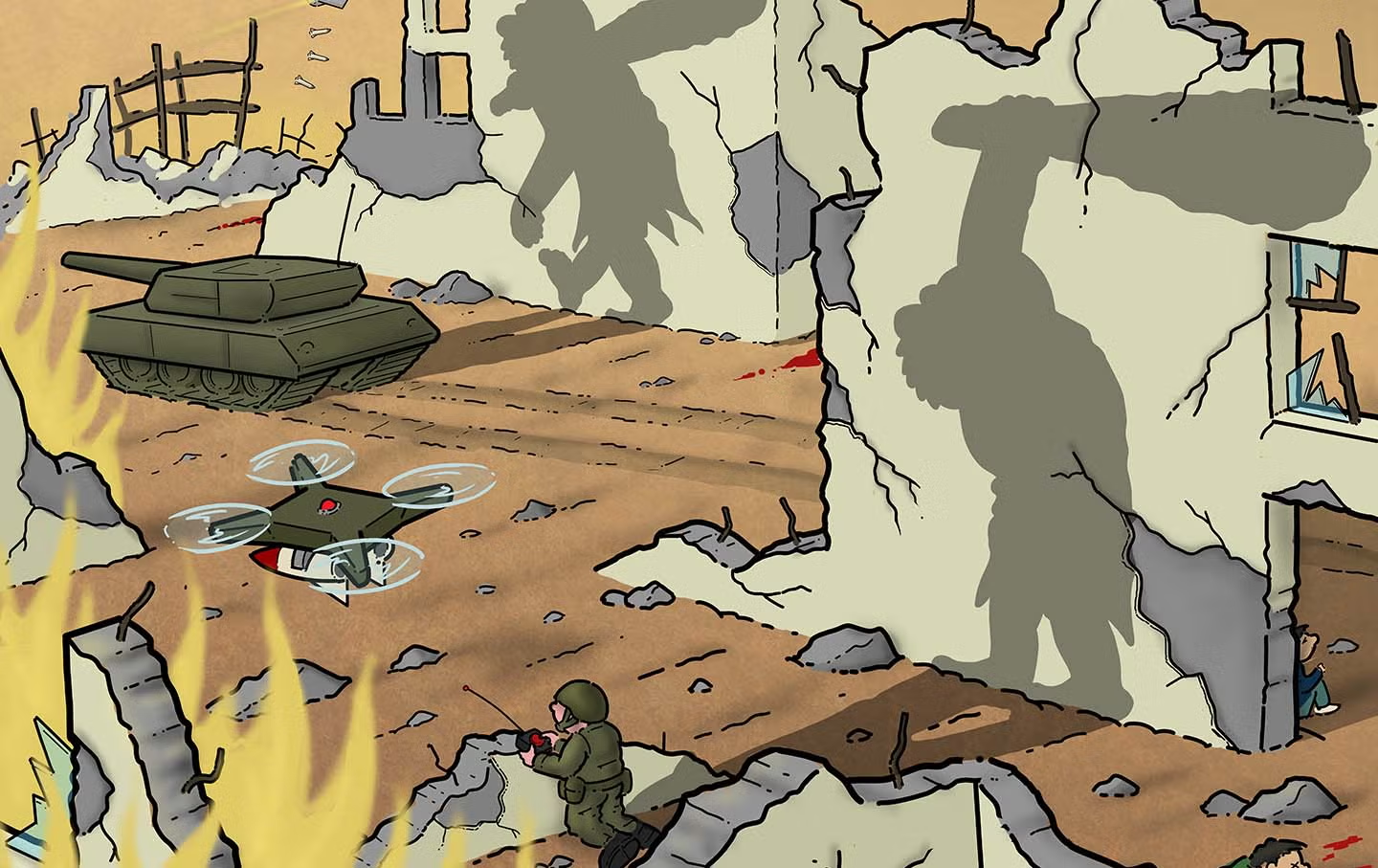
The Shadow Knows The Shadow Knows
High-tech weapons, low-tech intelligence.

Tom Hayden’s Legacy and the New American Left Tom Hayden’s Legacy and the New American Left
It’s been 10 years since he passed away.
The Decades-Long Battle Within the Democratic Party Establishment Between the Heirs of Dean Acheson and Franklin Roosevelt The Decades-Long Battle Within the Democratic Party Establishment Between the Heirs of Dean Acheson and Franklin Roosevelt
The calamitous history of America’s wars of choice.

