The UAW Has Won a Historic Victory. So What Comes Next?
The union’s triumph was a huge step forward in the quest to build a bigger and bolder labor movement.
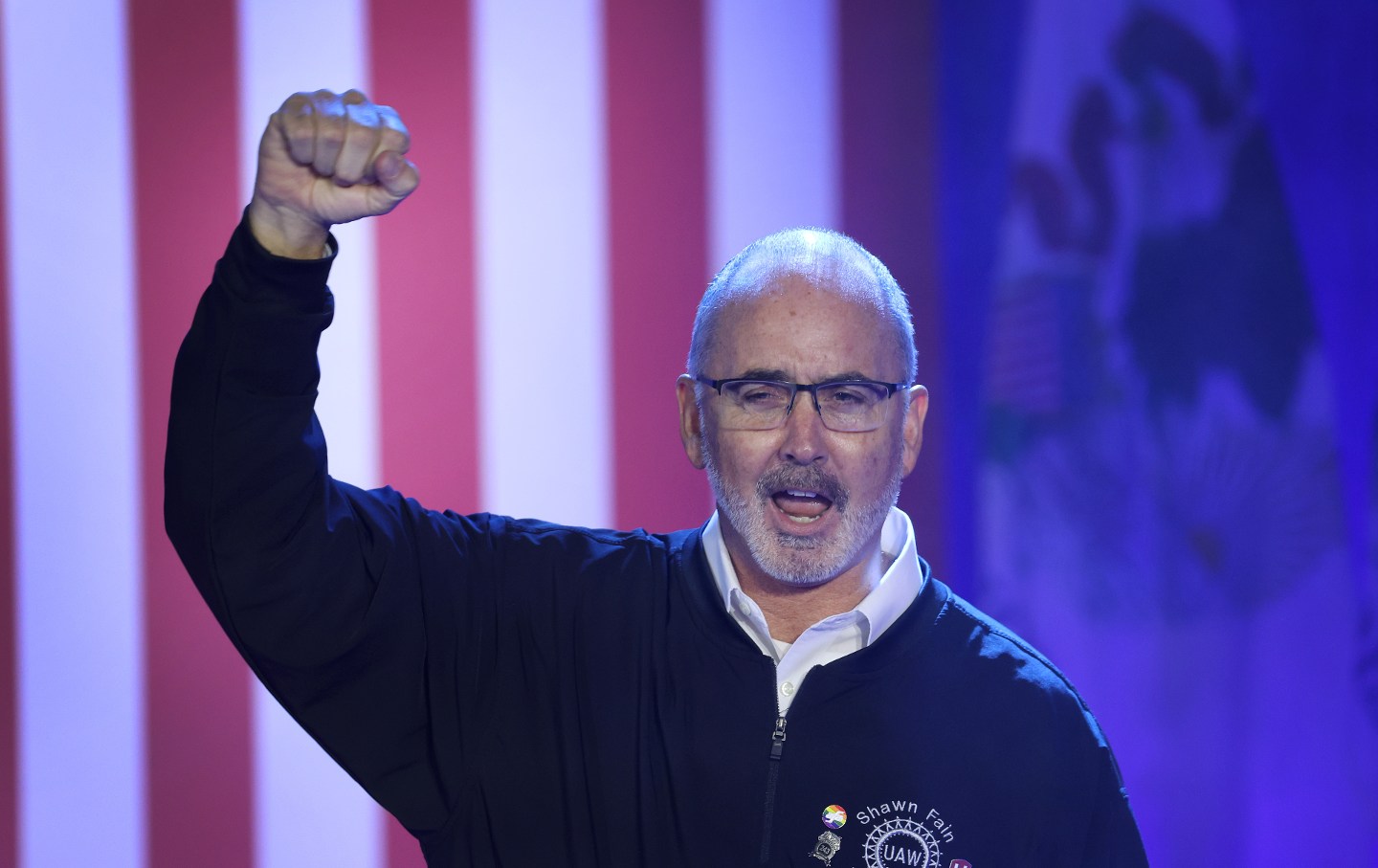
When the United Auto Workers reached a tentative agreement on October 30 with General Motors, the last of the Big Three automakers targeted by this fall’s 46-day strike, the union’s president, Shawn Fain, declared, “The result is one of the most stunning contract victories since the sit-down strikes in the 1930s.”
Fain knows his labor history. What the union achieved for its own workers, and for the broader working class in a country that’s experiencing a wave of labor activism, is comparable to the achievements of the UAW and its fellow CIO unions in the days when Franklin Roosevelt’s New Deal opened the way for Depression-ravaged workers to organize and bargain collectively as never before.
That doesn’t guarantee that unionization in the US will return to historic highs. But it does look like a critical turn has been reached in the modern-day struggle to build a dramatically bigger and bolder labor movement.
The UAW launched its strikes against GM, Ford, and Stellantis on September 15, shortly after the Teamsters secured a groundbreaking contract with UPS. That win had signaled that emboldened unions could again secure landmark agreements in negotiations with multinational corporations. The question was whether the UAW, a historically powerful labor organization that had been weakened by factory closings, offshoring, corruption scandals, and an overwhelming sense that its best days were behind it, could also go big and win.
Fain knew that the roughly 150,000 autoworkers he represented were frustrated after years of depressed wages and concessions within an industry that had banked roughly $250 billion in profits over the previous decade and hiked CEO pay by 40 percent. He bet workers were ready to strike on the basis that “record profits mean record contracts.”
Narrowly elected in March as a reformer backed by the rank-and-file Unite All Workers for Democracy caucus, Fain pulled together a bargaining team that demanded double-digit pay increases, an end to a tiered system that paid new workers less than existing ones, the restoration of the cost-of-living adjustments that had been sacrificed when the UAW helped save the auto companies during the Great Recession, a four-day workweek, and a say in the future of an industry that’s transitioning to electric-vehicle production.
The union’s expansive agenda was mocked by Elon Musk, the owner of the nonunion car company Tesla, commentators like CNBC’s Jim Cramer, and, of course, Donald Trump. In stark contrast to President Biden, who joined a UAW picket line and told striking workers, “You deserve what you earned, and you deserve a hell of a lot more than you’re getting paid now,” Trump dismissed the strike as a waste of time. “You’re all on the picket lines and everything, but it doesn’t make a damn bit of difference what you get, because in two years you’re all going to be out of business,” the former president claimed in a speech at a nonunion plant outside Detroit in which he ripped efforts by the Biden administration, auto companies, and unions to modernize the industry and make the US a leader in electric-vehicle production. That was a classic line of attack from Trump, a real estate mogul and reality-TV star whose understanding of American manufacturing has always been suspect and whose promises to save auto workers’ jobs fell miserably short during his presidency. But Trump’s efforts to divide workers against themselves—and to suggest that only he could save their jobs—got no traction; Fain proved to be a more effective communicator than the Republican front-runner and, for that matter, most Democrats. In a struggle against the billionaire class, the UAW argued, workers had to fight back. The union’s “Stand Up” strategy of having workers walk out at key plants without warning proved to be strategically brilliant, as it left auto execs struggling to figure out where they’d be hit next.
After Ford folded, it was just a matter of time before GM and Stellantis settled. But this was not just a victory over three corporations. It was a victory over the old argument, made by billionaires like Trump and Musk and their media apologists, that big demands by unions will end up costing jobs. The UAW won commitments for the expansion of existing plants, the right to organize at electric-vehicle battery plants, and, remarkably, the reopening of a shuttered Stellantis plant in Belvidere, Ill.
But the UAW isn’t resting on its laurels. The union is still fighting to regain the ground it lost as a result of past concessions. Even with a 25 percent pay hike over the course of the five-year contracts, the initial top rate for production workers will still be below what it was in 2007 when adjusted for inflation, and organizing the battery plants in Southern and border states won’t be easy. Fain recognizes that successful strikes are only the beginning of the fight for the advancement of the working class. He’s urged other major unions to align their contract negotiations so that the threat of strikes can affect corporations in the auto sector and beyond on May 1, 2028, when the new contracts expire.
So mark your calendars. And look for more than just strikes. Promising to “organize like we’ve never organized before,” Fain says that “when we return to the bargaining table in 2028, it won’t just be with the Big Three but with the big five or big six.” Be warned, Elon Musk: The UAW means business.