
The Supreme Court Prepares to Take Its First Shot at Contraception
A case just added to the high court’s docket takes on the question of whether Medicaid can be used to pay for services at medical providers that also perform abortions.

The exterior of a Planned Parenthood Reproductive Health Services Center in St Louis, Missouri
(Michael Thomas / Getty Images)
Last week, the Supreme Court added two additional cases to this term’s docket. You’ve probably already heard about the first one: The court plans to give TikTok one last opportunity to save itself, and will hear the company’s case in an expedited fashion, on January 10. The court can move incredibly quickly when money is at stake.
With all due respect to TikTok—increasingly the news platform of choice for America’s youth—the second case is more important. This case, Kerr v. Planned Parenthood, examines whether Medicaid funds can be used to pay for services at Planned Parenthood. If the court says “no,” it will limit access to contraception and gynecological care to millions and millions of impoverished Americans.
This case is not about abortion. Readers familiar with the dystopian state of reproductive rights in this country know that the government already forbids Medicaid from being used to fund abortion. We have the Hyde Amendment to thank for that, as well as various state laws that replicate that amendment’s damage.
But Planned Parenthood is more than an abortion clinic. The organization provides a plethora of medical services to women and girls, including gynecological care, cancer screenings, and, critically, various forms of contraception.
In 2018, South Carolina Governor Henry McMaster prohibited Medicaid funds from being used to pay for anything at Planned Parenthood clinics in his state. He said that “payment of taxpayer funds to abortion clinics, for any purpose, results in the subsidy of abortion and the denial of the right to life.” I will note that McMaster’s argument seems to forget that women in need of medical care have a “right to live” as well.
McMaster’s rule could be read incredibly broadly. Many poor women in many states get their contraception from clinics that also perform abortions, or from organizations that support abortions in the states where those are still legal. If Medicaid dollars cannot be used in any of these clinics, access to contraception could be severely limited in states that follow South Carolina’s lead.
Planned Parenthood sued, and won in state court, arguing that McMaster’s rule violated the Medicaid Act. The act allows the federal government, not the states, to determine how Medicaid funds can be used, and Congress has not banned the use of these funds at Planned Parenthood clinics. Now, the question of whether private entities, like the plaintiffs in this case, have a right to sue to force a state to enforce the Medicaid Act, is at the heart of South Carolina’s appeal to the Supreme Court.
I cannot emphasize enough how much is at stake with this case. Let’s say Congress passes a law directing money to be used in a certain way. Then let’s say a state decides to ignore the law and prevent the money from being used as directed. Who has the right to sue the state over its noncompliance? If South Carolina prevails, the answer might be “only Congress can sue to force a state to enforce the law.” If that’s the case, what do we do in a situation where Congress (because of which party dominates, a desire for culture war, or general incompetence) doesn’t sue? It could result in states’ being able to pick and choose which federal mandates are “real” and which ones can be safely ignored.
A recent Supreme Court case previewed how the court could—or should—think about Kerr v. Planned Parenthood. In 2022, the court decided Health and Hospital Corporation of Marion County v. Talevski. That case asked whether private individuals could sue the state of Indiana for its noncompliance with the Federal Nursing Home Reform Act. The court said “yes,” 7-2, with Ketanji Brown Jackson writing the majority opinion for the court and only Clarence Thomas and Sam Alito dissenting. Amy Coney Barrett wrote a concurring opinion in the case.
But that case didn’t involve an issue that Barrett thinks makes Jesus angry. With this one, we just don’t know if the Republican justices will rule that South Carolina has to follow the Medicaid Act, even if that means letting poor women have birth control.
We’ll soon find out. The arguments for this case haven’t been scheduled yet, but we can expect them in March or April with a decision to follow in June.
If I had to guess, I’d imagine the same 7-2 majority from Talevski holding together and ordering South Carolina to enforce the Medicaid Act. But this time, Barrett will write the majority opinion. In that opinion, she will tell the Republican Congress exactly what they have to do to amend the Medicaid Act in a way to allow the states to prevent women from using it to access contraception.
The fight to restore abortion rights has been lost—for the moment. The fight to protect contraception rights is already underway. This is what a majority of white women voted for.
More from The Nation

The Endless Hypocrisy of Bari Weiss The Endless Hypocrisy of Bari Weiss
She claims to be a free speech champion. But as her actions at CBS News keep showing, she seems to think free speech should run only in a rightward direction.
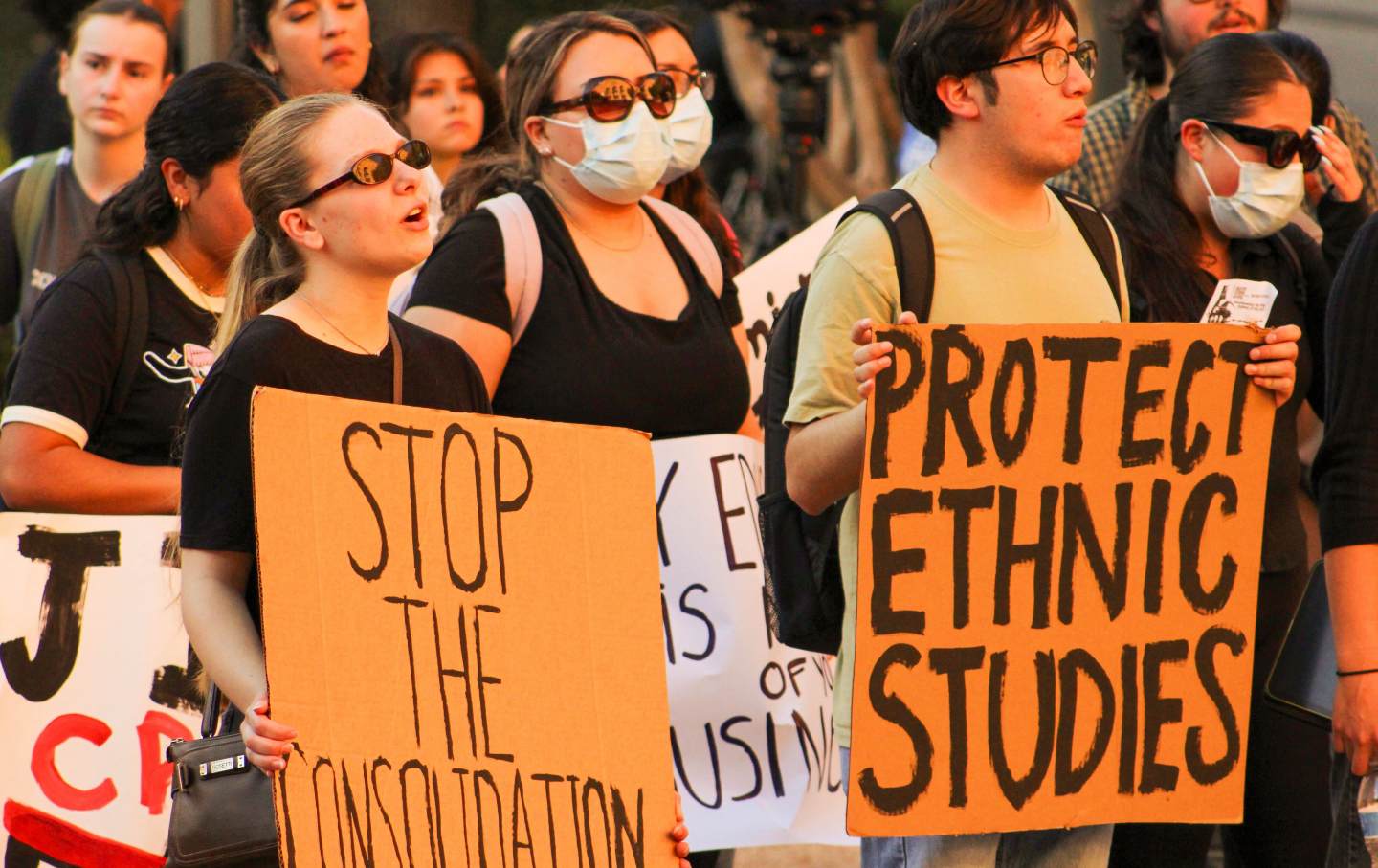
What Will Be Left After the University of Texas Destroys Itself? What Will Be Left After the University of Texas Destroys Itself?
UT-Austin has collapsed its race, ethnic, and gender studies into a single program while a new policy asks faculty to avoid “controversial” topics. But the attacks won’t end there...

The Corporate Media Is Head Over Heels for the Iran War The Corporate Media Is Head Over Heels for the Iran War
Donald Trump’s attack may be surreal, unjustified, and illegal. But that’s not stopping the press from turning the propaganda dial way up.

The Disturbing History of ICE’s “Death Cards” The Disturbing History of ICE’s “Death Cards”
The Vietnam-era practice is yet another example of ICE agents thrilling to the brutality they have been encouraged to cultivate.

The American Universities Programming Israel’s Killer Drones The American Universities Programming Israel’s Killer Drones
Industry partnerships in higher education are pushing STEM graduates into the business of weapons manufacturing and genocide profiteering.

The Red State–Blue State Healthcare Divide Is Dangerous for Everyone The Red State–Blue State Healthcare Divide Is Dangerous for Everyone
Whether or not you have access to independent, scientifically sound public health guidance may depend on how your state voted for governor.

