
Robert Redford Sounded the Alarm About Our Corrupted Politics Over 50 Years Ago
The late legend’s 1972 classic The Candidate was an urgent warning about how money-driven, TV-obsessed campaigns would devastate democracy.
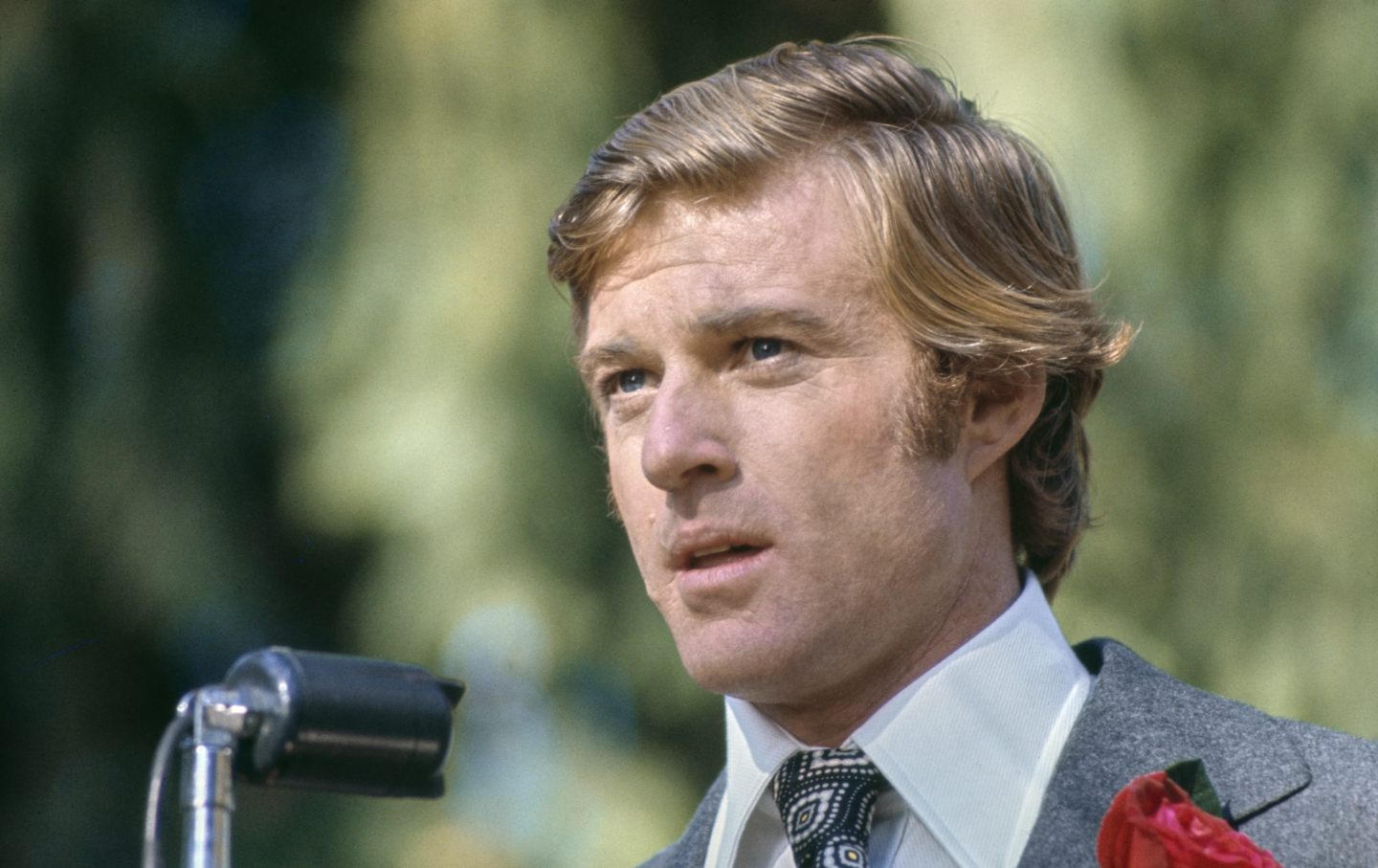
Robert Redford in a scene from 1972’s “The Candidate.”
(Michael Ochs Archives / Getty Images)The most telling moment in The Candidate, the 1972 film that so accurately anticipated today’s money-corrupted and dumbed-down American politics, comes when California US Senate candidate Bill McKay and his staff watch a commentary from Howard K. Smith, the distinguished co-anchor of the ABC Evening News, assessing the degeneration of his campaign.
Playing himself in the film, yet at the same time speaking to its core premises, Smith rips into McKay. The son of a former governor who had begun the Senate bid as an idealistic public interest lawyer with a commitment to civil rights and environmentalism, and a sharp critique of the corporate power that his incumbent opponent served, McKay has, over the course of the campaign, bent to the pressure of consultants and donors to moderate his positions. Now, Smith is calling him out.
“A television commercial is a way of selling a product. A candidate’s bid for votes should be a higher order of expression…with moral implications for the kind of people we are…and the kind we want to become. But, increasingly, candidates are merging the two…selling themselves like an underarm deodorant… in commercials just long enough to pound in some mindless slogan…that cheapens candidate… and voter alike,” explains Smith. “But in the California Senate race, young Bill McKay was different. He rejected the machine-type politics, by which his father won office…and ran a campaign refreshing in frankness and directness. But now, with only a month to go (before the election), McKay’s ways have visibly changed. Those early hard statements of his are turning into mush. Specific policies dissolve into old generalities. The Madison Avenue commercial has become his means of persuasion. The voters are being asked to choose McKay… like they choose detergents. Socko salesmanship… no moral considerations involved.”
Smith concludes by declaring that, “Again, virtue seems too great a strain for the long haul of the campaign.”
A visibly agitated McKay hears the message loud and clear. He turns to his campaign manager and says, “I want to talk to you.”
“Don’t take it seriously,” replies the manager.
“I do take it seriously,” says McKay.
But in a matter of seconds, he is swept into the next stage of a bid that has veered far from the values that initially animated him.
The exchange, and the film as a whole, still resonate today. That’s in large part because of its visionary content and because of who plays Bill McKay: Robert Redford, the actor, director, producer, and activist who died last week at the age of 89.
The portrayal of McKay is a classic Redford performance, with tension developed not just with words from the script but with a tightened fist, a grimace and the physically awkward transformation of an activist into a politician. When it comes to the pivotal scene, everything about Redford’s response to Howard K. Smith’s takedown feels real because, in this case, it is real. Redford, as candidate McKay, is precisely right when he says, “This is a society divided by fear, hatred and violence. And until we talk about just what this society really is, then I don’t know how we’re going to change it.” Yet, that essential message is overwhelmed by the slick-yet-insipid sloganeering of a campaign that presents its “product” as a nominee who “shoots from the hip and is hip when he shoots.”
Redford always took politics, and the role that art can play in influencing the public discourse, seriously. He was a driving force behind some of the 20th century’s most intellectually inspired and politically influential films, most notably All the President’s Men, a ripped-from-the-headlines political thriller that examined the corruption that infused — and extended from — Richard Nixon’s presidency.
Redford was, as well, one of the nation’s leading environmentalists and supporters of independent media. He generally backed Democrats: endorsing Vice President Kamala Harris in 2024 as the candidate best prepared to “confront the existential challenge of our time and keep us free from climate hazards and harm” – and describing Donald Trump as “a president who degrades everything he touches, a person who does not understand (or care?) that his duty is to defend our democracy.”
Popular
“swipe left below to view more authors”Swipe →There were even suggestions over the years that Redford might be a credible Democratic US Senate candidate for his adopted state of Utah.
Redford’s great strength as an activist and performer was that he recognized the flaws in both right-wing Republicans and compromising Democrats. A keen observer of American politics, he read widely and supported progressive media – including this magazine. The actor saw evidence that campaigns were taking a bad turn more than half a century ago, and he responded as he knew best.
It was Redford’s concern about the increasingly vapid nature of politics that led him to make The Candidate, with director Michael Ritchie and Academy Award–winning screenwriter Jeremy Larner, who had served as a speechwriter for Minnesota Senator Eugene J. McCarthy’s insurgent antiwar campaign for the 1968 Democratic presidential nomination.
Ritchie and Redford had kept a close eye on the 1970 California US Senate race, in which a photogenic and wealthy Democratic member of the U.S. House, John Tunney, won a heated Democratic primary against a more liberal candidate, US Rep. George Brown. Brown had highlighted his determined opposition to the war in Vietnam, his support for farmworkers and organized labor, and his commitment to a burgeoning environmental movement. Tunney, who many saw as a California Kennedy, ran a softer, more media-focused campaign – expertly packaged by the great media strategist of the moment, David Garth — that critics saw as long on style and short on substance. In an ironic twist, the Democrat went on to defeat Republican incumbent George Murphy, an older actor-turned-politician, in the general election.
But that was just one aspect of the film, which also featured an incumbent senator (Crocker Jarmon, played by veteran actor Don Porter), who mouthed lines that echoed both Murphy and another rising California Republican star, then-governor Ronald Reagan—not to mention a complex father-son relationship that many compared with that of California governors Pat and Jerry Brown.
The Candidate explored an emerging American politics, with a skeptical eye and a warned about the dangers of electoral strategies are all about money and media. It got a mixed reception at the time of its release. But history has proven it to be one of the most visionary films of the era.
Unfortunately, not everyone got the point.
When Republicans nominated Indiana Senator Dan Quayle for vice president in 1988, it was frequently noted that the conservative senator bore a passing resemblance to Redford. When The Washington Post reported that — according to a law school classmate of Quayle, Frank Pope – the candidate had been inspired at least in part by The Candidate, writer Jeremy Larner, explained in The San Francisco Chronicle that the senator misunderstood the movie. “Sorry, Senator Quayle,” wrote Larner, “you thought we were telling you how-to, when we were trying to say ‘watch out.’”
Redford, who speculated about making a sequel to The Candidate in order to amplify its arguments, was more succinct. He let it be known that he would not be casting his ballot for Quayle, or for the politics of style-over-substance that he warned would warp our campaigns, elections and governance. Robert Redford saw the future coming. Now that he is gone, and the future is here, it is agonizing to recognize just how right he was to sound the alarm.
More from The Nation

The Endless Hypocrisy of Bari Weiss The Endless Hypocrisy of Bari Weiss
She claims to be a free speech champion. But as her actions at CBS News keep showing, she seems to think free speech should run only in a rightward direction.
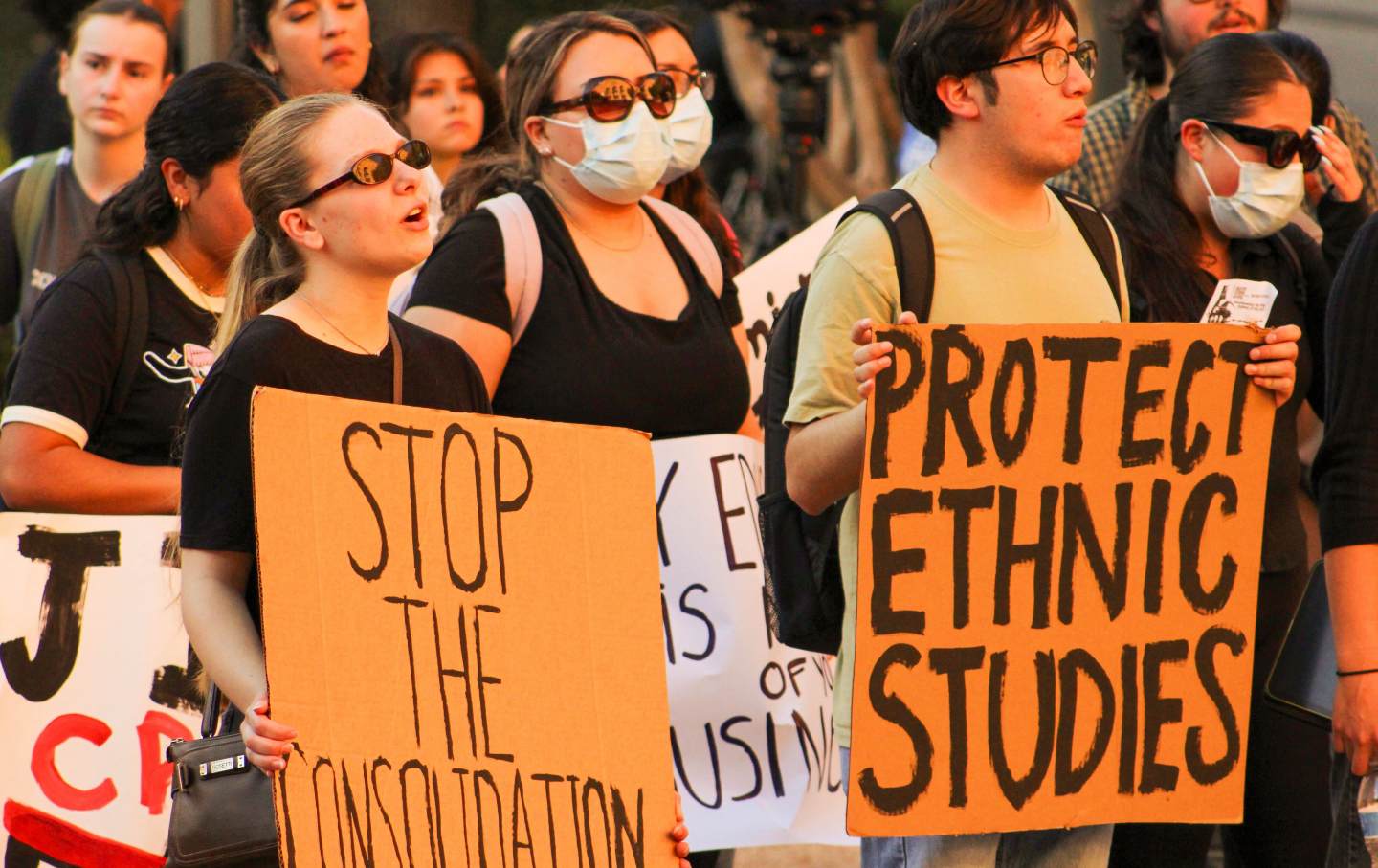
What Will Be Left After the University of Texas Destroys Itself? What Will Be Left After the University of Texas Destroys Itself?
UT-Austin has collapsed its race, ethnic, and gender studies into a single program while a new policy asks faculty to avoid “controversial” topics. But the attacks won’t end there...
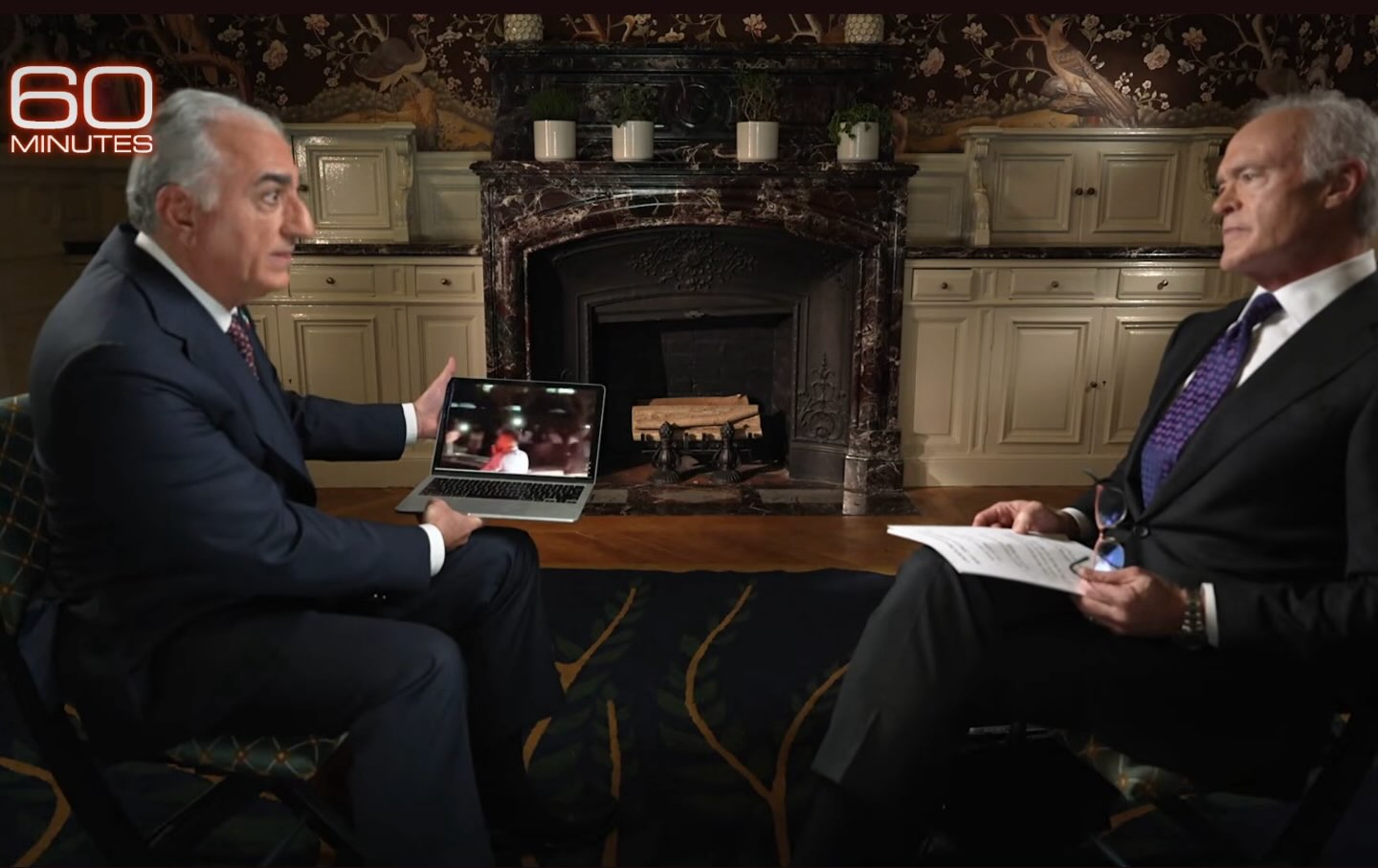
The Corporate Media Is Head Over Heels for the Iran War The Corporate Media Is Head Over Heels for the Iran War
Donald Trump’s attack may be surreal, unjustified, and illegal. But that’s not stopping the press from turning the propaganda dial way up.

The Disturbing History of ICE’s “Death Cards” The Disturbing History of ICE’s “Death Cards”
The Vietnam-era practice is yet another example of ICE agents thrilling to the brutality they have been encouraged to cultivate.

The Red State–Blue State Healthcare Divide Is Dangerous for Everyone The Red State–Blue State Healthcare Divide Is Dangerous for Everyone
Whether or not you have access to independent, scientifically sound public health guidance may depend on how your state voted for governor.
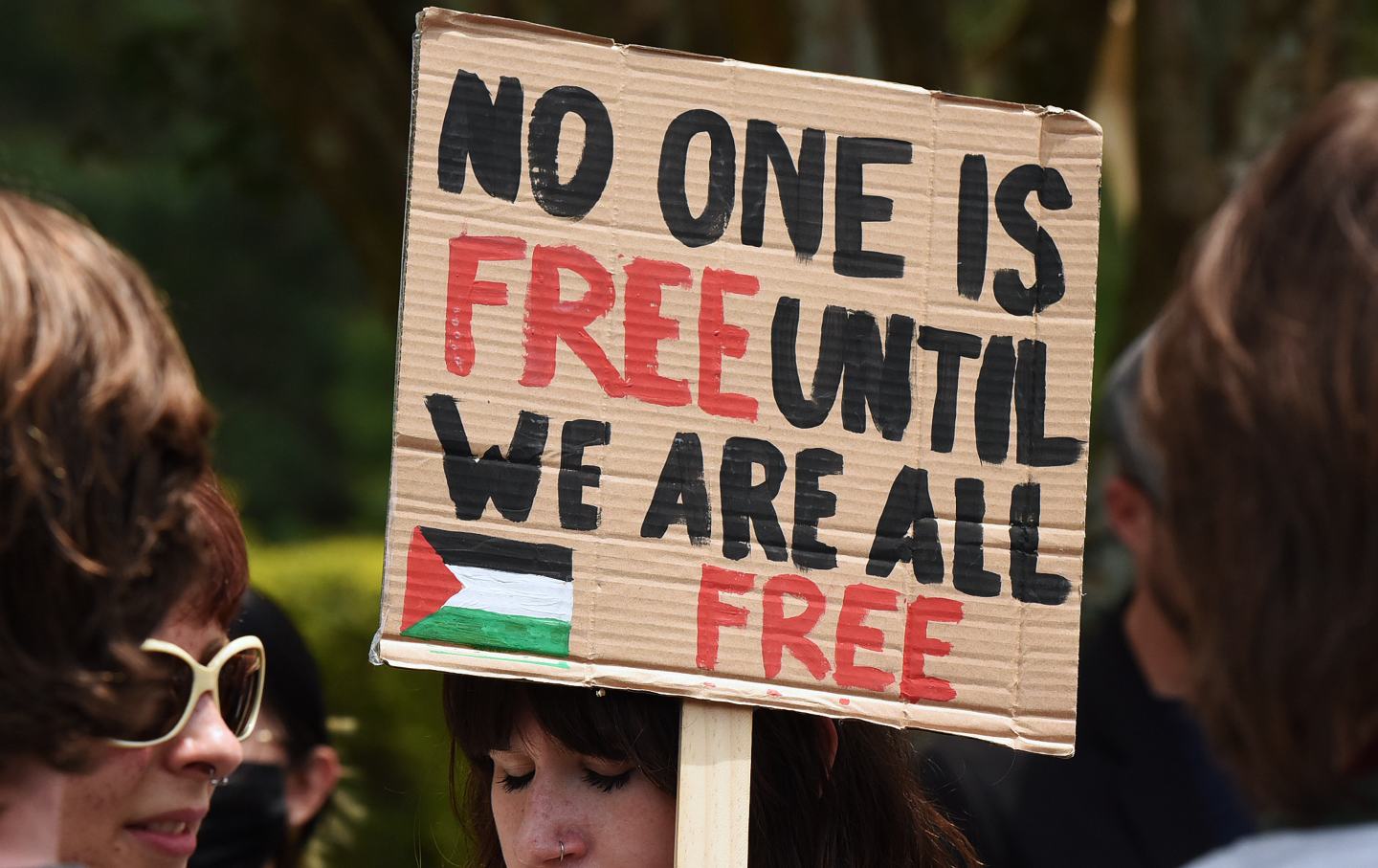
The American Universities Programming Israel’s Killer Drones The American Universities Programming Israel’s Killer Drones
Industry partnerships in higher education are pushing STEM graduates into the business of weapons manufacturing and genocide profiteering.

