
The Machine That Came for Jason Arday
It wasn’t a scandal but a machine—funded, transatlantic, and still running.
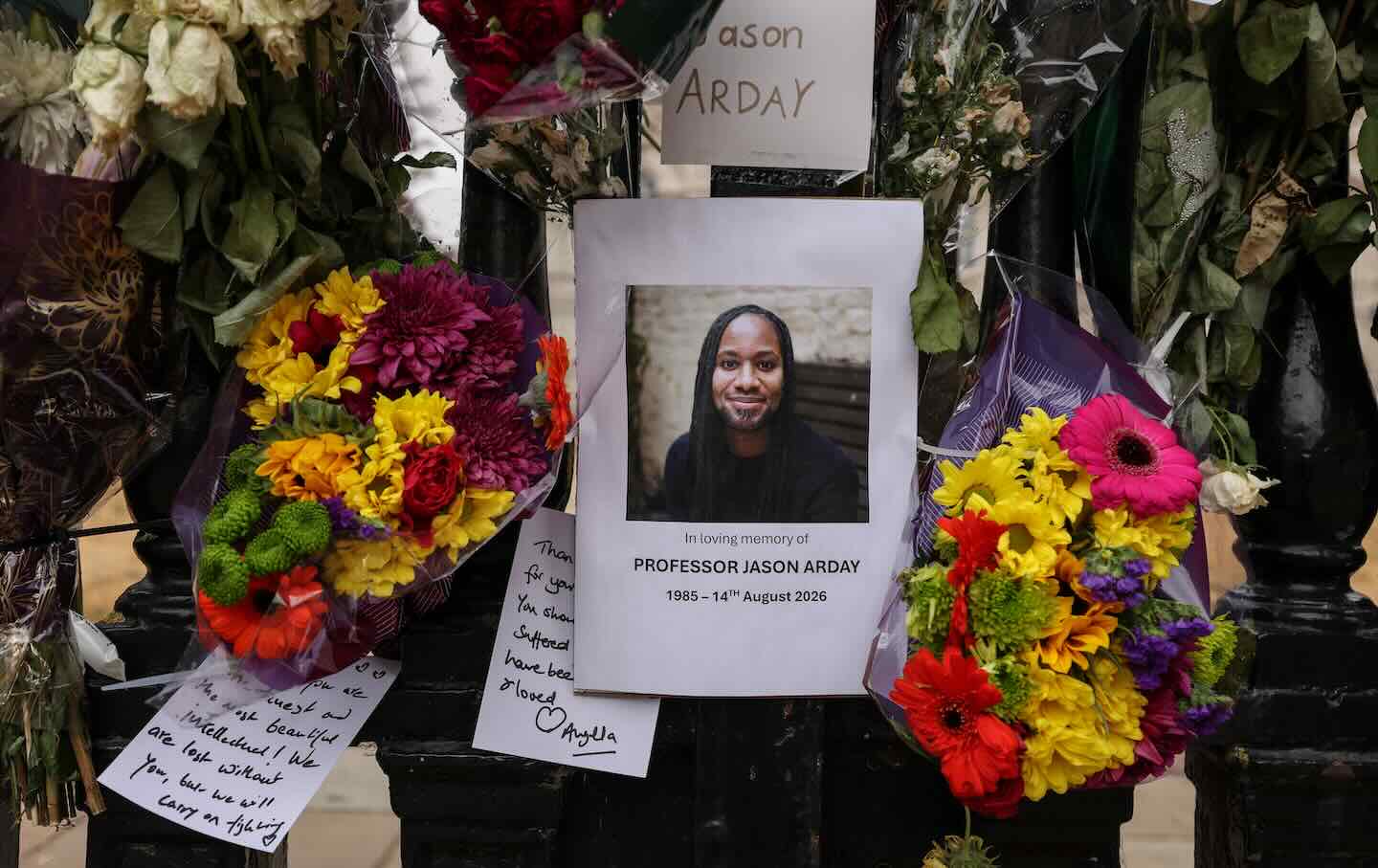
A photo of late Cambridge professor Jason Arday is pictured along with floral tributes that are attached to the fencing around the Senate House at the University of Cambridge on August 18, following his death at age 41 on August 14.
(Chris Radburn / AFP)I never met Jason Arday. He is still beloved; my people claim our dead. We do not wait to be introduced before we grieve them, or before the all-too-familiar rage. I will mourn him the way Black people have always mourned in public—telling the truth, correcting the record, and admonishing the sinner. There should be nowhere for them to hide. And there is still time for some of us to do better.
Not an Event, a Mode
Look at what has been laid out for you, dear reader. A man of 41 found in a flat in Battersea, and a police service that calls the death “unexpected, but not suspicious,” as if this shock is, at once, no one’s doing. Before this, a self-described hereditarian trained software on a Black man’s 11-year-old dissertation. It is all arranged, waiting for you to lean in and assess, to weigh—like some Anubis with a mobile phone with all the news apps and socials—whether Jason Arday earned his ruin.
And while you are bent over it, counting his citations, the thing that put him there keeps running on. Isaac Sanders, a doctoral student, already put it plainly on Instagram: “Jason Arday’s research explains exactly what happened to Jason Arday.” Fifteen years “describing his and many others’ lived experience.” “Fighting the tide,” on Black doctoral students trying to enter the profession. “No one can see me cry,” on the mental-health toll carried by Black staff in the university. “Forget the headlines,” Sanders said: “Read the bibliography.” I will leave you to it. Likewise, here I want to reorient us to what has been running in the background, unwatched; constructing and reconstructing sturdy institutions out of the stuff of pseudoscience. From a doctoral thesis 11 years old to a man dead nine days after he resigned. From “questions about his qualifications” to a family begging the press to stop. From who plagiarized, to who is fit to profess at all. From one Black scholar at Cambridge to every one of us reading this, feeling the floor tilting. Do you feel it?
This is not an event. It is a mode—a dynamic, durable apparatus of subjection and disposability that never runs out of supply.
Fuck Them. They Really Are Trying to Destroy Us.
The them is multiple. First, those who make racial hereditarianism their jobs. Second, those who merely use this batshit view—which exhumes the discredited 19th-century canard that Black people are innately, heritably inferior—to win convenient populist political ballast, or monetizable attention. What they share is a false racial grievance: the insistence that the inclusion of Black people steals what should belong to white folks by right. But also the they who built the pedestal and sold tickets to the toppling; focusing intensely, all along, precisely on what matters least, while ignoring the harder, critical questions. Fuck all of them.
I will say the quiet part out loud and plainly, since they count on our being too ashamed to say it. Most of us came in through the door that affirmative action pried open, and there is no shame in it. It was put in place only a very short time ago, as a corrective for violently enforced legal exclusion that is even older than Cambridge—and which is yet still unpaid-for and yet unrepaired.
To arrive through a remedy is not to arrive on sufferance. Once inside, we do the work. It is well documented that we write the books and rebuild the fields, shape-shifting whole disciplines. In fact, this is part of why they are mad. We teach your children—all of them, every background—to think better and be better than they learned at home. You are welcome.
Insignificant to Science, Indispensable to Politics: In the Tense of Due Diligence
Nathan Cofnas—a self-proclaimed “race realist” whose “hereditarianism” is scientifically condemned, and who has held only fixed-term academic posts (and that’s only part of the reason he seems mad)—is too useful to the movement to discard. While his work is published as philosophy, not science, it is indispensable to politics. He has been clear about his plan since at least 2024. Having already published that in a true meritocracy the number of Black professors would fall to almost none, after he was fired by Cambridge’s Emmanuel College, he informed donors to his Free Speech Union fundraising page of his effort to champion “the right of academics to express politically incorrect views about race.” Politically incorrect—as if what he peddles were a rude opinion at a dinner party.
Hereditarianism is not a suppressed viewpoint. It is a defeated one. Haitian anthropologist Anténor Firmin provided the evidence against the race science of his century in 1885.
But, as a hustler is wont to do, Cofnas is running game: “Politically incorrect” attempts to convert a refuted scientific claim into a suppressed viewpoint, and a suppressed viewpoint into a protected belief. That a county court in England bought the okey-doke of his lawsuit against Emmanuel for “belief discrimination” does not make it anything other than what it is. He announced the strategy, raised the money for it, and won—he lost his own suit and won the ruling he was really after—not vindication, but the finding: that his “views about race” are a protected belief the law must shield. Then Cofnas turned it on: fed a Black man’s 11-year-old dissertation through software until it raised a flag. The way this usually goes, a plagiarism accusation is answered quietly—an inquiry, a correction, a retraction—not in the media. But none of that mattered; the campaign had already chosen him.
Reporters and pundits seemed to pick at the account of Arday’s life for sport; spinning a plagiarism inquiry into hundreds of articles about a man’s childhood, and his account of himself. The media attention and incessant parasocial chatter has not stopped. Not even after his family begged them to, following his death.
Respectable outlets that would never print a race scientist, perish the thought, took the racist premise of hereditarianism—barely scrubbed of its stench—and ran it in the pretense of due diligence. They laundered it and executed it. A Black scholar’s standing is counterfeit until a machine says otherwise.
The House Witness
Some do not wait to have “token” thrust upon them but run headlong to the cover to proclaim it. Staff writer at The Atlantic and former Bates College assistant professor Tyler Austin Harper’s September cover story, “Confessions of a Token Black Professor” was not his first turn as the house witness. Months earlier, he indicted the Mellon Foundation and its president, Elizabeth Alexander, for pledging that “there won’t be a penny…not contributing to a more fair, more just, more beautiful society”—as though justice and beauty were crimes. He first made Alexander his exhibit; then, for the cover, made an exhibit of himself. He called the academy “a new model of inclusive exclusion,” making himself its representative wound. He confessed to having been hired as “a scholar second, if at all,” then admitted that he found himself “reflexively” wondering whether the other professors of color were “up to the job.”
Harper did Cofnas’s work from the inside, signing the putative “confession” they have wanted for two generations.
Be a token, if you must. But we will not abide the miserable inference—the dog whistle, I am not like those others—that we who came through a door nailed shut against our parents and grandparents, and did the work once we were through it, should carry any shame for being in the classroom or editorial meeting.
A token is placed. It is a thing set down by one who imagines they can therefore pick it back up and do with it what they will.
Speak for yourself, son. You have never spoken for us.
Gears and Levers
This is not merely a scandal, or an excess to be adjudicated in think pieces good only for outrage and then forgotten. It is far from an aberration. This is the design working.
I say “fuck them” because this is a program—announced, funded, and now affirmed in a British court—running exactly as intended. This machine’s money, personnel, and half-century of patience do not stop at Britain’s shoreline. Cofnas’s ruling, Harper’s cover, a chancellor’s commissioned report, and the money behind them, are gears and levers of one transatlantic apparatus; turned on both shores by many of the same people, and pointed at the same target. Still, we are not the ultimate target: behind us is a public, in Britain and America, kept from seeing how it is governed, by whom, and in whose interest. The standing of Black scholars—the fields and institutions and access we built on both sides of the water—forms a barricade they mean to clear in higher education, cultural institutions, and philanthropy, toward that end.
Consider Eric Kaufmann. He co-authored the Policy Exchange report that called for a government “Director of Academic Freedom” at Britain’s higher-education regulator—an office empowered to investigate universities and press for penalties, which Britain created in its 2023 free-speech act. He is also an adjunct fellow at New York’s Manhattan Institute, from which he has urged the American academy to follow Britain’s lead and let the government audit and fine its universities.
A movement that seeks to audit, fine, and defund speech it does not like is not a defender of speech. This is a transatlantic movement to end the independent production of knowledge about race and power—and to decide, on both shores, who is permitted to produce it at all.
No Standing to Audit Us
My warrant to be here was never anyone’s to hand me, and so it is not anyone’s to revoke. It was secured before I drew breath—by people forbidden on pain of the lash to learn their letters. They learned them anyway and transformed literature. Their example is the standard by which Black scholars continue to contribute (and, let’s be real, many of us consistently out do many of our colleagues). This is the standard of a people whose ancestors were turned from these same gates with police batons and statutes. They tried anyway. Sent their children. Some died trying. That is the warrant I hold to not only master the discipline, but to show where it has gone wrong, where it has no standing, and to transform it for the good of the world. Not by the largesse or grace of any institution, but as a debt paid—constantly compounded and repaid through our labor here, in the logic of the plantation. Always newly arriving in the discipline or department or masthead or byline or classroom. They have no standing to audit me. I will not allow Cofnas’s ledger.
Looked at one way, they have won. He is gone and the chilling effect—felt by scholars in Britain and in America—is real. They will likely continue their crusade, undeterred by this reminder of the real human costs. But, there is still time for some of us to do better.
In the tradition of the Black jeremiad—a form of speech that proclaims and exhorts, condemning wrongdoing, but holding out hope for the future—let us turn from them to us.
“Turn to your neighbor,” a preacher might say! You and I, who watched all of it. Those who read the first headline and let “plagiarism” settle softly into “where there’s smoke…” Who forwarded and ridiculed. You and I who clicked, and clicked, and told ourselves that reading is not the same as consuming. But Jimmy Baldwin already revealed the deadly sin of false innocence. What the world took in as ‘content’ now documents a man’s last excruciating months on this earth.
At least those who build the machine know what they are. It is the ones who believe their hands are clean who keep it running—“We only watched, only read, only wondered aloud whether he’d done it…”—especially those who know better and seem unwilling to fucking stand up and fight against the machine. Turn to your neighbor and say: “We can do better.”
To them: Find something better to do with your time than hunt for alibis for your motivated racist assumptions. Go build a thing of your own. Grieve your own dead. Read a book by one of the people you have been trying to unmake: You may even be the better for it.
We have buried more of us than you will ever trouble to count, and we are still here. We are not going anywhere. And we remember every name—ours, and yours.
Keep our names out your mouth.
More from The Nation
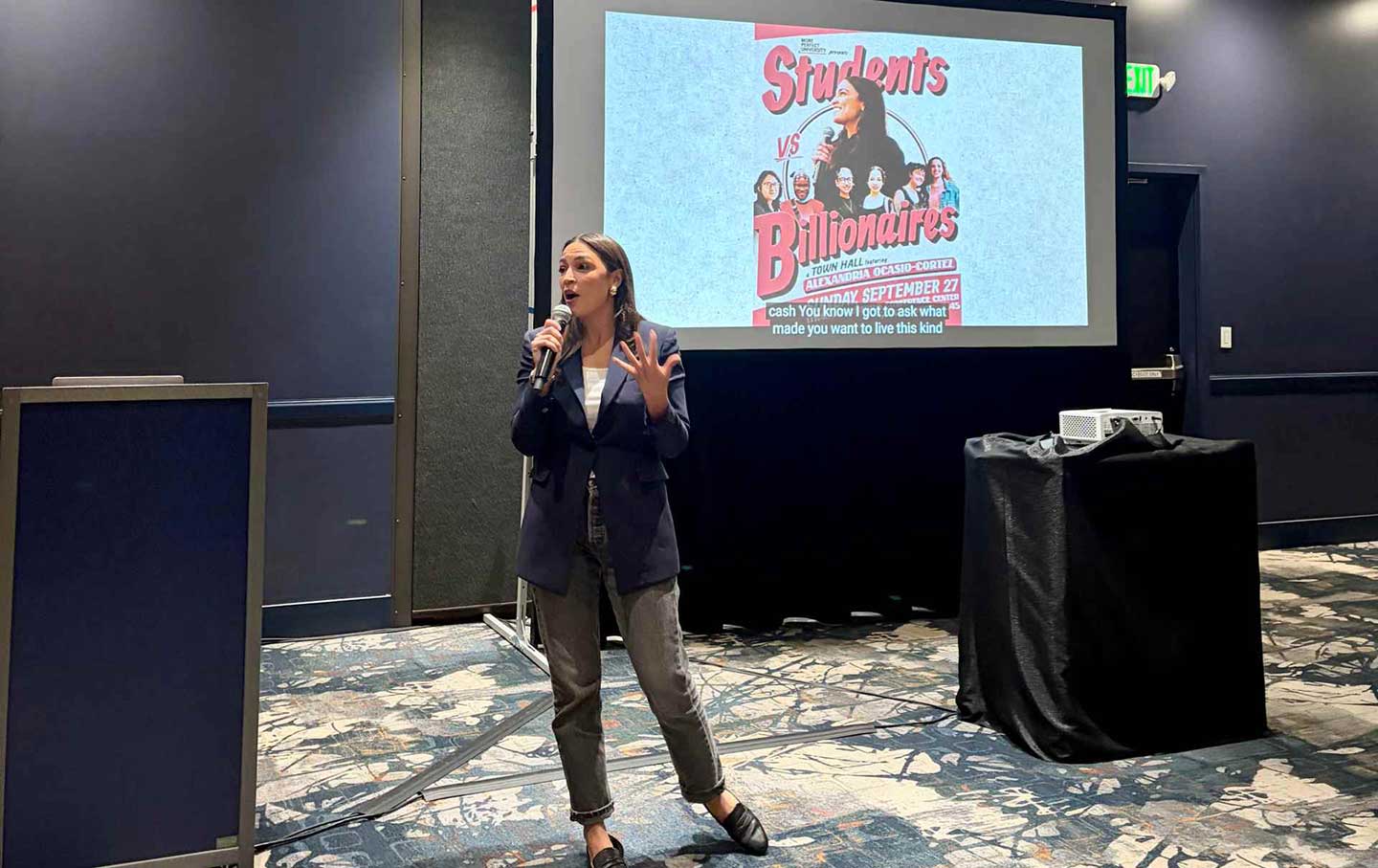
Cornell Students Challenge University Power at a “Students vs. Billionaires” Town Hall Cornell Students Challenge University Power at a “Students vs. Billionaires” Town Hall
Representative Alexandria Ocasio-Cortez spoke to Ithaca students about tuition hikes, sexual violence, free speech, and university governance.

Trump Has Made it Legal to Destroy Endangered Species’ Habitats Trump Has Made it Legal to Destroy Endangered Species’ Habitats
By redefining the meaning of “harm” in the Endangered Species Act, the administration is giving big corporations a gift they have long demanded.
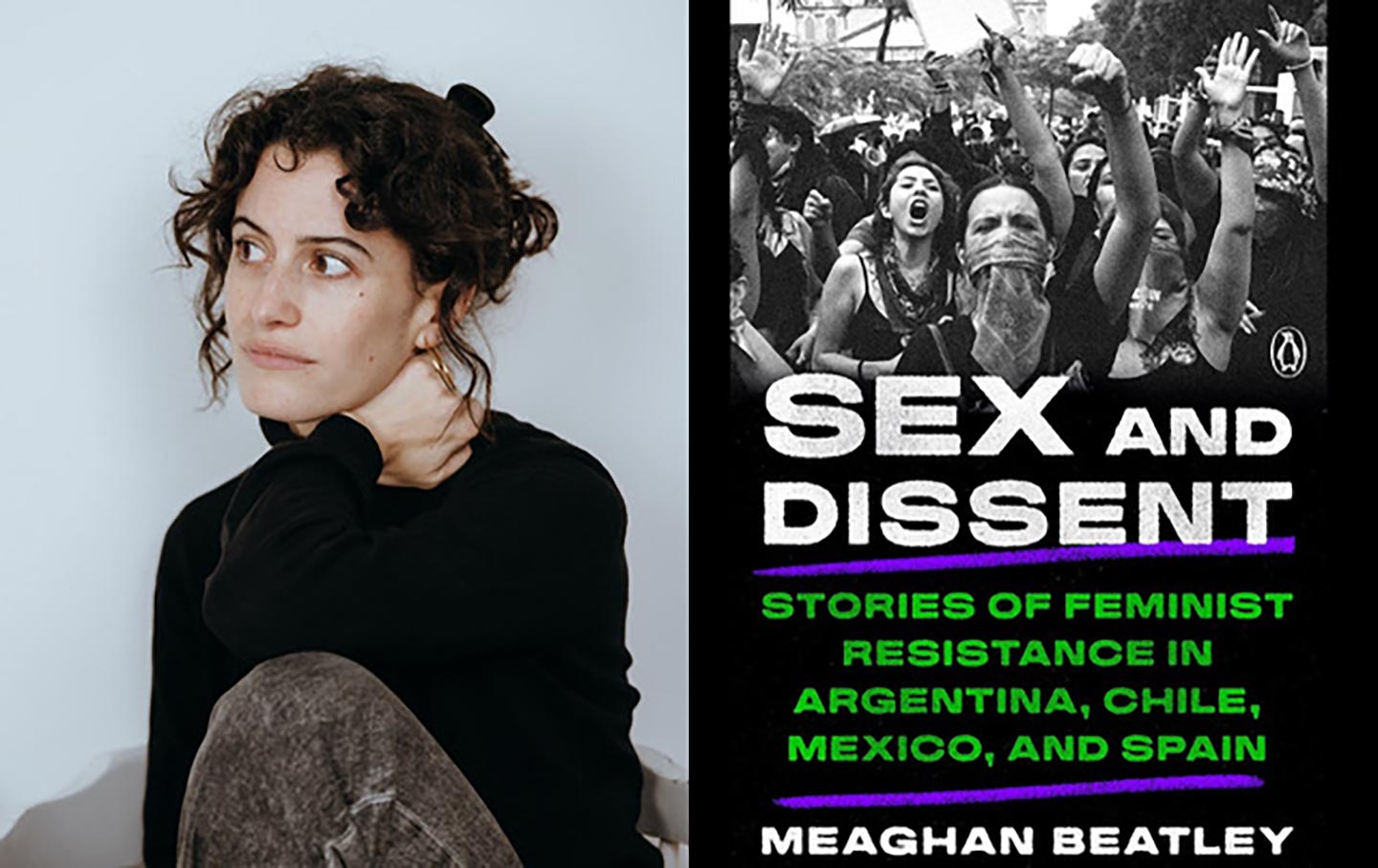
Journalist Meaghan Beatley on Latin America’s Feminist Resistance Journalist Meaghan Beatley on Latin America’s Feminist Resistance
A conversation with the author of Sex and Dissent about what American feminists can learn from the Green Wave movement.

As Cornell’s Rape Case Draws National Attention, Students Want Accountability As Cornell’s Rape Case Draws National Attention, Students Want Accountability
A new lawsuit alleging that a former student was drugged and gang-raped by Chi Phi fraternity members is sparking outrage in the Cornell community.

Irish Goalkeeper Gavin Bazunu’s Refusal to Play Against Israel Puts Him on the Right Side of History Irish Goalkeeper Gavin Bazunu’s Refusal to Play Against Israel Puts Him on the Right Side of History
Bazunu’s decision raises the perennial question: Why is a country that is currently committing a genocide allowed to compete in the first place?

