Northeastern’s Lack of Transparency Undermines Student Journalists
The lack of access to university administration makes it hard for student reporters to report fully on campus affairs.
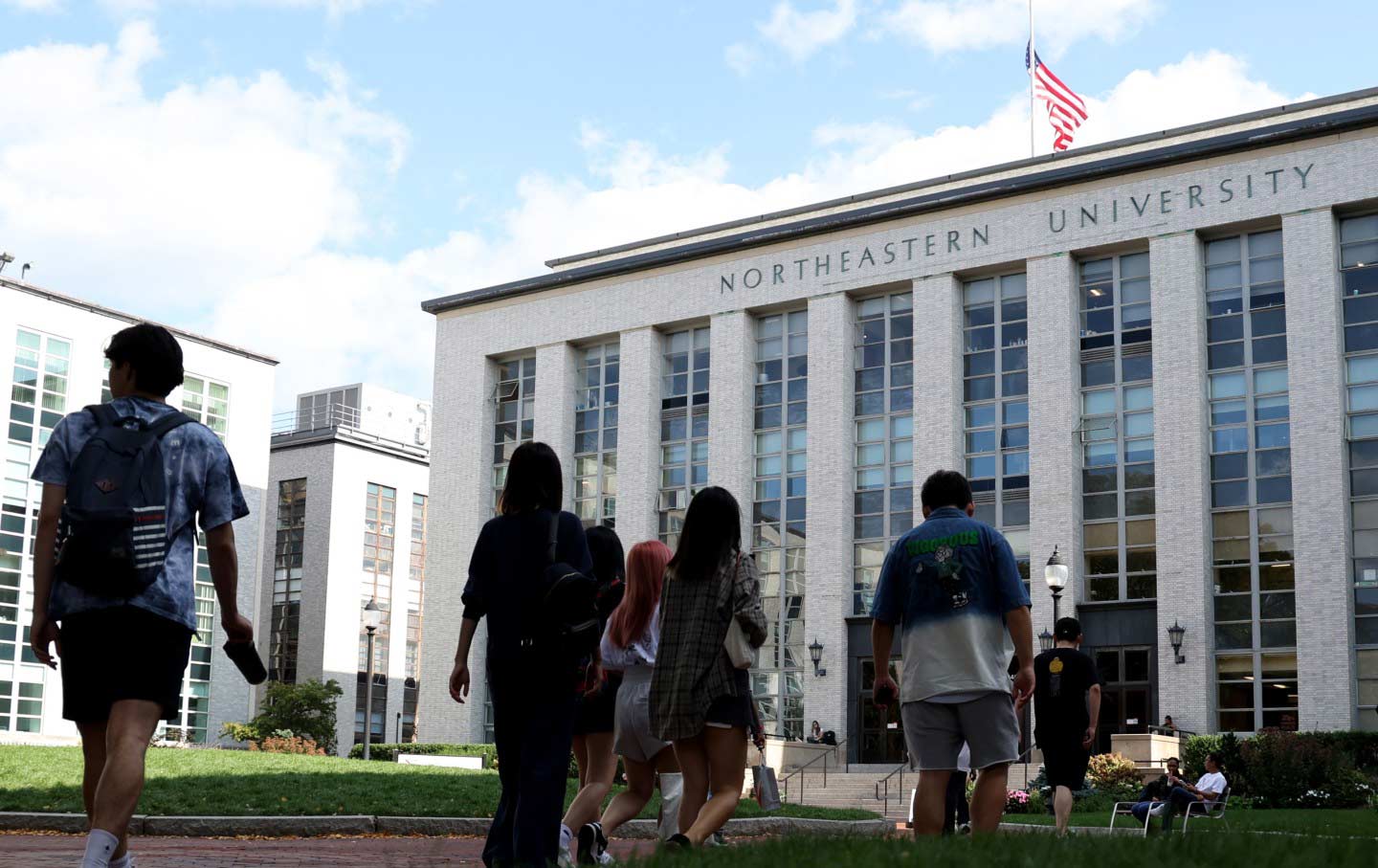
Working for a school newspaper and seldom getting a response from your own school officials can be an important lesson in experiential learning.
For 100 years, Northeastern University’s independent school newspaper, The Huntington News, has been in service to its campus community. In 2008, the News became independent from the university to gain editorial freedom.
As is the nature of school newspapers, significant energy is dedicated to campus affairs. And as students report on more issues that require university comment, from the 2024 pro-Palestinian encampments to employee salary disparities, Northeastern has failed to deliver time and time again.
In 2020, then editor in chief Kelly Chan and managing editor Deanna Schwartz spoke to Georgetown University’s Free Speech Project about Northeastern’s lack of transparency and failure to respond to newspaper interview requests.
Six years on, not much has changed. Emily Spatz, the News’s 2025–26 editor in chief, recently wrote a letter from the editor titled “Why The Huntington News is participating in a Boston City Council hearing about Northeastern’s transparency.”
In her letter, she explained that reporters are normally redirected to media relations for requests for comment, and it’s rare to even get a response from the comms professionals. When administrators do comment, they often don’t answer the reporters’ questions. Virtually all correspondence with the university happens through e-mails with media relations, in accordance with university policy. Even interviews with professors speaking on their areas of expertise are rarely allowed.
“Most of my relationship with them was lots of nonanswers and pushback on our stories,” Spatz said. “One time we were doing a story about [gender salary discrepancies] at the university and we e-mailed the university for comment and one of the media relations people called me and was trying to convince me it wasn’t a story.”
The lack of access to university administration makes it hard for student reporters to report fully on campus affairs.
In 2023, one of the university’s residence halls, White Hall, was shut down after structural engineers found significant water damage in the building. By 2024, the building was demolished. The building’s farewell came amid a student housing shortage so severe that the university ended up renting hotel rooms for students to live in.
The News was planning to write a story on when a new dorm building would start being built and important related issues directly relevant to students, but media relations never responded to e-mail requests and the article could not run.
“It’s pretty pertinent, urgent, and essential information to the students who thought they could be living there, or students who did live there. And so when they choose not to provide information, it goes to show what the priorities of the school are,” said Eli Curwin, the News’s 2023–24 editor in chief.
According to Spatz, that’s not the only time that students have had to kill a story idea because it wasn’t viable without the university’s cooperation. “You just can’t do it because you know the school won’t confirm anything,” she said.
Curwin, who later cofounded the Educational Freedom Project, a “student association seeking to defend and fulfill the promise of higher education,” found through the organization’s research study that ten out of 11 student leaders responded “No” to the statement “Do you think that senior members of Northeastern’s administration and the board of trustees are adequately transparent about decisions they make that impact student life?”
“Something I learned when I was [EIC] was that there’s no real structural mechanism to hold the university accountable,” Curwin said. “At its core, it means that we can’t [always] publish information that the university community needs.”
At Northeastern, that includes information about ICE presence on campus, why international students are getting their visas revoked, and why the DEI office has been dismantled.
There have been a few instances where members of the News have spoken to administrative staff such as senior vice president for external affairs Michael Armini and then senior vice president for academic affairs Beth Winkelstein, but these conversations are rare. Other Boston-area college university presidents speak to their student newspaper far more frequently than Northeastern’s top administrator.
Popular
“swipe left below to view more authors”Swipe →After almost four years, The Huntington News was recently granted an hour-long interview with university President Joseph Aoun. According to the article soon published after the interview, Aoun told reporters: “I think that we believe in academic freedom, and that’s essential,” and “that’s a precious attribute that…we want to keep in higher education.”
But it’s going to take some real changes for students to believe in Aoun’s commitment to free expression and transparency. As the face of the university, Aoun faces the brunt of criticism. But, according to Curwin, the broader university system that “prioritizes the brand over the people who go to the school,” is what is at fault.
The wall that the university has put up against its student journalists hasn’t stopped enterprising reporters from doing their job.
“Even if we can’t get an official answer from the school, we have tried to report around it,” Spatz said. In practice, this means having to go through “many more people” to confirm information.
Since Trump has taken office, the attack on free speech has affected law firms, libraries, schools, and federal agencies. In higher education his leadership has created a chilling atmosphere, where universities risk funding cuts if they don’t acquiesce to his demands, creating a trickling culture of self-censorship.
“It is the role of student journalists to uplift student voices, hold the university accountable, and inform the university community. Regardless of whether or not you go to a school that is willing to align with those goals, it is your job to fulfill them anyways,” Curwin said. “Your community is relying on you for essential information [and] as a platform to have their voices heard
Northeastern University did not respond to repeated requests for comment.
This article originally stated that 1,077 students, faculty, staff, parents, and alumni responded to a survey. This mistake has been corrected.
More from The Nation

We Have Invited Insane Surveillance Into Our Homes We Have Invited Insane Surveillance Into Our Homes
Aggregated property listings are being weaponized by insidious intelligence outfits. We have ourselves to blame.

How Mona Chalabi Explains Income Inequality How Mona Chalabi Explains Income Inequality
An interview with the data journalist about how she uses numbers and design to illustrate how class weighs on the lives of Americans.
How Did New York Become So Unequal? How Did New York Become So Unequal?
A new history of New York examines how it went from a center of social-democratic experiment to one of neoliberal devastation.
The EEOC Is Failing Workers While Hunting for Discrimination Claims From White Men The EEOC Is Failing Workers While Hunting for Discrimination Claims From White Men
Investigators are rapidly closing out claims of workplace discrimination so that they can search for the kinds of cases chair Andrea Lucas most wants to find.

The Country Repudiated Bigotry in This Election. Will the Sports World Follow? The Country Repudiated Bigotry in This Election. Will the Sports World Follow?
If we follow the lead of billionaire team owners, toxic cable news channels, and misguided athletes, it’s a resounding no. That just means we need to forge our own path.

Rethinking the Early History of North America Rethinking the Early History of North America
Peter Mancall’s new book reframes the history of the American continent as a zone of encounters between Native peoples, European empires, and African societies.