The Midterms Are Over, and We Won. Now It’s Time to Till the Democratic Soil
To renew the promise of self-government, we must create a politics beyond opposing Trump.
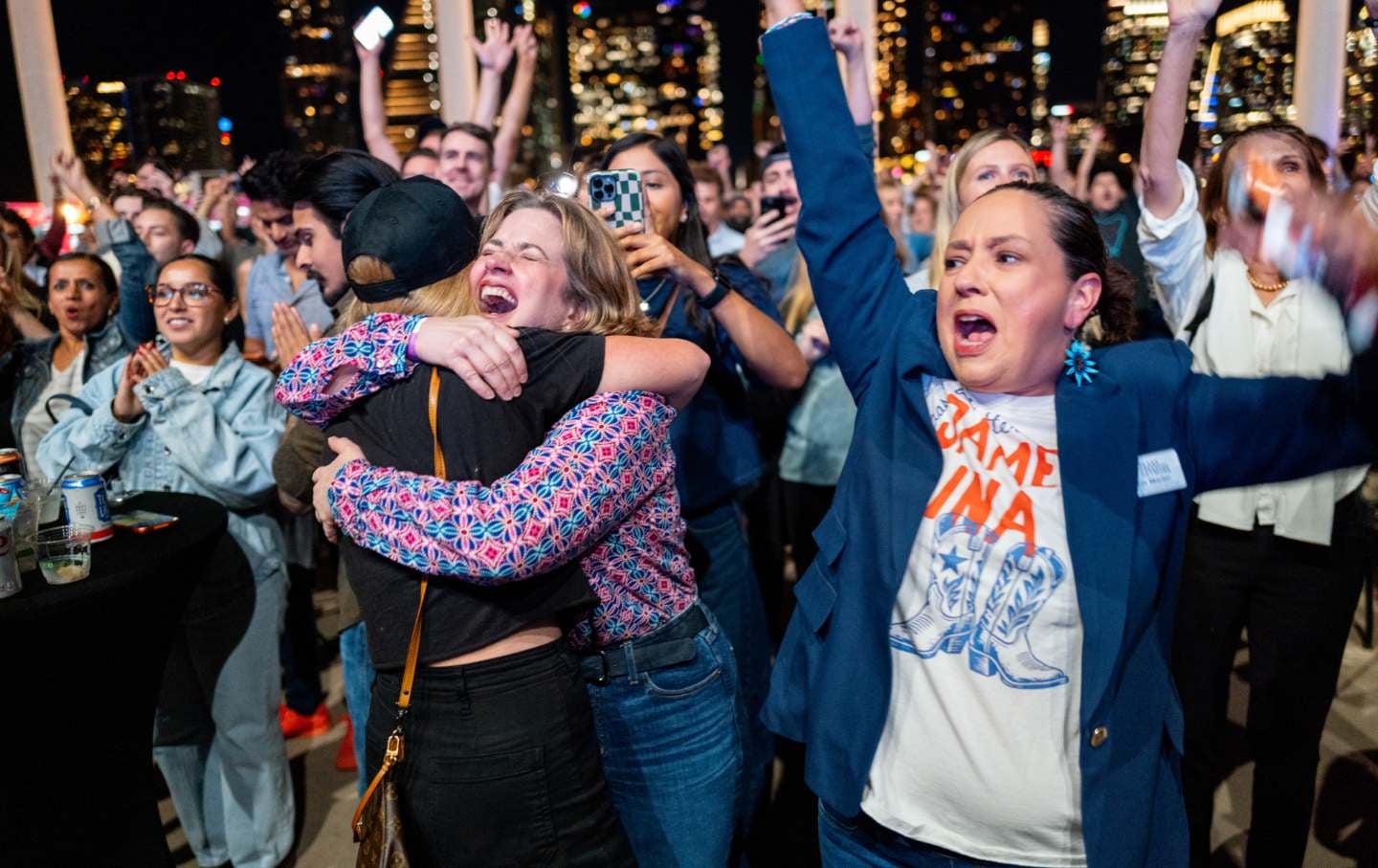
With the midterms over, we must now turn to the hard work of tending the democratic soil. Such work is not easy, and it will be tempting to train our attention instead on the polling about 2028, on Trump’s latest atrocities, on worrying about whether our country will survive.
These temptations are old ones. Thousands of years ago, the Greek statesman Demosthenes scolded Athenians for being “content to run round and ask one another, ‘Is there any news today?’” about Philip, King of Macedon, the great threat. He mocked the daily dialogue: “‘Is Philip dead?’ you ask. ‘No, indeed; but he is ill.’” Demosthenes begged the Athenians to see that “this Philip has not grown great through his own unaided strength so much as through our carelessness.” If Athenians kept up at this anxious gossip, he cautioned, they “will soon raise up a second Philip.”
Trump has become our modern-day Philip. His gross destruction of institutions and almost gleeful corruption, his desire to slander opponents and his naked venality, make his actions different in kind from those of other presidents. He flaunts his abuses like a peacock displaying its feathers. “Drain the swamp,” he crows, while accepting a jet from Qatar. “Leakers should be shot,” he shouts at a campaign rally.
“Is he ill?” we ask. “Are his poll numbers down?” Even if you are not embedded in Kalshi and Polymarket, you are likely tempted by the prognostications. But this obsession risks distracting us. Trump’s extremity only means we have greater responsibilities than we might want. As Wendell Berry said to Bill Moyers in 2013, “We don’t have a right to ask whether we’re going to succeed or not. The only question we have a right to ask is: ‘What’s the right thing to do? What does this earth require of us if we want to continue to live on it?’” If we don’t want to raise up a second Philip, there are at least three things people who believe in the promise of self-government should be doing today to till the democratic soil.
First, we must engage in local politics. We can yell at an inert Congress all we want, but if we are careless about our local democratic institutions, congresspeople will only become more untethered from our concerns—after all, the average representative theoretically hears from more than 700,000 people. From Arendt to Brandeis to Tocqueville, the greatest theorists of American democracy have pointed to the townships and local and regional politics as the places where the art of collective action amid difference is learned. It is where we develop the ability to laugh and feel compassion even as we fiercely disagree, tolerating opposing—even hated—ideas without breaking apart. In cities and towns, the public creates democracy tethered to human life.
The most riveting and inspiring actions today are happening locally, with local resistance against ICE and true left-right, MAGA-socialist-independent alliances forming in opposition to AI companies and surveillance tools like Flock cameras. Amid the decay, we see an extraordinary—and successful—uprising of political courage. In the first quarter of 2026, local opposition blocked or delayed at least 75 AI data-center projects, and the number of grassroots anti-data-center groups has been growing exponentially, from under 150 in spring 2025 to over 800 now. People are setting aside their differences to fight against a dictated industrial policy of building sprawling water-and-energy-gobbling server farms that communities don’t want.
Second, we need to build a national anti-corruption movement, one that is separate from the political parties. That anti-corruption movement must demand to investigate Trump’s corrupt deals with law firms and big companies, to be sure, but it must do far more. It must fight to overturn Buckley v. Valeo and Citizens United, the Supreme Court’s catastrophic rulings on campaign finances, as well as the court’s decision to bless lobbyists giving Rolex watches to governors. And it must reclaim our understanding of human nature from the view of it that has dominated American politics for half a century.
The economics revolution of the 1970s taught judges, policymakers, and politicians that to be human is to be Homo economicus—essentially, profit-maximizers whose behavior should be “nudged” in certain directions by laws that appeal to our self-interest. This vision of the person as inherently devoid of empathy feeds a politics of paranoia and mistrust of others. A society with a thin and suspicious understanding of the person will collapse on itself. We must expect courage and compassion from each other, and ourselves. When Aristotle warned against corrupt constitutions, he feared the radical breaking of a shared public life. He described the fundamental threat of corruption as that of the selfishness of rulers. We must renew from within.
Finally, we should use both national and local tools to take on the pinnacle of antidemocratic power: corporate monopolies. Not only are they destroying our food, land, and farmers, but the huge tech companies—the biggest monopolies today—are embedding isolation in every action we take, feeding each of us different content and, increasingly, assigning us different prices and different wages. Megacorporations like UnitedHealthcare are gobbling up independent medical practices and corrupting doctor’s offices by taking decisions away from primary-care providers. Massive monopolies have sucked the soul out of cities and rural areas across America and are driving the epidemic of loneliness and powerlessness.
What does the future require of us if we want to continue to live in it together? Our country is teetering between possibilities. To truly fight corruption, we need to recover democratic power and, with it, democratic responsibility. We cannot renew ourselves unless we build local institutions, learn to love each other through our bitterness, and, instead of asking which Democrat will save us in 2028, ask what the soil needs, and whether we are willing to get blisters on our hands to tend it.