Actually, Democrats Don’t Have to Sacrifice Trans People or Immigrants to Win
For two years, leading Democratic factions have insisted the party must abandon key populations to win. Tuesday proved them wrong.

J.D. Ford, representative-elect for Indiana’s 5th Congressional district; Peggy Flanagan, senator-elect for Minnesota.
(J.D. Ford for US Congress campaign) (Stephen Maturen / Getty )
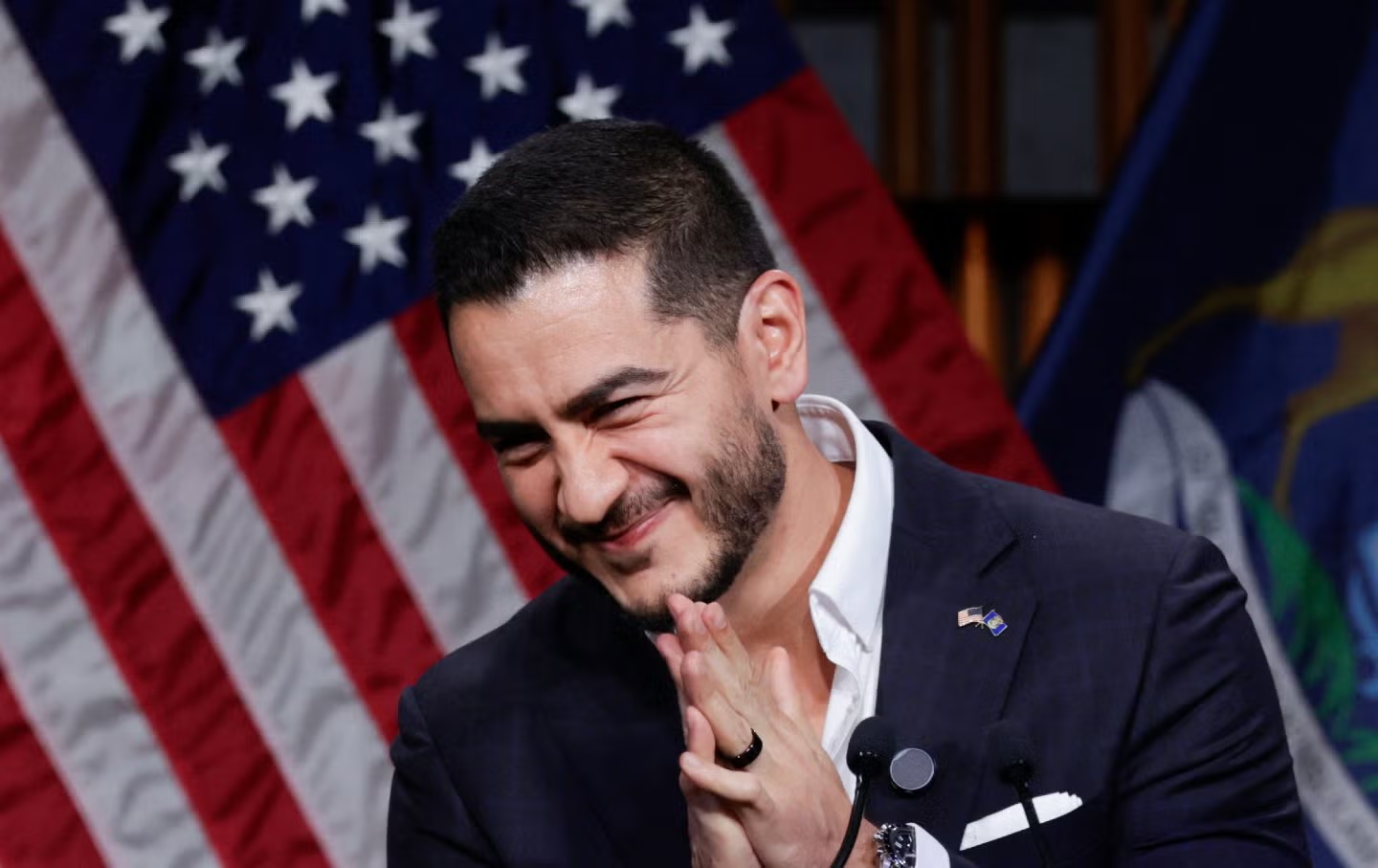
In Muncie, Indiana, Republican Congresswoman Victoria Spartz lost her deep red district to J.D. Ford, an openly gay Democrat who loudly and proudly supports trans rights. In Maine, Republican Senator Susan Collins lost to Democrat Troy Jackson, a logger who does not have Nazi tattoos or a history of violence toward women or a backlog of homophobic comments on Reddit. In Michigan, Muslim doctor Abdul El-Sayed defeated a Republican who was endorsed by a pro-Israel Democrat who lost the primary to him, while never wavering from his defense of Palestinian rights. In Minnesota, Peggy Flanagan, a citizen of the White Earth Nation, defeated a former NFL reporter while running explicitly on “dismantling ICE,” the paramilitary organization that is responsible for the murder of some of her neighbors and constituents. And in Alabama, Allison Montgomery won a state house race, becoming the first transgender legislator in Alabama.
For the past two years, we have been repeatedly told that to win elections, Democrats must abandon their principles. We’ve been told to throw certain groups under the bus. We’ve been told that AIPAC is an insurmountable force. We’ve been told to demonize immigrants. We’ve been told to embrace a form of masculinity that is toxic. We’ve been told that if we don’t do these things, Democrats cannot win anywhere outside New York and California.
No, no, no, and no. Tuesday night showed that having principles is a feature, not a bug. Tuesday night illustrated that Democrats can win anywhere. Tuesday night proved that no group needs to be left behind in order for the coalition to rise.
The Democrats are not the Republicans: there’s no ring you have to kiss or cult leader you have to praise to be part of the group. While the Democrats certainly had a national legislative agenda (that they’ll now be expected to deliver), I’d say the things that bind the current party together are not policies so much as principles. Decency, accountability, fairness, dignity. Donald Trump has debased the Republican Party to the point that the thing that marks you as a “liberal” is not where you stand on the marginal tax rate on incomes over $1,000,000, it’s where you stand on whether rape is a crime that should be prosecuted.
Having strong principles helped Democrats everywhere. Authentically standing up for those principles helped Democrats everywhere. Standing ten-toes down for what you believe helped Democrats even in races they lost. Just look at Angie Nixon, the DSA-backed candidate who came within striking distance of winning her Senate race in Florida. Nixon received almost no support from the Democratic National Committee, which wrote Florida off as a lost cause, and yet she almost pulled it out. She didn’t have to campaign on policing where kids go to the bathroom or promise to send bombs to Israel to get thisclose to the upset of the night. The difference between Nixon winning and Nixon losing was establishment Democrats seeing her potential earlier and giving her some money, not Nixon selling out her ideals to the first tech-bro billionaire willing to cut her a check.
Tuesday was a historically good night for candidates of color and women, but I must admit that the victory that was most gratifying to me was Jackson’s up in Maine. I’m one of those people who jumped off the Graham Platner bandwagon so hard when I saw his “totenkopf” tattoo that I sprained several ankle ligaments. My tolerance for Nazi-aligned body art… does not exist. I got into a lot of fights with the lefty-boy commentariat who told me to overlook the tattoo, and essentially assured me that Platner embossed himself with Nazi insignia as a youthful indiscretion. I got into even more fights with people as Platner’s disgusting history of Reddit homophobia came out. By the time the allegations of sexual assault showed up, I was telling my Maine friends to write in “literally any Black bear” instead of voting for Platner.
Through it all, I was told that Platner’s Marine-honed masculinity was the key to defeating Susan Collins and winning the Senate. I was told that I was being elitist for expecting a “perfect” candidate, as if my request of “maybe don’t nominate the guy who posts homophobic slurs and gets a Nazi tattoo” was some sort of impossible purity test from the egghead left. I was told I was out of touch with regular Maine voters, as if any of these pundits were in-touch with rural Mainers who have to shovel snow off their roofs to keep their ceilings from caving in.
All of those political know-it-alls were dead wrong. Troy Jackson, it turns out, is every bit as “manly” as Platner without having committed assault. He’s every bit as “salt-of-the-earth” without being a bigot online. He’s not a guy I will probably agree with on a lot of things but, by all accounts, he seems to be a decent person. And this year, in this election, that was enough.
I hope the pollster-industrial-complex learns that lesson from this election. No, Democrats don’t have to sacrifice trans children on the altar of the megachurch because J.C. (James Carville) told them to. No, Democrats don’t have to take testosterone supplements and treat consent as optional to prove they can win the locker room. No, Democrats don’t have to ignore suffering in Gaza. No, Democrats don’t have to mass deport their neighbors. No, Democrats don’t have to act like Republicans to win Republican districts.
Democrats won this election by having principles. If they also govern that way, things will work out just fine.