We Can Ensure Parents, Children, and Birth Workers Thrive
The “lactonomy” is rigged against us, but there are public health measures we can take to fix it.
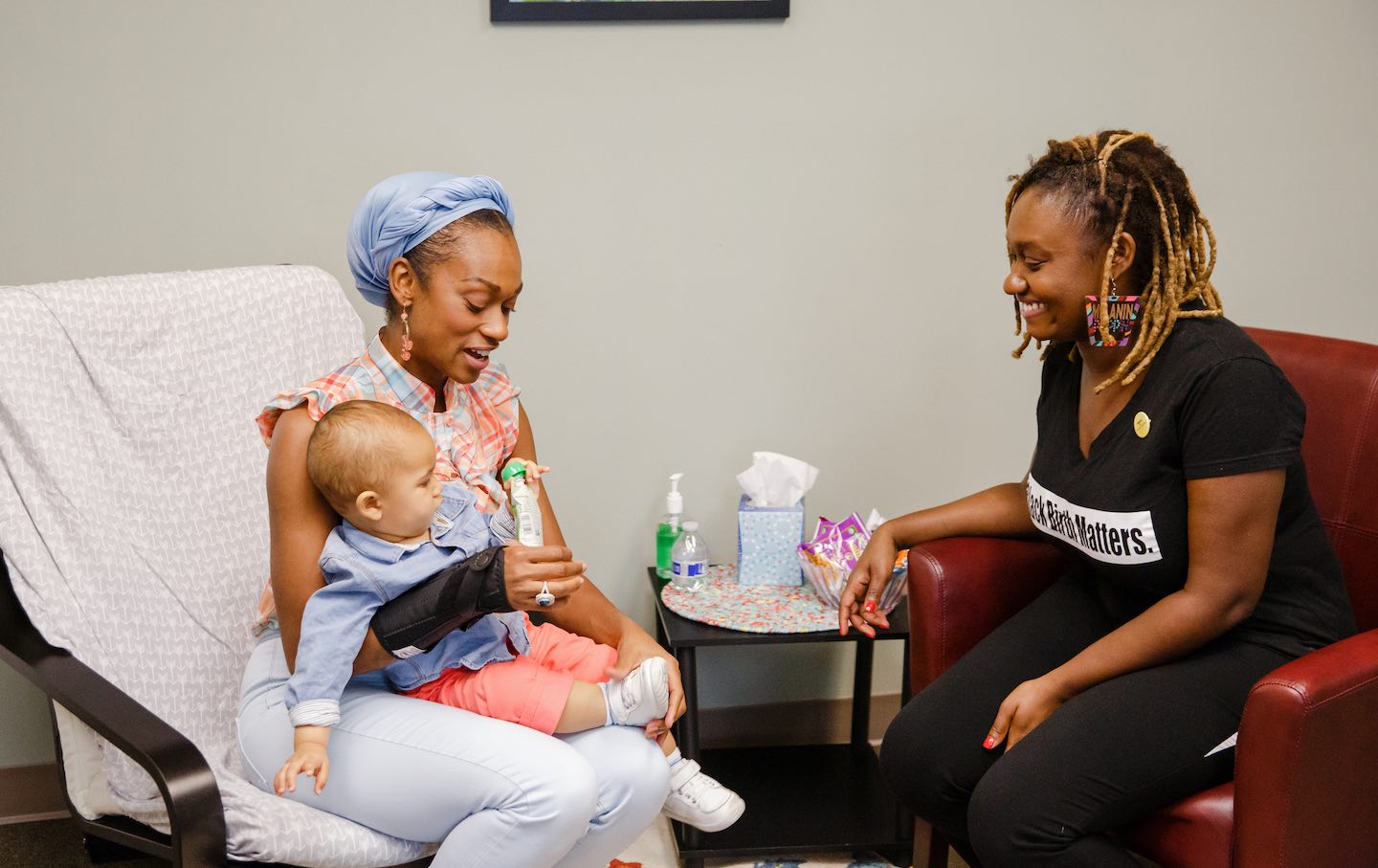
Long before enough people in the media cared to draw attention to the crisis of birthing while Black in America, community birth workers have been saving lives through high-quality, community-based perinatal support programs. For decades, doulas, perinatal community health workers, and lactation consultants have been recreating ancestral models of communal care, and quietly doing the work of caring for families in their communities as a salve to the broken medical system. Of late, we are finally starting to be recognized and celebrated for our impacts: Everywhere from Essence and Time to The New York Times and the White House, people are praising birth workers as a solution to this nation’s devastating perinatal outcomes. Yet, while we are celebrated, birth workers are simultaneously being asked to take on increasing burdens without adequate funding or staff resources.
Last summer, I gathered with my fellow members of the Birthmark Doula Collective—our majority-Black, New Orleans birth worker cooperative. Birth workers, many of whom are former clients, own and manage this co-op, providing holistic, client-centered care to families during pregnancy, birth, and the postpartum period. It was a long, stressful meeting during a hot summer. We were two years into the pandemic, still recovering from Hurricane Ida, and our financial reserves were critically low. We were trying to figure out how to continue to serve the urgent needs of our New Orleans birthing and parenting community, which would only grow after the Supreme Court ruled against the national right to abortion in its Dobbs ruling, unleashing a wave of abortion bans across the South and Midwest. Faced with this reality, standing on the front lines of a worsening maternal health crisis, we came to one conclusion: “It’s lactonomics; it just don’t add up.”
Lactonomics, a term coined by our fellow doula Ashley Hill Hamilton, is our way of referring to the socioeconomic conditions in which perinatal care, practices, and outcomes occur in our society. And quite frankly, the American lactonomy is rigged.
Since I started Birthmark 12 years ago, our inboxes have always been full of messages from pregnant and postpartum people seeking support services, information, advocacy, and mutual aid. The need has only grown as our nation has divested from already weak perinatal support structures—consolidating hospitals, obstructing access to comprehensive reproductive health care, and ending safety net programs for families and children.
Yet, as the need has increased, available state and federal perinatal support structures have not. If anything, birth workers have fewer resources available today as we are overextending ourselves to fill widening gaps in our broken health care system. My birth worker co-op, for example, devised creative ways to support and educate families during the pandemic who felt isolated and disconnected from health care and social networks, while providing mutual aid to our staff and community struggling to meet basic needs. During Hurricanes Ida and Laura in the Gulf South, we provided feeding assessments, lactation resources, and basic supplies like diapers, female hygiene products, and formula to evacuated families who were desperate for supplies they could not get from local government agencies. And during the peak of the formula shortage, we connected families to feeding supplies, provided emergency counseling on how to relactate or build milk supply, and tried to reassure new parents terrified about the prospect of their infant running out of food.
The lack of resource investments paired with increasing burdens do not add up for parents either—particularly for parents of color, working-class, and rural parents—to say nothing of the way systemic failures put increasing numbers of pregnant and parenting people and their children at risk.
I remember one of my clients, a Black mother with a premature newborn baby, who came to me for help building her milk supply. She drove for a ride-share company during her pregnancy and had gone into preterm labor while on a drive two hours from home. Her baby was hospitalized for weeks, and my client was far from home, without family support, and using up her small savings on hotel rooms. Once back home, she had to start driving again to pay her mounting bills, as she had no paid parental leave. It was one year into the Covid-19 pandemic, and this three-week postpartum mother was transporting strangers in her car, with her newborn baby strapped in the backseat, pulling over in parking lots to pump breast milk, bottle feed, change diapers, and change her pads.
I was awed by her determination. I was even more angry at the injustice of her situation.
Like this client, most of my lactation clients talk to me about much more than breastfeeding during our visits, because their birth and breastfeeding outcomes are strongly influenced by their social and economic realities. They share their stories of struggling through poor access to care, birth trauma, natural disasters, preterm birth, postpartum rehospitalizations, and lack of paid leave to adequately recover and care for their newborn.
On top of many preexisting traumas and challenges, my clients often have had to fight just to access the care we provide—searching wide, traveling up to 100 miles, and often lacking insurance coverage. My fellow birth workers and I carry the secondary trauma of supporting so many families through these experiences.
Like our wider economic system in this country, the lactonomic system is biased against those who already have it the hardest. As the cracks widen in our nation’s safety net systems, more birthing people, and the community birth workers that support them, are being set up to fail.
To me, this is where the real story of birthing in America. And like our wider economic system, it will take a lot of effort to create health equity for both families and perinatal community health workers. Fortunately, birth workers and parents have already done the math. It’s time for the policy-makers, health system leaders, and insurance companies to catch up. From birth workers and postpartum parents alike: Don’t just praise us, pay us!
Alongside passing universal paid parental leave, Congress should adopt the Black Maternal Health Momnibus, which would provide financial and structural support to the essential perinatal workforce. The Momnibus also addresses many of the social determinants of perinatal health, such as housing, transportation, and health insurance coverage, and expands access to perinatal care during public health emergencies, natural disasters, and incarceration. Lactation consultants and breastfeeding families need the United States to provide the protections afforded by the WHO International Code to decrease the negative impact of future formula crises. And we must reinstate the national right to abortion, while making certain that all pregnant people have access to abortion care and miscarriage management. Taken together, these public health measures will ensure the health and well-being of parents, children, and birth workers. It’s time to make the lactonomics add up.