
Harvard Stands Up
Very real pain is about to be inflicted on students, staff, researchers, and faculty. At least for now, most of the people here are willing to bear that price.
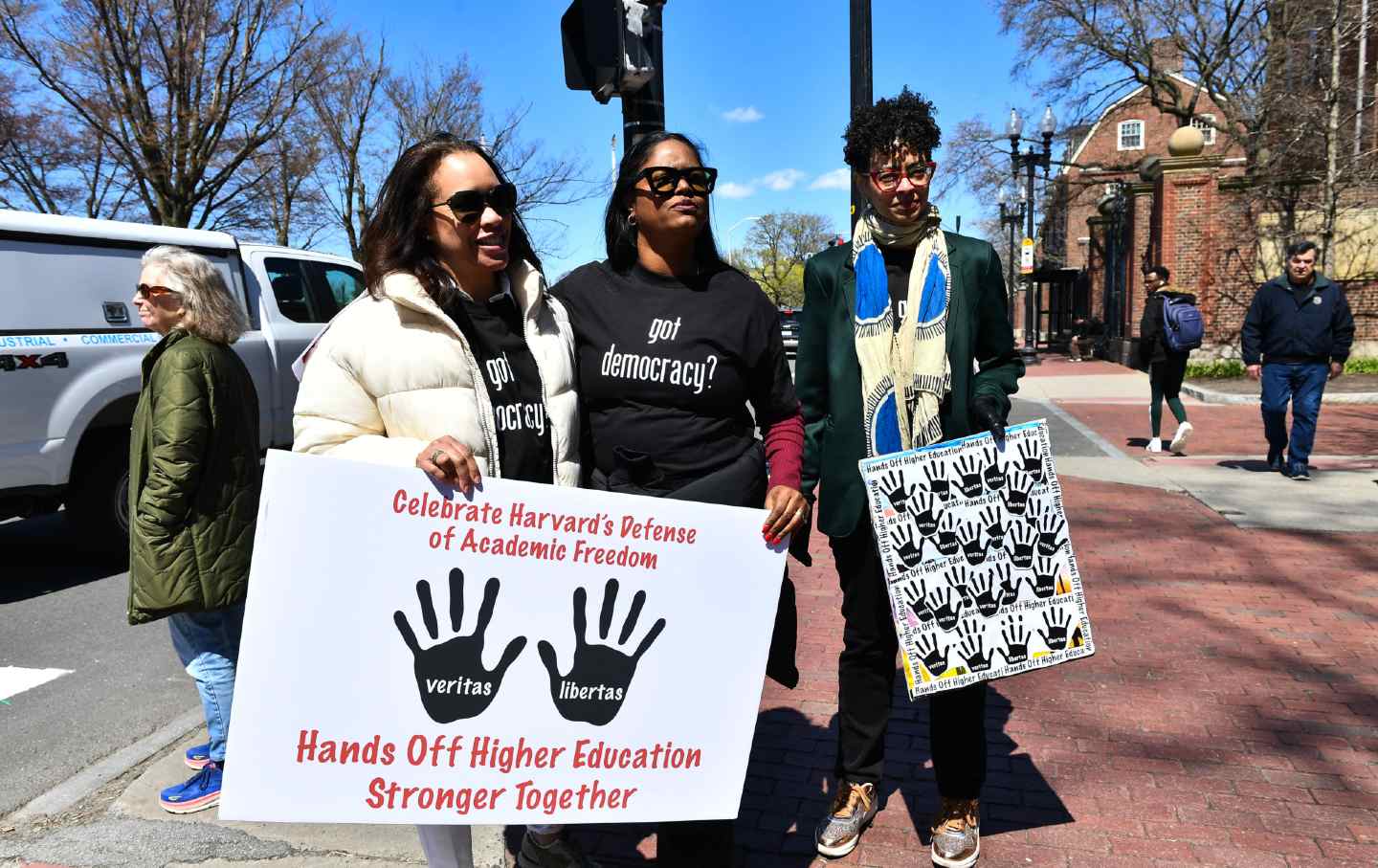
Cambridge, Massachusetts—The Harvard Crimson’s “most-read” story this past Tuesday carried a simple headline: “Harvard Will Fight Trump’s Demands.”
After months of equivocation as the White House pressed down on higher education, America’s oldest and most powerful university suddenly and dramatically said “no” to America’s oldest and most reckless president. Harvard’s message to Trump was succinct: “The University will not surrender its independence or relinquish its constitutional rights.” It was a declaration that within minutes went viral worldwide.
Leading the global rush of media coverage, The New York Times headlined “Harvard’s Decision to Resist Trump Is ‘of Momentous Significance’”—and then ran nearly a dozen in-depth stories in two days, from how and why Harvard decided to fight, to the moves Trump made next when he realized the university would not bend to his will: first, suspending $2.2 billion in federal funds to the university, then backpedaling, before shifting to a threat to strip Harvard of its tax-exempt status as an educational institution.
None of Trump’s vengeful moves seemed to faze Harvard officials—at least not yet. But the story’s half-life—the arc of what’s already being dubbed “Harvard-gate”—will almost certainly be short, given the number of fronts the Trump administration has chosen to battle on in its first 100 Days.
What comes next are months of court battles, and the slow-motion progress of suits to the Supreme Court (where four of the nine justices are Harvard graduates). Tariffs, taxes, Elon, China, Europe, inflation, recession, Russia, Gaza, and the slash-and-burn shutdown of broad swaths of the federal government haven’t stopped—and new assaults are certain to occur, jostling to be the administration’s latest headline grab.
The mood among the majority of students and faculty (to judge from several dozen personal conversations, e-mail exchanges, and Crimson interviews) is palpably upbeat right now. As the Crimson put it, “Facing down a federal extortion racket, Harvard sent its clearest, most courageous message to date: Our values aren’t for sale.” The student reaction, it went on, was “overwhelming and immediate. At a school often derided for a lack of spirit, Harvard today experienced a moment of intense unity.”
But for many here there remains a deep wariness—and for some, an almost-paralyzing fear—that, beyond whatever chaotic harm Trump means to cause Harvard and higher education, he is hell-bent to destroy America’s constitutional democracy itself.
And that leaves the question: What next? Having pushed hard and repeatedly for the university to stand up, Harvard’s progressive faculty and students face multiple challenges ahead, some in supporting Harvard, some in reforming it.
The university’s sudden decision to stand up, according to insiders, wasn’t the plan a week earlier—and came about because the White House sent a list of demands so detailed, so humiliating, and so crudely anti-intellectual that Harvard was left with no option but to reject it. (There is growing suspicion here that Trump’s demands were deliberately crafted to be rejected, setting the stage for more Trumpian melodrama and hysteria.)
For months before this week, Harvard’s administration had been either maddeningly indecisive or too willing to give in to its conservative critics on DEI, on allegations of antisemitism, and in its protections of student free speech and assembly.
The Claudine Gay fiasco, for example, metastasized after a disastrous congressional interrogation into a shocked discovery of alleged antisemitism at Harvard. Ex-president Larry Summers weaponized the issue by declaring it a campus-wide problem (which three other Jewish former presidents of Harvard had somehow all failed to notice). As the death toll in Gaza soared, questions about the proportionality of Israel’s response to the Hamas attack on October 7, 2023, and on how to differentiate criticism of the IDF’s actions (and the Netanyahu government’s orders and goals) from antisemitism, and what role the US should be playing, all drove an ever-more-heated campus debate well before Trump returned to the White House.
With his return came a new set of issues that overtook the Gaza questions. Trump’s high-velocity, high-volume executive actions during his first weeks in office left critics—and not a few of his ostensible allies—reeling. At Harvard, those first few weeks drove faculty to organize an ever-growing number of seminars, talks, debates, colloquiums, mini-conferences, and Zoom gatherings on what quite honestly feels even now like a bizarre question: Will American democracy survive? The conclusions have been alarmingly varied, signaling the scale of dangers still ahead.
Yet those dangers so far haven’t sparked a rush of student activity since Trump’s reelection. Visible signs of student protest had been markedly down compared to last spring—but that may be changing. As movement groups have organized actions like last weekend’s “Hands Off” rallies nationwide—and suddenly institutions like Harvard seem to be standing up—clearer paths of attack may be emerging for Trump’s many opponents, including progressives.
For universities like Harvard and their institutionalist defenders, there is now an obvious high-road path in defending academic freedom and protecting thought and speech that—at least in abstract form—enjoys clear majority support in the country. But the details are divisive, and won’t be resolved by Harvard the institution pushing back against Trump and his oligarchic thought police.
For progressives at Harvard and other universities, an agenda that preexisted Trump’s political ascent remains—and short of outright overthrow of American government, isn’t going away. At minimum, it includes:
- Social identity questions entailing race, gender, and sexuality;
- Economic distribution issues about wealth and income, education, and group disadvantage and privilege;
- Environmental debates that test not just nature’s carrying-capacity limits but also how to most quickly reduce human impact on the planet;
- The global governance agenda as the America-as-sole-superpower idea vaporizes, and the division of power within and between states, corporations, and whatever overarching forms of governance evolve during the rest of this century.
Popular
“swipe left below to view more authors”Swipe →Taken together, these constitute an agenda that needs to be advanced with the utmost care. On some of these issues, the university will be more conservative than we want, but in this perilous moment it is important for progressives not to misread the contours of the possible.
Three days after Harvard finally stepped up and said “no” to Donald Trump, the Crimson’s “most-read” list had a new lead story: “Stop-Work Orders Roll In for Harvard Researchers After $2.2 Billion Pause in Federal Funds.”
Thursday morning brought news that 70 current former university presidents had issued a statement endorsing Harvard President Alan Garber’s rejection of Trump’s demands.
Yet very real pain is about to be inflicted on students, administrative and support staff, researchers, and faculty. Invaluable research that could save lives and the careers of young men and women who could add to the vital store of human knowledge are going to be derailed, along with talent that, once dispersed, won’t be reassembled.
Harvard knew all that when it stood up this week. At least for now, most of the people here are willing to bear that price.
More from The Nation

The Endless Hypocrisy of Bari Weiss The Endless Hypocrisy of Bari Weiss
She claims to be a free speech champion. But as her actions at CBS News keep showing, she seems to think free speech should run only in a rightward direction.
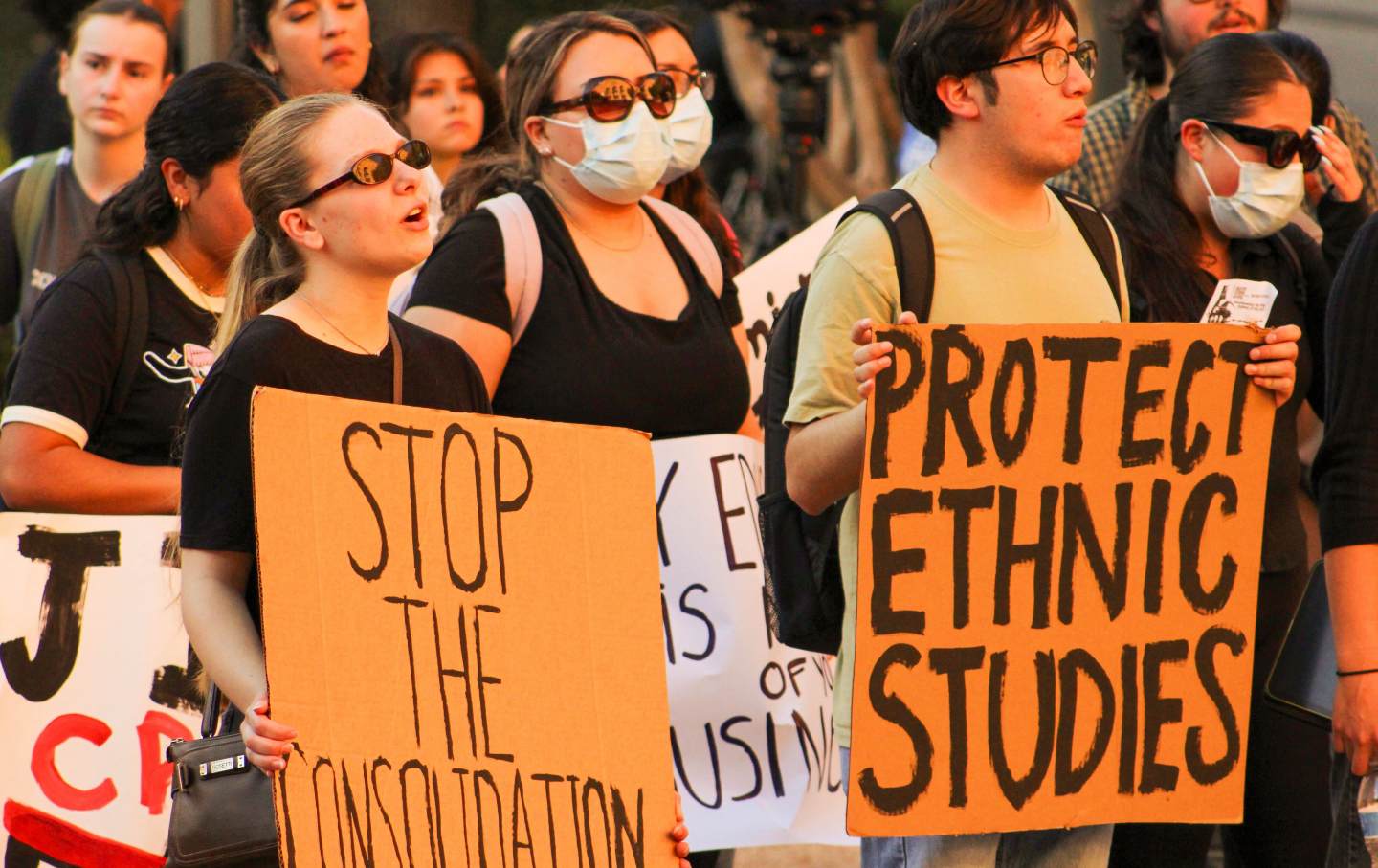
What Will Be Left After the University of Texas Destroys Itself? What Will Be Left After the University of Texas Destroys Itself?
UT-Austin has collapsed its race, ethnic, and gender studies into a single program while a new policy asks faculty to avoid “controversial” topics. But the attacks won’t end there...
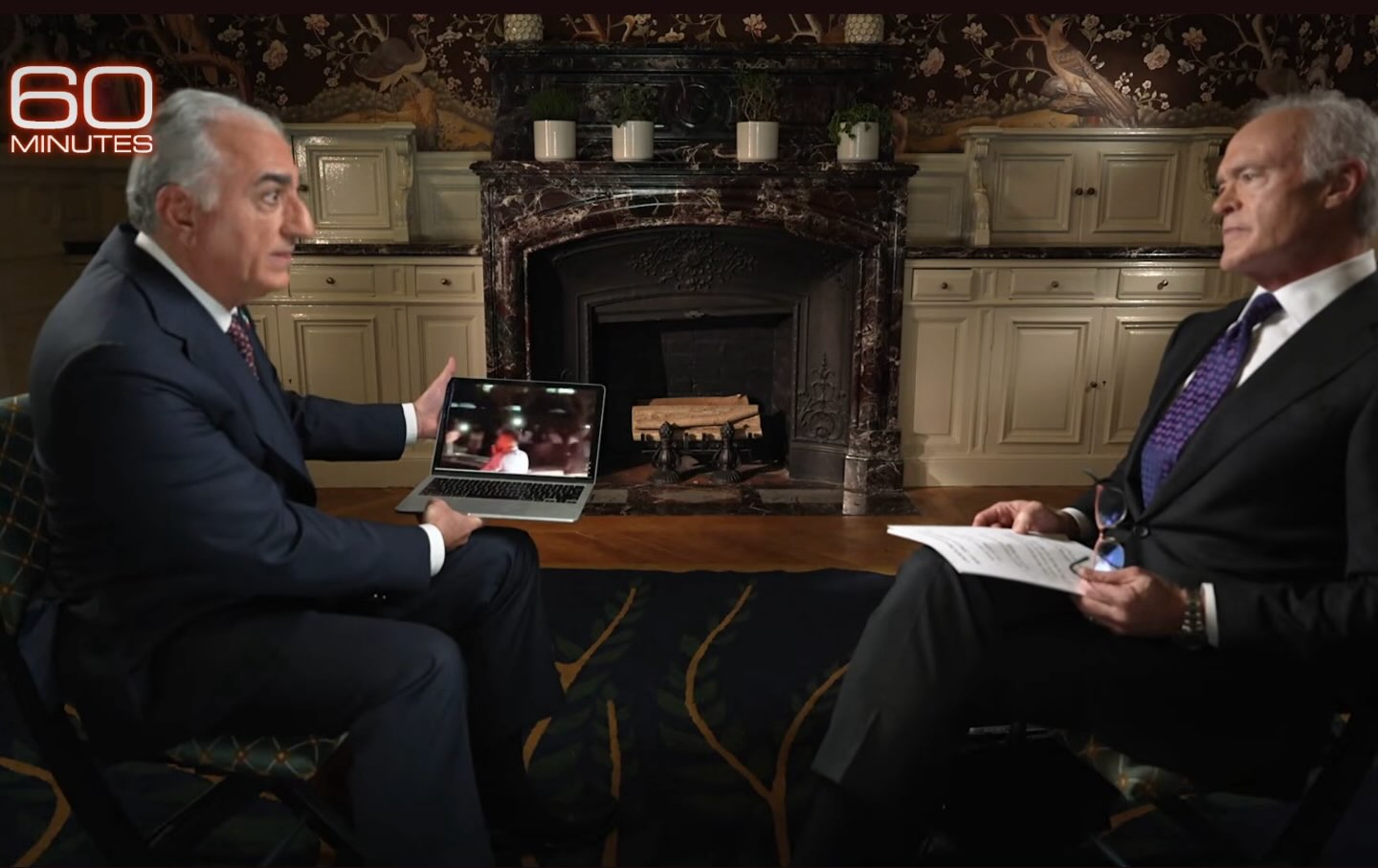
The Corporate Media Is Head Over Heels for the Iran War The Corporate Media Is Head Over Heels for the Iran War
Donald Trump’s attack may be surreal, unjustified, and illegal. But that’s not stopping the press from turning the propaganda dial way up.

The Disturbing History of ICE’s “Death Cards” The Disturbing History of ICE’s “Death Cards”
The Vietnam-era practice is yet another example of ICE agents thrilling to the brutality they have been encouraged to cultivate.
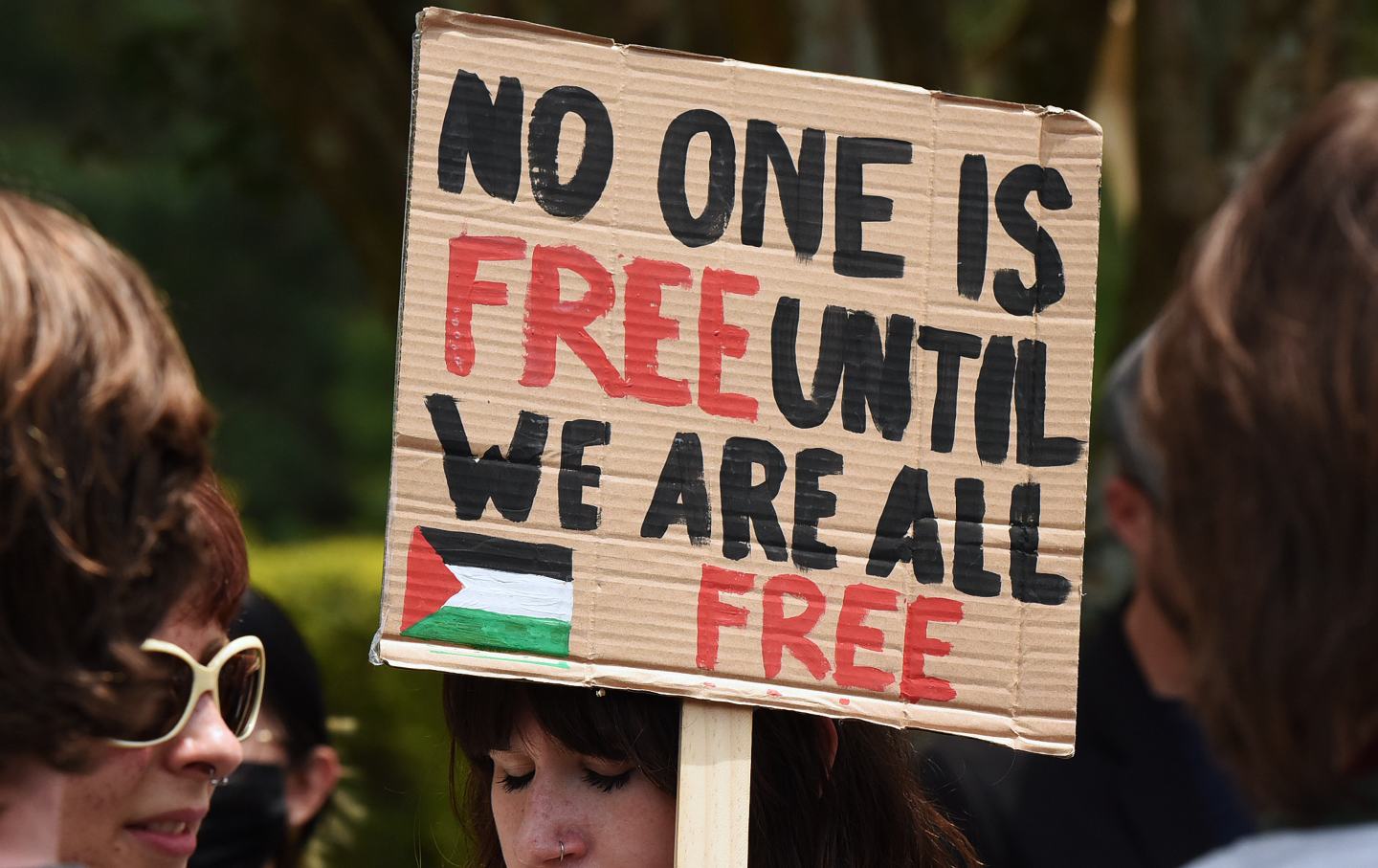
The American Universities Programming Israel’s Killer Drones The American Universities Programming Israel’s Killer Drones
Industry partnerships in higher education are pushing STEM graduates into the business of weapons manufacturing and genocide profiteering.

The Red State–Blue State Healthcare Divide Is Dangerous for Everyone The Red State–Blue State Healthcare Divide Is Dangerous for Everyone
Whether or not you have access to independent, scientifically sound public health guidance may depend on how your state voted for governor.

