
Is Punishing People for Not Having a Place to Sleep Cruel and Unusual?
With Grants Pass, the Supreme Court appears set to allow cities, counties, and states to criminalize homelessness.
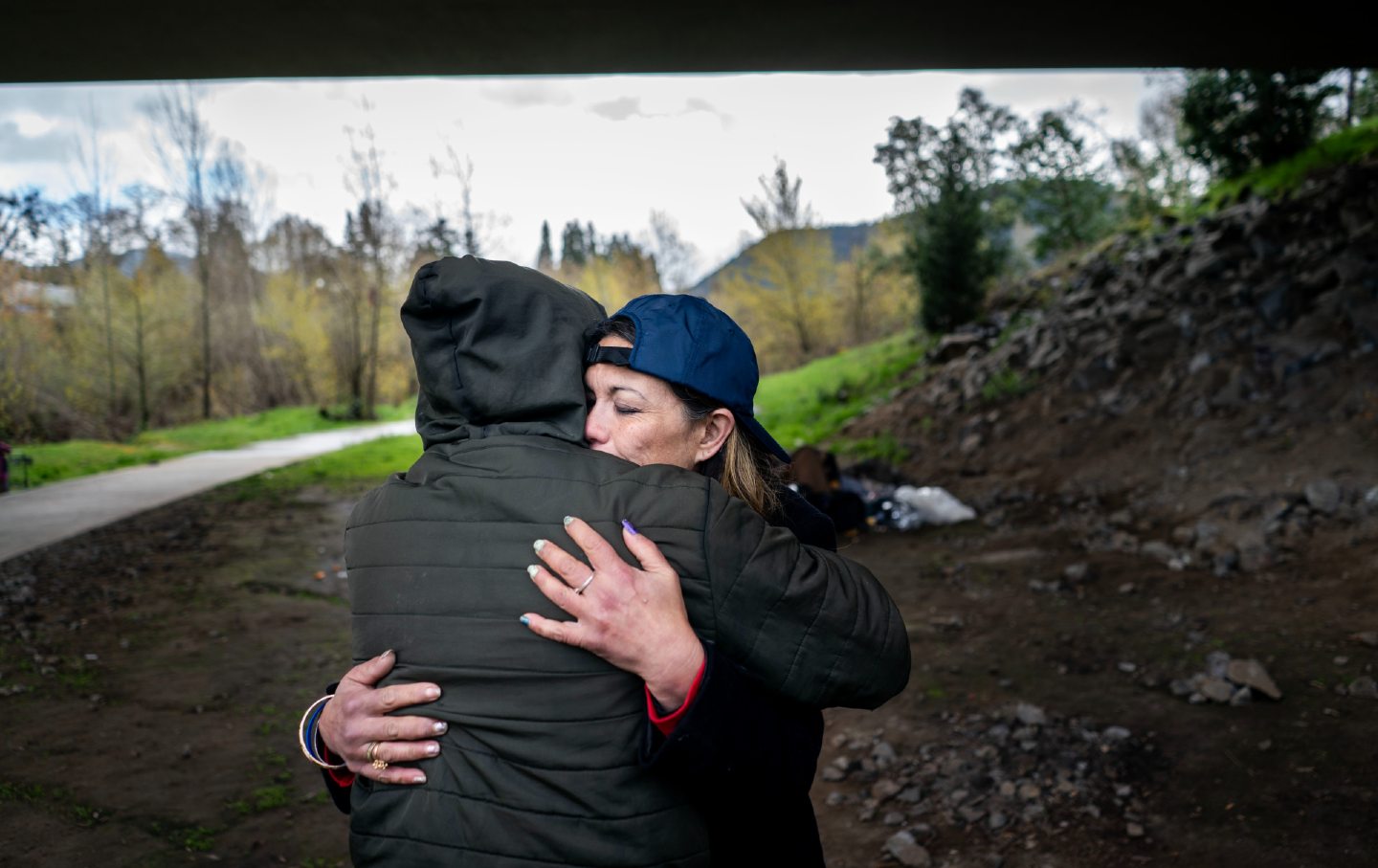
On a sunny, cold February day, I drove four hours from Portland, Oregon, to Grants Pass, a town of about 40,000 in the southern part of the state. I wanted to talk to residents about the homelessness crisis there and ask whether they thought the city should still be allowed to punish its roughly 600 unhoused people for not having a home.
Grants Pass has no operating emergency shelter. Yet a few years ago, it passed a number of anti-sleeping laws that made it impossible for people in the city without homes to avoid constant fines and jail time. Then, in 2022, the Ninth Circuit Court of Appeals issued a permanent injunction to bar the enforcement of such anti-homelessness provisions.
I headed to Morrison Park, where four people sat around a picnic table next to a pair of tents and a pickleball court. After I pulled into the parking lot of a carpet store across the street, a man came out to talk to me. He was angry about the people in the park, telling me that it was ridiculous that “people”—meaning people with homes—could no longer use their public spaces. He wanted to punish the homeless. Liberal policies, he said, had created chaos in deep-red southern Oregon.
Donald Trump won Josephine County, where Grants Pass is located, by 26 points in 2020, but Republicans are not alone in their antipathy toward the unhoused. The failure to generate affordable and supportive housing is bipartisan and widespread.
Between 2021 and 2022, the number of people experiencing homelessness increased in 41 states. Western states reported especially high rates. Between 2020 and 2022, Oregon saw a 22.5 percent spike in homelessness.
Two months later, I was on the other side of the country, at the Supreme Court, to hear the oral arguments in Grants Pass v. Johnson, a case that will determine whether city ordinances that impose civil or criminal penalties for involuntary homelessness constitute cruel and unusual punishment.
The case made its way to the Supreme Court largely because the Grants Pass ordinances were especially harsh. In addition to banning the use of bedding materials “for the purpose of maintaining a temporary place to live,” the city would sometimes shut off the water and close public restrooms in the parks. Helen Cruz, who has lived in Grants Pass since she was 4 and has been intermittently homeless, told me the ordinances were intended to make life uncomfortable enough that people would leave. “One cop even asked me, ‘Well, why don’t you just move?’” she recalled.
Liberal cities in the Ninth Circuit, such as San Francisco and Los Angeles, filed amicus briefs supporting neither party, and district attorneys from San Diego, Sacramento, and other blue cities joined Idaho, Montana, and 22 other states that support the city of Grants Pass and claim that the Ninth Circuit’s injunction removes the punitive tools needed to solve local homelessness issues.
The justices spent the two and a half hours of oral arguments discussing where the line should be drawn between the status of being homeless and the conduct associated with it. The status precedent comes from a 1962 case, Robinson v. California, which determined that a person cannot be punished simply for being addicted to narcotics. The justices ruled that the Eighth Amendment prohibits the state from punishing an act or condition if it is the unavoidable consequence of one’s status or being.
Ticketing people for having nowhere to go penalizes them for not being able to overcome skyrocketing rents, low wages, and a lack of healthcare. If the court—as seems likely—rules that cities, counties, and states can criminalize sleeping outdoors, this crisis will get worse. Laws likes the ones in Grants Pass will push unhoused residents further into poverty, harming their mental health and potentially leading to substance-use disorders.
Ask any case worker about homelessness, and they will list the barriers their clients face in obtaining housing: prior evictions, criminal records, and the inaccessibility of healthcare. Note that “lack of jail time” and “too little debt” are not on the list.
Even right-wing Justices Brett Kavanaugh and Amy Coney Barrett asked the counsel for Grants Pass where homeless people are expected to go after serving a jail sentence. The lawyer said that the jail would hypothetically connect people to services, but she had no good answer for what happens when housing and services are not available.
As in other places, people with disabilities, people of color, and LGBTQ individuals are disproportionately represented in the homelessness statistics for Grants Pass. All the homeless residents I spoke with had experienced trauma. We know what helps homelessness: affordable housing and healthcare.
Back in February, Helen Cruz told me there was a third thing that could help—something the Supreme Court could make more difficult. “People out here, they’ve got nothing to lose and nothing to look forward to,” Cruz said. “Just give them a little bit of hope, because a lot of them out there have none.”
Support independent journalism that does not fall in line
Even before February 28, the reasons for Donald Trump’s imploding approval rating were abundantly clear: untrammeled corruption and personal enrichment to the tune of billions of dollars during an affordability crisis, a foreign policy guided only by his own derelict sense of morality, and the deployment of a murderous campaign of occupation, detention, and deportation on American streets.
Now an undeclared, unauthorized, unpopular, and unconstitutional war of aggression against Iran has spread like wildfire through the region and into Europe. A new “forever war”—with an ever-increasing likelihood of American troops on the ground—may very well be upon us.
As we’ve seen over and over, this administration uses lies, misdirection, and attempts to flood the zone to justify its abuses of power at home and abroad. Just as Trump, Marco Rubio, and Pete Hegseth offer erratic and contradictory rationales for the attacks on Iran, the administration is also spreading the lie that the upcoming midterm elections are under threat from noncitizens on voter rolls. When these lies go unchecked, they become the basis for further authoritarian encroachment and war.
In these dark times, independent journalism is uniquely able to uncover the falsehoods that threaten our republic—and civilians around the world—and shine a bright light on the truth.
The Nation’s experienced team of writers, editors, and fact-checkers understands the scale of what we’re up against and the urgency with which we have to act. That’s why we’re publishing critical reporting and analysis of the war on Iran, ICE violence at home, new forms of voter suppression emerging in the courts, and much more.
But this journalism is possible only with your support.
This March, The Nation needs to raise $50,000 to ensure that we have the resources for reporting and analysis that sets the record straight and empowers people of conscience to organize. Will you donate today?
More from The Nation
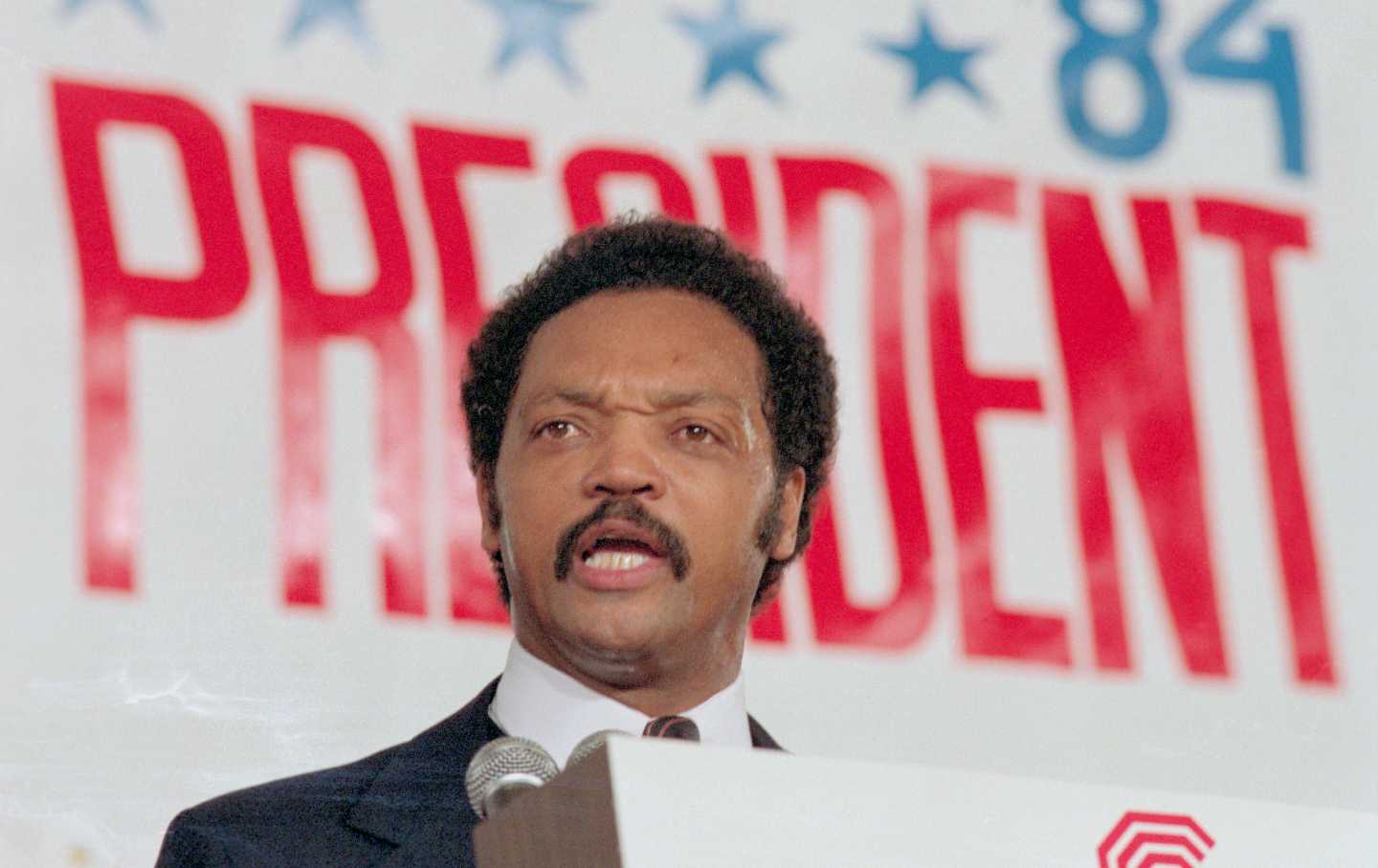
In Memoriam: the Rev. Jesse Jackson (1941–2026) In Memoriam: the Rev. Jesse Jackson (1941–2026)
The civil-rights activist and founder of the Rainbow PUSH Coalition changed what’s possible in politics.

The Real Reason Americans Love Guns The Real Reason Americans Love Guns
With a weak social safety net, a gun offers a false sense of personal power and security.

The Endless Hypocrisy of Bari Weiss The Endless Hypocrisy of Bari Weiss
She claims to be a free speech champion. But as her actions at CBS News keep showing, she seems to think free speech should run only in a rightward direction.
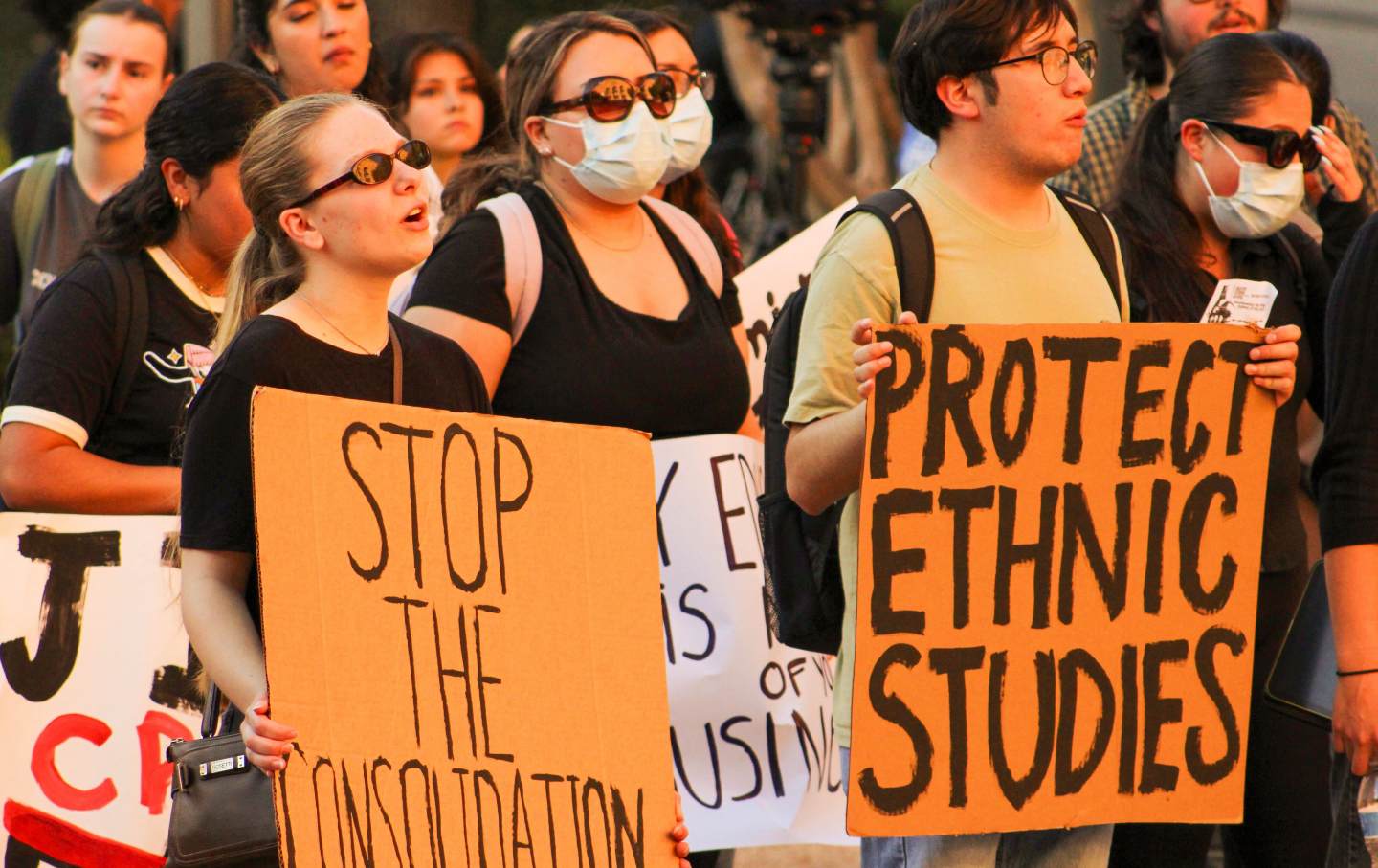
What Will Be Left After the University of Texas Destroys Itself? What Will Be Left After the University of Texas Destroys Itself?
UT-Austin has collapsed its race, ethnic, and gender studies into a single program while a new policy asks faculty to avoid “controversial” topics. But the attacks won’t end there...

The Corporate Media Is Head Over Heels for the Iran War The Corporate Media Is Head Over Heels for the Iran War
Donald Trump’s attack may be surreal, unjustified, and illegal. But that’s not stopping the press from turning the propaganda dial way up.
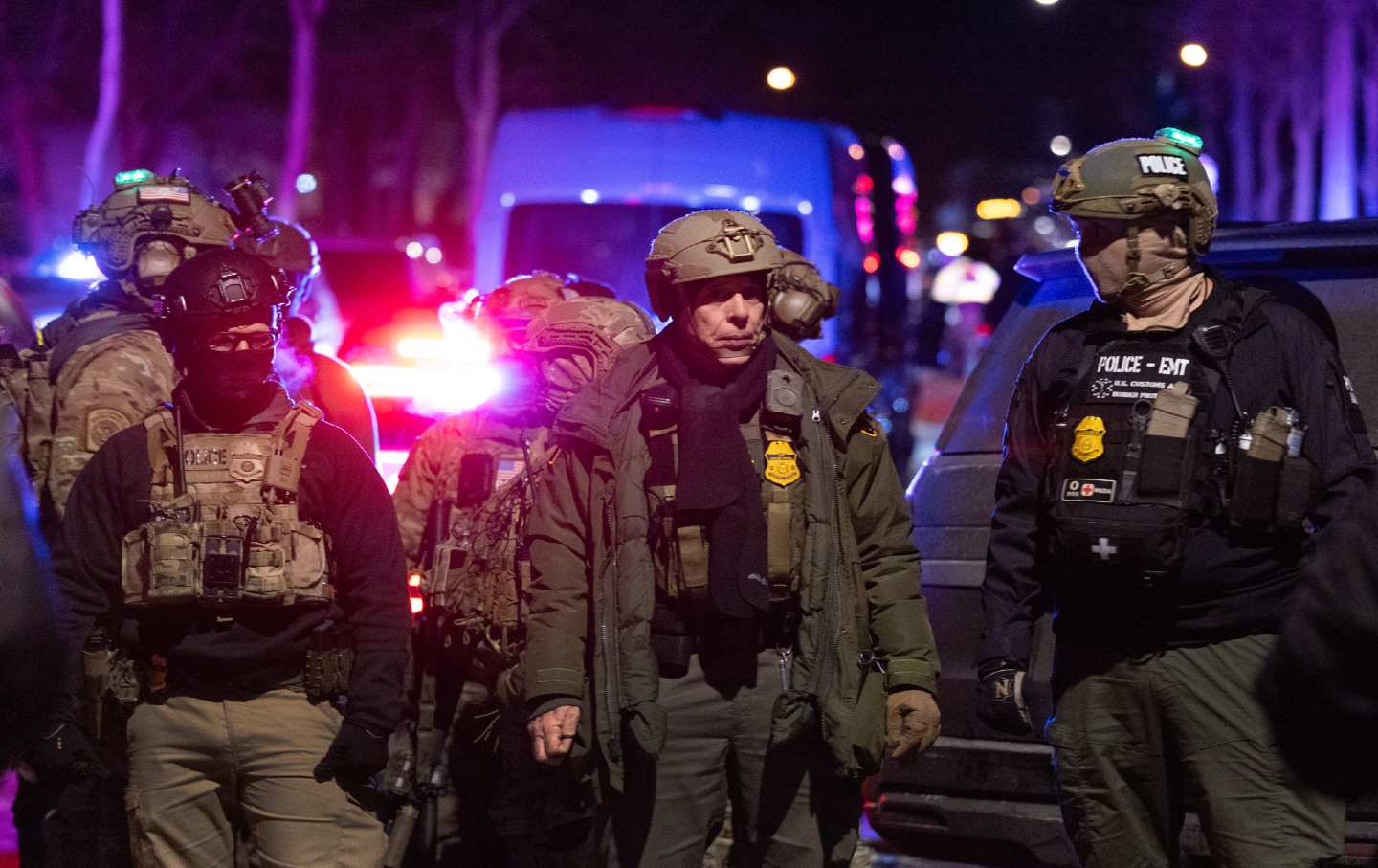
The Disturbing History of ICE’s “Death Cards” The Disturbing History of ICE’s “Death Cards”
The Vietnam-era practice is yet another example of ICE agents thrilling to the brutality they have been encouraged to cultivate.

