
We Must Restore Congress as the Predominant Branch of Government
The promise of democratic governance was stolen from the people. We must win it back.
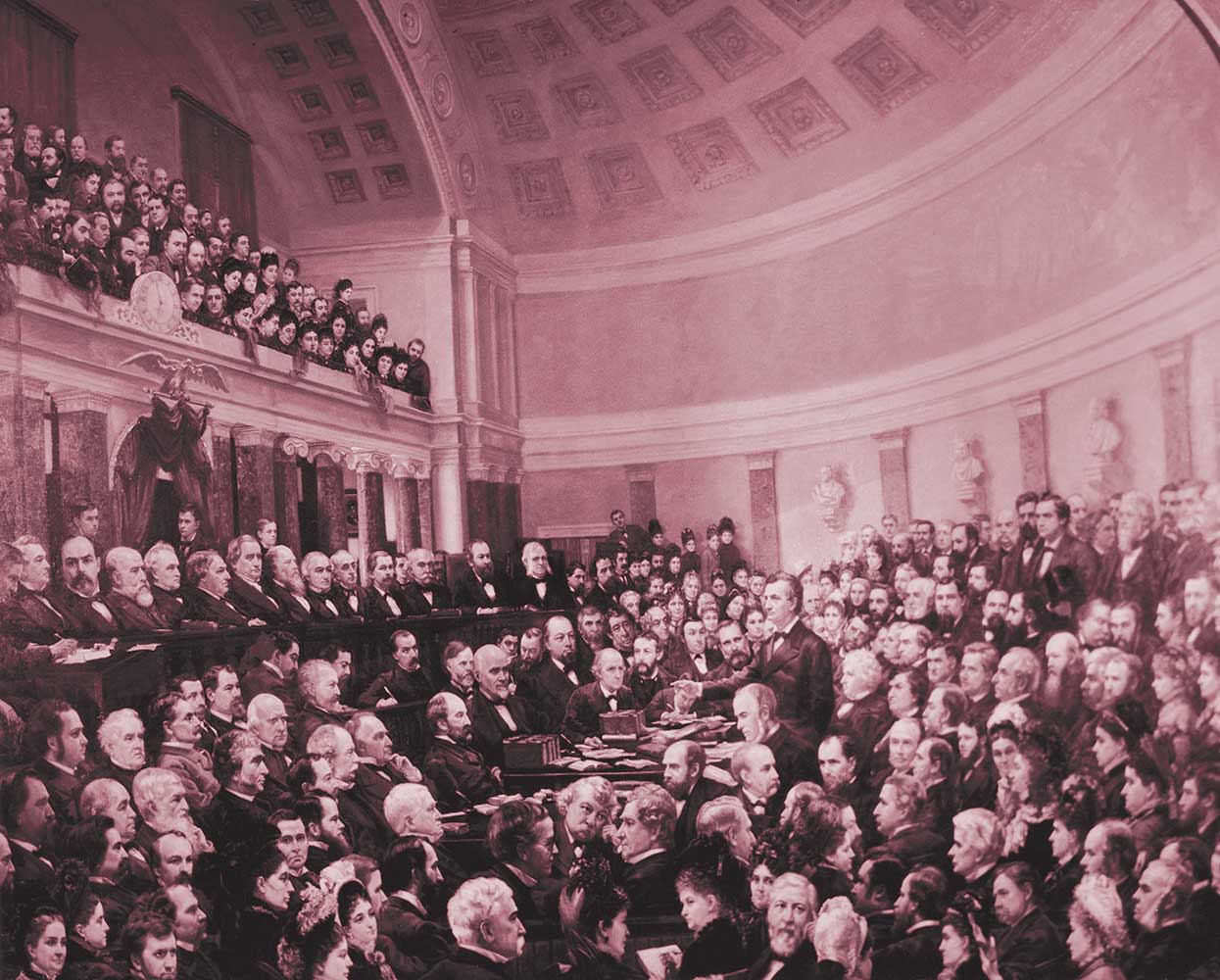
You will hear no more disorienting or self-defeating a platitude uttered on Capitol Hill in this 250th year of the American journey, by politicians of either party, than the sixth-grade dogma that America has “three co-equal branches of government.”
That “co-equal” thing is confected nonsense. To begin with, if it is a real word at all, “co-equal” is a mediocre concoction whose lackadaisical users cannot even decide whether it should be hyphenated. By adding the gratuitous prefix to the indispensable stand-alone word, which the Declaration of Independence applied to people, “co-equal” establishes a confusing false equivalency among institutions, making it seem as if the framers wanted the three branches to be involved in a perpetual game of rock-paper-scissors with no apparent preference for actual progress toward a more perfect union.
The word “co-equal” or “coequal” appears nowhere in the Constitution and nowhere in the Bill of Rights. It makes a few appearances in The Federalist Papers to describe, for example, the relationship between the House of Representatives and the Senate or the national government and the states, but never to characterize the relationship among the three branches.
250 Years of Searching for a More Perfect Union
When used repetitively by judges, legislators, or pundits to characterize the relationship of Congress to the president and the Supreme Court, the “co-equal” trope first obscures and then surrenders the essential primacy of Congress as established and ordained in the first article of the Constitution. In Federalist No. 51, James Madison called Congress, the nation’s lawmaking institution, the “predominant” branch of national government and predicted that it would be the most powerful branch, indeed so powerful that it should be divided into the House and Senate to prevent it from overwhelming the rest of the government.
The whole history and structure of our Constitution supports Madison’s point. We had a revolution against a king and the system of monarchical government and hereditary rule. We replaced our quasi-religious faith in an absolute and unquestioned ruler—which produced unending corruption, inequality, folly, and war—with the process of representative government based on what Thomas Jefferson called “the consent of the governed.” The framers placed their faith in the political representatives of the people in a listening democracy, not the whims and fancies of one person.
Our preamble, which proclaims and exercises the sovereign power of the people to establish our Constitution, is a tour de force that should be taught in school in place of the degrading “co-equal” myth. It reads:
We the People of the United States, in Order to form a more perfect Union, establish Justice, insure domestic Tranquility, provide for the common defense, promote the general Welfare and secure the Blessings of Liberty to ourselves and our Posterity, do ordain and establish this Constitution for the United States of America.
Where does the power to proclaim these national purposes then go? It flows into the first sentence of Article I, which begins, “All legislative Powers herein granted shall be vested in a Congress of the United States.”
Article I unspools a jam-packed inventory of congressional powers, including to collect taxes and pay debts, appropriate and borrow money, regulate commerce domestically and internationally, establish the Postal Service, declare war and raise armies, call forth militias to stop insurrections and invasions, govern the federal district, and make all other laws “necessary and proper for carrying into Execution the foregoing Powers.”
Only then do you get to Article II and the executive power, which is carefully cabined to prevent monarchical dictatorship, corruption, and every other potential form of presidential betrayal of the people. Section 1 obligates the president to swear an oath to “preserve, protect and defend the Constitution.” It provides him an official salary but denies him the right to receive “any other Emolument from the United States.” Section 4 concludes by stating that the president “shall be removed from Office on Impeachment for, and Conviction of, Treason, Bribery, or other high Crimes and Misdemeanors.” (If we were designed to be “co-equal,” then why do we in Congress have the right and power to impeach, try, convict, remove, and permanently disqualify the president, but he has no power to do the same to us?)
The primary function of the president is simply to “take Care that the Laws be faithfully executed,” not thwarted, diverted, blockaded, rewritten, or impounded. He is the commander in chief, not of the United States but “of the Army and Navy of the United States, and of the Militia of the several States, when called into the actual Service of the United States.” The president can veto legislation passed by Congress, but his veto can be overridden by a two-thirds vote, again giving Congress the final word on matters of legislative policy.
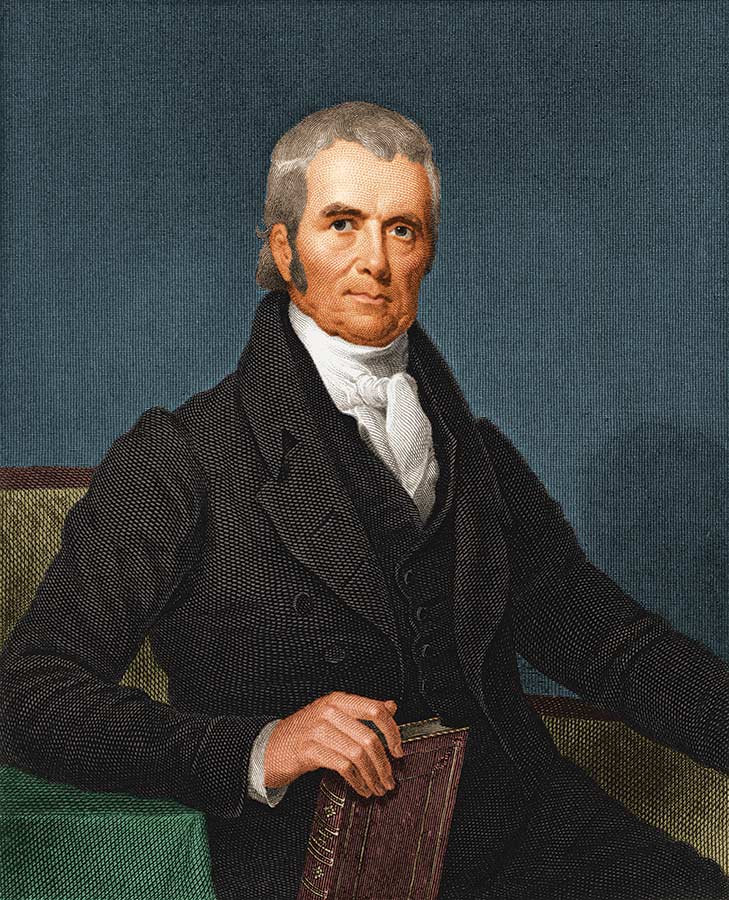
Article III vests judicial power in “one supreme Court” and in inferior courts established by Congress. In conflicts between Congress and the president or the people and the government, it is “emphatically the province and duty” of the federal judiciary “to say what the law is,” as Chief Justice John Marshall wrote in Marbury v. Madison (1803), and this responsibility implies the power of judicial review over the constitutionality of both legislative and executive actions. The democratic opposition in America today has won dozens of important separation-of-powers victories in federal district and circuit courts against Trump on everything from his attack on National Institutes of Health grant programs to the denial of birthright citizenship to the illegal sacking of federal workers to the refusal of Immigration and Customs Enforcement to allow members of Congress to conduct statutory surprise inspections of immigration detention facilities.
If we had a Supreme Court that was committed to the Constitution, as opposed to right-wing corporatism and white political supremacy, we could be halting a lot more MAGA authoritarianism. But a strong and self-respecting democracy does not depend on judges, especially Supreme Court justices—an undependable lot—to let the voices of the people be heard. We, their elected representatives, are supposed to make sure they are heard.
The world we inhabit today, of deranged monarchical dictates and colossally stupid wars of imperial fancy, a world blessed and enabled by the Roberts court, is galaxies away from what the framers had in mind in 1776 and 1787.
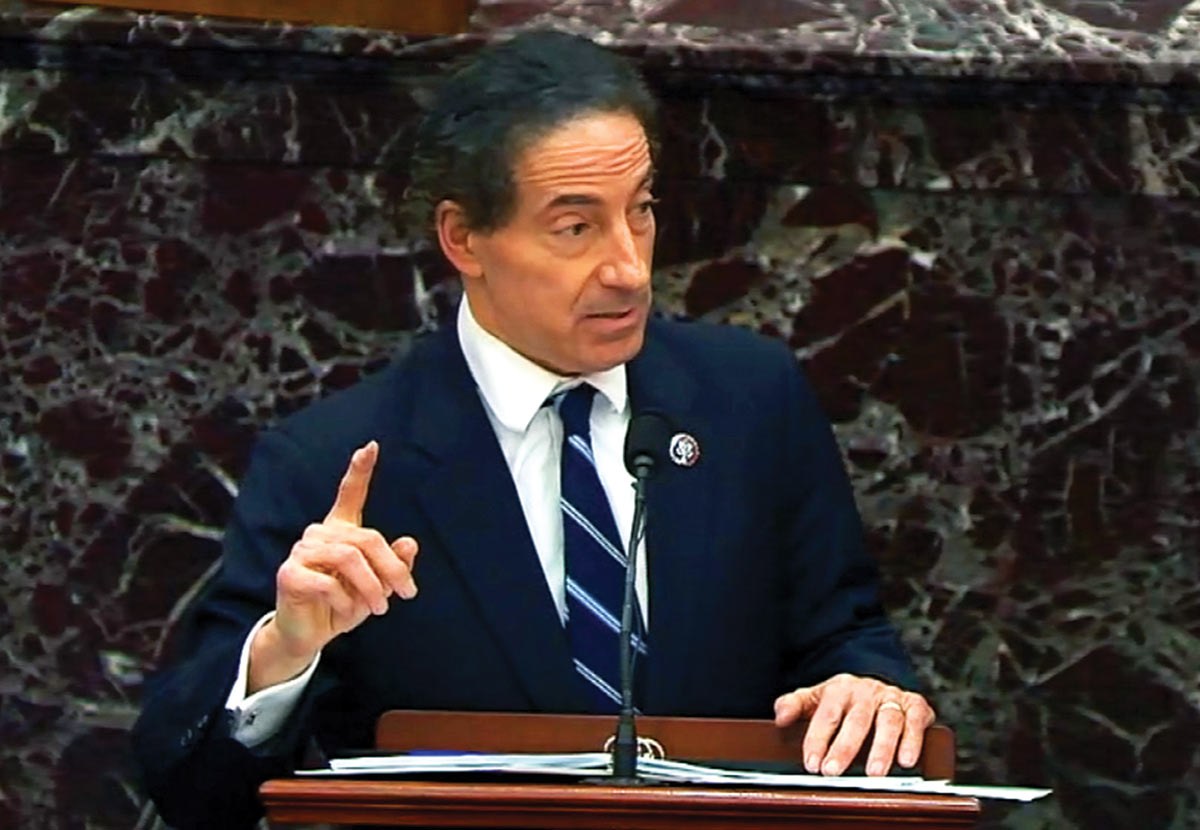
The framers were emphatic about congressional control over the decision to go to war, but Congress never declared this brutal and slapdash war on Iran and never authorized it. President Trump and his inner circle turned for advice to the co-equal autocratic strongmen of Saudi Arabia and Israel, Mohammed bin Salman and Benjamin Netanyahu, who replaced the House of Representatives and the Senate as the key decision-makers. Nor did President Trump comply with the War Powers Resolution of 1973, which authorizes unilateral presidential military action only to repel an actual or imminent military attack on the United States.
The nightmarish folly of this “little excursion” of a presidential war, which has already cost America around $2 billion a day and destroyed thousands of human lives, vindicates the wisdom of the framers, who trusted only the representatives of the people to make fundamental decisions over war and peace, the life and death of our soldiers, for the American people.
Our “day one” dictator has, in fact, been trampling congressional spending powers from day one of his second term. He has impounded funds in blatant violation of the 1974 Impoundment Control Act; withheld mandatory spending for schools, healthcare, clean-energy infrastructure, disaster preparedness, and other programs he opposes; cut off legislated spending to states and cities as coercive leverage in policy debates over immigration; and even dismantled and gutted entire departments, agencies, and programs established and funded by Congress, like the US Agency for International Development and the Consumer Financial Protection Bureau.
Conversely, he has spent taxpayer money on completely invented and bogus purposes never authorized by Congress, like his fraudulent Board of Peace, a mysterious entity either public or private (still no one knows) without any legal standing, which has assembled billions of dollars from autocrats all over the world and for which Trump has anointed himself “Chairman for Life.” His ravaged Department of Justice wrote a $1.25 million check to his disgraced former national security adviser, Michael Flynn, who pleaded guilty to lying about his contact with Russian government officials. Flynn repeatedly affirmed his crimes under oath. Even Trump recognized he “had to fire General Flynn because he lied to the Vice President and the FBI.” Yet now the DOJ is rewarding Flynn with taxpayer money to “settle” Flynn’s frivolous case against the government, which the government had already won decisively in federal court. And Trump “settled” his meaningless and bogus $10 billion lawsuit against the government with an agreement by the DOJ to end all investigations of Trump and the Trump family and to create a $1.8 billion political slush fund for him to dole out to the Proud Boys, the Oath Keepers, and other rioters, insurrectionists, and political partners.
Trump has made himself the first president in US history to unilaterally impose a massive presidential tax on the American people through his chaotic, illegal, and unconstitutional tariffs. The entire scheme, including the hundreds of billions of dollars of ruinous costs imposed on our people and our businesses, was so egregious that even Trump’s own sycophantic, stacked-and-packed Supreme Court had to strike down his tariffs as outside of the president’s delegated authority under the International Emergency Economic Powers Act.
The added scandal of all these usurpations is that the narrow GOP majorities hanging on in Congress have acted as willing accomplices to Trump’s blatant crimes against the Constitution. The framers expected public servants to stand up for their own branches of government. But the vast majority of Republicans in Congress, having elevated political party over constitutional patriotism, did not even vote to impeach or convict Trump in 2021 when he incited and unleashed a bloodthirsty insurrectionary mob to storm the Capitol, where my colleagues and I were meeting to certify the presidential election on January 6. This term—with the occasional honorable exception of Kentucky Representative Thomas Massie, the conscience of the Republican Conference (although that is surely to damn him with faint praise)—Republicans have overwhelmingly opposed our efforts to activate the War Powers Act, claw back spending authority, block Trump’s tariff onslaught, and exercise legislative oversight over his corrupt regime.
The invertebrate House Republicans don’t even pretend to be Trump’s “co-equals.” They behave just like cult members bowing and scraping for attention from their holy father and begging for rides on Air Force One.
This November, we have the chance to elect concurrent Democratic majorities to reestablish the rule of law in the country, dismantle the most extraordinary presidential corruption America has ever seen, and restore the institutional leadership of Congress to our battered political order. Of course, the preeminent role of Congress is justified only by its own democratic legitimacy, which means we must protect voting rights for all and put America back on the democracy growth track.
“The only solution to the ills of democracy,” John Dewey is often credited with saying, “is more democracy.” To meet this standard, we must, as America marks the 250th anniversary of its founding, secure the precarious right to vote by shutting down voter-suppression and right-wing gerrymander schemes and guaranteeing majority electoral winners with ranked-choice voting. We must replace our undemocratic, dysfunctional, and obsolete Electoral College system—an accident waiting to happen every four years—with the National Popular Vote plan. And we must pick up on Trump’s statehood push, not for Canada, Greenland, and Panama, which never asked for statehood, but for the millions of unrepresented and disenfranchised American citizens living in Puerto Rico and Washington, DC, who are demanding their full political rights. We must fight for a constitutional amendment to guarantee voting rights for all citizens, majority rule, fair districting, and proportional representation. In Congress, we must fight not to become institutional “co-equals” with the person who is assigned to faithfully execute our laws, but rather the nation’s preeminent institutional champions for progress toward a more perfect union.
More from The Nation
What Trump and Tucker Carlson Have in Common What Trump and Tucker Carlson Have in Common
Carlson has broken with Trump largely over the war in Iran. But on Ukraine and immigration, the two speak very much the same language.

The Jewish Case Against AI The Jewish Case Against AI
Haredi rabbis and the secular left agree: This technology is a threat to the entire social fabric.
The Fight for Educational Equality Is Also a Fight for a Just Supreme Court The Fight for Educational Equality Is Also a Fight for a Just Supreme Court
The court has severely weakened our ability to make an education system that fulfills the promise of Brown.

The Fall of “Scientific American” The Fall of “Scientific American”
When the beloved science publication got too political, its corporate owners stepped in. Now its future is uncertain.

The Bookstore Revolution in Taiwan’s Conservative Heartlands The Bookstore Revolution in Taiwan’s Conservative Heartlands
After Taiwan legalized same-sex marriage, gender-themed bookstores are working to build the social acceptance that the law alone couldn’t deliver.

Jalen Hurts Deserved Better. We All Do. Jalen Hurts Deserved Better. We All Do.
In a country that treats workers as expendable parts, Hurts’s playing through a blood clot is just the highest-profile example of the price workers pay in an oligarchy.

