Facing Legal Threats, Colleges Back Off From Race-Based Programs
College programs designed to give students from underrepresented groups a foothold in careers are being reframed or disappearing.
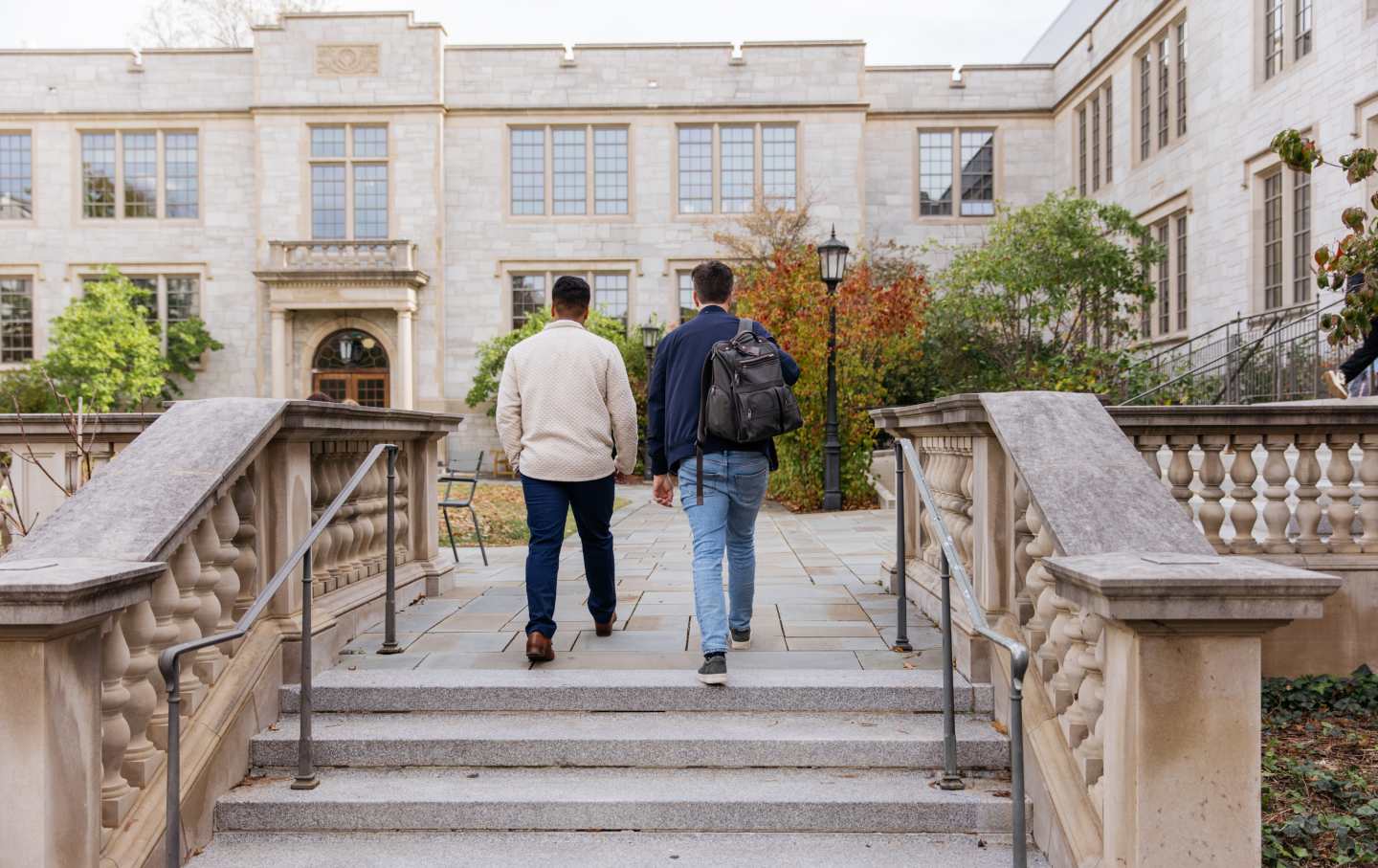
Christopher Molina, a senior at the University of Arkansas and Marc Mund, his mentor with Latinx On the Rise, on the campus in Fayetteville, Arkansas.
(Terra Fondriest for The Hechinger Report)
As might be expected of someone working toward a PhD in neuroscience at Stanford School of Medicine, Jocelyn Ricard has impressive credentials.
There are scholarships—Knight-Hennessy and, last year, a Ford Foundation Fellowship—and publications in journals like Nature Neuroscience and The Lancet Psychiatry. Plus, Ricard has done research at Yale and Cornell; and in Chiang Mai, Thailand; Berlin; and elsewhere.
The 26-year-old’s research focuses on substance-use disorders and how inequity and disadvantage affect brain function, interest she says was spurred by seeing relatives grapple with addiction and incarceration. She credits the University of Minnesota for her entrée into the field.
Specifically, she said that the Multicultural Summer Research Opportunities Program, known as MSROP, offered a vital invitation the summer before her sophomore year. Said Ricard, “I think MSROP changed my life.”
A low-income, first-generation student from both Minneapolis and St. Paul, Ricard said the “multicultural” label was a targeted welcome to explore a path she knew nothing about. “That was one of the things that drew me to the program,” said Ricard, who is Black. As an experience specifically for students from underrepresented racial groups, she said, “it felt like people really wanted to assist” those like her who “had no prior understanding of ‘research’ and what that meant.”
Through MSROP, Ricard learned not just how to conduct research, but how to write an abstract, compose presentation posters and scientific papers, plus how to network and navigate a conference—“such important skills,” she said, that are “like a hidden curriculum.” The program also connected her to other students of similar backgrounds who shared her interests.
Today, however, MSROP is no longer. Following the June 2023 Supreme Court decision banning colleges from considering race in admissions and a wave of state laws curbing campus diversity, equity and inclusion efforts, such pipeline programs, along with race- and gender-based affinity mentoring circles and scholarships, are facing fire.
While there is no official count of such programs, they have become common offerings on college campuses as ways to support underrepresented students. This has spurred a backlash from conservative groups arguing for “equality”—providing all students the same opportunities—over “equity,” which seeks to help those needing supports to access them. That backlash is expected to intensify with the reelection of Donald J. Trump.
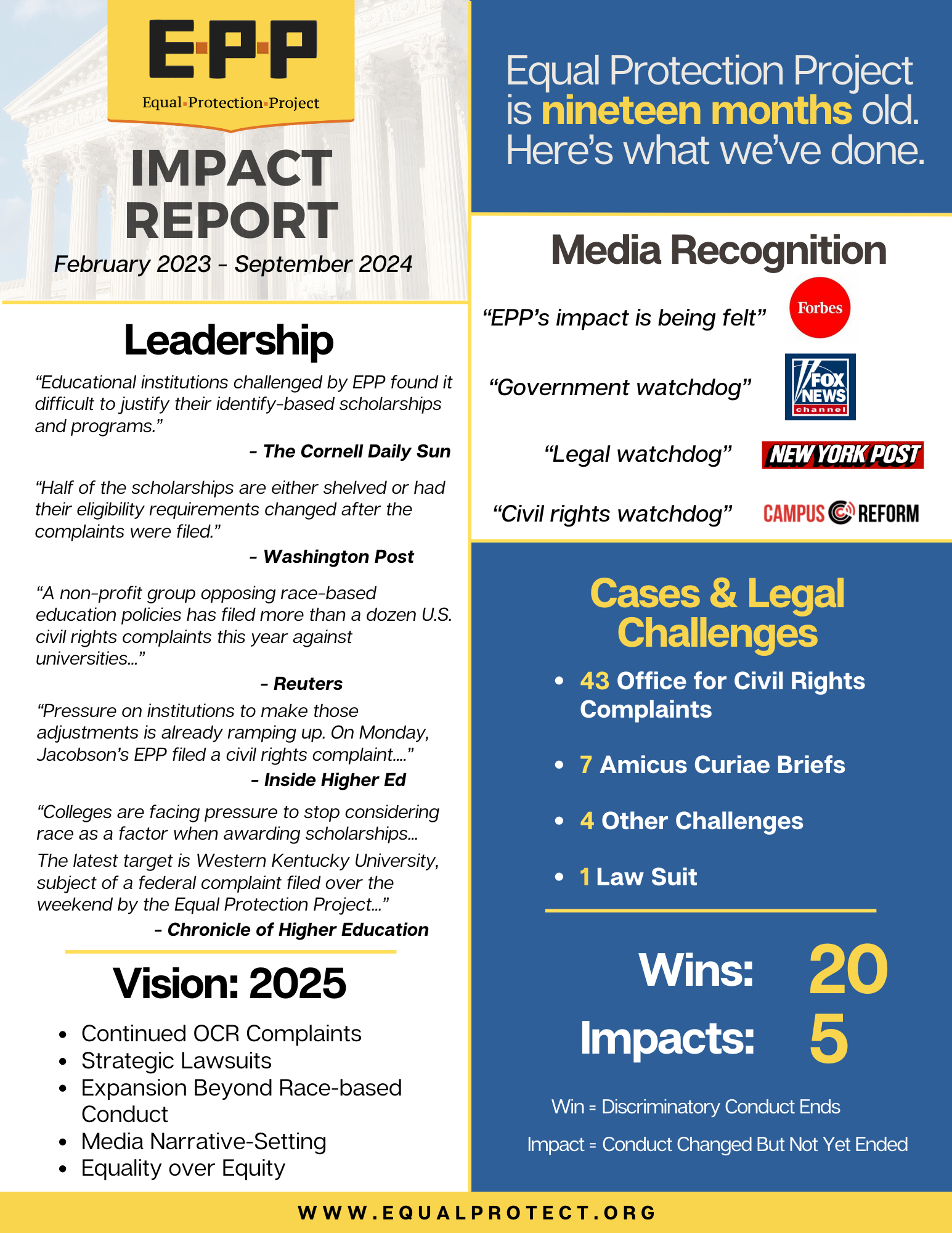
The Equal Protection Project, a conservative legal group, has been particularly active in challenging services for students based on race and gender. Launched in early 2023 as an arm of the Legal Insurrection Foundation, the group boasted in its “impact report” that between February 2023 and September 2024, it had filed 43 complaints with the Department of Education’s Office for Civil Rights (OCR), made four “other challenges,” filed seven amicus curiae briefs, one lawsuit—and recorded 20 “wins.” The group’s “Vision: 2025” includes “continued OCR complaints” and “strategic lawsuits.”
William A. Jacobson, a Cornell law professor and the founder of the Legal Insurrection Foundation, said his group’s goal is “to stop discriminatory conduct.” He said that barring entry to certain groups, like white students, harms them. “We don’t accept that having racially discriminatory barriers is just no big deal or is not actually depriving, not actually harming someone,” he said.
Others disagree. Derek W. Black, professor of law at the University of South Carolina and expert in education law and policy, said that campuses that are halting or altering offerings may be doing so unnecessarily. The only thing the Supreme Court ruling struck down, he said, “was racial box-checking” in admissions. “Colleges, however, seem to be running in the opposite direction of anything that even touches or relates to race, even if it does not involve the prohibited box-checking, because they are afraid of public scrutiny or being sued,” he said.
The issue turns on the specifics of how programs frame their purpose and admit students, said Black, noting that programs cannot formally bar white students unless designed “as a remedy to past discrimination.” In the wake of the Supreme Court decision, the Department of Education’s Office for Civil Rights issued a Dear Colleague letter in August 2023, stating that schools could “offer or recognize programs focused on the experience of particular racial groups, including mentorship programs, fellowships, leadership trainings, and similar opportunities,” but could not exclude students based on race. Targeted programs in and of themselves were not necessarily a problem, the letter said.
Popular
“swipe left below to view more authors”Swipe →Yet some campuses are not pushing back against legal challenges. After the Equal Protection Project filed a civil rights complaint in May 2023 charging that MSROP was discriminatory because it admitted only students of color, the University of Minnesota altered the program and whom it serves.
It is now “Pathways to Graduate School: Summer Research Program,” making no mention of race, gender, ethnicity nor “any specific populations of students,” although it does consider students’ experiences and “contribution to the cultural, gender, age, economic, or geographic diversity of the student body,” according to a statement from the University of Minnesota’s Office of Undergraduate Education shared by Andria Waclawski, director of public relations. The statement also said that MSROP dates to the 1980s and “was developed in part to address the underrepresentation of students of color at the graduate or professional level, which was considered a national issue.”
Some experts argue that it remains a pressing national issue.
Darnell Cole, a professor and codirector of the Center for Education, Identity, and Social Justice at the University of Southern California Rossier School of Education, said targeted programs offer students tools “to optimally navigate post-secondary institutions,” and accomplish their own goals while serving the institution’s aim of having successful graduates and alumni. Attacking DEI programs, he said, provides “little gain” for other students while taking away from targeted groups.
“It is not really about fairness. It is not really about merit. It’s really about excluding people, and we have a long history of doing that,” said Cole.
More on Education:
Across higher education, Black and Hispanic students remain underrepresented in college and graduate programs, especially in the fields of science, technology, engineering and math. A 2023 report by the Council of Graduate Schools found Black students “particularly underrepresented in several fields,” comprising 6.5 percent of biological and agricultural sciences graduate students, 6 percent in engineering, and just 3.8 percent in physical and earth sciences.
A 2023 report by the National Center for Science and Engineering Statistics found Black and Hispanic students underrepresented in STEM master’s degree programs, also noting that such students “are especially underrepresented at the doctoral level.” Hispanic students were 12 percent of PhD students in science and engineering; Black students were 6.6 percent.
Research suggests that race-based support and pipeline programs do increase the entry and persistence of underrepresented students into certain fields, especially STEM.
Yet legal complaints have some campuses broadening who may apply.
At Massachusetts Institute of Technology, the 2-year-old CRWN program—an abbreviation for Creative Regal Women of kNowledge—has a mission “to inspire undergraduate women of color.”
In May, the Equal Protection Project filed a civil rights complaint claiming the program engaged in “invidious discrimination on the basis of race, color and sex.” A video on the CRWN website features Black women attesting to the power of a gathering space for women of color, but Abby Abazorius, an MIT spokesperson, said via email that “all undergraduate students are invited to participate regardless of race, ethnicity, national origin, or gender.” The website was updated in the spring, she said, “to make that more clear.”
Even groups bringing together students and alumni for career help are facing attack. After the Equal Protection Project in October challenged a BIPOC Alumni-Student Mentoring Program at the University of Virginia School of Education and Human Development, the description was revised to say that while created “with BIPOC students in mind,” it “is open to mentors and mentees of all races, ethnicities, and national origins.”
Jacobson of the Equal Protection Project said he is glad programs are altering admissions criteria, but that it may not be enough. In the case of the University of Virginia, he said, it did not remove “BIPOC” from the name or program descriptor. “We’re glad that they put in language that it’s open to everybody.” But, he said, “that doesn’t solve the problem.”
And at the University of Arkansas, the school’s Black Graduate Student Association is under fire from the Equal Protection Project for its BIPOC Mentoring Circle series, co-sponsored by Walmart and Sam’s Club, headquartered in nearby Bentonville. John Thomas, a university spokesman, said via email that school officials are “reviewing this matter, which involves a registered student organization initiative.”
The statement also said, “The University is fully committed to ensuring that all members of the University community can fully participate in its programs and activities without regard to race or ethnicity, and requires the same of UA student organizations.” No Black Graduate Student Association members responded to interview requests.
Yet the Latinx On The Rise Mentoring Program—which is organized by the NWA Hispanic Leadership Council in northwest Arkansas and counts the University of Arkansas as a partner and supporter—still matches Hispanic students with professionals. That was how Christopher Molina, a senior and first-generation student whose parents immigrated from El Salvador, received guidance from Marc Mund, who works in biotech and is connected with the Hispanic community through his wife, who is Mexican.
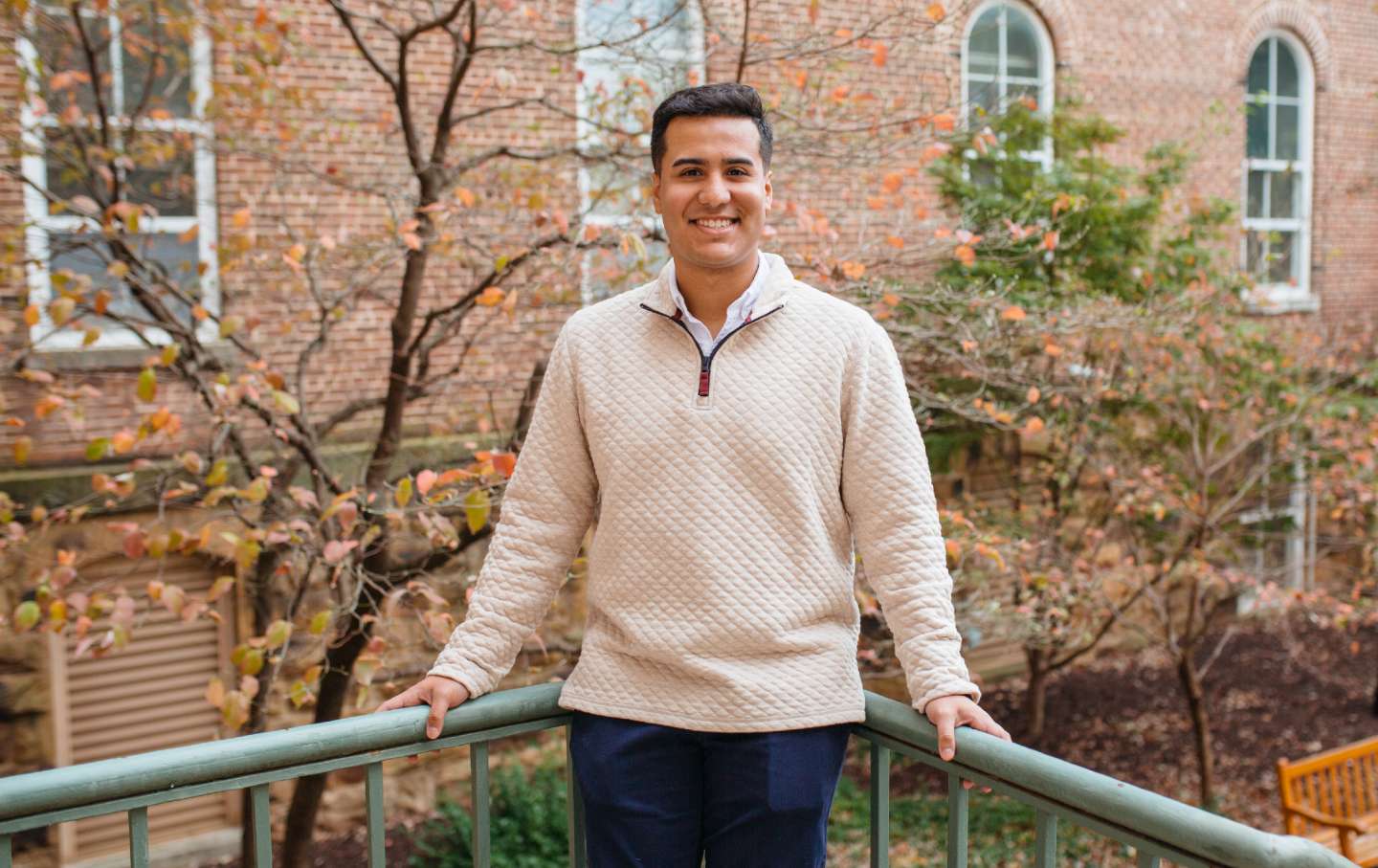
Molina’s parents are hard-working—his father drives a truck for Walmart and his mother does laundry in a nursing home—but are not poised to advise him on a business career. Mund’s mentoring, said Molina, helped him think beyond matters like pay to “what career escalation looked like at different companies, what I can expect my life to look like,” and when to attend graduate school.
This was valuable information. As a first-year student living at home, Molina recalled at first even being unsure how classes worked, where to find food or tutoring help on campus, and where to make friends. On his first day of class, he put the school building address in Google Maps, not understanding the difficulties of parking on a large campus. Finally, through the Multicultural Center, he connected to students with similar experiences. Then, an email to his university account invited him to the mentoring program where he matched with Mund.
When they first met, Mund saw Molina as “someone with a lot of gifts and talents” but “he wasn’t really sure what he wanted.” With Mund’s guidance, Molina landed a corporate internship at Sam’s Club last summer. He was so successful that after graduating from the Sam M. Walton College of Business next spring, Molina will begin his career there.
Campus pipeline and mentoring experiences offer students like Ricard and Molina access to information others may absorb because of who their parents are or how they grew up. Casting campus offerings as broadly inclusive rather than focused on a specific group or groups might risk “ignoring the needs of those historically underrepresented,” said Paulette Granberry Russell, president of the National Association of Diversity Officers in Higher Education.
While “the goal is for students to all feel welcome in these spaces,” campuses still must take into account the disadvantages students experience that affect what help they need to navigate their education, she said. Suggesting we suddenly have “a level playing field,” said Granberry Russell, “is problematic.”
In the place of racial, ethnic, and gender labels, some schools are embracing experiences or identities such as “low-income,” “first-generation,” and “veteran”—or simply scrapping controversial wording. After the University of Wisconsin–Madison’s Creando Comunidad: Community Engaged Black, Indigenous, and People of Color (BIPOC) Fellows program faced a complaint from the Equal Protection Project in January, it became just “Creando Comunidad.” Rather than explicitly gathering BIPOC students, applicants instead now must show “demonstrated interest or experience in promoting equity, inclusion, and social justice for communities of color.”
Ciboney Reglos, a former program member who graduated in May, is now a health coordinator for the Minnesota Department of Health and previously ran a Covid vaccine clinic for her Filipino community. As someone who has seen the power of acknowledging identity in her own work, she is disappointed by the removal of the explicitly BIPOC aspect of Creando Comunidad. She found being around others who shared similar experiences “one of the most valuable things that I took away from the program.” Now, as she encourages underserved communities to get vaccinated or do health screenings, she observes that it matters to provide people “a space where you know that your identity is going to be respected and humanized.” Being from an underrepresented community herself, she said, lets her more effectively connect with those she serves. In fact, said Reglos, “it’s one of the reasons I was drawn to the job.”
Support independent journalism that does not fall in line
Even before February 28, the reasons for Donald Trump’s imploding approval rating were abundantly clear: untrammeled corruption and personal enrichment to the tune of billions of dollars during an affordability crisis, a foreign policy guided only by his own derelict sense of morality, and the deployment of a murderous campaign of occupation, detention, and deportation on American streets.
Now an undeclared, unauthorized, unpopular, and unconstitutional war of aggression against Iran has spread like wildfire through the region and into Europe. A new “forever war”—with an ever-increasing likelihood of American troops on the ground—may very well be upon us.
As we’ve seen over and over, this administration uses lies, misdirection, and attempts to flood the zone to justify its abuses of power at home and abroad. Just as Trump, Marco Rubio, and Pete Hegseth offer erratic and contradictory rationales for the attacks on Iran, the administration is also spreading the lie that the upcoming midterm elections are under threat from noncitizens on voter rolls. When these lies go unchecked, they become the basis for further authoritarian encroachment and war.
In these dark times, independent journalism is uniquely able to uncover the falsehoods that threaten our republic—and civilians around the world—and shine a bright light on the truth.
The Nation’s experienced team of writers, editors, and fact-checkers understands the scale of what we’re up against and the urgency with which we have to act. That’s why we’re publishing critical reporting and analysis of the war on Iran, ICE violence at home, new forms of voter suppression emerging in the courts, and much more.
But this journalism is possible only with your support.
This March, The Nation needs to raise $50,000 to ensure that we have the resources for reporting and analysis that sets the record straight and empowers people of conscience to organize. Will you donate today?
More from The Nation

The Overlooked Crisis Facing Immigrants With Disabilites The Overlooked Crisis Facing Immigrants With Disabilites
Gregory Javier Laguna, who has Down syndrome, and his brother have been detained for almost five months. Under Trump, "it feels like we have no recourse," said one advocate.

Assisted Outpatient Treatment Doesn’t Work. Mamdani Could Stop It. Assisted Outpatient Treatment Doesn’t Work. Mamdani Could Stop It.
Claims that coercive mental health care is a necessary evil are not supported by evidence.

Do the Owners of MLB Teams Even Like Baseball? Do the Owners of MLB Teams Even Like Baseball?
The failsons and finance brokers who own MLB franchises seem ready to destroy the league to make themselves a little richer—and too many fans may take their side.

The Radical Texas War Against the “Devil’s Rope” The Radical Texas War Against the “Devil’s Rope”
An excerpt from the new book The Myth of Red Texas.

2 FIFA Rulings on Israel, 1 Familiar Deference to MAGA 2 FIFA Rulings on Israel, 1 Familiar Deference to MAGA
The world’s soccer governing body reminded fans what its theoretical commitment to “neutrality” means in practice: siding with the genocidaire.

Marc Andreessen’s Dangerously Unexamined Life Marc Andreessen’s Dangerously Unexamined Life
The tech mogul has declared himself an enemy of introspection, and that conveniently erases considerations of conscience from his amoral investment empire.