
The Overlooked Crisis Facing Immigrants With Disabilites
Gregory Javier Laguna, who has Down syndrome, and his brother have been detained for almost five months. Under Trump, “it feels like we have no recourse,” said one advocate.

Protesters call for an ICE facility in Illinois to shut down on September 19, 2025.
(Jacek Boczarski / Anadolu via Getty Images)
Victor Laverde Laguna and Gregory Javier Laverde Laguna, who are dual citizens of Venezuela and Colombia, arrived in the United States in September 2024 as legal asylum seekers. Victor, 62, is the guardian of his brother Gregory Javier, who is 50 years old and has Down syndrome. They settled in Columbus, Ohio, and Victor eventually found a job on Facebook for him and his brother to deliver medical supplies.
In late September 2025, Victor walked back to his car after dropping off a package and heard a gunshot. Five or six Athens County law enforcement agents pushed him to the ground while other agents dragged Gregory Javier out of the car. Neither of the men speak much English, and Gregory Javier’s speech is limited. He yelled for his brother as two agents handcuffed him and put their knees on his back. Victor shouted at the agents, “my brother is Down,” several times in English, but their brutality did not change. Both men were dragged on gravel to a nearby police car and put in the back seat.
Victor and Gregory Javier were caught in the middle of an alleged extortion scheme that attempted to steal $100,000 from an elderly citizen. Both brothers were charged with attempted theft. In conversations via a translator with his defense attorney, Victor has said that they did not know what they were transporting on their deliveries. While they awaited trial in the Southeast Ohio Regional Jail, the brothers were released to US Immigration and Customs Enforcement without the permission of the judge presiding over their criminal case. According to reporting by the Athens County Independent, the brothers entered ICE custody on the morning of October 29, 2025, just hours before prosecutors filed a motion to dismiss the brothers’ case. In transferring the brothers to federal custody, local officials ignored a court order to hold the brothers on bond and enabled ICE’s detainment of them indefinitely.
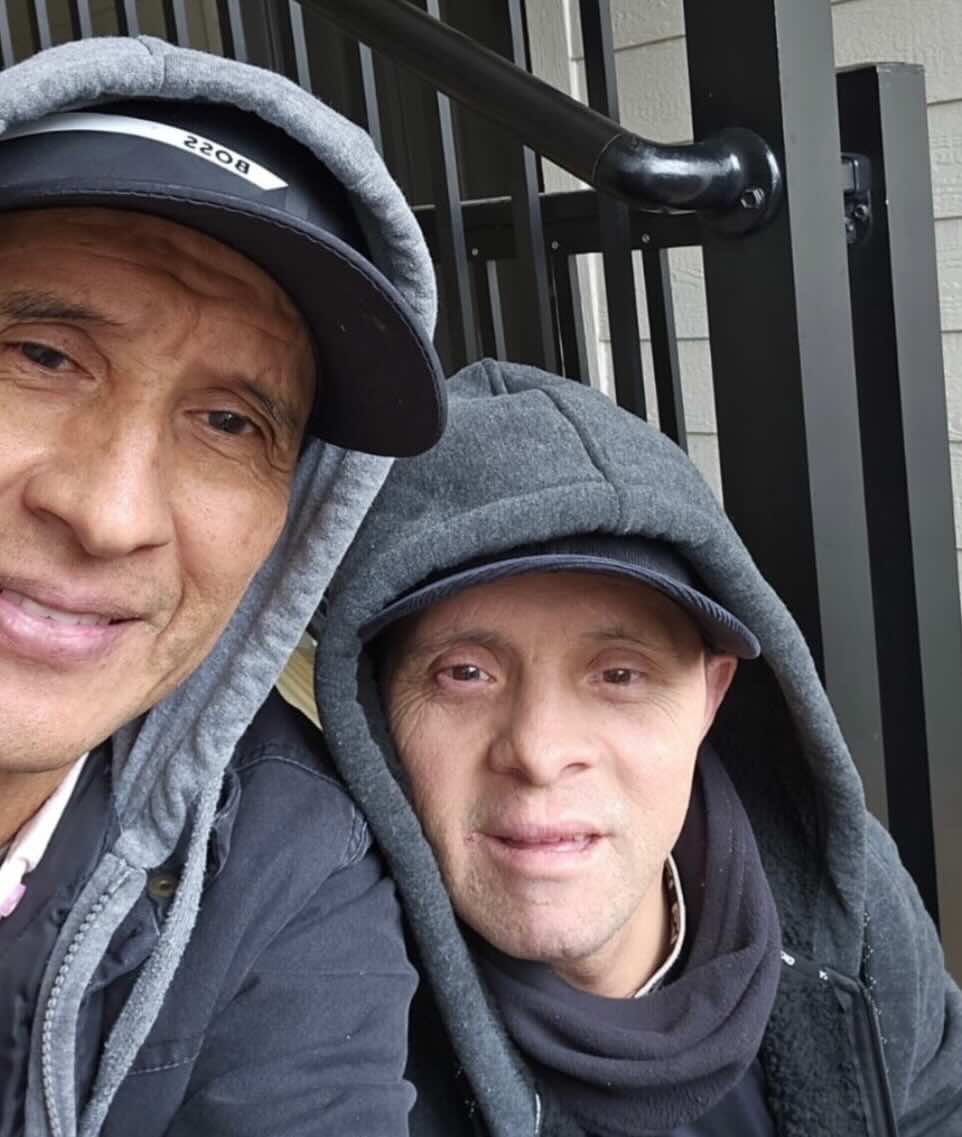
Victor and Gregory Javier have now been detained at the Northeast Ohio Correctional Center in Youngstown for almost five months. I spoke with Julio Laverde Belandria, Victor’s son and Gregory’s nephew, in late February. He said that he was able to speak with his father every day, but Gregory Javier’s mental health is suffering. In an interview conducted on December 18, Victor spoke about the regular episodes of yelling and fighting among inmates. At one location in which they were previously held, there was a man who kept approaching Gregory Javier with a stick. “My brother should have never been incarcerated,” Victor told the reporter. “He should have never been treated with the violence that he was from day one.”
A filing by Victor’s defense attorney Scott Petroff on October 30, 2025, states that Gregory Javier has “developmental disabilities” and that he is under the guardianship of his brother. In other words, Gregory Javier does not understand the consequences of the legal proceedings or why he is being detained. Yet it seems as if local and state authorities wanted to draw as little attention as possible to the fact they arrested a man with Down syndrome for a crime he was not capable of committing. Petroff told a reporter in November, “At least with Gregory, it would be very easy for them [the prosecutors] to say, ‘We didn’t realize he had a developmental disability when we made the arrest.’… But then they’d have to admit that they screwed up.” Handing the brothers over to ICE gave local authorities an opportunity to wash their hands of their mistake.
Disabled people have never been considered desirable American citizens. Look no further than the American Immigration Act of 1882, which barred “lunatics” and “idiots” from entering the country. However, the Americans with Disabilities Act of 1990 requires state and local law enforcement to provide reasonable modifications to procedures like arrests and detainment for people with disabilities and to avoid unnecessary criminal justice involvement. Section 504 of the Rehabilitation Act of 1973 prohibits discrimination on the basis of disability by any agency receiving federal funding, including ICE. In the case of criminal detainment, required accommodations might include things like ASL interpreters, healthcare services, and removal from conditions that could exacerbate increased susceptibility to victimization.
Given the lawlessness of ICE’s actions under the Trump administration, it is valid to wonder whether such policies matter anymore. The Arc of the United States, an advocacy organization for people with intellectual and developmental disabilities, has established programs to increase law enforcement awareness and training for state and local authorities. But partnerships at the federal level have been harder to establish. Leigh Anne McKingsley, senior director of criminal Justice for the Arc, told me, “With the ADA, at least we have a seat at the table, but with ICE and on the federal level, it feels like we have no recourse.” The Office of Civil Rights and Civil Liberties in the Department of Homeland Security, once a source of federal mediation and redress, now barely exists after 85 percent of its staff was cut.
In the case of Gregory Javier Laguna, county and federal law enforcement defied decades of efforts to ensure that people with intellectual disabilities receive equal access to justice. Twenty percent of the American population has a disability, yet they are 30 percent to 50 percent of the victims of police brutality, and the risk of being the subject of police violence increases for those who are not white.
Facing these statistics and reckoning with tragedies of unnecessary violence, self-advocates and family members have worked with state and local law enforcement to address the vulnerability of people with disabilities. Organizations like the Ethan Saylor Alliance in Maryland have worked to educate law enforcement about deescalation when a person with a disability appears agitated or non-compliant. Saylor had Down syndrome and was killed in 2013 at the age of 26 by an off-duty police officer after refusing to leave a movie theater. As part of its efforts to prevent such tragedies in the future, the organization provides Maryland law enforcement and first responders with training sessions that emphasize the need to use plain language, allow extra time for responses, reduce sensory stressors and involve trusted support like family and caregivers when necessary. These sessions are often led by advocates with intellectual and developmental disabilities.
Similar efforts to train federal law enforcement are rare, if any exist at all, and only 20 states require law enforcement officer training on interacting with people with disabilities. Other states offer voluntary training or put the responsibility on people with disabilities to identify their needs. Ohio Governor Mike DeWine signed Keith’s Law in early January, when the Laguna brothers were already in ICE detention in the state. The law allows people to register their disability with emergency responders so they can be aware of a person’s support needs before arriving on the scene. Such a law, however, would have done little to prevent Gregory Javier from being violently taken into custody. It also assumes that people with disabilities should trust law enforcement and other first responders enough to register—a trust that is eroding in the face of ICE’s brutal treatment of those who are most often targeted for violence.
“As ICE continues, they will lose public trust,” McKingsley warned. “The only way to build that trust is honest, open communication with the disability community.”
Access Living has worked for over 15 years to defend the freedoms and civil rights of people with disabilities in Chicago. But efforts to meet the unique needs of immigrants with disabilities have become increasingly necessary during recent ICE raids. In the past year, Access Living has provided workshops and information to educate immigrants about their rights and protections under federal disability laws like the ADA. They have also formed the Immigration and Disability Watch Project, an effort to collect and elevate the stories of disabled immigrants like Gregory Javier that are not typically part of the conversation about ICE. “We want to say, ‘hello, we’re here, look at us,’” Michelle Garcia, manager of organizing and community development for Access Living, told me.
Due to the toll that months of imprisonment has taken on his brother, Victor has filed a voluntary deportation request. He and Gregory Javier are currently waiting in ICE detention to be removed from the United States to Colombia.
“These individuals did things the right way,” their immigration lawyer Liliana Vasquez told me. “They followed the rules for processing their asylum request. They appeared in court when they needed to.” But in the end, thanks to an overzealous arrest by county law enforcement, doing things the “right way” didn’t matter.
Their case shows that our nation’s hard-earned progress toward respecting the dignity of people with disabilities is quickly slipping away.
Become a Sustaining Donor This September
Between the reemergence of right-wing red-baiting and Donald Trump’s use of the chilling National Security Presidential Memorandum–7 to criminalize left political organizing, we’re seeing McCarthyism reborn before our eyes.
This assault on democracy cannot be ignored or wished away. Resisting it requires bravery in the face of threats and repression, a steadfast commitment to the truth, and the unwavering belief that we can—and will—overcome this darkness.
We must have an independent media that sets the record straight, unearths corruption and abuses of power, and advances a politics of justice and dignity for all if we’re to win this fight.
That’s why I’m writing to you today. This September, The Nation needs to add 100 monthly donors to sustain our progressive journalism. Your contribution makes the next investigative report, the next truth-speaking column, and the next pathbreaking essay all possible.
I hope you’ll support our work with a recurring donation today. If you donate $10 or more a month, we’ll send you a brand new “Hands Off the Free Press!” sticker to recognise your commitment to our cause. Please, donate today.
Onward,
Katrina vanden Heuvel
Editor and Publisher, The Nation
More from The Nation

Journalist Meaghan Beatley on Latin America’s Feminist Resistance Journalist Meaghan Beatley on Latin America’s Feminist Resistance
A conversation with the author of Sex and Dissent about what American feminists can learn from the Green Wave movement.

As Cornell’s Rape Case Draws National Attention, Students Want Accountability. As Cornell’s Rape Case Draws National Attention, Students Want Accountability.
A new lawsuit alleging that a former student was drugged and gang-raped by Chi Phi fraternity members is sparking outrage in the Cornell community.

Irish Goalkeeper Gavin Bazunu’s Refusal to Play Against Israel Puts Him on the Right Side of History Irish Goalkeeper Gavin Bazunu’s Refusal to Play Against Israel Puts Him on the Right Side of History
Bazunu’s decision raises the perennial question: Why is a country that is currently committing a genocide allowed to compete in the first place?
The Promises and Compromises of the University of California The Promises and Compromises of the University of California
I grew up in a neighborhood manufactured by the University of California, Irvine. It felt like a utopia for academics—until the university forsook its mission of serving the publi...
Is Platonic Co-Parenting the Future of the Family? Is Platonic Co-Parenting the Future of the Family?
Disillusioned with the nuclear family and apprehensive of tethering their reproductive futures to the bleak hellscape of modern love, young people are seeking a different way.

